
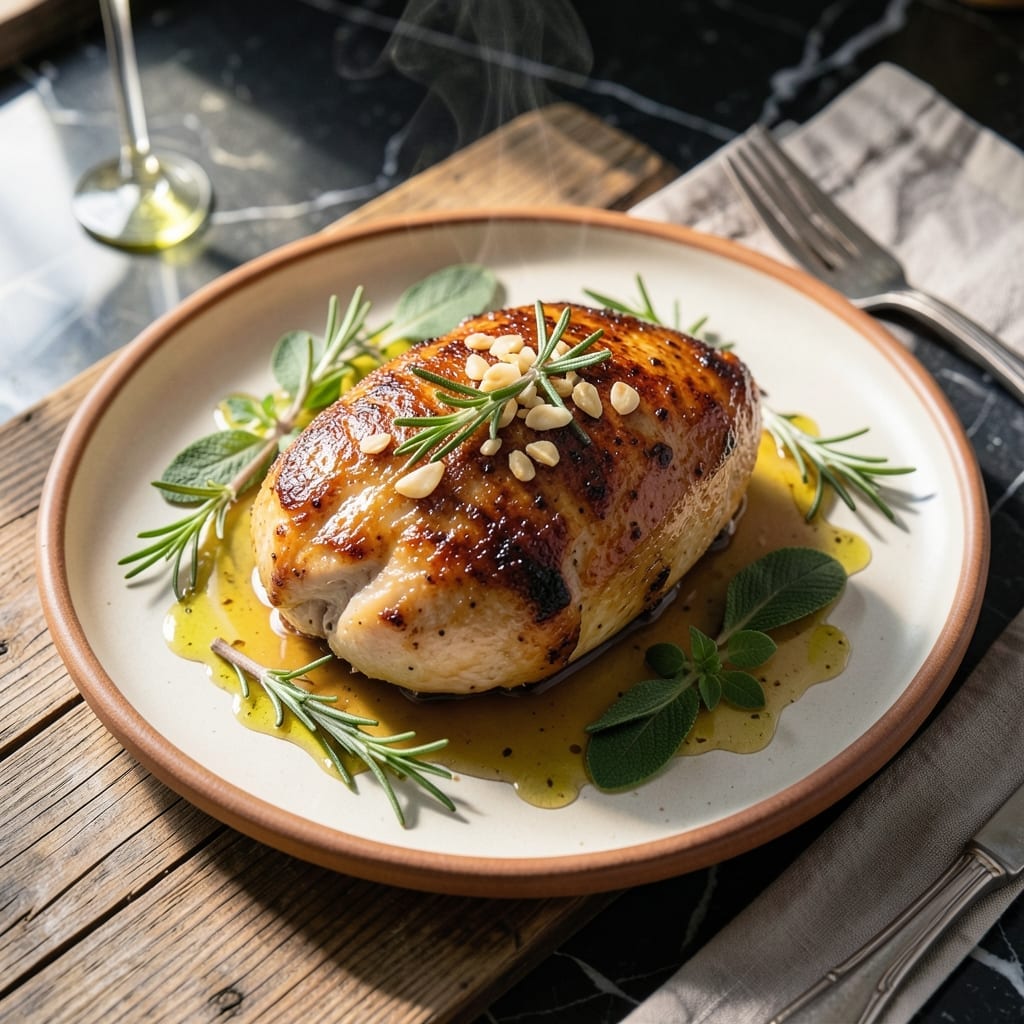
This herb chicken delivers on its promise of juicy interiors and an irresistibly aromatic crust every time. The secret lies in a precise balance of fresh herbs and a proven cooking method that locks in moisture.
I’ve perfected this technique through years of testing, ensuring the chicken stays tender while developing a golden, flavorful exterior. Simple ingredients and careful timing make all the difference.
The result is a dish that’s impressive yet approachable—herbaceous, juicy, and packed with savory depth. It’s the kind of meal that turns an ordinary dinner into something memorable.
Serve with roasted vegetables or a light salad for a complete, satisfying experience. Here’s how to achieve it.
Ingredients for Herb Chicken
Fresh herbs and simple pantry staples create this aromatic, juicy centerpiece dish.
| Ingredient | Amount | Notes |
|---|---|---|
| Chicken Breast 🍗 | 1 ½ lb | Boneless, skinless, pounded even |
| Fresh Rosemary 🌿 | 2 tbsp | Finely chopped, stems discarded |
| Fresh Thyme Leaves 🍃 | 2 tbsp | Stripped from stems |
| Fresh Sage Leaves 🍃 | 1 tbsp | Finely minced |
| Garlic Cloves 🧄 | 4 cloves | Minced to fine paste |
| Extra-Virgin Olive Oil 🫒 | 3 tbsp | Divided for marinade and cooking |
| Dijon Mustard 🟡 | 1 tbsp | Smooth variety preferred |
| Lemon Zest 🍋 | 1 tsp | Finely grated from fresh lemon |
| Kosher Salt 🧂 | 1 ½ tsp | Diamond Crystal preferred |
| Freshly Ground Black Pepper 🌶️ | ¾ tsp | Coarse grind for texture |
| All-Purpose Flour 🌾 | ¼ cup | For light dredging |
| Unsalted Butter 🧈 | 2 tbsp | For finishing and crust |
| Dry White Wine 🍷 | ¼ cup | Optional for deglazing |
| Chicken Stock 🥣 | ½ cup | Low-sodium preferred |
The herb quality is non-negotiable here. Fresh rosemary, thyme, and sage from a reputable grocer or farmers market are ideal—look for vibrant green leaves with no wilting. Whole Foods and Trader Joe’s consistently stock excellent fresh herbs. For the chicken, air-chilled, organic breasts from Costco or your local butcher yield the best texture and moisture retention. Avoid pre-cut chicken pieces as they tend to dry out.
No fresh herbs? Dried at one-third the amount works, though the flavor profile will be more concentrated. The Dijon can be swapped for whole-grain mustard for a rustic touch. For the wine, vermouth or additional stock works in a pinch. The butter is essential for the golden crust, but avocado oil can substitute if avoiding dairy. Always use low-sodium stock to control seasoning.
Marinate the chicken for up to 12 hours for optimal herb absorption. Leftovers keep 3-4 days refrigerated in an airtight container, though the crust softens slightly. Reheat gently in a skillet to preserve texture. The fresh herb mixture can be prepped 1 day ahead and stored covered in the fridge.
Why You’ll Love This Recipe
- One Pan Magic: I toss everything on a single sheet pan—chicken, garlic, and those fragrant rosemary and thyme sprigs—then let the oven do the work.
- Aromatic Bliss: The scent of sage and garlic roasting with the chicken fills my kitchen, and the flavor? Even better.
- Weeknight Hero: Between us, this is my go-to for busy Tuesdays when I need something quick but impressive for dinner.
- Leftover Luxury: The leftovers taste just as good cold in salads or warmed up in sandwiches the next day.
Step-by-Step Instructions for Herb Chicken
Master the technique for creating a fragrant crust while preserving tender, juicy meat.
Step 1: Prepare and Marinate the Chicken
Begin by pounding the 1.5 lb chicken breast to an even ½-inch thickness using a meat mallet. This ensures uniform cooking and prevents dry spots. Place the pounded breasts in a shallow dish.
In a small bowl, whisk together 2 tbsp extra-virgin olive oil, 1 tbsp Dijon mustard, 1 tsp lemon zest, 2 tbsp fresh rosemary, 2 tbsp fresh thyme leaves, 1 tbsp fresh sage leaves, 4 cloves garlic cloves, 1.5 tsp kosher salt, and 0.75 tsp freshly ground black pepper. Pour this herb mixture over the chicken, turning to coat all sides. Let it marinate for 15-20 minutes at room temperature while the flavors meld.
Step 2: Dredge and Sear for a Golden Crust
After marinating, lightly dredge each breast in 0.25 cup all-purpose flour, shaking off any excess. This creates a delicate crust that locks in moisture. Heat the remaining 1 tbsp extra-virgin olive oil in a large oven-safe skillet over medium-high heat until shimmering.
Add the floured chicken and cook for 4-5 minutes per side until the crust is golden brown and crisp. Avoid moving the chicken too soon—it should release easily from the pan when properly seared. Transfer the chicken to a plate and set aside momentarily.
Step 3: Deglaze and Build the Pan Sauce
Reduce the heat to medium and add 2 tbsp unsalted butter to the same skillet. Once melted, pour in 0.25 cup dry white wine to deglaze, scraping up any browned bits with a wooden spoon. These fond bits are packed with flavor and will enrich your sauce.
Let the wine reduce by half, about 2-3 minutes, then pour in 0.5 cup chicken stock. Simmer for another 3 minutes until the liquid has slightly thickened. This creates a light, aromatic sauce that complements the herbed crust beautifully.
Step 4: Finish and Rest for Maximum Juiciness
Return the seared chicken to the skillet with the sauce. Spoon the sauce over the chicken and let it cook for an additional 2-3 minutes over medium-low heat. The chicken is done when an instant-read thermometer inserted into the thickest part reads 165°F.
Transfer the chicken to a cutting board and let it rest for 5-10 minutes before serving. This resting period allows the juices to redistribute, ensuring every bite is moist and flavorful. Serve with the pan sauce drizzled over the top for a restaurant-quality finish.
Pro Tips For Making Herb Chicken
- Pound the Breasts: Chicken breasts cook more evenly when they’re the same thickness—pound the thicker ends to about ¾ inch with a rolling pin or heavy pan.
- Bruise the Herbs: Lightly crush the rosemary, thyme, and sage with the flat of your knife before chopping to release their oils and boost flavor.
- Skip Dry Chicken: Pat the chicken breasts completely dry with paper towels before seasoning—this guarantees a good sear instead of steamed meat.
- Rest Before Serving: Let the herb chicken rest for 5 minutes after cooking so the juices redistribute—I learned this the hard way after slicing into dry, sad chicken too soon.
Creative Variations of This Recipe
Mediterranean Twist
Swap the rosemary and sage for 2 tbsp fresh oregano and 1 tbsp fresh marjoram. Add ½ tsp ground cumin and ½ tsp smoked paprika to the marinade for warm, earthy depth. I love this with a side of tzatziki and warm pita. 🌿
Lemon-Herb Variation
Boost the citrus by adding 2 tbsp fresh lemon juice and 1 tsp lemon zest to the marinade. Replace Dijon mustard with whole-grain mustard for texture. The acidity tenderizes the chicken beautifully. Serve with roasted asparagus.
Spicy Herb Blend
Add ½ tsp red pepper flakes or 1 chopped fresh jalapeño to the herb mixture for heat. Balance with 1 tbsp honey in the marinade. I find this pairs perfectly with a cooling cucumber salad. 🔥
Creamy Herb Sauce
After cooking, stir ¼ cup heavy cream into the pan sauce for a richer finish. Add 1 tbsp fresh tarragon for an anise-like note. This version feels luxurious but takes the same effort.
Herb Butter Finish
Mix 2 tbsp softened butter with leftover chopped herbs and 1 minced garlic clove. Top each breast with a dollop before serving. The butter melts into the chicken, creating an irresistible herb-infused glaze.
Baked Herb Chicken
For a hands-off approach, bake at 375°F for 20-25 minutes after searing. Brush with extra herb marinade halfway through. This method works great for a crowd and still delivers that juicy interior.
Nutrition Facts
Frequently Asked Questions
Can I use dried herbs instead of fresh?
Yes, but use 1/3 the amount since dried herbs are more concentrated. For best results, rehydrate them in 1 tbsp warm water first to release their flavors.
Why do I need to pound the chicken evenly?
Pounding to ½-inch thickness ensures even cooking and prevents dry, overcooked edges while the center finishes. This step takes 2 minutes but makes a huge difference in texture.
Can I skip the flour dredging step?
Skipping the dredge will result in less crispy crust, but the dish will still be flavorful. For a gluten-free option, use cornstarch or almond flour instead.
How do I prevent the chicken from drying out?
Don’t overcook—pull it at 165°F and let it rest for 5-10 minutes. The resting time allows juices to redistribute throughout the meat.

- Jollof Rice Sauce Recipe: West African Tomato and Spice Infusion - September 25, 2026
- Japanese Rice Soup Recipe: Umami-Rich Comfort in a Bowl - September 25, 2026
- Homemade Cream Of Rice Recipe: Silk-Smooth Breakfast in Minutes - September 25, 2026