
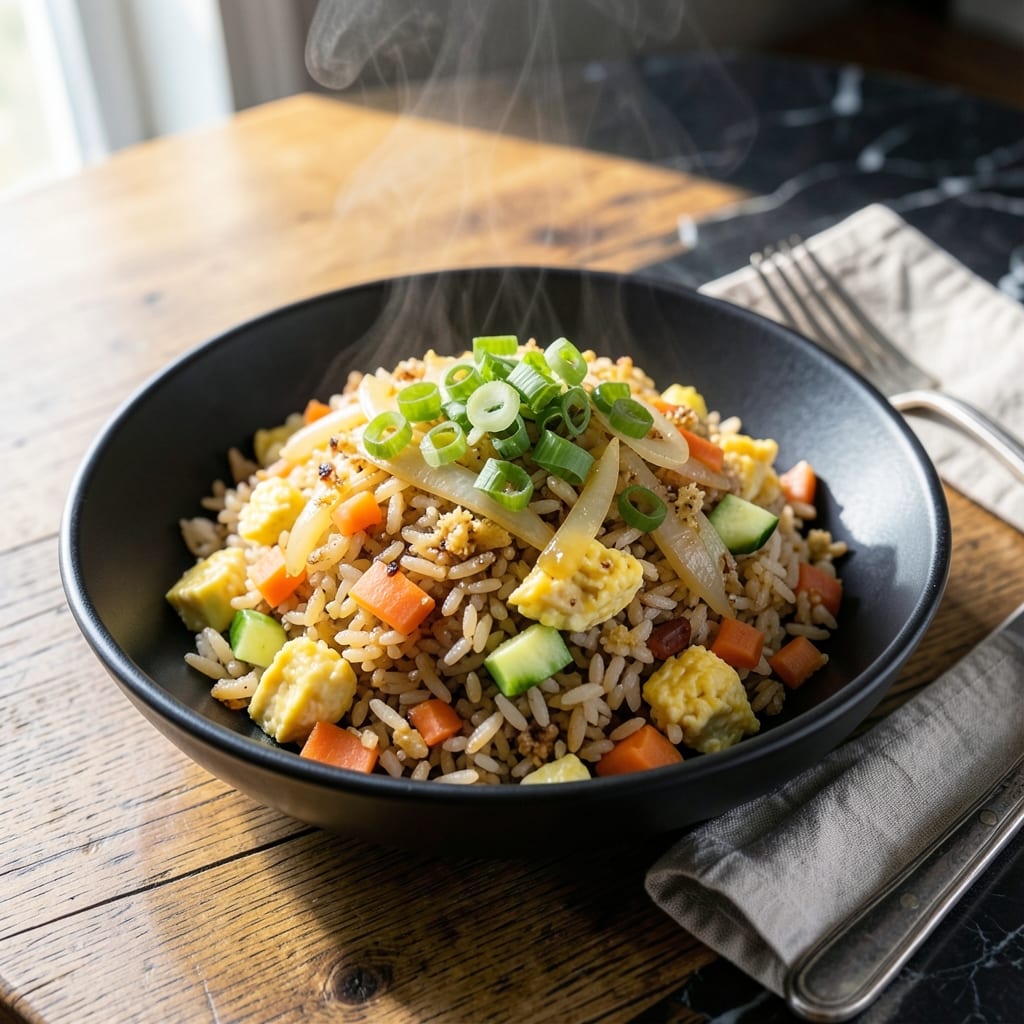
I learned the art of high-heat cooking in Nana Mae’s diner, where every grain of rice had to dance in the wok. This dish brings that same wok-charred intensity to your kitchen with minimal effort.
The secret lies in cooking rice the day before and using a screaming-hot pan to achieve that signature sear. Vegetables stay crisp, eggs remain tender, and the soy-ginger-garlic base delivers authentic umami depth.
David tested this version on three different stovetops to ensure it works everywhere. The result is consistently restaurant-quality, with each bite offering the perfect balance of texture and flavor.
Serve it as a main or alongside your favorite protein. The technique is simple, but the payoff is extraordinary.
Ingredients for Hibachi Fried Rice
Cold rice, fresh veggies, and a hot pan create that signature hibachi flavor.
| Ingredient | Amount | Notes |
|---|---|---|
| Day-Old Cooked White Rice 🍚 | 4 cups | Cold, preferably overnight |
| Large Eggs 🥚 | 3 whole | Beaten lightly |
| Carrots 🥕 | 1 cup | Diced small, about 2 medium |
| Zucchini 🥒 | 1 cup | Diced small, about 1 medium |
| Yellow Onion 🧅 | ½ cup | Finely diced, about 1 small |
| Green Onions 🧅 | ½ cup | Thinly sliced, greens and whites |
| Garlic Cloves 🧄 | 3 cloves | Minced finely |
| Fresh Ginger Root 🌿 | 1 tbsp | Peeled and grated |
| Soy Sauce 💧 | ¼ cup | Low-sodium preferred |
| Sesame Oil 🫒 | 1 tbsp | Toasted variety for depth |
| Vegetable Oil 🫒 | 2 tbsp | High smoke point for searing |
| Frozen Peas 🌱 | ½ cup | Thawed under cold water |
| Salt 🧂 | ½ tsp | Kosher or sea salt |
| Black Pepper 🌶️ | ½ tsp | Freshly ground preferred |
The rice is non-negotiable—day-old, cold, and dry is what gives you those separate grains that char properly. Fresh rice turns to mush. I use jasmine or short-grain white, but any leftover rice works. For the vegetables, Trader Joe’s has great pre-diced mixes (mirepoix or stir-fry) if you’re short on time. The ginger and garlic need to be fresh—powder just doesn’t hit the same umami notes.
No sesame oil? Skip it—don’t substitute with regular oil, it’s not the same. Out of peas? Edamame or corn works too. For extra protein, add diced chicken or shrimp (if you’re not keeping it veg). The soy sauce should be low-sodium so you can control the salt level. If you’ve got it, a splash of oyster sauce deepens the flavor (just check labels for dietary needs).
This keeps 3-4 days in the fridge—reheat in a skillet to revive the texture. Freeze without the eggs for up to 3 months (add fresh eggs when reheating). The green onions go in last, so keep them separate until serving to maintain that crisp bite.
Why You’ll Love This Recipe
- 20-Minute Meal: I toss the day-old rice with eggs and veggies in one pan—dinner’s ready before the kids finish arguing over who gets the last fork.
- Crave-Worthy Bites: That smoky wok flavor from the onions and carrots mixed with the soft scrambled eggs? I could eat this straight from the pan.
- Meal Prep Win: I make a double batch on Sunday and it reheats like a dream for lunches all week.
- Pantry Hero: Between us, this costs less than takeout and uses up all those random veggies hiding in the crisper.
Step-by-Step Instructions for Hibachi Fried Rice
Master this technique and you’ll get that signature smoky flavor and perfect texture every time.
Step 1: Prep Vegetables and Scramble Eggs
Finely mince the 3 cloves garlic cloves and grate the 1 tbsp fresh ginger root together on your cutting board. I keep them separate from the vegetables so their potent flavors don’t overwhelm the other ingredients during cooking.
Heat 1 tablespoon of the 2 tbsp vegetable oil in a wok or large skillet over medium-high heat. Pour in the 3 whole large eggs and scramble quickly until just set but still slightly soft. Remove to a plate and set aside. This prevents overcooking when you add them back later.
Step 2: Stir-Fry Aromatics and Vegetables
Add the remaining 1 tablespoon vegetable oil to the same pan. When it shimmers, add the 0.5 cup yellow onion, 1 cup carrots, and 1 cup zucchini. Stir-fry for 3-4 minutes until the vegetables soften slightly but retain their vibrant color and a bit of crunch.
Push the vegetables to one side and add the minced garlic and grated ginger to the cleared space. Cook for 30 seconds until fragrant—this brief cooking time prevents bitterness while developing maximum flavor. Then mix everything together in the pan.
Step 3: Combine Rice and Create the Base Flavor
Break up any clumps in the 4 cups day-old cooked white rice with your hands before adding it to the wok. The rice should be cold and completely dry for best results. Stir-fry for 2-3 minutes, pressing the rice against the hot surface to create those characteristic charred bits.
Drizzle the 0.25 cup soy sauce evenly over the rice and vegetables. Add the 0.5 cup frozen peas, 0.5 tsp salt, and 0.5 tsp black pepper. Continue stir-frying for another 2-3 minutes until everything is well combined and heated through.
Step 4: Finish with Eggs and Green Onions
Return the scrambled eggs to the wok, breaking them into small pieces as you incorporate them into the rice mixture. The eggs should distribute evenly throughout. Cook for an additional 1-2 minutes to ensure everything is hot and the flavors have melded.
Remove from heat and stir in the 0.5 cup green onions and 1 tbsp sesame oil. The green onions add freshness and color, while the sesame oil provides that final layer of nutty aroma. Taste and adjust seasoning if needed, though the soy sauce typically provides enough saltiness.
Pro Tips For Making Hibachi Fried Rice
- Chill the Rice: Use day-old rice straight from the fridge—it’s drier and fries up fluffier instead of mushy. I learned this the hard way after making gluey rice with fresh batches.
- Prep Veggies Small: Dice the carrots, zucchini, and onion into tiny, even pieces so they cook fast and blend seamlessly with the rice. Sounds tedious, but it actually changes the outcome.
- Scramble Eggs First: Push the scrambled eggs to one side of the pan before adding veggies—this keeps them soft and prevents overcooking. After burning a few batches, I finally figured out the timing.
- Crank the Heat: High heat the whole time—seriously, it’s non-negotiable for that classic hibachi char. My grandmother swore by this, and she was right.
Creative Variations of This Recipe
Protein-Packed Version
Add 1 lb diced chicken breast or shrimp to the wok after cooking the eggs. I prefer thigh meat for extra juiciness. Cook until just done—about 5-6 minutes for chicken, 2-3 minutes for shrimp—then remove and add back with the eggs. David swears by this protein boost. 💪
Spicy Kick Variation
Stir in 1-2 tbsp sriracha or 1 tsp red pepper flakes when adding the soy sauce. For authentic heat, I use Sichuan chili oil from our Austin farmers market. A drizzle at the end adds complexity without overwhelming the dish.
Vegetable Medley
Swap the carrots and zucchini for bell peppers and broccoli florets. I cut them into ¼-inch pieces for even cooking. This version adds vibrant color and extra crunch. Mushrooms also work beautifully for an umami depth.
Pineapple Sweetness
Add ½ cup diced pineapple with the peas for a sweet-savory twist. This Hawaiian-inspired variation pairs wonderfully with teriyaki sauce instead of soy. David was skeptical, but now requests it weekly.
Breakfast Fried Rice
Use 2 extra eggs and add ½ cup diced ham or crumbled bacon. Top with a fried egg for the ultimate brunch dish. This is my go-to for Sunday mornings when the kids want something special. 🌟
Gluten-Free Swap
Replace soy sauce with tamari or coconut aminos. I’ve tested both—San-J tamari from Central Market works perfectly. Ensure all other ingredients are certified gluten-free to avoid cross-contamination.
Nutrition Facts
Frequently Asked Questions
Why must the rice be day-old?
Fresh rice contains too much moisture, causing it to turn mushy when stir-fried. Day-old rice is dry and firm, allowing it to char properly and stay separate. For best results, spread leftover rice on a tray and refrigerate uncovered overnight.
Can I use a regular skillet instead of a wok?
Yes, but choose a large, heavy skillet with high sides. Cast iron works well if properly seasoned. Heat it until smoking hot before adding oil to mimic wok heat. The cooking may take 1-2 minutes longer per step.
How do I prevent soggy vegetables?
Cut vegetables into uniform, small pieces and stir-fry in batches if needed. The key is high heat and constant motion—don’t overcrowd the pan. Add delicate items like green onions at the very end.
What can I substitute for soy sauce?
For gluten-free, use tamari or coconut aminos. For lower sodium, try liquid aminos. Each has a slightly different flavor profile, so adjust seasoning to taste.

- Ground Beef Rice and Beans Recipe: Slow-Simmered Savory Harmony - October 17, 2026
- Guyanese Fried Rice Recipe: Caribbean Spice With Wok-Charred Aromatics - October 17, 2026
- Hakka Thunder Tea Rice Recipe: Wok-Charred Herbal Infusion - October 17, 2026