
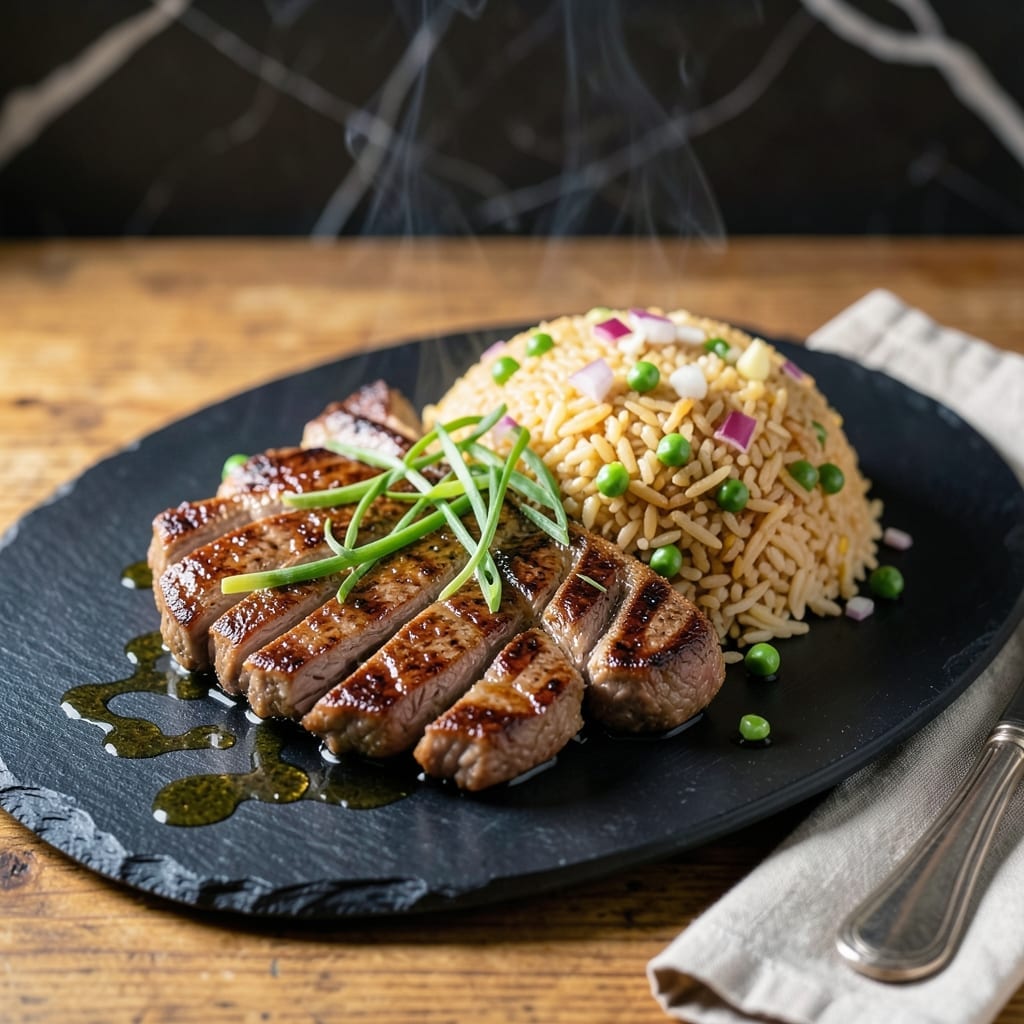
This recipe brings authentic teppanyaki flavors to your kitchen with tender, perfectly seared steak and savory fried rice. I’ve refined the technique to replicate the restaurant experience at home.
The key is high heat and precise timing. Cook the steak first, then use the same pan for the rice to capture every bit of flavor. Simple ingredients come together for a meal that’s impressive yet approachable.
You’ll achieve juicy steak with a caramelized crust and fluffy fried rice packed with vegetables and umami depth. The result is a complete dish that tastes just like your favorite hibachi spot.
Serve immediately for the best texture and flavor. This method ensures restaurant-quality results every time.
Ingredients for Hibachi Steak and Fried Rice
High-heat ingredients for restaurant-quality teppanyaki right in your kitchen.
| Ingredient | Amount | Notes |
|---|---|---|
| Ribeye Steak 🥩 | 1 ½ lb | Thinly sliced for quick cooking |
| White Rice 🍚 | 2 cups | Day-old, cooked and chilled |
| Soy Sauce 🫒 | ½ cup | Low-sodium preferred for balance |
| Garlic Cloves 🧄 | 4 cloves | Minced for maximum flavor |
| Fresh Ginger 🌿 | 1 tbsp | Finely grated, no fibers |
| Onion 🧅 | 1 whole | Diced into small pieces |
| Carrots 🥕 | 2 whole | Julienned or finely diced |
| Zucchini 🥒 | 1 whole | Diced into small cubes |
| Green Onions 🧅 | ½ cup | Sliced, whites and greens separated |
| Sesame Oil 🫒 | 2 tbsp | Toasted for depth of flavor |
| Vegetable Oil 🫒 | 3 tbsp | High smoke point for searing |
| Large Eggs 🥚 | 2 whole | Lightly beaten for rice |
| Salt 🧂 | 1 tsp | Diamond Crystal kosher preferred |
| Black Pepper 🌶️ | ½ tsp | Freshly ground for best aroma |
| Butter 🧈 | 2 tbsp | Unsalted, for finishing steak |
The steak is non-negotiable here. Ribeye is my go-to for that perfect marbling and juiciness—sirloin works in a pinch but won’t melt like butter. Grab it from Whole Foods or your local butcher if you want prime quality. Day-old rice is key for fried rice (fresh gets mushy), and I always make extra white rice the night before just for this. Jasmine or short-grain work best, but long-grain will do.
No ribeye? Flank steak or skirt steak are great swaps—just slice thinly against the grain. Fresh ginger is ideal, but ground ginger at half the amount gets you close. Short on veggies? Frozen peas or bell peppers work great. The soy sauce can be tamari for gluten-free, but I’d stick with Kikkoman for that classic hibachi flavor. Skip the pre-minced garlic in jars—fresh takes two minutes and tastes infinitely better.
Steak is best cooked and served immediately, but the fried rice holds up well. Leftovers keep 3-4 days in the fridge, reheat with a splash of water to refresh. The rice can be prepped a day ahead—actually improves the texture. Freeze the steak raw for up to 6 months if you’re meal prepping.
Why You’ll Love This Recipe
- One Pan Wonder: I love that the steak and rice cook in the same pan—minimal cleanup, maximum flavor.
- Umami Bomb: The soy sauce, garlic, and ginger combo hits that perfect savory note every time.
- Weeknight Hero: Between us, this is my go-to for busy evenings when I need dinner fast but still crave restaurant quality.
- Leftovers Win: The rice soaks up even more flavor overnight, so lunch the next day is just as good.
Step-by-Step Instructions for Hibachi Steak and Fried Rice
Here’s how to nail that sizzling restaurant experience right in your own kitchen.
Step 1: Prep the Steak and Vegetables
Slice the 1.5 lb Ribeye Steak into ¼-inch thick strips against the grain. This ensures tender bites and quick cooking. Season generously with 1 tsp Salt and 0.5 tsp Black Pepper, then set aside.
Dice the 1 whole Onion into small, even pieces. Julienne the 2 whole Carrots and dice the 1 whole Zucchini into small cubes. Separate the whites and greens of the 0.5 cup Green Onions and slice thinly. Mince the 4 cloves Garlic Cloves and finely grate the 1 tbsp Fresh Ginger. This prep ensures even cooking and maximum flavor in every bite.
Step 2: Cook the Steak to Perfection
Heat 1 tbsp Vegetable Oil in a large skillet or wok over high heat until shimmering. Working in batches to avoid crowding, add the seasoned ribeye strips. Sear for 1-2 minutes per side until browned but still slightly pink inside.
Transfer the cooked steak to a plate and immediately top with 2 tbsp Butter, allowing it to melt over the hot meat. Cover loosely with foil to keep warm. The residual heat will finish cooking the steak while you prepare the rice.
Step 3: Sauté the Vegetables and Aromatics
In the same skillet, add the remaining 2 tbsp Vegetable Oil and heat over medium-high heat. Add the diced onion, julienned carrots, and diced zucchini. Stir-fry for 3-4 minutes until the vegetables soften slightly but retain a crisp bite.
Push the vegetables to one side of the skillet. Add the minced garlic and grated ginger to the cleared space, cooking for 30 seconds until fragrant. Stir everything together, then add the white parts of the green onions and cook for another 30 seconds.
Step 4: Combine Rice, Eggs, and Sauce
Increase the heat to high and add the 2 cups White Rice, breaking up any clumps. Pour in the 0.5 cup Soy Sauce and 2 tbsp Sesame Oil, stirring well to coat the rice evenly. Cook for 2-3 minutes, allowing the rice to crisp slightly and absorb the flavors.
Push the rice to one side and pour the 2 whole Large Eggs into the cleared space. Scramble quickly until just set, then mix into the rice. Add the cooked steak back to the skillet, along with any accumulated juices. Toss everything together for 1 minute until heated through.
Step 5: Finish and Serve
Remove from heat and stir in the green onion tops. Taste and adjust seasoning if needed. The rice should be slightly crispy with a rich, savory flavor from the soy sauce and sesame oil.
Serve immediately, dividing the steak and fried rice evenly among plates. Garnish with extra green onions if desired. Each bite should deliver tender steak, flavorful rice, and a satisfying crunch from the vegetables.
Pro Tips For Making Hibachi Steak And Fried Rice
- Rest the Steak: Let your ribeye sit at room temperature for 20-30 minutes before cooking—I learned this the hard way after serving tough, cold-centered steaks to guests.
- Use Day-Old Rice: Fresh rice turns to mush in the wok; cook your white rice a day ahead and refrigerate it overnight for that perfect fried rice texture.
- High Heat Only: Crank your pan or grill to smoking hot before adding the steak, or you’ll end up with gray, sad meat instead of that beautiful hibachi crust.
- Grate the Ginger: Skip the powder and use freshly grated ginger—about 1 tablespoon—it makes a real difference in the sauce’s bright, zingy flavor that pairs with the soy.
Essential Equipment for Perfect Results
High-Heat Skillet
A heavy cast iron skillet or carbon steel wok is essential for achieving those restaurant-quality sears. I use my 12-inch Lodge skillet—it retains heat beautifully and develops a natural non-stick surface over time. Avoid nonstick pans as they can’t reach the necessary high heat. 🔥
Sharp Knives
Thinly slicing the steak requires a razor-sharp chef’s knife. I swear by my 8-inch Wüsthof—it glides through the ribeye with minimal effort. Keep a honing steel nearby to maintain the edge during prep. Dull knives crush rather than cut, which ruins the texture of your steak.
Rice Cooker
For consistently perfect rice, a rice cooker takes the guesswork out of the equation. My Zojirushi 3-cup model makes fluffy white rice every time. Cook the rice the day before and refrigerate it—this dries it out slightly, which is crucial for getting that ideal fried rice texture without mush.
Tongs and Spatula
Use long-handled tongs for flipping the steak strips—they give you precision without crowding the pan. A metal spatula is perfect for stir-frying the rice and scraping up those flavorful browned bits. I keep both within arm’s reach during the entire cooking process.
Meat Thermometer
While experience helps, a instant-read thermometer ensures your steak hits the perfect medium-rare (130-135°F). I use the ThermoWorks ThermoPop—it gives accurate readings in 2-3 seconds. This is especially helpful if you’re cooking larger batches or trying new cuts.
Mixing Bowls
A set of nested mixing bowls keeps your prep organized. I use stainless steel bowls from Winco—they’re lightweight, durable, and easy to clean. Having all your vegetables prepped and ready to go makes the stir-fry process smooth and stress-free. 💛
Nutrition Facts
Frequently Asked Questions
What’s the best cut of steak to use?
Ribeye is ideal for its marbling and tenderness. Sirloin or flank steak work too but slice thinly against the grain. Avoid lean cuts like filet mignon as they dry out quickly.
Can I use fresh rice instead of day-old?
Fresh rice will turn mushy in stir-fry. Day-old rice is drier and fries up perfectly. If in a hurry, spread freshly cooked rice on a tray to cool and dry for 30 minutes before using.
How do I prevent the steak from getting tough?
Don’t overcook! Sear for just 1-2 minutes per side on high heat. Let it rest 5 minutes before slicing to retain juices. Slicing against the grain also ensures tenderness.

- Ground Beef Rice and Beans Recipe: Slow-Simmered Savory Harmony - October 17, 2026
- Guyanese Fried Rice Recipe: Caribbean Spice With Wok-Charred Aromatics - October 17, 2026
- Hakka Thunder Tea Rice Recipe: Wok-Charred Herbal Infusion - October 17, 2026