
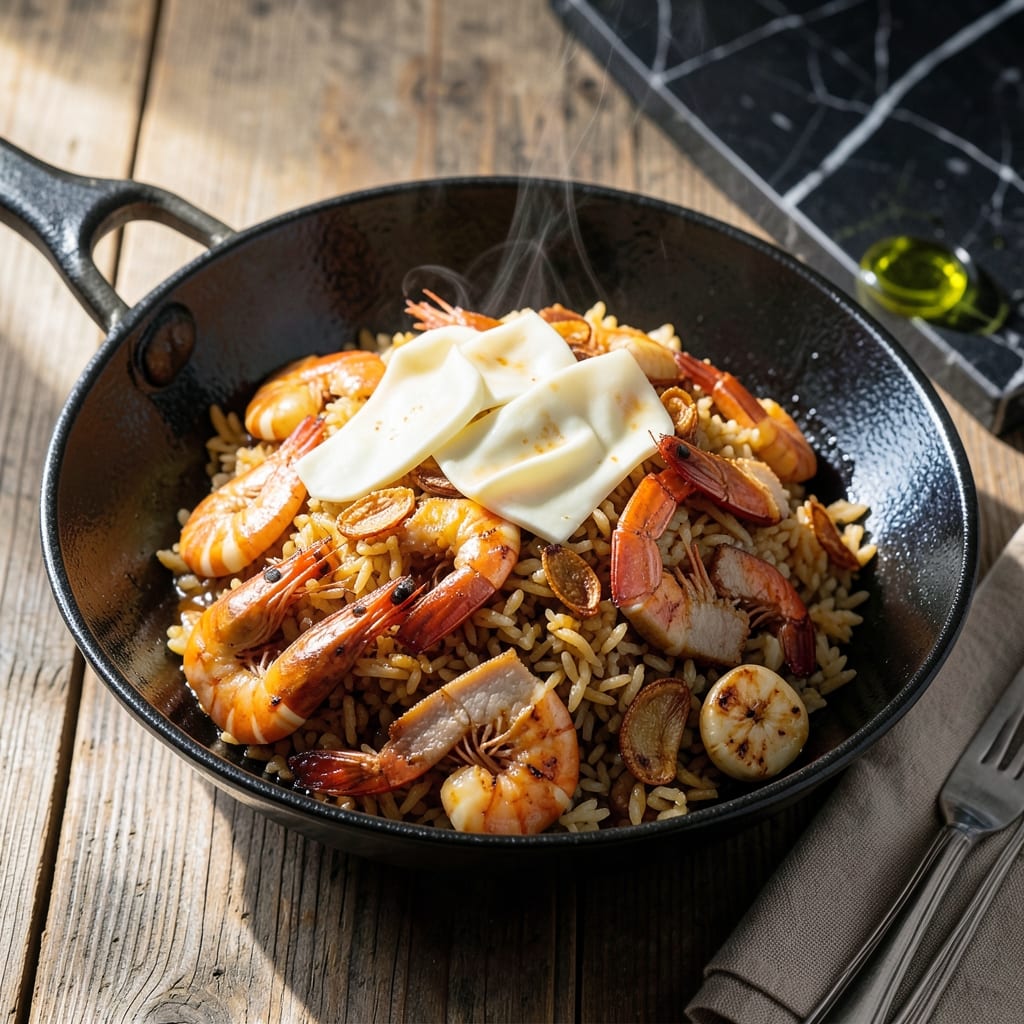
This Hokkien fried rice delivers the authentic wok-hei flavor you’d find in a Singapore hawker stall. The dish combines smoky charred aromatics with tender prawns, succulent pork, and silky eggs for a restaurant-quality experience at home.
Each bite offers layers of umami from soy sauce and shrimp paste, balanced by the natural sweetness of the seafood and meat. The key is high heat and quick cooking to achieve that signature slightly crispy texture.
Ingredients for Hokkien Fried Rice
Day-old rice, fresh prawns, and charred aromatics make this dish sing with wok-hei.
| Ingredient | Amount | Notes |
|---|---|---|
| Jasmine Rice 🍚 | 4 cups | Day-old, cooked and chilled |
| Prawns 🦐 | ¾ lb | Peeled, deveined, tails on |
| Pork Belly 🥩 | ½ lb | Thinly sliced, skin removed |
| Large Eggs 🥚 | 3 whole | Lightly beaten for scrambling |
| Garlic Cloves 🧄 | 6 cloves | Minced finely for aromatics |
| Shallots 🧅 | 4 whole | Thinly sliced for charring |
| Shrimp Paste 🌶️ | 1 tbsp | Belacan or Thai variety |
| Dark Soy Sauce 🫙 | 2 tbsp | For deep color and umami |
| Light Soy Sauce 🫙 | 2 tbsp | For seasoning balance |
| Sweet Soy Sauce 🫙 | 1 tbsp | Kecap manis preferred |
| Shaoxing Wine 🍶 | 2 tbsp | Or dry sherry as substitute |
| White Pepper 🧂 | ½ tsp | Freshly ground for aroma |
| Lard 💧 | 2 tbsp | Or vegetable oil for frying |
| Green Onions 🧅 | 4 whole | Thinly sliced for garnish |
| Bean Sprouts 🌱 | 1 cup | Optional, for fresh crunch |
The rice needs to be cold and dry—day-old jasmine rice is perfect. Asian markets carry the best shrimp paste (look for Belacan in the refrigerated section). For the pork belly, ask your butcher to slice it thin with the skin removed. The prawns should be fresh (peeled and deveined but leave the tails on for presentation). H-Mart or 99 Ranch are great for authentic ingredients.
No shrimp paste? Fish sauce at half the amount works in a pinch. For a lighter version, swap lard with vegetable oil. Shaoxing wine is traditional, but dry sherry is an acceptable substitute. If you can’t find kecap manis, mix 1 tbsp soy sauce with 1 tsp brown sugar. The bean sprouts are optional but add a nice textural contrast (frozen works in a pinch).
This dish is best eaten fresh, but leftovers keep for 2 days in the fridge. Reheat in a skillet to revive the texture—microwaving makes it soggy. The shrimp paste and soy sauces last 6-12 months in a cool, dark place. Always store rice in an airtight container.
Why You’ll Love This Recipe
- One Pan Magic: I toss everything—the prawns, pork belly, and jasmine rice—into one wok and let the flavors mingle.
- Umami Bomb: That first bite with garlic, pork belly, and the wok hei? Ridiculously good.
- Weeknight Hero: Honestly, it’s my Tuesday dinner savior when I need something fast but satisfying.
- Leftovers Win: Between us, it tastes even better the next day—if there’s any left.
Step-by-Step Instructions for Hokkien Fried Rice
Here’s the method I swear by for that authentic wok hei flavor.
Step 1: Char the Aromatics and Protein
Heat the 2 tbsp lard in a wok over high heat until it shimmers. Add the 4 whole shallots and stir-fry for 2-3 minutes until they turn deep golden brown and slightly crispy at the edges. This charring is crucial for that signature smoky depth.
Push the shallots to one side and add the 0.5 lb pork belly. Sear for 3-4 minutes until the edges crisp and the fat renders. Then add the 0.75 lb prawns and the 6 cloves garlic cloves, stirring for 1-2 minutes until the prawns turn opaque and pink. Remove everything and set aside.
Step 2: Scramble the Eggs and Build the Base
In the same wok, add a bit more lard if needed. Pour in the 3 whole large eggs and scramble quickly over medium-high heat until just set but still slightly runny—about 1 minute. Break the curds into small pieces as they form.
Add the 1 tbsp shrimp paste to the eggs and stir to distribute evenly. Then add the chilled 4 cups jasmine rice, breaking up any clumps with your spatula. The rice should sizzle violently when it hits the pan—that’s how you know your wok is hot enough.
Step 3: Season and Incorporate the Sauces
Drizzle the 2 tbsp dark soy sauce, 2 tbsp light soy sauce, 1 tbsp sweet soy sauce, and 2 tbsp Shaoxing wine around the edges of the wok. Stir everything together, pressing the rice against the hot surface to create those coveted caramelized bits.
Sprinkle in the 0.5 tsp white pepper and return the cooked proteins and shallots to the wok. Toss everything vigorously for 2-3 minutes until the rice is uniformly coated and heated through. The grains should look glossy and slightly charred in spots.
Step 4: Finish with Fresh Elements
Remove from heat and fold in the 1 cup bean sprouts and 4 whole green onions. The residual heat will soften the sprouts just enough while keeping their crunch. Taste and adjust seasoning if needed—though with these sauces, it should be perfectly balanced.
Serve immediately while the wok hei aroma is at its peak. Each bite should deliver a complex interplay of smoky, sweet, salty, and umami flavors with that characteristic slightly crispy texture that defines great fried rice.
Pro Tips For Making Hokkien Fried Rice
- Use Day-Old Rice: Fresh rice turns mushy—spread leftover jasmine rice on a tray and refrigerate overnight. I learned this the hard way after two batches of soggy fried rice.
- Velvet Your Pork: Slice pork belly thin, marinate with 1 tsp cornstarch and 1 tbsp soy for 10 minutes. After burning three batches, I finally figured out this keeps it tender in the wok.
- Prawns Last: Add prawns only in the final 2 minutes of cooking or they’ll turn rubbery. My grandmother swore by this, and she was right.
- Garlic First, Fast: Smash garlic cloves lightly, fry in hot oil for 15 seconds max before adding anything else. Sounds weird, but it works—any longer and it turns bitter.
Dietary Considerations for hokkien fried rice
Gluten-Free Option
This dish can easily be made gluten-free by swapping the soy sauces. Use tamari instead of light and dark soy sauce, and ensure your sweet soy sauce is gluten-free certified. Check labels carefully, as some brands contain wheat. 💡
Seafood Allergy
For those with shellfish allergies, simply omit the prawns and replace shrimp paste with 1 tbsp fish sauce. Swap prawns for 0.75 lb chicken breast, sliced thin. The dish retains its depth without seafood.
Vegetarian Adaptation
Replace pork belly and prawns with 1 cup cubed firm tofu and 1 cup mixed vegetables. Use vegetable oil instead of lard. The umami comes from soy sauces and mushroom-based shrimp paste substitutes.
Lower Sodium
Cut sodium by using low-sodium soy sauces and reducing amounts by half. Boost flavor with extra garlic, ginger, or fresh herbs. The dish stays flavorful while being heart-healthier.
Egg-Free Version
Skip the eggs entirely or replace with ½ cup crumbled firm tofu for protein. The texture changes slightly but the dish remains delicious. I’ve made this for egg-allergic friends with great success.
Pork-Free Alternative
Swap pork belly for 0.5 lb chicken thigh or extra prawns. Chicken thigh stays juicy when stir-fried. For a halal version, use beef strips marinated in soy sauce. 🌟
Nutrition Facts
Frequently Asked Questions
Why use day-old rice for this dish?
Day-old rice is drier, which prevents it from turning mushy when stir-fried. Fresh rice contains too much moisture and will steam instead of frying, losing that desired slightly crispy texture. Chill it overnight for best results.
Can I substitute regular soy sauce for dark soy sauce?
Not recommended. Dark soy sauce adds deep color and richness that regular soy sauce can’t. If you must, mix 1 tbsp regular soy sauce with 1 tsp molasses to mimic the depth and color.
How do I get that smoky wok hei flavor at home?
Use a well-seasoned wok or cast-iron skillet and cook over high heat. Allow ingredients to char slightly, and don’t stir constantly—let them sit for 10-15 seconds between stirs. This builds the signature smoky aroma.
What’s the best way to store leftovers?
Store in an airtight container in the fridge for up to 2 days. Reheat in a skillet over medium-high heat to restore texture. Avoid microwaving, as it makes the rice soggy.

- Jimmy Dean Sausage and Rice Recipe: Hearty One-Pot Savory Delight - October 19, 2026
- Indian Jasmine Rice Recipe: Fragrant Basmati-Free Elegance - October 19, 2026
- KFC Rizo Rice Recipe: Copycat Side Dish With Savory Spice Blend - October 19, 2026