
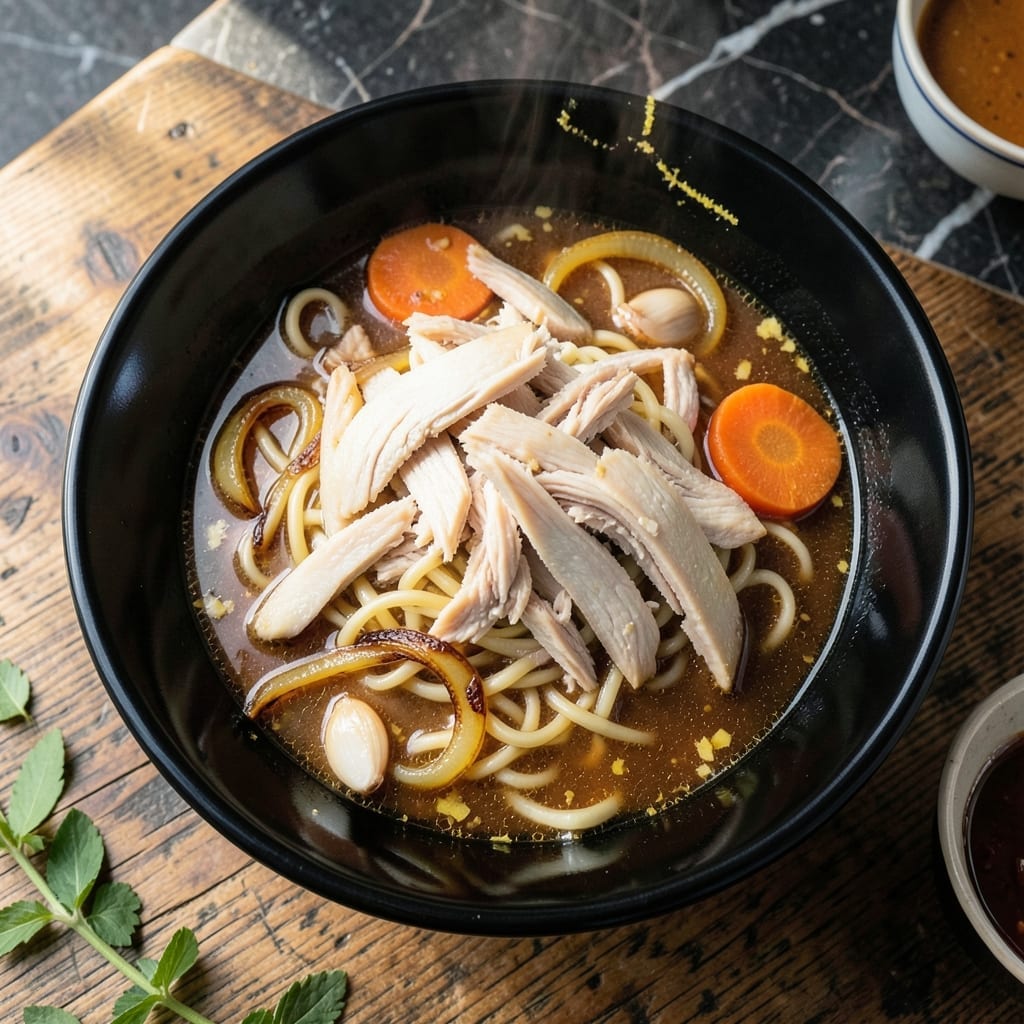
This from-scratch ramen delivers restaurant-quality results with a deeply flavorful broth that simmers for hours to extract maximum umami richness. I developed this method to recreate the complex layers of traditional ramen without shortcuts or artificial enhancers.
The foundation is a slow-simmered chicken broth fortified with aromatic vegetables, soy sauce, and miso for authentic depth. The chicken becomes fall-apart tender while the broth develops its signature rich, savory character that defines great ramen.
Fresh noodles, soft-boiled eggs, and vibrant toppings transform this into a complete, satisfying meal. The contrast between the silky broth, chewy noodles, and crisp vegetables creates the perfect balance of textures in every bite.
This homemade version proves you can achieve professional results in your own kitchen with patience and the right techniques.
Ingredients for Homemade Chicken Ramen
Rich broth and fresh toppings come together for a restaurant-quality bowl at home.
| Ingredient | Amount | Notes |
|---|---|---|
| Chicken Thighs 🍗 | 1 ½ lb | Boneless, skin-on for flavor |
| Chicken Wings 🍗 | 1 lb | For extra gelatinous broth |
| Yellow Onion 🧅 | 1 whole | Quartered, skin on for color |
| Garlic Cloves 🧄 | 6 cloves | Smashed, unpeeled |
| Fresh Ginger 🌿 | 3 oz | Sliced, unpeeled |
| Carrots 🥕 | 2 whole | Cut into large chunks |
| Celery Stalks 🥬 | 2 whole | Cut into large chunks |
| Dried Shiitake Mushrooms 🍄 | ½ oz | For umami depth |
| Soy Sauce 🫒 | ½ cup | Low-sodium preferred |
| White Miso Paste 🥣 | ¼ cup | Fermented, for richness |
| Ramen Noodles 🍜 | 4 packages | Fresh or dried, discard seasoning |
| Large Eggs 🥚 | 4 whole | For soft-boiled eggs |
| Green Onions 🧅 | 4 whole | Thinly sliced for garnish |
| Bok Choy 🥬 | 2 whole | Baby or Shanghai variety |
| Sesame Oil 🫒 | 1 tbsp | Toasted for aroma |
The chicken is key here. Thighs and wings create that collagen-rich, silky broth you expect from ramen shops. I get mine from Whole Foods—they’ve got good quality, bone-in options. The dried shiitakes (found at Asian markets or Trader Joe’s) add that deep umami without MSG. Don’t skip the ginger and garlic, skin-on for both—it’s worth the extra minute for the flavor they infuse.
Need to swap the miso? Red miso works but cuts the simmer time—it’s stronger. No fresh noodles? Dried ramen or udon are fine, just cook separately. The soy sauce can be tamari for gluten-free, but taste as you go—sodium levels vary. Short on toppings? Shredded cabbage or spinach adds crunch and color in a pinch.
Broth keeps 5 days in the fridge, freezes beautifully for 3 months. Cook noodles fresh each time—they don’t reheat well. Soft-boiled eggs can be prepped ahead and stored peeled in water (changes texture slightly, but still delicious).
Why You’ll Love This Recipe
- One Pot Wonder: I toss the thighs, wings, and aromatics in, let it simmer, and the broth builds itself—no babysitting required.
- Deep Umami Bomb: The ginger and garlic infuse every sip with that rich, savory depth you’d expect from a ramen shop.
- Meal Prep MVP: I make a big batch Sunday, and it reheats like a dream all week. Honestly, it tastes even better the next day.
- Budget Stretcher: Chicken thighs and wings keep it affordable, and one pot feeds my family for two nights straight.
Step-by-Step Instructions for Homemade Chicken Ramen
Here’s my foolproof method for building layers of rich, authentic flavor from scratch.
Step 1: Build the Umami-Rich Broth Base
In a large stockpot, combine the 1.5 lb chicken thighs, 1 lb chicken wings, 1 whole yellow onion, 6 cloves garlic cloves, 3 oz fresh ginger, 2 whole carrots, and 2 whole celery stalks. Cover with 8 cups cold water—this slow start extracts maximum flavor.
Bring to a gentle simmer over medium-high heat, then reduce to low heat. Skim any foam that rises to the surface during the first 10 minutes. Add the 0.5 oz dried shiitake mushrooms—these will infuse the broth with deep, earthy umami as they rehydrate.
Partially cover and simmer for 2 hours, maintaining just a few bubbles breaking the surface. The broth should develop a golden amber color and rich aroma. Strain through a fine-mesh sieve, discarding solids but preserving all liquid—this is your flavor foundation.
Step 2: Create the Flavor-Enhanced Broth
Return the strained broth to the pot and bring to a simmer over medium heat. Whisk in the 0.25 cup white miso paste until fully dissolved—this fermented paste adds complexity and body. Be patient; miso can be stubborn to incorporate completely.
Stir in the 0.5 cup soy sauce and 1 tbsp sesame oil. The soy sauce should deepen the color to a rich mahogany. Simmer for 10 minutes to allow the flavors to meld. Taste and adjust seasoning if needed, but remember the ramen noodles will absorb some saltiness.
Step 3: Prepare the Toppings and Noodles
While the broth simmers, soft-boil the 4 whole large eggs for 6 minutes for perfectly jammy yolks. Transfer to an ice bath to stop cooking, then peel and set aside. This timing gives you that coveted runny center that enriches each spoonful.
Prepare the 4 packages ramen noodles according to package directions, but reduce cooking time by 30 seconds—they’ll finish in the hot broth. Drain and rinse briefly under cold water to stop cooking and remove excess starch. Divide the noodles among four serving bowls.
Step 4: Blanch the Vegetables and Assemble
Separate the 2 whole bok choy into individual leaves and blanch in the hot broth for 30 seconds until just wilted but still vibrant green. Remove with a slotted spoon and arrange over the noodles in each bowl. Thinly slice the 4 whole green onions on a diagonal for an elegant presentation.
Ladle the hot, flavorful broth over the noodles and bok choy in each bowl. The broth should come nearly to the rim—this dish is generously portioned. Halve the soft-boiled eggs and place two halves in each bowl, yolk-side up. The residual heat will warm them perfectly.
Garnish each serving with sliced green onions. The eggs should glisten, the noodles should be just tender, and the broth should have a rich, aromatic steam rising from the bowl. Serve immediately while piping hot.
Pro Tips For Making Homemade Chicken Ramen
- Brown the Chicken Well: Sear the thighs and wings on medium-high until deep golden—about 4-5 minutes per side. I learned this the hard way: under-browned chicken makes a weak broth.
- Char the Aromatics: Let the onion, garlic, and ginger hit the pan after the chicken and get slightly blackened. Sounds weird, but it works: that char adds serious depth to the broth.
- Skip the Boiling: Keep your stock at a gentle simmer, never a rolling boil, or it’ll turn cloudy and greasy. After ruining two batches, I finally figured out patience pays off here.
- Use Wing Tips: Toss the wing tips into the stockpot too—they’re packed with gelatin and make the broth richer. I was skeptical until I tried it, but now I never waste them.
Dietary Considerations for This homemade chicken ramen
Gluten-Free Option
For a gluten-free version, swap the soy sauce for tamari—it delivers the same rich umami without wheat. I use San-J brand because it’s widely available and consistently good. Also, use 100% buckwheat noodles instead of regular ramen.
Dairy-Free Adaptation
This recipe is naturally dairy-free, but double-check your miso paste—some brands add milk derivatives. I recommend Miso Master or South River for guaranteed dairy-free options. The broth’s richness comes from chicken and vegetables, not dairy.
Lower Sodium Version
Cut the soy sauce in half and use low-sodium chicken broth as your base instead of water. Boost umami with extra dried shiitake mushrooms—1 oz instead of 0.5 oz. This keeps the depth while reducing sodium by about 40%. 💡
Vegetarian Alternative
Replace chicken with 1 lb cremini mushrooms and 1 block firm tofu. Use vegetable broth and add 1 tbsp nutritional yeast for a meaty flavor. The mushrooms will give the broth body, while tofu adds protein.
Egg-Free Option
Skip the soft-boiled eggs and add extra toppings like marinated tofu, avocado slices, or extra bok choy. For protein, edamame works beautifully—just blanch 1 cup with the vegetables. The dish stays hearty and satisfying.
Nut Allergy Note
Ensure your sesame oil is processed in a nut-free facility if allergies are severe. Kadoya brand is a safe choice. Also, verify that your noodles don’t contain peanut or almond flour, which some gluten-free varieties use. 🌱
Nutrition Facts
Frequently Asked Questions
Can I use store-bought broth instead?
Yes, but choose low-sodium chicken broth for best results. Simmer it with the aromatics and soy sauce for 30 minutes to deepen the flavor. Homemade is richer, but quality broth works in a pinch.
How do I get the perfect soft-boiled egg?
Boil eggs in simmering water for exactly 6 minutes, then plunge into ice water. This yields a firm white and creamy yolk. For jammy centers, don’t skip the ice bath—it stops the cooking instantly.
Can I make this ahead of time?
The broth can be made 2 days ahead and stored in the fridge. Reheat gently before assembling. Cook noodles fresh each time—they get mushy when reheated. Soft-boiled eggs can be prepped 1 day ahead and stored peeled in water.
Why is my broth not rich enough?
Simmer longer! The 2-hour cook time extracts collagen from chicken, creating a silky texture. Adding more soy sauce or miso won’t fix a weak base—patience is key. For extra depth, include more dried shiitakes.

- Jollof Rice Sauce Recipe: West African Tomato and Spice Infusion - September 25, 2026
- Japanese Rice Soup Recipe: Umami-Rich Comfort in a Bowl - September 25, 2026
- Homemade Cream Of Rice Recipe: Silk-Smooth Breakfast in Minutes - September 25, 2026