
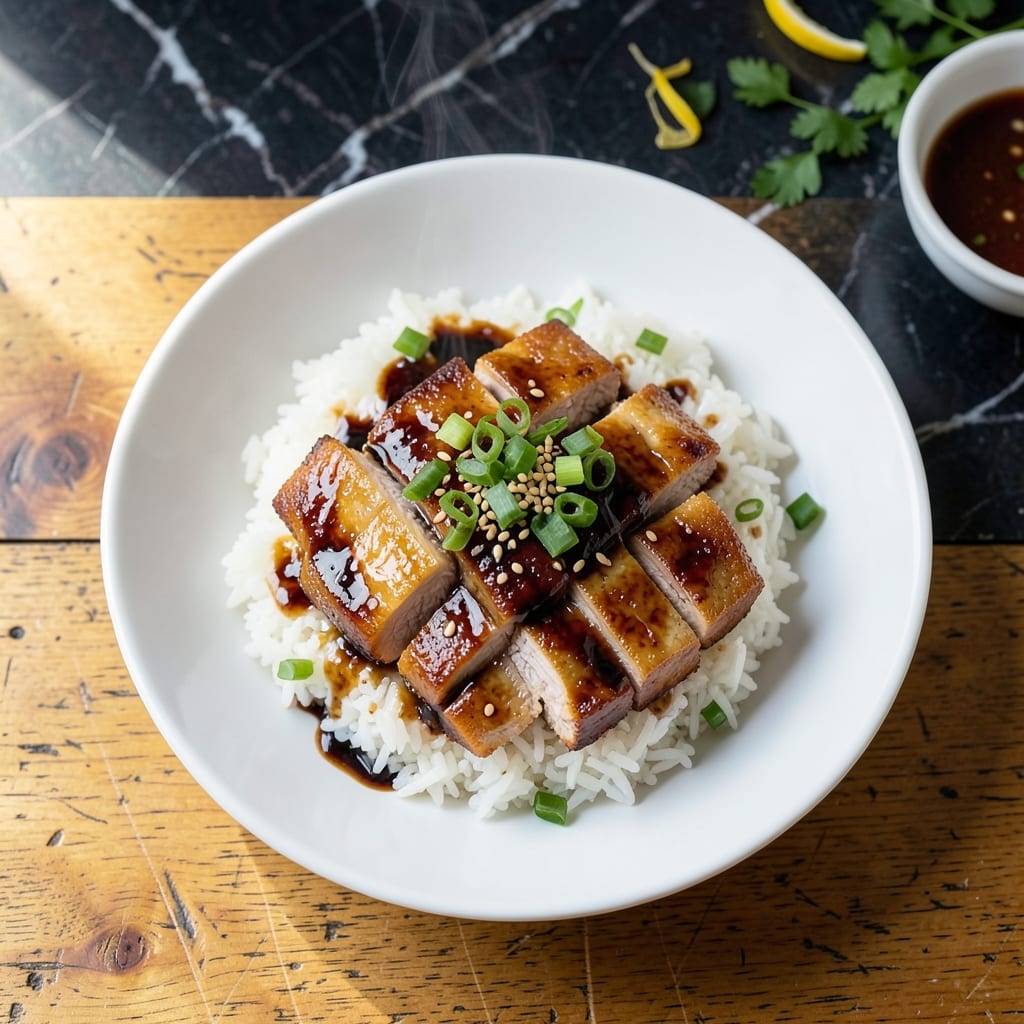
This recipe brings authentic Hong Kong flavors to your kitchen with perfectly seared pork chops over fragrant rice. The marinade is the key to achieving that signature savory depth.
I’ve refined this method to ensure the pork stays juicy while developing a caramelized crust. The rice is cooked with just the right amount of aromatics for a subtle, complementary base.
Each bite delivers tender pork, slightly crispy edges, and fluffy grains that soak up every drop of sauce. It’s a balanced dish that feels like a restaurant meal at home.
Serve with a side of pickled vegetables or a simple cucumber salad to complete the experience. Here’s how to make it.
Ingredients for Hong Kong Pork Chop Rice
Authentic Cantonese flavors start with these carefully selected ingredients for perfect pork and rice.
| Ingredient | Amount | Notes |
|---|---|---|
| Boneless Pork Chops 🥩 | 1 ½ lb | Cut 1-inch thick, pounded even |
| Jasmin Rice 🍚 | 2 cups | Rinsed until water runs clear |
| Light Soy Sauce 🫒 | 3 tbsp | Low-sodium preferred for balance |
| Dark Soy Sauce 🫒 | 1 tbsp | For color and depth |
| Oyster Sauce 🫒 | 2 tbsp | Vegetarian oyster sauce if needed |
| Shaoxing Wine 🍶 | 2 tbsp | Dry sherry works as substitute |
| Granulated Sugar 🍚 | 1 tbsp | Balances savory marinade flavors |
| Garlic Cloves 🧄 | 4 cloves | Minced for marinade and rice |
| Fresh Ginger 🌿 | 1 tbsp | Peeled and finely grated |
| Green Onions 🧅 | 4 whole | Sliced thin for garnish |
| Neutral Oil 🫒 | 3 tbsp | High smoke point for searing |
| Sesame Oil 🫒 | 1 tsp | Toasted, for finishing aroma |
| White Pepper 🌶️ | ½ tsp | Freshly ground for authentic flavor |
| Chicken Stock 🥣 | 1 ½ cups | Low-sodium for controlled seasoning |
| Cornstarch 🌾 | 1 tbsp | For velveting pork texture |
The pork chops need marbling for juiciness—bone-in or boneless both work, but boneless stays easier to eat. Look for 1-inch thick cuts at Asian markets or the butcher counter. For the rice, jasmine is non-negotiable; its floral aroma is signature. I use Kikkoman for both soy sauces, available at any major grocery store. The oyster sauce should be Lee Kum Kee or similar quality.
No Shaoxing wine? Dry sherry is the closest substitute (skip cooking wine—it’s salted). For vegetarian versions, mushroom stir-fry sauce replaces oyster sauce beautifully. Out of jasmine rice? Long-grain white works in a pinch but lacks fragrance. The cornstarch can be arrowroot powder at the same ratio. Always use fresh ginger and garlic—bottled versions taste harsh and one-dimensional.
Marinated pork keeps in the fridge for 24 hours before cooking. Cooked rice holds well at room temperature for 1 hour if wrapped. Leftovers store in airtight containers for 3-4 days—reheat pork gently to avoid drying. The sesame oil should be added fresh, never cooked, to preserve its aroma.
Why You’ll Love This Recipe
- 20-Minute Meal: I can get this on the table faster than takeout—just sear the pork chops while the rice cooks.
- Umami Bomb: That combo of light soy, dark soy, and oyster sauce hits every flavor note, sweet and salty all at once.
- Feeds the Crew: One batch serves my whole family, and the leftovers taste even better the next day for lunch.
- Pantry Hero: All the sauces are shelf-stable, so I always have what I need for a last-minute dinner.
Step-by-Step Instructions for Hong Kong Pork Chop Rice
Master the technique for tender pork and fragrant rice with this professional approach.
Step 1: Velvet and Marinate the Pork Chops
In a bowl, combine the 1.5 lb boneless pork chops with 3 tbsp light soy sauce, 1 tbsp dark soy sauce, 2 tbsp oyster sauce, 2 tbsp Shaoxing wine, 1 tbsp granulated sugar, 1 tbsp cornstarch, and 0.5 tsp white pepper.
Mix until the pork is evenly coated and the cornstarch creates a slightly tacky texture—this velveting step ensures juicy, tender meat. Let marinate for 15-20 minutes while you prepare the rice. The pork should appear glossy and slightly sticky when ready.
Step 2: Cook the Jasmine Rice
Rinse the 2 cups Jasmin rice under cold water until the water runs clear to remove excess starch. In a pot, combine the drained rice with 1.5 cups chicken stock, then add 2 cloves minced garlic cloves, ½ tbsp fresh ginger, and 1 tbsp neutral oil.
Bring to a boil, then reduce heat to low, cover, and simmer for 12-15 minutes until the liquid is absorbed and the rice is fluffy. Remove from heat and let it sit covered for 5 minutes to steam and finish cooking.
Step 3: Sear the Pork Chops to Perfection
Heat 2 tbsp neutral oil in a wok or large skillet over medium-high heat. Add the marinated pork chops in a single layer, ensuring they don’t overlap. Sear for 3-4 minutes per side until the pork is cooked through and the edges develop a deep, caramelized crust.
The pork should reach an internal temperature of 145°F and exhibit a rich, glossy brown color from the soy-based marinade. Remove the pork from the pan and set aside to rest.
Step 4: Finish and Assemble the Dish
In the same pan, add the remaining 2 cloves minced garlic cloves and ½ tbsp fresh ginger. Sauté for 30 seconds until fragrant. Slice the 4 whole green onions thinly, reserving some for garnish, and add most to the pan for a quick toss.
To serve, fluff the rice and divide it among plates. Top each portion with a pork chop, drizzle with 1 tsp sesame oil, and garnish with the reserved green onions. The rice should be aromatic and slightly sticky, perfectly complementing the savory pork.
Pro Tips For Making Hong Kong Pork Chop Rice
- Pound the Chops: Use the flat side of a knife or a meat mallet to tenderize the pork chops to about 1/2 inch thickness—this guarantees even cooking and a juicier bite, especially with boneless cuts.
- Marinate 30 Minutes: I learned this the hard way—letting the pork sit in the soy-oyster sauce mix for at least 30 minutes (even overnight) makes the flavor sink in deep, not just sit on the surface.
- Skip Overcrowding: Fry the chops in batches if needed—crowding the pan steams them instead of searing, and you’ll lose that crispy edge that defines this dish.
- Use Day-Old Rice: Sounds weird, but it works: fresh rice turns mushy under the saucy pork, while leftover jasmine holds its shape and soaks up the dark soy drizzle without falling apart.
Make-Ahead Tips for Leftovers
Marinade Prep
Mix the marinade ingredients the night before and store in the fridge. This gives the flavors maximum time to penetrate the pork. I use a ziplock bag for easy mixing and cleanup. 💡
Pork Storage
After marinating, the pork can stay in the fridge for up to 24 hours. For longer storage, freeze the marinated pork for up to 3 months—thaw overnight in the fridge before cooking.
Rice Preparation
Cook the rice up to 1 hour ahead and keep it warm in a rice cooker or covered pot. If making further in advance, spread the cooked rice on a tray to cool quickly, then refrigerate.
Reheating Pork
To reheat cooked pork, place it in a skillet with 2 tbsp water or chicken stock over medium-low heat for 3-4 minutes, covered. This prevents drying while restoring tenderness. 🔥
Full Meal Assembly
Assemble the dish just before serving to maintain texture. If prepping all components ahead, store pork and rice separately, then combine when reheating. The sesame oil should always be added fresh.
Leftovers Storage
Store leftovers in airtight containers in the fridge for up to 3-4 days. The flavors will deepen overnight, making leftovers just as delicious. Reheat gently to preserve the pork’s juiciness.
Nutrition Facts
Frequently Asked Questions
What can I use instead of Shaoxing wine?
Dry sherry is the best substitute for Shaoxing wine. Use the same 2 tbsp measurement. Avoid cooking wine as it contains added salt.
Can I use bone-in pork chops?
Yes, bone-in chops work well. They may need an extra 1-2 minutes per side to reach 145°F. Bones add flavor but make eating slightly messier.
Why is my pork chop tough?
Overcooking is the main cause. Pork only needs to reach 145°F. Also, don’t skip the cornstarch velveting step—it keeps the meat tender.
Can I make this with brown rice?
Yes, but adjust the cooking time. Brown rice needs about 40-45 minutes and more liquid. Jasmine is traditional for its fragrance though.

- Jollof Rice Sauce Recipe: West African Tomato and Spice Infusion - September 25, 2026
- Japanese Rice Soup Recipe: Umami-Rich Comfort in a Bowl - September 25, 2026
- Homemade Cream Of Rice Recipe: Silk-Smooth Breakfast in Minutes - September 25, 2026