
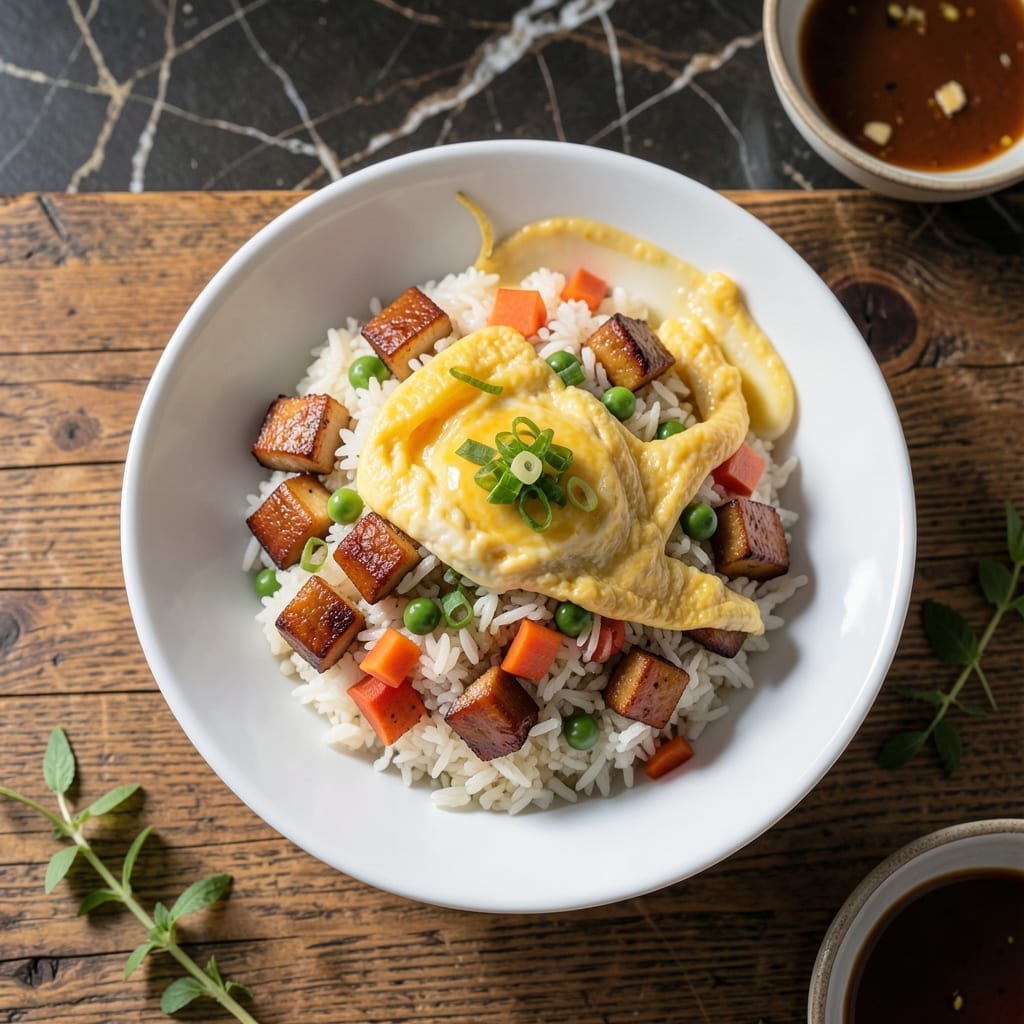
This dish brings the vibrant energy of Hong Kong street food to your kitchen. I’ve tested it multiple times to capture that authentic wok-tossed flavor and texture.
The secret lies in using day-old rice and high heat to achieve that signature smoky aroma. Simple ingredients come together through precise technique to create a classic that never disappoints.
Each bite delivers tender rice, crisp vegetables, and just the right amount of egg. The result is a balanced, flavorful dish that stays true to its street food roots.
Ready in minutes with basic pantry staples. This version stays faithful to tradition while working in home kitchens.
Ingredients for Hongkong Fried Rice
Day-old rice, crisp veggies, and char siu bring this wok classic to life at home.
| Ingredient | Amount | Notes |
|---|---|---|
| Day-Old Cooked White Rice 🍚 | 4 cups | Cold, preferably overnight |
| Large Eggs 🥚 | 3 whole | Lightly beaten |
| Green Onions 🧅 | 4 whole | Thinly sliced, whites and greens separated |
| Carrot 🥕 | 1 whole | Small dice |
| Frozen Peas 🌱 | ¾ cup | Thawed under cold water |
| Char Siu or Chinese BBQ Pork 🍖 | ½ cup | Diced, optional for authenticity |
| Soy Sauce 🫒 | 2 tbsp | Light or all-purpose |
| Dark Soy Sauce 🫒 | 1 tsp | For color depth |
| Oyster Sauce 🫒 | 1 tbsp | Vegan oyster sauce if needed |
| Sesame Oil 🫒 | 1 tsp | Toasted, for finishing |
| Vegetable Oil 🫒 | 3 tbsp | High smoke point |
| Garlic Cloves 🧄 | 2 cloves | Minced finely |
| Ground White Pepper 🌶️ | ¼ tsp | Classic HK flavor |
| Salt 🧂 | ½ tsp | To taste |
| Granulated Sugar 🧈 | ¼ tsp | Balances savory notes |
The rice is non-negotiable—day-old and cold prevents mushiness in the wok. Jasmine or long-grain white works best. For the char siu, check the Asian section at Whole Foods or any well-stocked market. If you can’t find it, lefant brand on Amazon is reliable. The green onions add freshness, so don’t skip them (the greens go on top at the end).
No char siu? Diced ham or shrimp works in a pinch. For a vegetarian version, firm tofu cubed and pan-fried first. Dark soy sauce adds that signature depth—Lee Kum Kee or Pearl River Bridge are solid brands. The oyster sauce can be swapped with hoisin or vegetarian stir-fry sauce. Frozen peas are fine, but fresh would be even better if available.
Store leftovers in an airtight container in the fridge for up to 3 days. Reheat in a skillet to keep the rice from getting soggy. This dish doesn’t freeze well—the texture suffers. Use within a day or two for the best results.
Why You’ll Love This Recipe
- One Pan Wonder: I toss everything in a single wok and it’s done in 15 minutes flat.
- Crave-Worthy Bites: The eggs get fluffy, the peas pop, and the rice soaks up all that garlicky soy goodness.
- Weeknight Hero: Honestly, it’s my Tuesday lifesaver when I need dinner fast and the fridge is nearly bare.
- Budget Stretcher: I use leftover rice, a couple eggs, and whatever veggies are lingering—feeds four for pennies.
Step-by-Step Instructions for Hong Kong Fried Rice
Master the wok technique that gives this dish its signature texture and depth of flavor.
Step 1: Prepare and Scramble the Eggs
Lightly beat the 3 whole Large Eggs in a small bowl. Heat 1 tablespoon of the Vegetable Oil in a wok or large skillet over high heat until shimmering. Pour in the eggs and let them set for 10 seconds before stirring.
Scramble the eggs until just set but still slightly runny. Remove them from the wok and set aside. This ensures they remain soft and silky when incorporated later, rather than turning rubbery from overcooking.
Step 2: Sauté Aromatics and Vegetables
Add the remaining 2 tablespoons of Vegetable Oil to the wok. Add the minced 2 cloves Garlic Cloves and stir-fry for 15 seconds until fragrant. Toss in the diced 1 whole Carrot and cook for 1 minute until slightly softened.
Add the thawed 0.75 cup Frozen Peas and the white parts of the 4 whole Green Onions. Stir-fry for another 1-2 minutes until the vegetables are tender but still vibrant. The wok should be hot enough that the vegetables sizzle audibly when they hit the surface.
Step 3: Combine Rice and Sauces
Break up any clumps in the 4 cups Day-Old Cooked White Rice with your hands and add it to the wok. Stir-fry for 2-3 minutes until the rice is heated through and begins to separate into individual grains. The rice should be dry and slightly crisp in spots from the high heat.
Drizzle the 2 tbsp Soy Sauce, 1 tsp Dark Soy Sauce, 1 tbsp Oyster Sauce, 0.5 tsp Salt, and 0.25 tsp Granulated Sugar over the rice. Add the 0.25 tsp Ground White Pepper. Toss everything together to coat the rice evenly, ensuring each grain is well seasoned.
Step 4: Incorporate Eggs, Pork, and Finish
Return the scrambled eggs to the wok, along with the diced 0.5 cup Char Siu or Chinese BBQ Pork. Stir-fry for 1-2 minutes until everything is well combined and heated through. The pork should be warm and the eggs fully integrated.
Remove from heat and stir in the green parts of the 4 whole Green Onions and the 1 tsp Sesame Oil. The sesame oil adds a final layer of aroma and should be added off heat to preserve its delicate flavor. Serve immediately while hot, with each grain of rice distinct yet cohesive.
Pro Tips For Making Hongkong Fried Rice
- Use Cold Rice: Always start with day-old, refrigerated rice—it’s drier and fries up fluffier instead of turning mushy. I learned this the hard way after too many soggy batches.
- Prep Veggies Small: Dice the carrot and green onions finely (peas are already small) so they cook quickly and evenly in the hot pan. Bigger pieces stay raw and ruin the texture.
- Scramble Eggs First: Push the scrambled eggs to one side of the wok or pan before adding the rice, then mix them in. This keeps the eggs soft and distinct instead of disappearing into the dish.
- High Heat Only: Crank the heat to max and work fast—this is what gives Hongkong fried rice that smoky, slightly charred flavor. After burning three batches, I finally figured out that medium heat just steams it.
Pro Cooking Tips for This Recipe
Wok Heat Mastery
Get your wok screaming hot before adding anything—I use my 14-inch carbon steel wok on max heat. The rice should sizzle immediately when it hits the surface. This high heat creates the wok hei (breath of the wok) that defines authentic flavor. 🔥
Rice Prep Secret
Day-old rice is non-negotiable for this dish. I spread freshly cooked rice on a baking sheet and refrigerate it overnight uncovered. This dries the grains completely so they fry instead of steam. Break up clumps with your hands before cooking.
Egg Timing
Cook the eggs separately first in 1 tbsp oil over high heat. Remove them while still slightly runny—they’ll finish cooking when added back to the wok. This prevents the rubbery texture that ruins so many home versions.
Sauce Distribution
Drizzle your sauces around the edges of the wok, not directly on the rice. I use Lee Kum Kee soy sauces and always add 1 tsp dark soy for that signature caramel color. Toss immediately to coat every grain evenly.
Final Flourish
Always finish with 1 tsp toasted sesame oil off heat—the delicate aroma disappears if cooked. Add the green onion tops last for freshness. I learned this timing trick from a street vendor in Kowloon. ✨
Nutrition Facts
Frequently Asked Questions
Why use day-old rice?
Fresh rice contains too much moisture, causing it to clump and steam instead of frying. Day-old rice is drier, creating that signature separate grain texture. Spread it on a tray overnight for best results.
Can I substitute the char siu?
Yes! Try diced ham, shrimp, or chicken. For vegetarians, firm tofu works well if pre-fried. The key is using something with a similar sweet-savory profile.
How do I prevent soggy rice?
Use high heat and don’t overcrowd the wok. Cook in batches if needed. The rice should sizzle when it hits the surface. Add sauces last to avoid steaming.
What’s the difference between light and dark soy sauce?
Light soy adds saltiness and seasoning, while dark soy gives color and depth. Use both for authentic flavor. Lee Kum Kee is a reliable brand for both.

- Ground Beef Rice and Beans Recipe: Slow-Simmered Savory Harmony - October 17, 2026
- Guyanese Fried Rice Recipe: Caribbean Spice With Wok-Charred Aromatics - October 17, 2026
- Hakka Thunder Tea Rice Recipe: Wok-Charred Herbal Infusion - October 17, 2026