
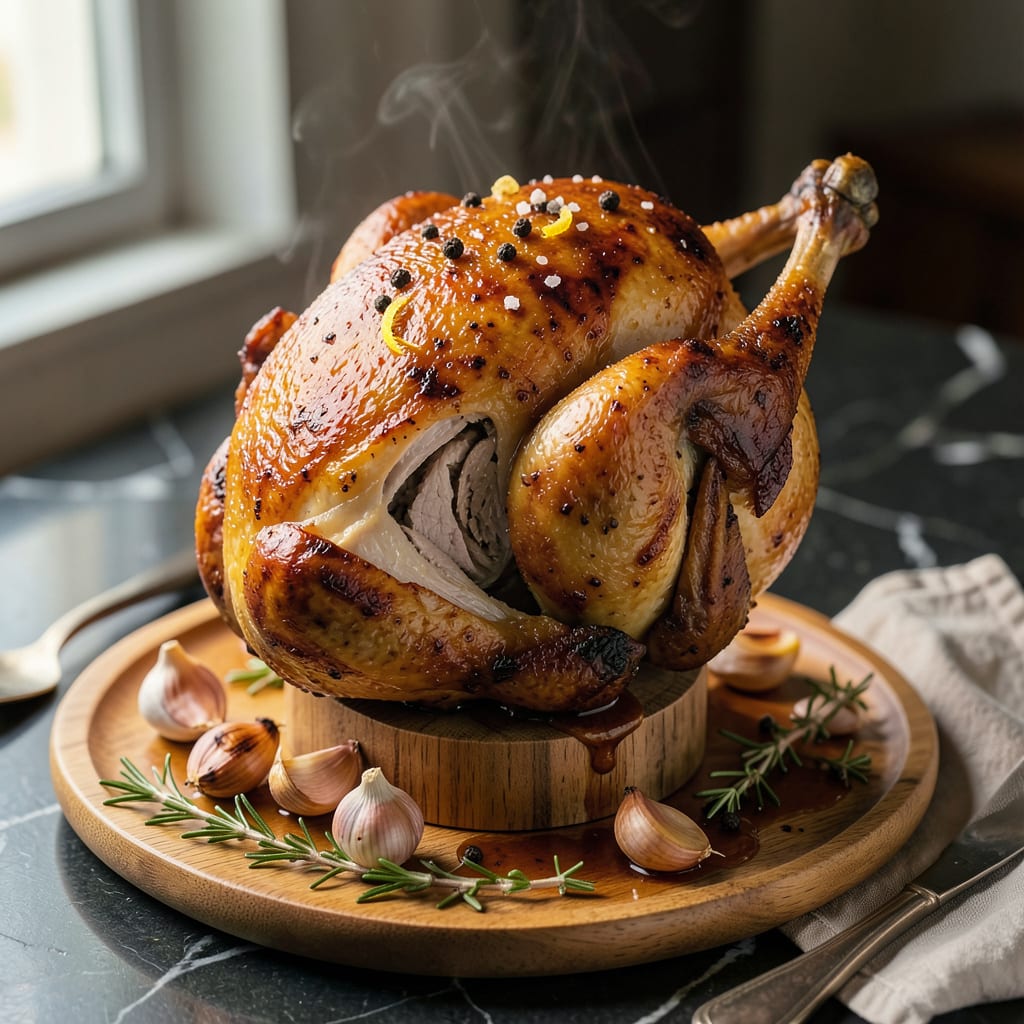
Store-bought rotisserie chicken stays fresh for 3-4 days refrigerated at 40°F or below. When left at room temperature, it should be discarded after 2 hours to prevent bacterial growth.
I’ve learned the hard way that cooked poultry is far more perishable than raw chicken because the cooking process removes protective barriers against bacteria. 🔥 The USDA’s 2-hour rule isn’t arbitrary—it’s based on how quickly pathogens multiply between 40°F and 140°F, the danger zone where bacteria thrive. What many don’t realize is that those delicious seasonings and brines actually speed up spoilage by increasing moisture content, creating an ideal environment for microbial growth.
Here’s my pro tip: transfer the chicken to an airtight container immediately after cooling—those styrofoam trays from the store are basically bacterial welcome mats. ✨ The difference in freshness can be dramatic, especially if you’re planning to use leftovers for meals later in the week. I always mark the container with the purchase date to avoid any guesswork about freshness.
💡 In This Article
- Why Rotisserie Chicken Spoils Faster Than Raw Chicken
- Maximizing Rotisserie Chicken Freshness and Safe Storage
Why Rotisserie Chicken Spoils Faster Than Raw Chicken
The cooking process fundamentally alters chicken’s cellular structure, making it more vulnerable to spoilage. When raw chicken is heated to 165°F, proteins denature and cell membranes rupture, releasing moisture and nutrients that bacteria feast on.
🔥 This creates a perfect storm: the same heat that makes chicken safe to eat also removes its natural defenses against microbial invasion.
What’s particularly insidious is the temperature danger zone between 40°F and 140°F, where bacteria like Salmonella and Campylobacter double every 20 minutes. Cooked chicken sits squarely in this zone as it cools, while raw chicken stays protected in refrigeration.
The seasoning process compounds this—brines and marinades increase surface moisture by up to 30%, giving bacteria both food and water to proliferate rapidly.
Here’s the kicker: that golden-brown skin you love? It’s porous after cooking, absorbing airborne contaminants like a sponge. 💫 Studies show cooked poultry develops detectable bacterial colonies within 4 hours at room temperature, compared to 8+ hours for raw chicken. The USDA’s 2-hour rule accounts for this accelerated growth curve that most home cooks underestimate.
The moisture content difference is staggering. Raw chicken contains about 75% water bound within muscle fibers, while cooked chicken releases this moisture during the process, creating a damp environment where bacteria thrive. This is why you’ll often see condensation in takeout containers—it’s not just steam, it’s a bacterial breeding ground forming before your eyes.
Even the pH changes work against you. Cooking raises the surface pH of chicken from about 5.7 to 6.2, moving it closer to neutral where most spoilage bacteria prefer to grow.
🌟 That lemon-pepper seasoning might taste great, but the citrus actually provides additional nutrients that certain bacteria can metabolize, potentially reducing shelf life by 12-24 hours compared to unseasoned cooked chicken.
Consider this comparison: a whole raw chicken might last 1-2 days in your fridge, while that same chicken cooked and shredded will spoil in half the time. The increased surface area from shredding or carving exposes exponentially more entry points for bacteria.
This is why food safety experts recommend keeping rotisserie chicken whole until ready to eat—every slice creates new vulnerability.

- Jollof Rice Sauce Recipe: West African Tomato and Spice Infusion - September 25, 2026
- Japanese Rice Soup Recipe: Umami-Rich Comfort in a Bowl - September 25, 2026
- Homemade Cream Of Rice Recipe: Silk-Smooth Breakfast in Minutes - September 25, 2026