
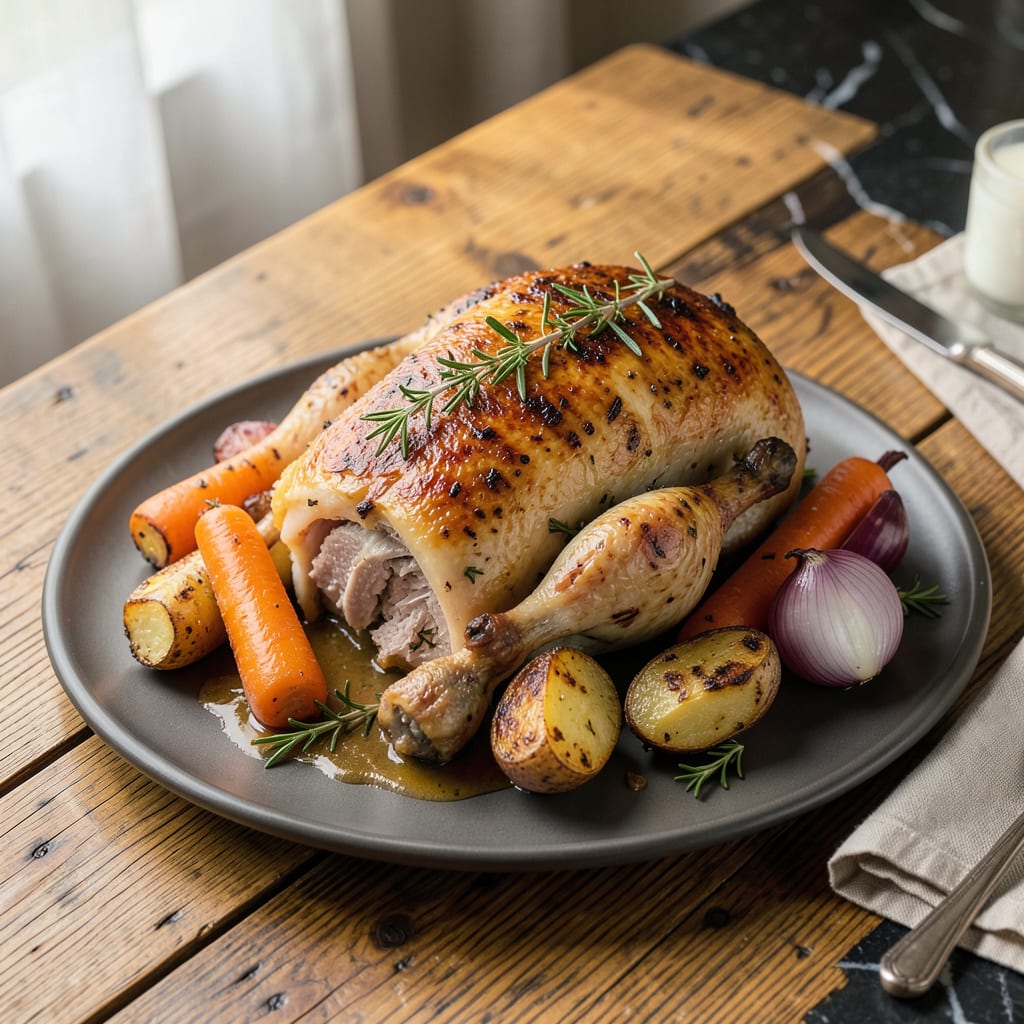
Defrosted chicken can safely stay in the fridge for 1-2 days before cooking, according to USDA guidelines. Always store it at 40°F or below and use airtight containers to prevent contamination.
This timeframe isn’t arbitrary—it’s based on how quickly bacteria like Salmonella and Campylobacter multiply even at cold temperatures. 🔥 I’ve learned through food safety training that the thawing process actually makes chicken more vulnerable because ice crystals damage cell walls, releasing nutrients that feed bacteria. That’s why proper storage becomes even more critical after defrosting.
What many home cooks overlook is that fridge placement matters too. 💫 The back of the bottom shelf (where it’s coldest) is ideal, and I always double-check my fridge temperature with a thermometer. Even one day beyond the safe window can significantly increase your risk of foodborne illness.
💡 In This Article
- Why Defrosted Chicken Has a Limited Fridge Life
- Safe Storage and Handling Tips for Defrosted Chicken
Why Defrosted Chicken Has a Limited Fridge Life
The 1-2 day window isn’t just a random recommendation—it’s based on how Salmonella and Campylobacter behave at refrigerator temperatures. These bacteria can double every 20 minutes in the “danger zone” (40-140°F), but even at proper fridge temps (40°F or below), they continue multiplying slowly.
The thawing process creates microscopic tears in chicken tissue, releasing proteins and moisture that become perfect bacterial food sources. 🔥
What happens during defrosting is fascinating (and concerning). Ice crystals that form during freezing puncture cell membranes. When thawed, these damaged cells leak nutrients into the surrounding tissue, creating an ideal environment for bacterial growth.
Studies show that thawed chicken can develop bacterial counts 10 times higher than fresh chicken within 48 hours, even at safe temperatures. This is why the USDA’s time limit is so strict—it’s about minimizing risk, not just preventing spoilage. ✨
The protein structure changes too. Myosin, the muscle protein that gives chicken its texture, begins breaking down during thawing. This degradation accelerates bacterial growth because the broken-down proteins are easier for microbes to consume. You might notice thawed chicken feels slightly softer than fresh—this is the protein breakdown in action.
The combination of cellular damage and protein degradation creates a perfect storm for rapid bacterial multiplication. 💫
Here’s what most people don’t realize: your fridge isn’t uniformly cold. The door (where many store chicken) can be 10°F warmer than the back. Temperature fluctuations from opening the door create microclimates where bacteria thrive.
USDA research shows that chicken stored in the warmest fridge areas can reach unsafe bacterial levels in as little as 24 hours, while properly stored chicken stays safe for the full 48 hours. ⚡
The 2-day limit also accounts for real-world conditions. Home fridges typically maintain 38-42°F, not the commercial standard of 34-38°F. At these slightly warmer temps, bacterial growth speeds up by about 30%. The USDA builds in this safety margin because they know most home kitchens can’t maintain perfect conditions.
This explains why restaurant kitchens often use thawed chicken within 24 hours—they operate at colder temperatures. 🌟
There’s also the moisture factor. As chicken thaws, it releases liquid that contains blood, proteins, and nutrients—essentially creating a bacterial growth medium. Even in sealed containers, this liquid can support microbial activity. The USDA’s time limit considers this “drip loss” which can contain up to 5% of the chicken’s weight in nutrients that feed bacteria.
This is why proper containment is just as important as the timeline itself. 💛

- Jollof Rice Sauce Recipe: West African Tomato and Spice Infusion - September 25, 2026
- Japanese Rice Soup Recipe: Umami-Rich Comfort in a Bowl - September 25, 2026
- Homemade Cream Of Rice Recipe: Silk-Smooth Breakfast in Minutes - September 25, 2026