
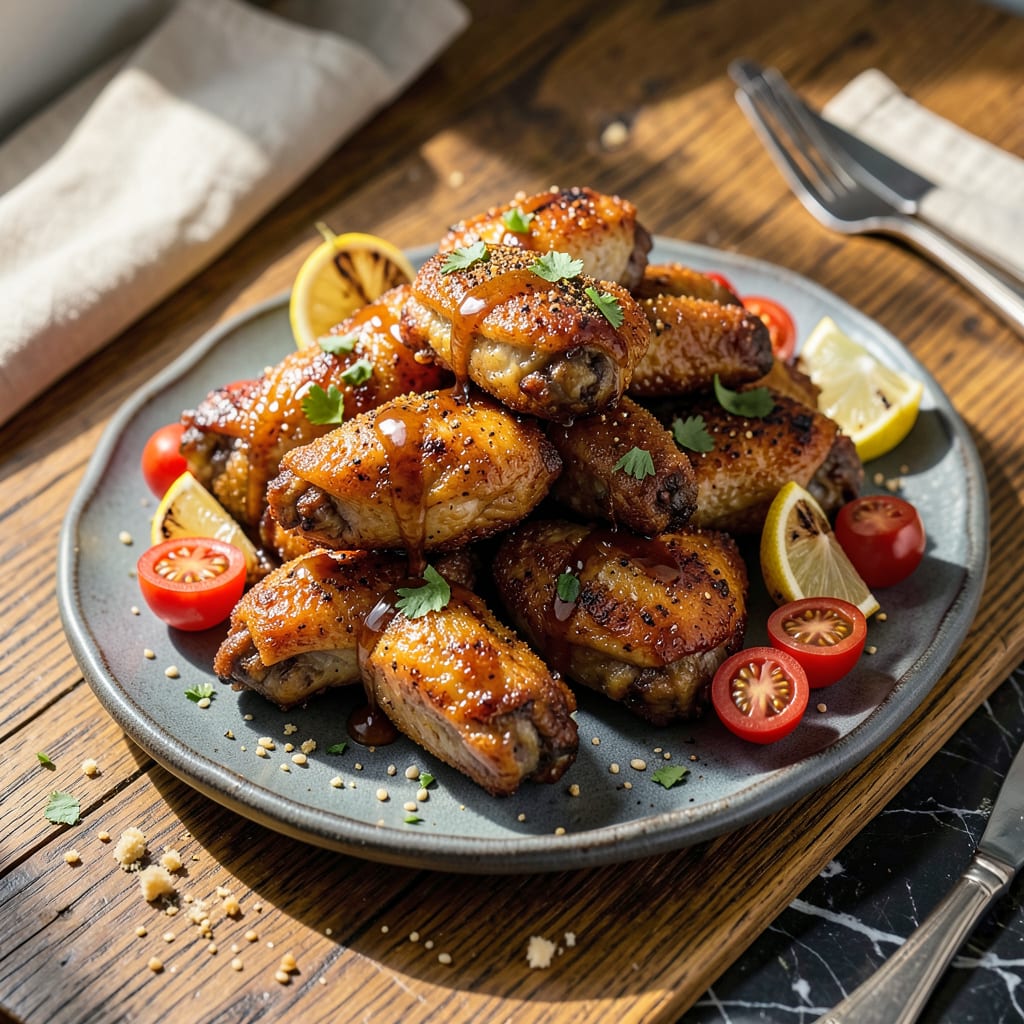
Whole chicken wings take 40-50 minutes at 400°F (200°C) in the oven, or 10-12 minutes per side on a grill at medium-high heat. Always cook until internal temperature reaches 165°F (74°C) for safe, juicy results.
The secret to nailing this timing lies in understanding heat distribution. 🔥 Ovens provide consistent, surrounding heat that slowly renders fat for crispy skin, while grills sear quickly but require vigilant flipping to prevent charring. I always use a meat thermometer to check the thickest part near the bone—this is where undercooking often happens. For extra insurance against dryness, I pull wings off at 160°F and let carryover heat finish the job during resting.
💡 In This Article
- Why Cooking Time Varies for Whole Chicken Wings
- Pro Tips for Perfectly Cooked Whole Chicken Wings
Why Cooking Time Varies for Whole Chicken Wings
The cooking time for whole chicken wings isn’t arbitrary—it’s determined by the bone-in structure and fat distribution. Unlike boneless cuts, wings contain joints and cartilage that require longer heat exposure to fully cook.
The drumette and flat sections have different densities, meaning the flat (with its two parallel bones) often cooks 5-10% faster than the meatier drumette. This is why rotating wings halfway through cooking ensures even doneness. 🔥
Heat distribution methods dramatically impact timing. Convection ovens circulate hot air at 400°F, cooking wings 20% faster than conventional ovens by eliminating cold spots. Grills, however, create intense direct heat zones (up to 500°F) that sear surfaces quickly but risk uneven cooking if wings aren’t flipped every 3-4 minutes.
The USDA’s 165°F benchmark isn’t just about safety—it’s the temperature where collagen in connective tissues begins breaking down, transforming chewy texture into tender perfection. ✨
Marinades and breading add another layer of complexity. Acidic marinades (vinegar, citrus) can pre-cook the outer layers, reducing oven time by 5-8 minutes. Conversely, thick breading acts as insulation, requiring an extra 8-10 minutes to penetrate to the bone.
I always test doneness in three spots: the thickest part of the drumette, the wing tip junction, and where the flat meets the drumette—this triple-check prevents undercooked surprises. 💫
Size matters more than you’d think. Jumbo wings (weighing 3.5-4 oz each) need the full 50-minute oven time, while standard 2.5-3 oz wings hit 165°F closer to 40 minutes. The difference comes down to thermal mass—larger wings have more dense muscle tissue that resists heat penetration.
For grill cooking, I use the “fist test”: if the wing meat feels as firm as your relaxed fist when pressed, it’s done. 🌟
Here’s what most recipes don’t tell you: carryover cooking adds 5-10°F after removal from heat. This means pulling wings at 160°F and tenting with foil for 5 minutes yields juicier results than cooking to exactly 165°F.
The resting period also allows rendered fat to redistribute, preventing that dreaded “first bite squirt” of juices escaping onto your plate. ⚡
For air fryer enthusiasts, the rules change again. The concentrated heat requires 25-30 minutes at 375°F, with shaking every 8 minutes to prevent the tips from burning.
The rapid air circulation creates a Maillard reaction (that delicious browning) faster than ovens, but the compact space means wings cook more evenly when arranged in a single layer with 1-inch gaps between pieces. 💛

- Jollof Rice Sauce Recipe: West African Tomato and Spice Infusion - September 25, 2026
- Japanese Rice Soup Recipe: Umami-Rich Comfort in a Bowl - September 25, 2026
- Homemade Cream Of Rice Recipe: Silk-Smooth Breakfast in Minutes - September 25, 2026