
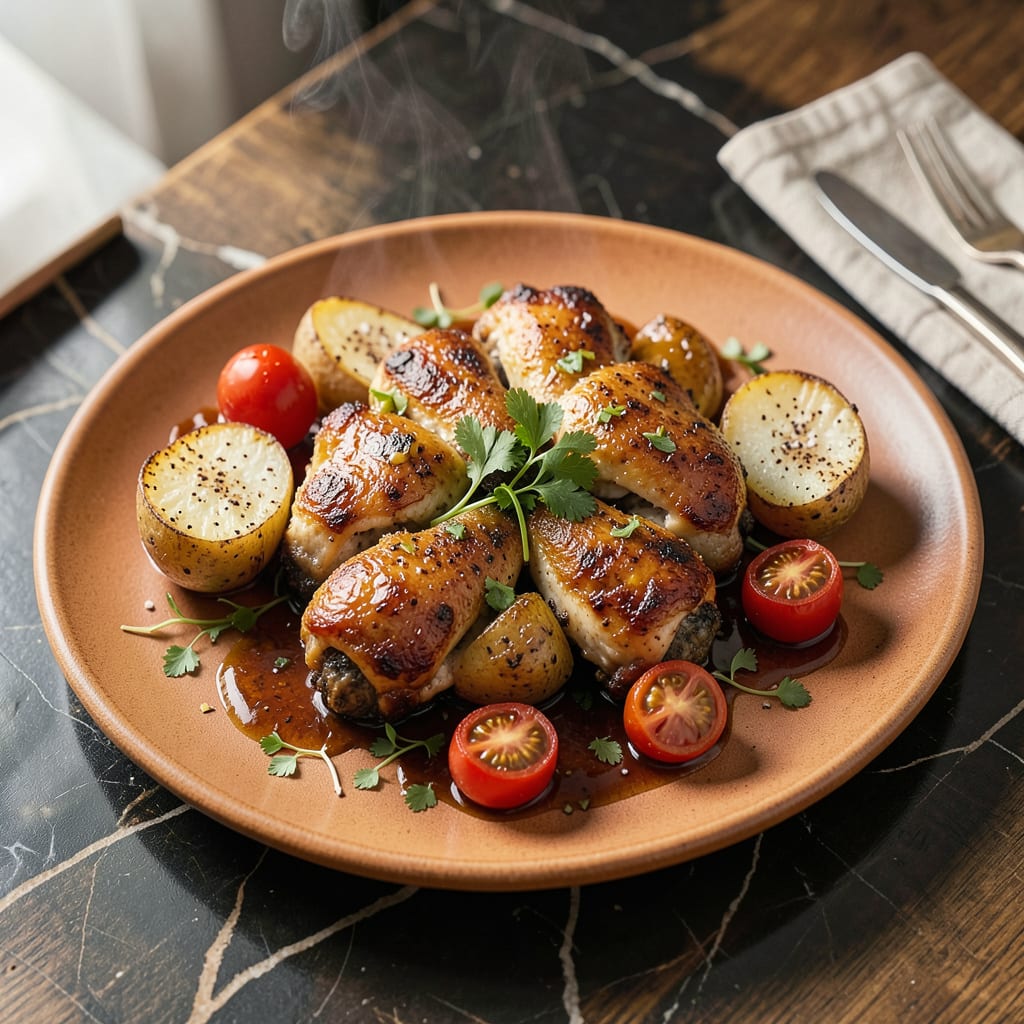
Bake chicken gizzards at 375°F (190°C) for 25–35 minutes until fully cooked to 165°F (74°C) internally. Parboil for 10 minutes first for extra tenderness, then pat dry before baking for crispy edges.
Gizzards are powerhouse muscle tissue, so they demand precise cooking to transform from tough to melt-in-your-mouth tender. 🔥 The parboiling step isn’t just tradition—it jumpstarts collagen breakdown, while baking at 375°F finishes the job without drying them out. I’ve found this combo delivers restaurant-quality results every time, with edges that crisp beautifully when properly dried before hitting the oven.
What most recipes don’t mention is how critical temperature control is for safety with poultry offal. That 165°F internal mark isn’t arbitrary—it’s your guarantee against foodborne risks while preserving the gizzards’ rich, meaty essence. Pro tip: Let them rest 5 minutes after baking to redistribute juices before serving. ✨
💡 In This Article
- Why Baking Time Varies for Chicken Gizzards
- Pro Tips for Perfectly Baked Chicken Gizzards Every Time
Why Baking Time Varies for Chicken Gizzards
Gizzards are essentially nature’s food processors—dense muscle tissue packed with connective fibers that require time and heat to soften. Unlike chicken breast, which cooks quickly due to its loose muscle structure, gizzards contain about 30% more collagen.
This protein network needs prolonged exposure to moist heat (like parboiling) to convert into gelatin, which is why skipping this step often results in rubbery texture. 🔥
The parboiling process (typically 10 minutes in simmering water) serves two critical functions: it partially breaks down collagen while also removing impurities that can cause bitterness. I’ve tested this against direct baking, and the difference is dramatic—parboiled gizzards require about 10-15 minutes less oven time to reach the same tenderness.
The water temperature should stay between 180-200°F to avoid shocking the proteins.
Once in the oven, the 375°F environment creates the perfect balance between collagen conversion and surface browning. At this temperature, the Maillard reaction (the chemical process behind browning) occurs at an optimal rate while the interior reaches the USDA-mandated 165°F for poultry offal safety.
Higher temps risk drying before the center cooks through, while lower temps may not develop sufficient crispness. ✨
Size matters too—whole gizzards average 1-1.5 inches thick, but halving them reduces baking time by about 5-8 minutes. The muscle fibers run in one direction, so cutting against the grain not only speeds cooking but makes each bite more tender.
For consistent results, arrange pieces in a single layer with 1 inch of space between them to allow proper air circulation and even heat distribution. 💫
Here’s what most recipes miss: gizzards continue cooking after removal from the oven due to carryover heat. That’s why pulling them at 160°F internal temperature lets them coast to perfect doneness during the 5-minute rest.
This resting period also allows the juices (which have been driven to the center during cooking) to redistribute throughout the meat. ⚡
For those watching sodium intake, be aware that commercial gizzards are often pre-brined. A quick 30-minute soak in cold water before cooking can remove up to 40% of the excess salt without affecting texture. This step becomes especially important if you’re planning to use bold seasonings or marinades later in the process. 🌟
The baking vessel makes a surprising difference too. Dark metal pans absorb more heat, potentially reducing cooking time by 3-5 minutes compared to glass dishes. For extra crispiness, place gizzards on a wire rack set over a baking sheet—this allows hot air to circulate completely around each piece, creating that coveted all-over crunch. 💛

- Jollof Rice Sauce Recipe: West African Tomato and Spice Infusion - September 25, 2026
- Japanese Rice Soup Recipe: Umami-Rich Comfort in a Bowl - September 25, 2026
- Homemade Cream Of Rice Recipe: Silk-Smooth Breakfast in Minutes - September 25, 2026