
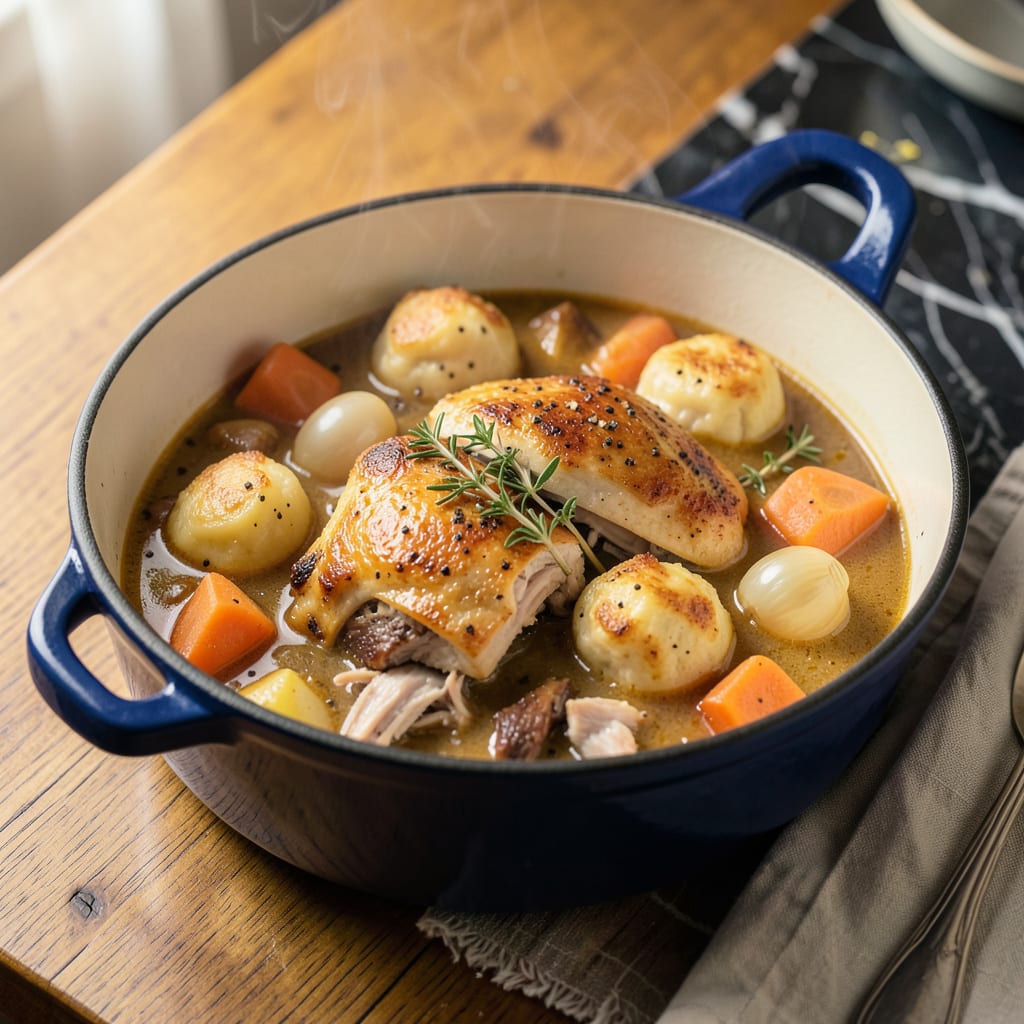
Nothing beats the comfort of chicken and dumplings—until you’re staring at leftovers the next day, wondering how to bring back that just-cooked magic. I’ve ruined my fair share by microwaving into a soggy mess, but after testing every method, I’ve cracked the code for perfectly reheated results every time.
Here’s the thing—this only works if you started with properly stored leftovers (refrigerated within 2 hours of cooking). The real challenge is keeping those dumplings pillowy soft while preventing the chicken from drying out. Spoiler: your microwave is the riskiest option, but I’ll show you how to make it work in a pinch.
Whether you’re using the oven, stovetop, or microwave, the secret lies in gentle heat and moisture control. We’re aiming for silky broth that hasn’t separated, dumplings that don’t turn to mush, and chicken that stays tender. No one wants reheated leftovers that taste like, well… leftovers.
I’ll walk you through each method with exact times and temps (yes, you’ll need a thermometer for safety), plus the one ingredient that saves dried-out dumplings every time. Remember—this is for pre-cooked chicken and dumplings only, not raw prep.
📚 In This Guide
- What You’ll Need
- Instructions
- Tips and Common Mistakes
What Youll Need
- ● Leftover chicken and dumplings – At least 1–2 cups per serving (ensure it’s stored in an airtight container 🥘).
- ● Microwave-safe bowl – Deep, wide-rimmed (for even heating and easy stirring).
- ● Saucepan or skillet – Medium-sized, nonstick (if reheating on the stovetop 🔥).
- ● Spoon or spatula – Wooden or silicone (to gently stir without breaking dumplings).
- ● Microwave or stovetop – Your trusty heat source! (Microwave for speed, stovetop for texture control.)
- ○ Splash of broth or water – 2–3 tbsp (prevents drying out—optional but highly recommended!).
- ○ Butter or cream – 1 tsp (optional, for extra richness).
- ○ Fresh herbs – Parsley or thyme (optional, for a bright finish ✨).
- ○ Oven-safe dish – If baking (for crispier dumplings—optional method).
- ● Aluminum foil – To cover and trap steam (keeps dumplings tender).
Instructions
Reheating chicken and dumplings properly is all about gentle heat and careful timing—here’s how to do it right.
Choose Your Reheating Method
For stovetop reheating, transfer your chicken and dumplings to a heavy-bottomed pot or Dutch oven. I prefer this method because it gives you the most control over heat distribution. If you’re using the microwave, select a microwave-safe container with enough room for stirring—this prevents uneven heating and cold spots.
Real talk: the microwave is faster, but the stovetop yields better texture results. If you’re short on time, microwave in 30-second intervals at 50% power to prevent the dumplings from turning rubbery. For stovetop, you’ll want to use medium-low heat throughout the process.
Add Moisture for Silky Broth
Before reheating, add 2-3 tablespoons of water, chicken broth, or milk per serving to the pot. This compensates for moisture lost during storage and prevents the broth from becoming too thick or gluey. Stir gently to distribute the liquid without breaking up the dumplings.
Here’s the thing—dumplings absorb liquid as they sit, so that perfect broth consistency you had originally will need a little help. The added liquid also creates steam, which helps reheat the dumplings evenly from all sides. Don’t skip this step, even if your dish looks saucy enough.
Reheat Gently and Evenly
For stovetop reheating, cover the pot and warm over medium-low heat for 8-10 minutes, stirring occasionally. You’re looking for the broth to reach a gentle simmer—small bubbles breaking the surface around the edges of the pot. This gradual heating prevents the dumplings from breaking apart.
If using the microwave, cover the container with a damp paper towel to trap steam. Heat at 50% power for 1 minute, then stir gently. Continue heating in 30-second bursts at the same power level, stirring between each interval, until everything is heated through. The dumplings should feel plump and tender when pressed gently with a spoon.
Check for Perfect Texture
Your chicken and dumplings are properly reheated when the broth reaches 165°F (use an instant-read thermometer for accuracy) and the dumplings are pillowy soft throughout. The chicken should flake easily with a fork but not be dry or stringy.
Taste and adjust the seasoning if needed—the flavors often mellow during storage. A splash of heavy cream stirred in at the end can restore richness if the broth tastes flat. If the consistency is too thin, let it simmer uncovered for 2-3 minutes to reduce slightly.
Serve Immediately for Best Results
Once properly reheated, serve your chicken and dumplings immediately. The dumplings will continue to absorb liquid as they sit, potentially becoming soggy. If you’ve reheated more than you can eat, store leftovers in a separate container with a bit of extra broth to maintain moisture.
For that fresh-made experience, garnish each serving with a sprinkle of fresh parsley or cracked black pepper. The contrast of bright green against the creamy broth makes the dish look as good as it tastes. Remember that reheated dumplings are more delicate, so serve with a wide, shallow spoon to keep them intact.
Tips and Common Mistakes
The difference between rubbery dumplings and restaurant-quality results comes down to these key details.
Moisture Management: In Step 2, don’t just add the 2-3 tablespoons of liquid and call it done. The type matters: chicken broth enhances flavor, milk adds creaminess, while water keeps it neutral. For best results, warm your chosen liquid slightly before adding—cold liquid can cause the broth to seize up temporarily. Stir gently but thoroughly to distribute without breaking dumplings, using a silicone spatula that won’t scratch your pot.
Heat Control: During the 8-10 minutes of stovetop reheating in Step 3, resist the urge to crank up the heat. Medium-low heat is non-negotiable—any higher and you risk the dumplings disintegrating while the chicken overcooks. I’ve found that electric stoves often need the full 10 minutes, while gas heats more efficiently at the 8-minute mark. Watch for that gentle simmer described in the instructions: steady bubbles breaking only at the edges, not a rolling boil.
Texture Verification: When checking doneness in Step 4, don’t rely solely on the 165°F temperature. Press a dumpling gently with your spoon—it should yield slightly but spring back, like a well-risen biscuit. The chicken will flake cleanly when pressed with a fork, but shouldn’t shred completely. If your dumplings feel dense or gummy, they’ve absorbed too much liquid during storage; next time, add an extra tablespoon of broth when reheating to compensate.
Serving Strategy: Step 5 mentions serving immediately, and here’s why: dumplings continue absorbing liquid at room temperature at twice the rate they do when hot. If you must hold them, transfer to a warm (not hot) oven—200°F maximum—with the container uncovered. This keeps everything warm without further softening the dumplings. The parsley garnish isn’t just for looks; its fresh flavor cuts through the richness, so don’t skip it.
Pro Tips for Reheat Chicken And Dumplings
- The difference between rubbery dumplings and restaurant-quality results comes down to these key details.
- Moisture Management: In Step 2, don’t just add the 2-3 tablespoons of liquid and call it done. The type matters: chic…
- Heat Control: During the 8-10 minutes of stovetop reheating in Step 3, resist the urge to crank up the heat. Medium-l…
Frequently Asked Questions
Can I reheat chicken and dumplings in the microwave without drying them out?
Yes! Use a microwave-safe bowl with a damp paper towel over the top to trap steam. Heat in 30-second bursts, stirring gently between each, until warmed through (usually 1–2 minutes). Avoid overcooking—dumplings turn rubbery fast!
How long does reheated chicken and dumplings last in the fridge?
Store leftovers in an airtight container for 3–4 days max. If the broth smells sour or dumplings get slimy, toss it! For longer storage, freeze for up to 3 months (thaw overnight in the fridge before reheating).
Why did my dumplings turn mushy when reheated?
Overheating or stirring too vigorously breaks them down. Reheat gently on the stovetop (low heat) or microwave (short intervals). If they’re already mushy, try adding a splash of broth or cream to revive the texture.
Can I reheat chicken and dumplings in an air fryer?
Not ideal! Air fryers dry out the broth and dumplings. Stick to the stovetop, microwave, or oven (covered with foil at 300°F for 15–20 mins). Save the air fryer for crispy foods like wings or fries!
What’s the best way to reheat frozen chicken and dumplings?
Thaw overnight in the fridge, then reheat on the stovetop (low heat) or microwave (covered). If frozen solid, simmer in a pot with 2–3 tbsp water or broth for 10–15 mins, stirring occasionally.
Reheating chicken and dumplings doesn’t have to mean soggy dumplings or a broken broth—just pick the right method for your time and tools! 🍲 Whether you choose the gentle stovetop approach, the quick microwave trick, or the hands-off oven route, a little care keeps every bite as cozy as the first.
Now that you’re armed with the know-how, why not save leftovers with confidence or even double your next batch? Your future self (and taste buds) will thank you! 😉

- Jollof Rice Sauce Recipe: West African Tomato and Spice Infusion - September 25, 2026
- Japanese Rice Soup Recipe: Umami-Rich Comfort in a Bowl - September 25, 2026
- Homemade Cream Of Rice Recipe: Silk-Smooth Breakfast in Minutes - September 25, 2026