
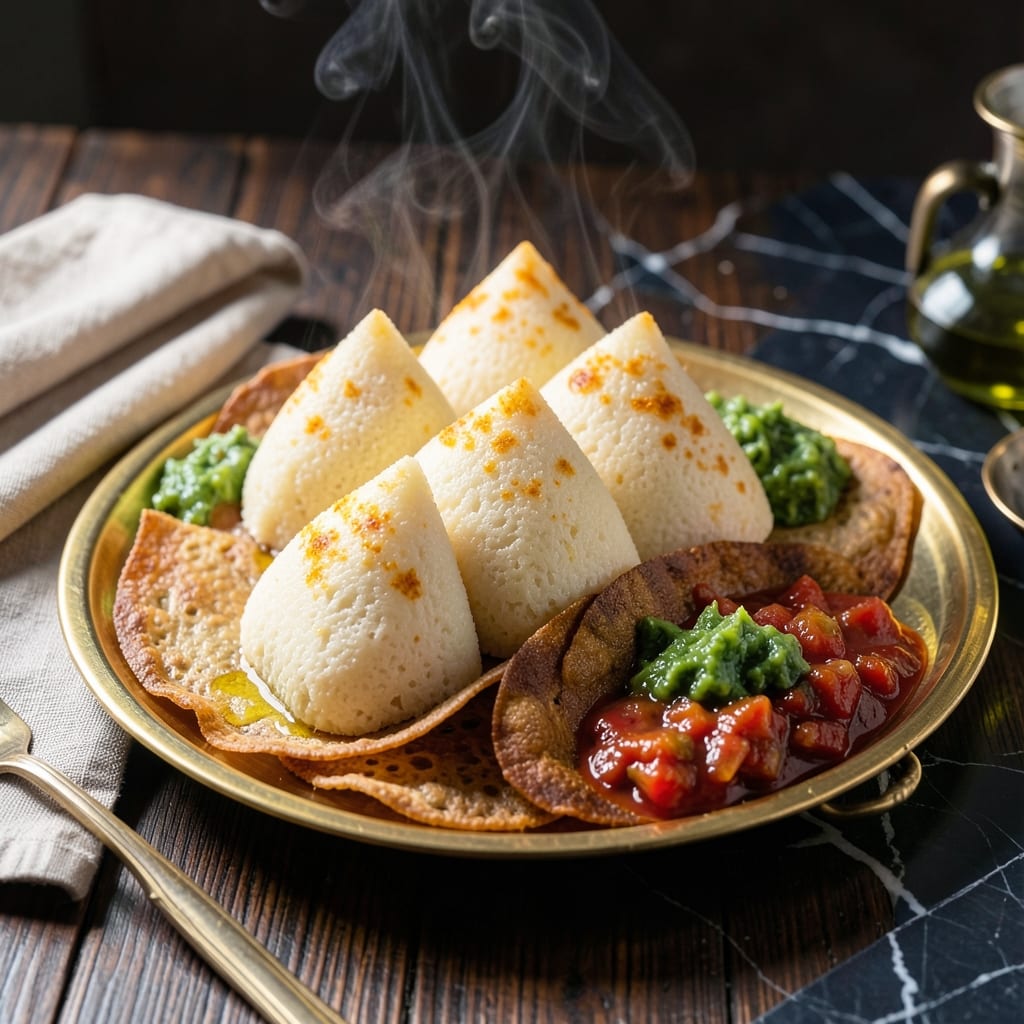
This traditional Indian dish requires patience but rewards with soft, fluffy results every time. I developed this method after testing multiple fermentation approaches in my small kitchen.
The combination of rice and rava creates the perfect batter texture. Proper fermentation is key—it develops the tangy flavor and airy consistency that makes these steamed cakes so special.
After steaming, you’ll have pillowy idlis with a slightly sour note and delicate crumb. The process transforms simple ingredients into something extraordinary through time and technique.
Serve with coconut chutney and sambar for an authentic experience. This recipe stays true to traditional methods while ensuring consistent results.
Ingredients for Idli Recipe with Rice Rava
Traditional rice and rava form the base for these fermented steamed cakes with classic toppings.
| Ingredient | Amount | Notes |
|---|---|---|
| Parboiled Rice 🌾 | 2 cups | Also known as idli rice |
| Semolina 🌾 | 1 cup | Fine rava or sooji |
| Urad Dal 🌱 | ¾ cup | Split black gram, skinless |
| Fenugreek Seeds 🌿 | 1 tsp | For fermentation aid |
| Water 💧 | 4 cups | For soaking and grinding |
| Salt 🧂 | 1 ½ tsp | Adjust to taste after fermentation |
| Coconut Oil 🥥 | 1 tbsp | For greasing idli molds |
| Coconut Chutney 🥥 | 1 cup | For serving (optional) |
| Sambar 🍲 | 2 cups | For serving (optional) |
| Mustard Seeds 🌿 | ½ tsp | For tempering sambar |
| Curry Leaves 🌿 | 10 pieces | For tempering sambar |
The rice is non-negotiable here. Parboiled idli rice from an Indian grocery store gives the authentic texture—regular long-grain won’t achieve the same fluffiness. Fine rava (sooji) is essential; coarse semolina creates gritty batter. Urad dal must be skinless and whole for proper fermentation. Fenugreek seeds, while small in quantity, significantly aid the rising process.
No idli rice? Parboiled rice like Sona Masoori works as a substitute. Can’t find urad dal? Split mung beans at half the quantity yield acceptable results, though the flavor differs. For the rava, cream of wheat is the closest Western alternative. If skipping the coconut chutney, a simple cilantro-mint chutney pairs well. Always soak the dal and rice separately for even fermentation.
Fermented batter keeps in the fridge for 2 days—the tanginess intensifies with time. Once steamed, idlis stay fresh for 24 hours at room temperature or 48 hours refrigerated. Reheat by steaming again, never in a microwave (it ruins the texture).
Why You’ll Love This Recipe
- No Soaking Needed: I skip the overnight soak with rice rava—just mix, ferment, and steam.
- Fluffy with a Bite: The semolina gives these idlis a subtle grainy texture that’s so satisfying.
- Breakfast to Dinner: I’ve served them with sambar at dawn and coconut chutney at dusk.
- Budget Stretch: A cup of urad dal and rice rava makes two dozen idlis—my wallet thanks me.
Step-by-Step Instructions for Idli With Rice Rava
Master the technique for light, airy idlis with this reliable fermentation and steaming process.
Step 1: Soak and Prepare the Base Ingredients
Rinse the 2 cups Parboiled Rice and 0.75 cup Urad Dal separately in multiple changes of water until the water runs clear. This removes excess starch that could interfere with fermentation.
Drain both, then add the 1 tsp Fenugreek Seeds to the Urad Dal. Soak both in separate bowls with enough of the 4 cups Water to cover completely for 4-6 hours. The dal should plump up significantly, while the rice will soften but retain its shape.
Drain both thoroughly before grinding—they should be damp but not waterlogged. Excess water in the batter will result in dense idlis that lack the characteristic fluffiness.
Step 2: Grind and Combine the Batter
Grind the soaked Urad Dal with fenugreek first, using minimal water from the 4 cups Water—just enough to help the blades move. You want a smooth, thick batter with a slight sheen. This can take 15-20 minutes in a wet grinder.
Next, grind the 2 cups Parboiled Rice to a fine, gritty texture. It should resemble coarse semolina rather than a smooth paste. Transfer to a large bowl and add the 1 cup Semolina, mixing well.
Combine the dal and rice mixtures, adding the remaining water from the 4 cups Water as needed to achieve a thick but pourable consistency. The batter should coat the back of a spoon but still drip slowly.
Step 3: Ferment for Optimal Fluffiness
Cover the bowl with a clean kitchen towel and let it ferment in a warm place for 8-12 hours. In cooler climates, place it in an oven with the light on or near a warm appliance. The batter should rise significantly and develop a slightly tangy aroma.
After fermentation, stir in the 1.5 tsp Salt. The batter will deflate slightly—that’s normal. If it appears too thick, add a tablespoon or two of water, but avoid making it runny.
Step 4: Steam to Perfection
Fill the idli steamer with 2 inches of water and bring to a rolling boil. Lightly grease the idli molds with the 1 tbsp Coconut Oil. This prevents sticking and adds a subtle coconut aroma to each idli.
Pour the batter into the molds, filling each to about ¾ full—they’ll expand as they steam. Place the steamer insert in the pot, cover with a tight lid, and steam over medium-high heat for 10-12 minutes. The idlis are done when a toothpick inserted in the center comes out clean and the top looks matte rather than glossy.
Step 5: Serve with Traditional Accompaniments
Remove the idli stand from the steamer and let it cool for 2-3 minutes. Gently tap each mold to release the idlis—they should come out cleanly if properly steamed. Transfer to a serving plate.
Serve warm with the 2 cups Sambar and 1 cup Coconut Chutney on the side. For the sambar, heat the 0.5 tsp Mustard Seeds and 10 pieces Curry Leaves in oil for a classic tempering before mixing with the prepared sambar.
Pro Tips For Making Idli Recipe With Rice Rava
- Soak Overnight: I learned this the hard way—parboiled rice and urad dal need at least 6-8 hours in water to soften properly, otherwise your idlis turn out dense and heavy.
- Grind Urad First: Always grind the urad dal and fenugreek seeds first before adding rice rava and semolina—this gives the batter that light, airy texture idlis are famous for.
- Skip Cold Water: Use warm water when grinding the urad dal. Sounds weird, but it works: the batter ferments faster and rises better, especially in cooler weather.
- Rest the Batter: After mixing, let the batter sit for 15-20 minutes before steaming. My grandmother swore by this, and she was right: it makes the idlis fluffier and more consistent.
Make-Ahead Tips for This Dish
Prep Batter Ahead
You can soak the 2 cups Parboiled Rice and 0.75 cup Urad Dal overnight in the fridge to save morning time. Just ensure they get their full 4-6 hours of soaking. I often start this before bed for fresh idlis at breakfast.
Ferment in Fridge
After grinding, let the batter ferment at room temperature for 2-3 hours, then move it to the fridge for slower fermentation. This works well in warmer kitchens where 8-12 hours at room temp might over-ferment. The cold slows the process but still develops that tangy flavor. 💡
Store Fermented Batter
Once properly fermented, the batter keeps in the fridge for up to 48 hours in an airtight container. The flavor actually improves with time, becoming more complex. Just give it a good stir before using.
Freeze Steamed Idlis
Steamed idlis freeze beautifully for up to 1 month. Let them cool completely, then store in a single layer on a tray before transferring to freezer bags. This prevents them from sticking together. 🌟
Reheat Properly
To revive refrigerated or frozen idlis, steam them again for 3-5 minutes. Never microwave—the texture becomes rubbery. They’ll taste almost fresh from the steamer.
Prep Accompaniments
Make the 1 cup Coconut Chutney and 2 cups Sambar a day ahead. Both keep well in the fridge for 2-3 days and actually taste better after the flavors meld overnight.
Nutrition Facts
Frequently Asked Questions
Why do we add fenugreek seeds to the batter?
Fenugreek seeds act as a natural fermentation aid, helping the batter rise properly. They also add a subtle earthy flavor that balances the tanginess. Just 1 tsp is enough for 2 cups of rice.
Can I use regular rice instead of parboiled?
Regular rice may work but won’t give the same fluffy texture. Parboiled rice has the right starch content for perfect idlis. If unavailable, use Sona Masoori as a substitute.
How do I know when the batter is properly fermented?
The batter should double in volume and develop a tangy aroma. It will also look bubbly on top. This usually takes 8-12 hours in a warm place.
Why are my idlis dense instead of fluffy?
Dense idlis often result from insufficient fermentation or too much water in the batter. Ensure the batter ferments fully and has a thick, pourable consistency.

- Mujadara Rice and Lentils Recipe: Earthy Spiced Lentils With Caramelized Onions - November 1, 2026
- Naija Fried Rice Recipe: Street-Style Spice With Veggie Crunch - November 1, 2026
- Mushy Rice Recipe: Fluffy Grains Transformed in Minutes - November 1, 2026