
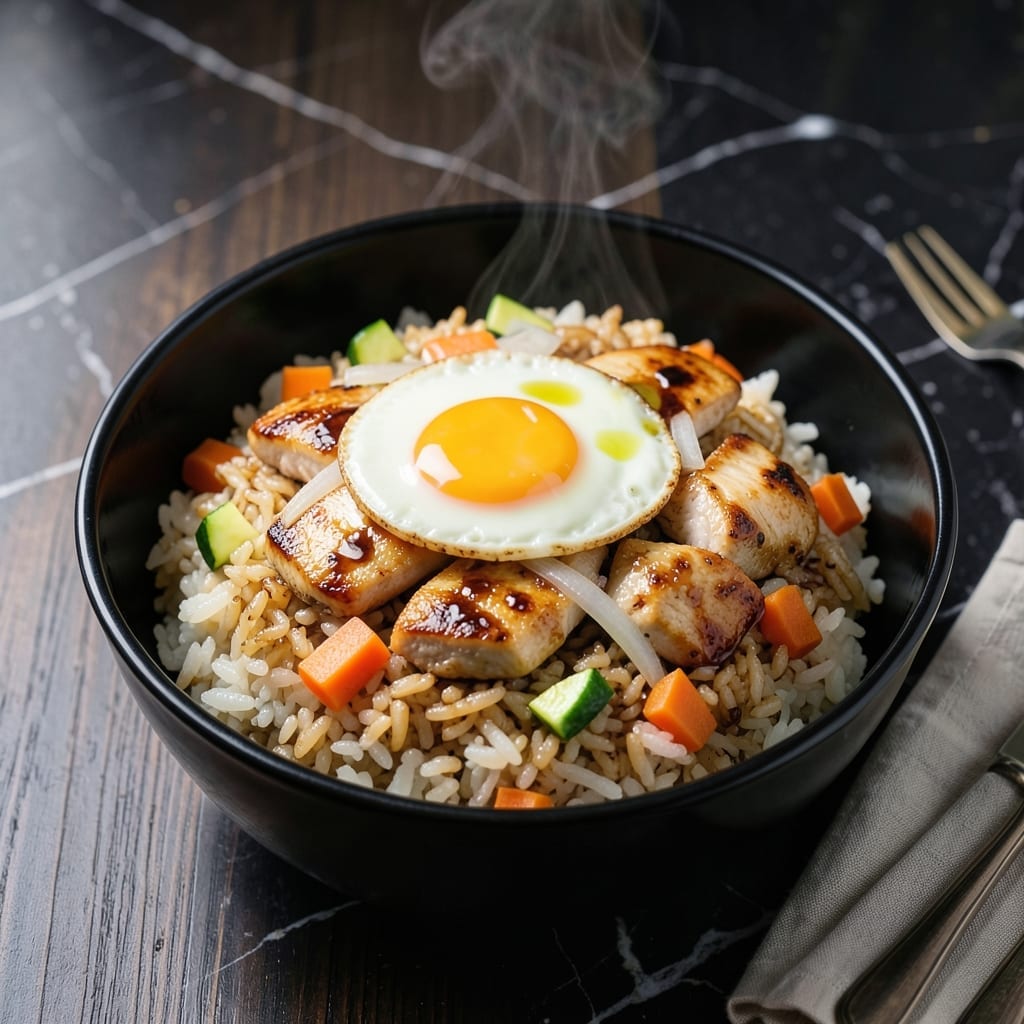
Achieving authentic hibachi fried rice at home requires mastering the balance of smoky depth and umami richness. This method delivers restaurant-quality results through precise wok-tossing techniques.
The foundation lies in using day-old rice, which prevents mushiness, and cooking at high heat to develop that signature charred flavor. Each ingredient is added in sequence to build layers of taste without overwhelming the dish.
What emerges is a plate of perfectly textured rice with bits of egg, vegetables, and protein all coated in a subtle soy-based seasoning. The smoky aroma from the wok complements the savory notes beautifully.
Serve immediately while hot, with additional soy sauce or hibachi sauce on the side for customization. The technique ensures consistent, professional results every time.
Ingredients for Japanese Hibachi Fried Rice
Day-old rice and high-heat cooking create authentic hibachi flavors at home with these ingredients.
| Ingredient | Amount | Notes |
|---|---|---|
| Day-Old Cooked White Rice 🍚 | 4 cups | Cold, preferably overnight |
| Vegetable Oil 🫒 | 3 tbsp | High smoke point preferred |
| Large Eggs 🥚 | 2 whole | Beaten lightly |
| Carrots 🥕 | 1 whole | Finely diced |
| Zucchini 🥒 | 1 whole | Finely diced |
| White Onion 🧅 | ½ whole | Finely diced |
| Garlic Cloves 🧄 | 2 cloves | Minced finely |
| Soy Sauce 🫙 | 3 tbsp | Low-sodium preferred |
| Hibachi Sauce 🍯 | 2 tbsp | Store-bought or homemade |
| Sesame Oil 🫒 | 1 tsp | Toasted for depth |
| Green Onions 🧅 | 2 whole | Thinly sliced for garnish |
| Salt 🧂 | ½ tsp | To taste |
| Black Pepper 🌶️ | ¼ tsp | Freshly ground |
| Chicken Breast 🍗 | ½ lb | Boneless, skinless, diced |
| Shrimp 🦐 | ½ lb | Peeled, deveined, chopped |
The rice is non-negotiable—day-old, cold, and dry (freshly cooked turns to mush). For the protein, Costco’s boneless chicken breast works well, or grab peeled shrimp from the seafood counter (ask for deveined to save time). Vegetable oil with a high smoke point is essential for achieving that smoky wok flavor. Look for Kikkoman soy sauce—it’s the professional standard for hibachi.
No hibachi sauce? Mix 2 tbsp ketchup, 1 tbsp soy sauce, and 1 tsp sugar for a quick substitute. Shrimp can be swapped for diced pork or steak if preferred. Fresh out of green onions? Thinly sliced chives work in a pinch. The sesame oil adds depth—toasted variety is key. For a vegetarian version, skip the protein and add extra veggies.
The diced carrots and zucchini keep 4-5 days in the fridge if prepped ahead. Cooked rice can be stored overnight to dry out. Leftovers reheat beautifully in a skillet with a splash of oil—tastes almost as good as fresh. 3 days max in the fridge for best texture.
Why You’ll Love This Recipe
- One Pan Magic: I toss the rice, eggs, and veggies in a single pan—no extra dishes, no fuss.
- Umami Bomb: The carrots and zucchini soak up that savory, buttery flavor that makes it irresistible.
- Meal Prep Hero: Honestly, it reheats like a dream for lunches all week.
- Budget Stretcher: Day-old rice and humble veggies turn into something special without breaking the bank.
Step-by-Step Instructions for Japanese Hibachi Fried Rice
Master the wok technique for restaurant-quality fried rice with smoky, umami-rich flavor in every bite.
Step 1: Prepare and Cook the Proteins
Heat 1 tablespoon Vegetable Oil in a wok or large skillet over medium-high heat until shimmering. Add the 0.5 lb Chicken Breast and cook for 4-5 minutes, stirring occasionally, until lightly browned and cooked through. The chicken should reach an internal temperature of 165°F.
Remove the chicken and set aside. In the same wok, add the 0.5 lb Shrimp and cook for 2-3 minutes until pink and opaque. Transfer the shrimp to the plate with the chicken. This sequential cooking ensures each protein develops optimal flavor without overcrowding the pan.
Step 2: Sauté the Aromatics and Vegetables
In the same wok, add the remaining 2 tablespoons Vegetable Oil. Add the 0.5 whole White Onion, finely diced, and stir-fry for 2 minutes until translucent. Then add the minced 2 cloves Garlic Cloves and cook for 30 seconds until fragrant—be careful not to burn it.
Next, add the finely diced 1 whole Carrots and 1 whole Zucchini. Stir-fry for 3-4 minutes until the vegetables are tender-crisp. The carrots should soften slightly but retain a bite, while the zucchini should develop a subtle char from the high heat.
Step 3: Scramble the Eggs and Combine Ingredients
Push the vegetables to one side of the wok and pour the 2 whole Large Eggs into the empty space. Scramble the eggs gently with a spatula until just set, about 1-2 minutes. The eggs should be soft and slightly runny, as they’ll continue cooking when mixed with the other ingredients.
Add the cooked chicken and shrimp back into the wok along with the 4 cups Day-Old Cooked White Rice. Break up any clumps in the rice with your spatula. Stir-fry for 2 minutes to combine everything evenly and warm through. The rice should absorb the flavors from the proteins and vegetables.
Step 4: Season and Finish
Drizzle the 3 tbsp Soy Sauce, 2 tbsp Hibachi Sauce, and 1 tsp Sesame Oil over the mixture. Add the 0.5 tsp Salt and 0.25 tsp Black Pepper. Stir-fry for an additional 2-3 minutes until everything is evenly coated and the sauce has been fully absorbed.
Taste and adjust the seasoning if needed. The rice should have a glossy sheen from the sauces, and every grain should be infused with smoky, savory flavor. Remove from heat and garnish with the thinly sliced 2 whole Green Onions for a fresh, vibrant finish.
Pro Tips For Making Japanese Hibachi Fried Rice
- Break Up the Rice: Use your hands to crumble day-old rice into individual grains before frying—this prevents clumps and guarantees that crisp, separated texture hibachi rice is known for.
- Prep Veggies Small: Dice carrots and zucchini into tiny, uniform pieces (1/4-inch or smaller) so they cook quickly and evenly without turning mushy while the rice browns.
- Skip Fresh Rice: I learned this the hard way—fresh rice is too moist and will steam instead of fry, so always use cold, day-old rice for that authentic dry, slightly chewy bite.
- Cook Eggs Separately: Scramble the eggs first, then set aside—adding them directly to the rice often leads to rubbery bits, but cooking them separately keeps them soft and distinct.
Serving Suggestions for This japanese hibachi fried rice
Garnishing Tips
Finish with extra green onions for a pop of color and freshness. A drizzle of hibachi sauce or sriracha adds visual appeal and extra flavor. I love the contrast of bright green against the golden-brown rice. 💛
Side Dishes
Pair with miso soup for a traditional combo. Edamame or seaweed salad adds freshness. For heartier meals, grilled shrimp skewers complement the flavors perfectly.
Serving Style
Serve family-style in a large bowl with wooden spoons for scooping. Individual plates work for a more refined presentation. I prefer family-style—it feels more authentic to the hibachi experience.
Extra Toppings
Offer sesame seeds or crushed red pepper for customization. A soft-boiled egg on top adds richness. I always set out small bowls of toppings for guests to personalize. ✨
Temperature Note
This dish is best served piping hot straight from the wok. If making ahead, reheat quickly in a skillet with a splash of oil. The texture changes if left to sit too long.
Beverage Pairing
An ice-cold Asahi beer or sake cuts through the richness. For non-alcoholic options, green tea or ginger ale works beautifully. 🍺
Nutrition Facts
Frequently Asked Questions
Why use day-old rice for this dish?
Day-old rice is drier, preventing mushiness when stir-fried. Fresh rice contains too much moisture, leading to a soggy texture.
Can I substitute other proteins?
Try diced pork, steak, or tofu for variety. Cook times may vary slightly for each protein.
How do I make hibachi sauce at home?
Mix 2 tablespoons ketchup, 1 tablespoon soy sauce, and 1 teaspoon sugar. This quick version mimics the restaurant flavor.
What if my rice turns out mushy?
You likely used fresh rice or overcrowded the wok. Spread the rice out while cooking and use high heat to evaporate excess moisture.

- Mujadara Rice and Lentils Recipe: Earthy Spiced Lentils With Caramelized Onions - November 1, 2026
- Naija Fried Rice Recipe: Street-Style Spice With Veggie Crunch - November 1, 2026
- Mushy Rice Recipe: Fluffy Grains Transformed in Minutes - November 1, 2026