
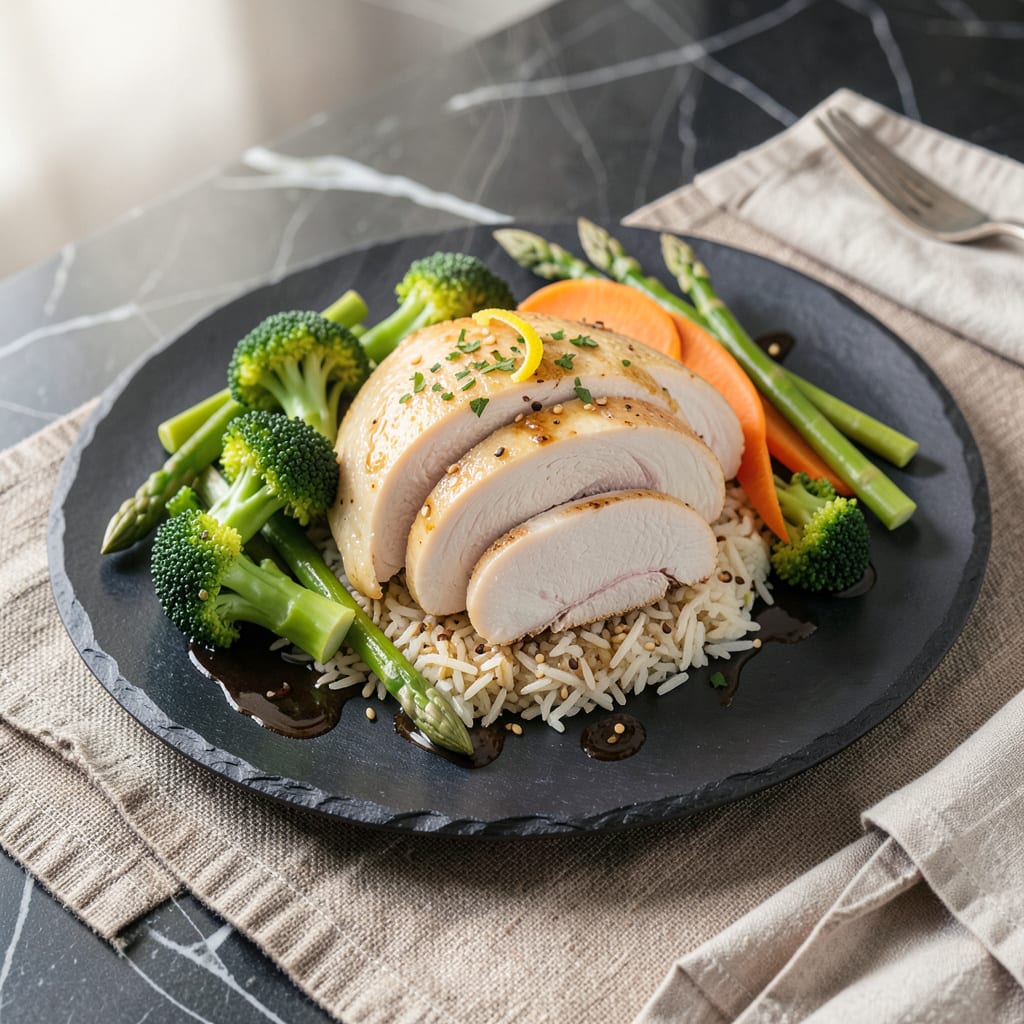
Steamed chicken is exceptionally healthy as it preserves protein quality, retains essential nutrients like B vitamins and selenium, and avoids added fats from oils. This gentle cooking method keeps calories low while maintaining moisture and digestibility.
When I compare steaming to other cooking methods, the health advantages become crystal clear. The moist heat environment prevents the protein denaturation that occurs with high-temperature methods like frying, which can degrade amino acid quality. 🔥 What’s particularly impressive is how steam cooking locks in water-soluble vitamins that would otherwise leach out during boiling or get destroyed by direct flame.
From a practical standpoint, this method shines for those monitoring their fat intake or managing conditions like heart disease. The absence of added oils means you’re getting pure chicken nutrition without the extra 120+ calories per tablespoon that frying would add. Plus, the gentle process makes it easier to digest while keeping the meat tender enough for all ages.
💡 In This Article
- Nutritional Science Behind Steamed Chicken Benefits
- Maximizing Health Benefits When Steaming Chicken
Nutritional Science Behind Steamed Chicken Benefits
The magic of steaming lies in its gentle 212°F environment that cooks chicken without breaking down its delicate nutrients. Unlike frying at 350°F+ or grilling over direct flames, steam preserves the complete amino acid profile of chicken protein. The moist heat causes proteins to coagulate slowly, maintaining their biological value while keeping the meat tender.
This method particularly excels at retaining B-complex vitamins like niacin and B6, which are water-soluble and would otherwise leach into cooking water. 🔥
What sets steaming apart is its ability to maintain chicken’s natural moisture content. The condensation process creates a humidity level of about 100% in the cooking environment, preventing the muscle fibers from drying out. Compare this to roasting, where chicken can lose up to 30% of its moisture through evaporation.
The steam also acts as a natural barrier, protecting heat-sensitive nutrients like selenium (which supports thyroid function) and zinc (crucial for immune health) from oxidation. ✨
From a caloric perspective, steamed chicken delivers pure protein power without hidden extras. A 3.5-ounce serving provides about 31g of protein with only 165 calories, compared to fried chicken which can pack 250+ calories in the same portion due to oil absorption.
The absence of added fats makes it ideal for those managing cholesterol levels or following heart-healthy diets. The gentle cooking also makes the protein more digestible by partially breaking down connective tissues. 💫
The science gets even more interesting when we examine how steam affects chicken’s cellular structure. The moist heat causes collagen fibers to convert to gelatin at lower temperatures than dry heat methods, resulting in that signature tender texture without needing long cooking times. This process also makes minerals like phosphorus and potassium more bioavailable.
Unlike boiling where nutrients dissolve into the water, steam cooking keeps them locked in the meat where your body can utilize them. ⚡
Research shows steamed chicken retains about 90% of its thiamine content compared to just 60% in boiled chicken. The difference comes from steam’s ability to cook food without submerging it in water.
For those watching their sodium intake, steaming requires no added salt to keep the meat flavorful – the natural juices concentrate during cooking, enhancing taste without compromising health benefits. 🌟
This method particularly benefits active individuals and those in recovery. The high-quality protein in steamed chicken provides all essential amino acids in ratios that support muscle repair and immune function. The gentle cooking preserves glutamine, an amino acid that plays a key role in gut health and recovery from intense physical activity.
Unlike charred or blackened meats, steamed chicken contains no potentially harmful compounds like heterocyclic amines that can form during high-heat cooking. 💛

- Jollof Rice Sauce Recipe: West African Tomato and Spice Infusion - September 25, 2026
- Japanese Rice Soup Recipe: Umami-Rich Comfort in a Bowl - September 25, 2026
- Homemade Cream Of Rice Recipe: Silk-Smooth Breakfast in Minutes - September 25, 2026