
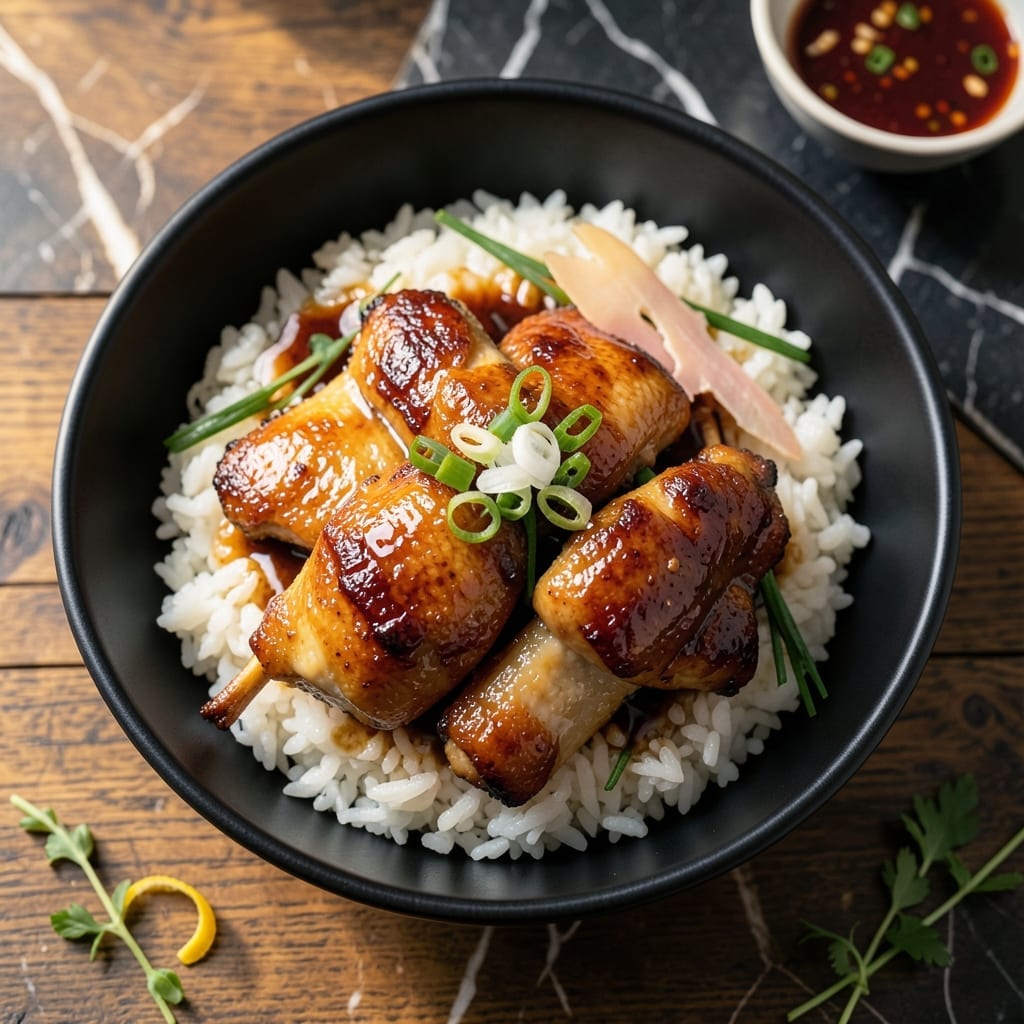
This Japanese chicken bowl brings restaurant-quality flavors to your home kitchen with minimal effort. The teriyaki glaze creates a sticky-sweet coating that perfectly complements the tender chicken and fresh vegetables.
I developed this recipe to simplify weeknight cooking without sacrificing authenticity. The chicken cooks quickly at 400°F, while the steamed veggies add color and texture in minutes.
The secret lies in the balance of flavors—savory soy sauce, sweet mirin, and aromatic ginger create a sauce that’s both rich and well-rounded. Every bite delivers that signature umami depth.
Serve over steamed rice for a complete meal that’s ready in under 30 minutes. The presentation is as satisfying as the taste.
Ingredients for Japanese Chicken Bowl
Pantry staples meet fresh produce for this vibrant, flavor-packed bowl.
| Ingredient | Amount | Notes |
|---|---|---|
| Boneless Chicken Thighs 🍗 | 1 ½ lb | Skin-on or skinless, cut into bite-sized pieces |
| Soy Sauce 🥢 | ½ cup | Low-sodium preferred for balance |
| Mirin 🍶 | ¼ cup | Sweet rice wine essential for authenticity |
| Fresh Ginger Root 🌿 | 1 whole | Peeled and finely grated |
| Garlic Cloves 🧄 | 3 cloves | Minced for maximum flavor |
| Granulated Sugar 🍚 | 2 tbsp | Balances the savory elements |
| Cornstarch 🌾 | 1 tbsp | For thickening the teriyaki glaze |
| Vegetable Oil 🫒 | 1 tbsp | High smoke point for searing |
| Broccoli Florets 🥦 | 2 cups | Fresh or frozen, cut evenly |
| Carrots 🥕 | 2 whole | Julienned or thinly sliced |
| Green Onions 🧅 | 3 whole | Thinly sliced for garnish |
| Steamed White Rice 🍚 | 2 cups | Uncooked, yields about 6 cups cooked |
| Sesame Seeds 🌰 | 1 tbsp | Toasted for garnish |
| Water 💧 | ¼ cup | For cornstarch slurry |
The chicken is the star—thighs stay juicier than breasts here (trust me on this). Costco has great pre-cut thigh pieces if you’re in a hurry, but any grocery store works. For the soy sauce, Kikkoman low-sodium is my go-to—lets you control the salt without sacrificing depth. Mirin can be tricky to find; check the Asian aisle or grab it at H Mart. Ginger and garlic should be fresh—no shortcuts on these.
No mirin? Dry sherry with a teaspoon of sugar gets you 80% there. Out of fresh ginger? Ground ginger at one-quarter the amount in a pinch (but fresh is worth the effort). The veggies are flexible—swap in bell peppers, snap peas, or zucchini. For rice, jasmine or short-grain absorbs the teriyaki best. If you’re gluten-free, tamari instead of soy sauce works perfectly.
Leftovers keep 4-5 days in the fridge—reheat gently to avoid drying out the chicken. The teriyaki glaze thickens as it cools, so thin with a splash of water if needed. Freezes beautifully for up to 3 months (portion before freezing for easy meals).
Why You’ll Love This Recipe
- One Pan Wonder: I love that everything cooks together—just sear the chicken thighs, then let the soy, mirin, ginger, and garlic work their magic in the same pan.
- Umami Bomb: The combo of soy sauce and mirin creates this sweet-savory glaze that coats every bite of tender chicken.
- Meal Prep Hero: I make a big batch Sunday night and it reheats beautifully for lunches all week.
- Budget Friendly: Boneless thighs are cheaper than breasts, and this recipe stretches them into a filling meal with rice and veggies.
Step-by-Step Instructions for Teriyaki Glazed Japanese Chicken Bowl
Here’s the method I use to build maximum flavor in every layer of this dish.
Step 1: Prepare the Teriyaki Glaze Base
In a medium bowl, combine the 0.5 cup Soy Sauce, 0.25 cup Mirin, 2 tbsp Granulated Sugar, peeled and finely grated Fresh Ginger Root, and minced 3 cloves Garlic Cloves. Whisk until the sugar begins to dissolve and the mixture looks uniform.
This base develops the deep umami flavor that defines teriyaki. I always let it sit for 5 minutes before using to allow the ginger and garlic to infuse fully into the liquid. The grated ginger should be fine enough that you can’t see distinct pieces—this ensures even distribution in every bite.
Step 2: Cook the Chicken and Thicken the Glaze
Heat the 1 tbsp Vegetable Oil in a large skillet over medium-high heat until it shimmers. Add the 1.5 lb Boneless Chicken Thighs cut into bite-sized pieces and cook for 5-6 minutes, stirring occasionally, until the pieces are browned on all sides and cooked through.
Pour the soy sauce mixture over the chicken and bring to a simmer. In a small cup, mix the 1 tbsp Cornstarch with the 0.25 cup Water until smooth, then stir this slurry into the skillet. Cook for 2-3 minutes until the sauce thickens to a glossy glaze that coats the back of a spoon. The glaze should cling to the chicken pieces beautifully.
Step 3: Steam the Vegetables to Perfection
While the chicken cooks, prepare the vegetables. Place the 2 cups Broccoli Florets and julienned 2 whole Carrots in a steamer basket over boiling water. Cover and steam for 4-5 minutes until the vegetables are tender-crisp—bright in color and slightly resistant when pierced with a fork.
Don’t overcook them; they should retain some bite to contrast with the tender chicken. The carrots should be just soft enough to bite through easily but not mushy. Transfer the steamed vegetables to a bowl and set aside until ready to assemble.
Step 4: Assemble the Bowls and Garnish
Divide the 2 cups Steamed White Rice evenly among four bowls. Top each portion with the teriyaki chicken and its glossy sauce, then arrange the steamed broccoli and carrots alongside. The rice should be hot to create a satisfying contrast with the warm chicken and vegetables.
Sprinkle each bowl with thinly sliced 3 whole Green Onions and toasted 1 tbsp Sesame Seeds for a final touch. The green onions add a fresh, sharp bite that cuts through the richness of the teriyaki, while the sesame seeds add a nutty crunch. Serve immediately while everything is at its peak temperature and texture.
Pro Tips For Making Japanese Chicken Bowl
- Sear the Thighs: Get your pan screaming hot before adding the chicken—this gives you that crispy, caramelized edge that soaks up the soy-mirin glaze. I learned this the hard way after too many pale, sad chicken bowls.
- Grate the Ginger: Skip the mincing and use a microplane for the fresh ginger—it releases way more flavor and blends seamlessly into the sauce.
- Reduce the Sauce: After cooking the chicken, let the soy-mirin mixture simmer for 2-3 minutes to thicken slightly. Sounds weird, but it works—no one likes a watery chicken bowl.
- Slice Against Grain: Cut the cooked thighs against the grain for shorter muscle fibers. It’s the thing that matters most for tender, easy-to-eat pieces in every bite.
Common Mistakes When Making This Dish
Overcooking Chicken
Chicken thighs can turn rubbery if cooked too long. I pull them off the heat as soon as they hit 165°F internal temperature—this usually takes 5-6 minutes at medium-high heat. Remember, they’ll continue cooking slightly as they rest.
Thin Sauce Problem
If your teriyaki glaze stays watery, the cornstarch slurry might need more time. After adding the slurry, let it simmer for a full 2-3 minutes while stirring constantly. The sauce should coat the back of a spoon when done. 💡
Skipping the Rest
Don’t rush to assemble the bowls immediately. Let the chicken rest in its sauce for 3-4 minutes after cooking. This allows the flavors to meld and the glaze to thicken slightly, ensuring every piece is perfectly coated.
Soggy Vegetables
Over-steaming is the enemy of crisp veggies. 4-5 minutes in the steamer basket is perfect for broccoli and carrots—they should be bright and slightly resistant. Plunge them in ice water immediately if you need to stop the cooking process.
Uneven Chicken Pieces
Cut your 1.5 lb Boneless Chicken Thighs into uniform, bite-sized pieces before cooking. This ensures even cooking and prevents some pieces from drying out while others finish. I aim for 1-inch cubes for consistent results.
Cold Rice Mistake
Always use hot, freshly steamed rice. Cold rice absorbs the teriyaki sauce unevenly and creates a dense texture. Keep your 2 cups Steamed White Rice warm while prepping other components for the best bowl experience.
Nutrition Facts
Frequently Asked Questions
Can I use chicken breast instead of thighs?
Yes, but thighs stay juicier. If using breast, reduce cooking to 4-5 minutes at medium-high heat to prevent dryness. Brining the breast for 30 minutes beforehand helps too.
What can I substitute for mirin?
Use 2 tbsp dry sherry plus 1 tbsp sugar per 0.25 cup mirin. Or mix equal parts rice vinegar and honey for a quick fix.
How do I make the sauce gluten-free?
Swap soy sauce for tamari and ensure all other ingredients are certified gluten-free. The cornstarch is naturally gluten-free, so no change needed there.
Can I meal prep this dish?
Store components separately in airtight containers for up to 4 days. Reheat chicken and sauce together, and microwave veggies briefly to restore crispness.

- Jollof Rice Sauce Recipe: West African Tomato and Spice Infusion - September 25, 2026
- Japanese Rice Soup Recipe: Umami-Rich Comfort in a Bowl - September 25, 2026
- Homemade Cream Of Rice Recipe: Silk-Smooth Breakfast in Minutes - September 25, 2026