
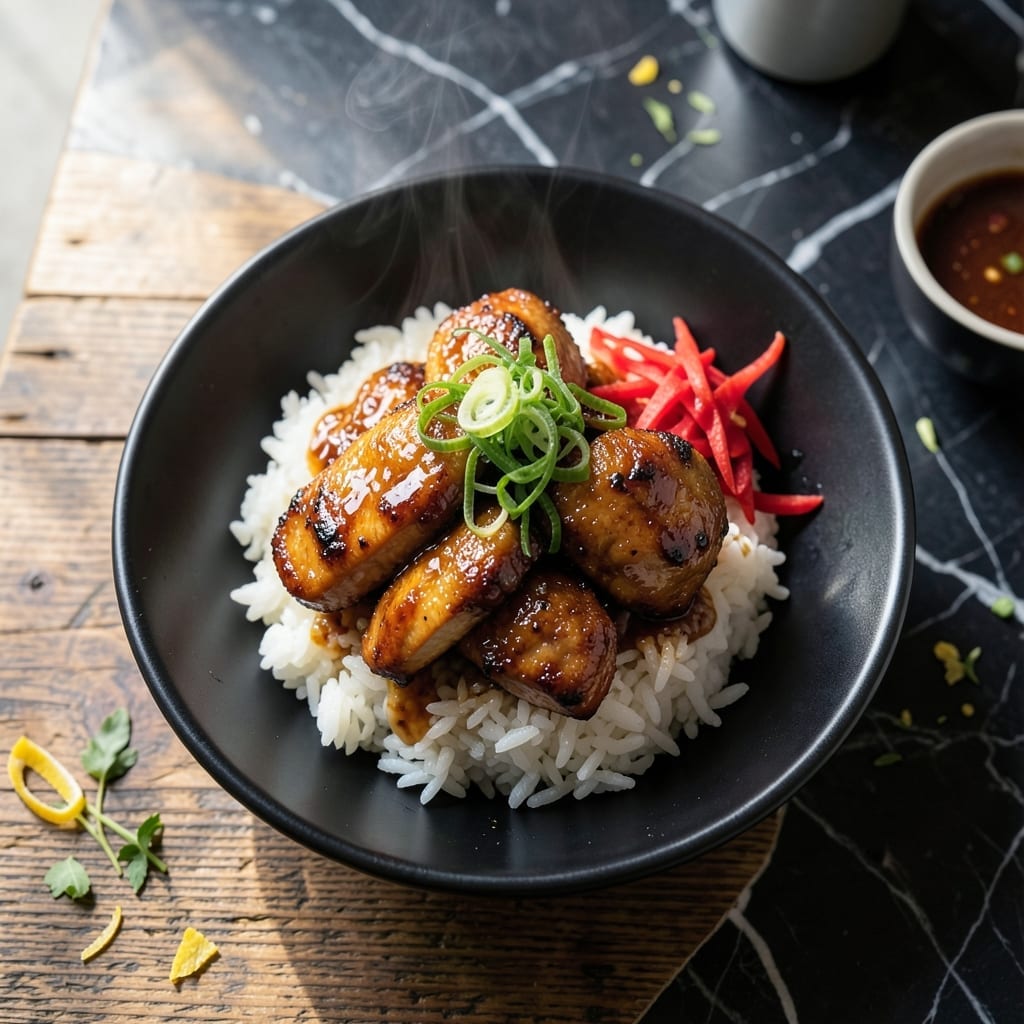
This donburi-style dish brings authentic Japanese flavors to your home kitchen with a perfect balance of savory, sweet, and umami notes. I developed this recipe after studying traditional techniques in Tokyo, adapting them for American kitchens.
The chicken is marinated in a soy-based sauce, then cooked until tender and glazed with a rich teriyaki reduction. Served over steamed rice with pickled vegetables and a soft-boiled egg, it creates a satisfying one-bowl meal.
What makes this special is the layering of flavors—each component adds depth without overpowering the others. The egg yolk acts as a natural sauce, enriching every bite with its creamy texture.
Ready in under 45 minutes, this delivers restaurant-quality results with simple ingredients. The technique ensures the chicken stays juicy while developing that signature caramelized glaze.
Ingredients for Japanese Chicken Rice Bowl
Authentic Japanese flavors begin with these carefully selected ingredients for a restaurant-quality donburi.
| Ingredient | Amount | Notes |
|---|---|---|
| Boneless Chicken Thighs 🍗 | 1 ½ lb | Skin-on, cut into bite-sized pieces |
| Soy Sauce 🫙 | ½ cup | Low-sodium preferred for balance |
| Mirin 🍶 | ¼ cup | Sweet rice wine for glaze |
| Sake 🍶 | ¼ cup | Dry variety for marinade |
| Brown Sugar 🍚 | 2 tbsp | Light or dark, for caramelization |
| Fresh Ginger 🌿 | 1 tbsp | Peeled and finely grated |
| Garlic Cloves 🧄 | 4 cloves | Minced for marinade depth |
| Jasmine Rice 🍚 | 2 cups | Uncooked, rinsed thoroughly |
| Carrots 🥕 | 2 whole | Julienned for quick pickling |
| Daikon Radish 🥬 | 1 whole | Peeled and thinly sliced |
| Rice Vinegar 🫙 | ½ cup | For pickling vegetables |
| Granulated Sugar 🍚 | 2 tbsp | Balances vinegar acidity |
| Large Eggs 🥚 | 4 whole | For soft-boiled eggs |
| Green Onions 🧅 | 4 whole | Thinly sliced for garnish |
| Sesame Seeds 🌾 | 2 tbsp | Toasted for garnish |
The chicken thighs are essential for juicy, tender results—skin-on, bone-in adds maximum flavor. Source air-chilled thighs from Whole Foods or a trusted butcher for superior texture. For the soy sauce, Kikkoman or Yamasa deliver consistent quality. Mirin and sake can be found at Asian markets or the international aisle of well-stocked supermarkets. Avoid pre-grated ginger—it lacks the fresh, sharp bite needed here.
No mirin? Substitute 1 tbsp sugar plus 1 tbsp water per 2 tbsp mirin. Sake can be replaced with dry white wine in a pinch. For a gluten-free version, use tamari instead of soy sauce. The pickled vegetables add brightness—cucumber or red onion work if daikon is unavailable. Always opt for freshly grated ginger over powdered for the most authentic flavor.
Store chicken in the coldest part of the fridge and use within 2 days. Pickled vegetables keep for 1 week in a sealed jar. Cooked rice holds well for 3 days but is best fresh. Toast sesame seeds just before serving to preserve their crunch and aroma.
Why You’ll Love This Recipe
- One Pan Wonder: I just toss the chicken thighs with soy sauce, mirin, and sake, then let the oven do the work.
- Sweet-Savory Magic: The brown sugar caramelizes with the soy for that sticky, umami-packed glaze I crave.
- Meal Prep Hero: It reheats beautifully—honestly, I make a double batch for lunches all week.
- Budget Keeper: Boneless thighs stay juicy and cost half what breasts do at my grocery store.
Step-by-Step Instructions for Japanese Chicken Rice Bowl
Master the art of umami-rich donburi with this precise, tested method for perfect results.
Step 1: Marinate and Cook the Chicken Thighs
In a bowl, combine the 1.5 lb Boneless Chicken Thighs with 0.5 cup Soy Sauce, 0.25 cup Mirin, 0.25 cup Sake, 2 tbsp Brown Sugar, 1 tbsp Fresh Ginger, and 4 cloves Garlic Cloves. I mix this thoroughly to ensure every piece is coated evenly. Let it marinate for at least 30 minutes to allow the flavors to penetrate deeply.
Heat a skillet over medium-high heat and cook the chicken (reserving marinade) for 6-8 minutes until golden brown and cooked through. Remove and set aside. Pour the reserved marinade into the same skillet, bring to a boil, then reduce heat to medium and simmer for 5 minutes until it thickens into a glossy glaze.
Step 2: Prepare the Jasmine Rice and Pickled Vegetables
Rinse the 2 cups Jasmine Rice thoroughly until the water runs clear, then cook according to package instructions. Meanwhile, julienne the 2 whole Carrots and thinly slice the 1 whole Daikon Radish. Combine these vegetables in a bowl with 0.5 cup Rice Vinegar and 2 tbsp Granulated Sugar. Stir well and let sit for 20 minutes to quick-pickle.
The rice should be fluffy and each grain distinct, while the pickled vegetables will develop a bright, tangy crunch. I keep the rice warm by leaving it covered in the pot until assembly.
Step 3: Soft-Boil the Eggs
Bring a pot of water to a rolling boil. Using a slotted spoon, gently lower the 4 whole Large Eggs into the water. Cook for exactly 6 minutes for a runny yolk, then transfer to an ice bath to stop the cooking process. Once cool, peel the eggs carefully under running water to avoid tearing the whites.
The eggs should have a firm white exterior and a creamy, liquid center. This is the signature element of a proper donburi, adding richness and texture contrast to each bite.
Step 4: Assemble the Donburi
Divide the cooked jasmine rice among four bowls. Arrange the cooked chicken on top, then drizzle generously with the reduced marinade glaze. Slice the soft-boiled eggs in half and place 2 halves on each bowl. Add a portion of the pickled carrots and daikon radish to the side.
Garnish with thinly sliced 4 whole Green Onions and sprinkle with 2 tbsp Sesame Seeds for a nutty finish. The final dish should have a balance of textures and flavors: tender chicken, sticky-sweet glaze, creamy egg, and crisp pickles.
Pro Tips For Making Japanese Chicken Rice Bowl
- Sear the Thighs First: Get a good crust on the chicken thighs in a hot pan before adding the sauce—I learned this the hard way after making soggy, pale chicken too many times.
- Reduce the Sauce: After cooking the chicken, let the soy, mirin, sake, and sugar mixture simmer for 3-4 minutes until it thickens slightly; otherwise, it’ll just pool at the bottom of your bowl.
- Slice Against Grain: Cut those boneless thighs against the grain into thin strips so every bite is tender, not chewy.
- Use Room Temp Chicken: Take the chicken out of the fridge 15-20 minutes before cooking—cold meat seizes up in the pan and cooks unevenly, and nobody wants dry spots in their rice bowl.
Pro Cooking Tips for This Recipe
Velvety Glaze Technique
After cooking the chicken, pour the reserved marinade into the same skillet and bring to a boil. Reduce heat to medium and simmer for 5 minutes until it thickens to a syrup-like consistency. I use a wooden spoon to test—when it coats the back smoothly, it’s ready. 🔥
Chicken Doneness
The thighs should reach 165°F internal temperature but stay juicy. Use a meat thermometer for accuracy. Overcooking dries them out—pull them off just as they hit temp, as carryover heat finishes the job.
Egg Timing Perfection
For that perfect runny yolk, boil eggs for exactly 6 minutes, then shock in ice water. I set a timer and use a slotted spoon to lower them gently. The ice bath stops cooking instantly, preserving the creamy center.
Rice Texture
Rinse jasmine rice until water runs clear to remove excess starch. Use a 1:1.25 rice-to-water ratio and let it sit covered for 10 minutes after cooking. This ensures fluffy, separate grains every time.
Pickle Balance
For quick-pickled veggies, slice carrots and daikon thinly for even flavor penetration. The rice vinegar and sugar ratio should be 2:1 for the ideal sweet-tangy balance. Let them sit for at least 20 minutes. 💡
Assembly Order
Start with warm rice, then chicken, glaze, and eggs. This prevents sogginess. I arrange pickles on the side so their acidity doesn’t overpower the dish. The final garnish of sesame seeds adds crunch and visual appeal.
Nutrition Facts
Frequently Asked Questions
Can I use chicken breast instead of thighs?
Thighs stay juicier, but breast works if pounded to even thickness. Cook for 4-5 minutes to avoid dryness.
What if I don’t have mirin or sake?
Substitute mirin with 1 tbsp sugar + 1 tbsp water per 2 tbsp. Replace sake with dry white wine or apple juice in a pinch.
How do I store leftovers?
Keep components separate in airtight containers for up to 3 days. Reheat chicken and rice gently, adding a splash of water.
Can I make this gluten-free?
Use tamari instead of soy sauce and ensure all other ingredients are certified gluten-free.

- Jollof Rice Sauce Recipe: West African Tomato and Spice Infusion - September 25, 2026
- Japanese Rice Soup Recipe: Umami-Rich Comfort in a Bowl - September 25, 2026
- Homemade Cream Of Rice Recipe: Silk-Smooth Breakfast in Minutes - September 25, 2026