
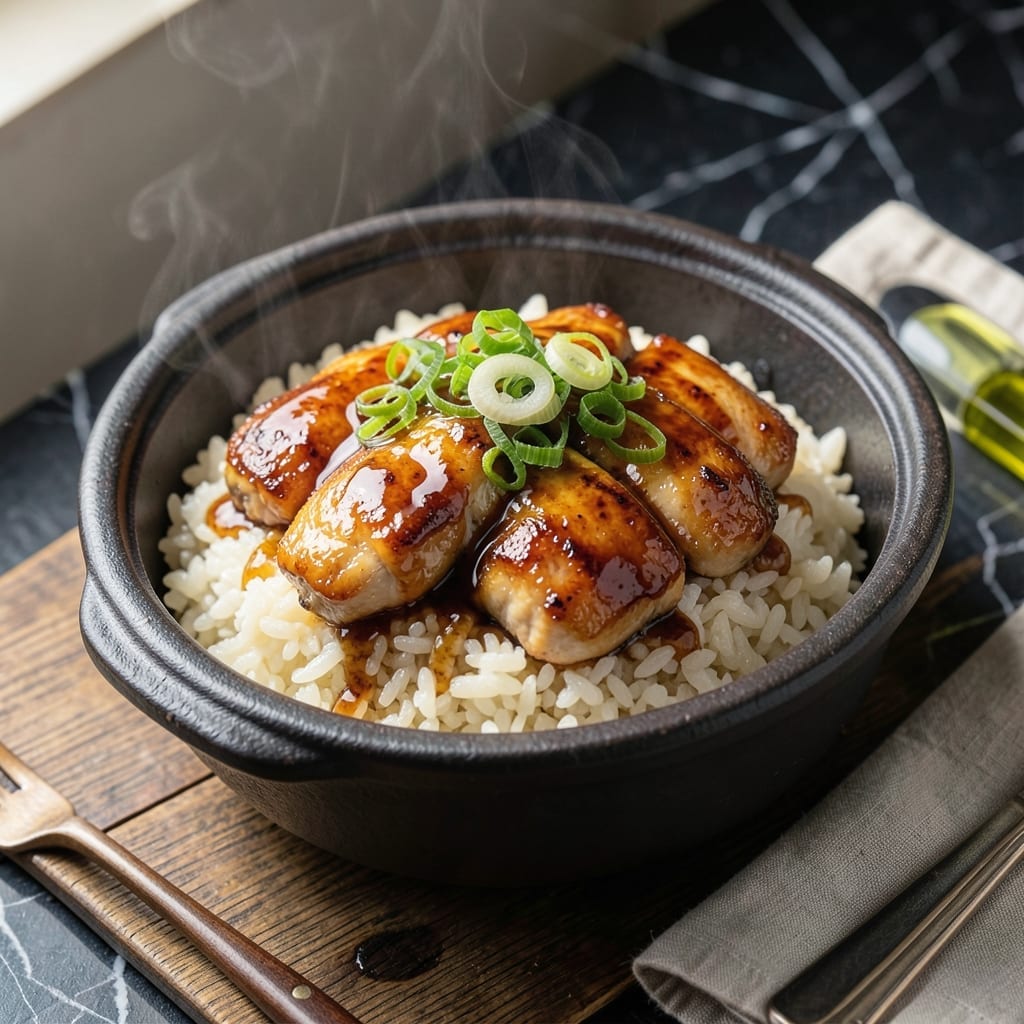
There’s something deeply satisfying about the crispy bottom layer of traditional Japanese clay pot rice, known as okoge. This method transforms simple ingredients into a dish with complex textures and rich flavors.
Using a donabe (clay pot), the rice cooks evenly while developing that coveted golden crust at the base. The process takes patience, but the reward is a pot of rice with nutty grains and a perfect sear.
Dashi and soy sauce infuse the grains with umami depth, while toppings like chicken or mushrooms add heartiness. The key is controlling the heat to achieve that signature crispy finish without burning.
This isn’t just rice—it’s a complete, comforting meal with layers of flavor and texture in every bite.
Ingredients for Japanese Clay Pot Rice
Simple ingredients transform into a complete comforting meal with crispy nutty layers and rich umami depth.
| Ingredient | Amount | Notes |
|---|---|---|
| Japanese Short-Grain Rice 🍚 | 2 cups | Rinsed until water runs clear |
| Dashi Stock 🍲 | 2 ½ cups | Homemade or instant granules |
| Soy Sauce 🫒 | 3 tbsp | Divided for cooking and serving |
| Sake 🍶 | 2 tbsp | Dry variety preferred |
| Mirin 🍯 | 2 tbsp | Sweet rice wine for glaze |
| Boneless Chicken Thighs 🍗 | 1 lb | Cut into bite-sized pieces |
| Shiitake Mushrooms 🍄 | 4 whole | Fresh or rehydrated dried |
| Green Onions 🧅 | 3 whole | Thinly sliced for garnish |
| Neutral Oil 🛢️ | 1 tbsp | For cooking chicken and mushrooms |
| Sesame Oil 🫒 | 1 tsp | For finishing drizzle |
| Nori Sheets 🍣 | 1 sheet | Cut into thin strips |
| Sesame Seeds 🌰 | 1 tsp | Toasted for garnish |
| Kosher Salt 🧂 | ½ tsp | Adjust to taste |
The rice is everything here. Japanese short-grain like Koshihikari or Nishiki gives you that sticky, chewy texture essential for okoge formation. Rinsing the rice removes excess starch—don’t skip this step (worth the extra minute). Dashi is the soul of the dish; instant granules from Kikkoman work perfectly if you’re not making it from scratch. For the crisp, a well-seasoned donabe from Iwachu is ideal, but a heavy Dutch oven works too.
No sake? Dry white wine gets you 80% there. Mirin can be 1 tbsp sugar plus 1 tbsp water in a pinch. Vegetarian? Swap chicken for extra mushrooms or tofu. The soy sauce should be Japanese-style—Kikkoman or Yamasa. If you’re gluten-free, tamari works but adjust salt. The nori is optional but adds that authentic touch (the good stuff, not the pre-shredded kind).
Leftover rice loses its crisp but reheats well. Store in the fridge for 3-4 days in an airtight container. The donabe needs special care—let it cool completely, then clean with water only (no soap). Freezing isn’t recommended; the texture suffers. Best made fresh and served immediately for that perfect okoge experience.
Why You’ll Love This Recipe
- I’ll be real: the next day’s rice tastes even richer. The flavors meld overnight, so I make extra on purpose.
- One-Pot Magic: I just dump the rice, dashi, and seasonings in the pot and let it work its magic—minimal cleanup, maximum flavor.
- Umami Bomb: That combo of soy sauce, sake, and mirin with the dashi? Ridiculously good. The rice soaks up every bit of savory depth.
- Feeds My Crowd: Honestly, it’s my go-to when friends drop by unannounced. Stretches easily, and everyone leaves happy.
Step-by-Step Instructions for Japanese Clay Pot Rice
Master the technique for achieving that coveted crispy bottom with perfectly cooked grains.
Step 1: Prepare and Rinse the Rice
Place the 2 cups Japanese Short-Grain Rice in a fine-mesh strainer and rinse under cold running water. Agitate the grains with your fingers, changing the water 3-4 times until it runs completely clear. This removes excess starch, which ensures the grains cook up separate and fluffy rather than gummy.
After the final rinse, drain the rice thoroughly in the strainer for 10 minutes. You want the grains to be just barely damp, not wet. Properly rinsed rice absorbs the cooking liquid evenly and develops the characteristic nutty flavor essential to this dish.
Step 2: Sear the Chicken and Mushrooms
Heat the 1 tbsp Neutral Oil in a heavy pot or Dutch oven over medium-high heat. Add the 1 lb Boneless Chicken Thighs cut into bite-sized pieces and sear undisturbed for 3-4 minutes until golden brown on one side. The chicken should release easily from the pot when properly browned.
Flip the chicken and add the 4 whole Shiitake Mushrooms. Cook for another 2-3 minutes until the mushrooms begin to soften and develop color. The chicken doesn’t need to be fully cooked at this stage—it will finish in the rice. Transfer the chicken and mushrooms to a plate and set aside.
Step 3: Combine and Cook the Rice
In the same pot, add the rinsed rice, 2.5 cups Dashi Stock, 2 tbsp Sake, 2 tbsp Mirin, 1 tbsp Soy Sauce, and 0.5 tsp Kosher Salt. Stir to combine, making sure to scrape up any browned bits from the bottom. These fond bits add incredible depth of flavor to the rice as it cooks.
Return the chicken and mushrooms to the pot, distributing them evenly over the rice. Bring the mixture to a boil over high heat, then immediately reduce to low heat. Cover tightly and simmer for 15 minutes. Resist the urge to lift the lid—steam is critical during this phase.
Step 4: Create the Crispy Bottom
After 15 minutes, remove the lid and increase the heat to medium-high. Drizzle the remaining 2 tbsp Soy Sauce over the top. Cook uncovered for 5-7 minutes until you hear a crackling sound and see the edges turning deep golden brown. This is the signature crispy bottom forming.
Traditional clay pots develop this crust naturally, but a heavy pot works just as well. The key is allowing the rice to sizzle and crisp without stirring. Once the bottom is evenly browned and crispy, remove from heat.
Step 5: Rest and Garnish
Cover the pot and let the rice rest for 10 minutes. This allows the grains to steam and become tender while the crispy bottom sets. During this time, thinly slice the 3 whole Green Onions, cut the 1 sheet Nori Sheets into thin strips, and toast the 1 tsp Sesame Seeds in a dry pan until fragrant.
To serve, fluff the rice gently with a spatula, being careful not to break up the crispy bottom. Drizzle with 1 tsp Sesame Oil and top with green onions, nori strips, and toasted sesame seeds. Serve immediately in the pot, allowing each person to scoop up portions of the coveted crispy bottom.
Pro Tips For Making Japanese Clay Pot Rice
- Soak the Rice: Rinse your short-grain rice until the water runs clear, then soak it for 30 minutes—this removes excess starch and guarantees even cooking in the clay pot.
- Heat the Pot First: Always preheat your clay pot before adding oil or rice; I learned this the hard way after my first batch stuck badly to a cold surface.
- Use Fresh Dashi: Skip the instant stuff—freshly made dashi with kombu and bonito flakes actually changes the outcome, giving the rice a deeper, cleaner flavor.
- Finish with High Heat: After the rice is cooked, crank the heat for 2-3 minutes to get that coveted crispy bottom layer, or okoge—sounds weird, but it works.
Health Benefits of This Recipe
Complex Carbohydrates
This dish features Japanese short-grain rice, a complex carb that provides steady energy release. Each serving offers about 45g of carbohydrates with a low glycemic index, helping maintain stable blood sugar levels throughout your day. 💪
Protein Powerhouse
The 1 lb boneless chicken thighs deliver approximately 30g of protein per serving. Chicken thighs are rich in essential amino acids, supporting muscle repair and immune function without the dryness of breast meat.
Umami-Rich Nutrients
Dashi stock and soy sauce provide a powerhouse of B vitamins, particularly B12 and niacin. These nutrients are vital for metabolism and nervous system health, while the fermented soy adds beneficial probiotics.
Low in Saturated Fat
Despite its rich flavor, this meal remains heart-healthy with only about 5g of saturated fat per serving. The neutral oil used for cooking is predominantly unsaturated, supporting cardiovascular health.
Fiber and Micronutrients
Shiitake mushrooms contribute 2g of fiber per serving along with immune-boosting selenium and copper. The nori sheets add iodine, essential for thyroid function, and vitamin K.
Balanced Meal
With its combination of carbs, protein, and healthy fats, this dish offers a nutritionally complete meal. The sesame oil finish adds antioxidants, while the green onions provide vitamin C for a well-rounded dietary profile. ✨
Nutrition Facts
Frequently Asked Questions
What type of rice works best?
Use Japanese short-grain rice like Koshihikari or Nishiki. Its sticky texture is essential for forming the crispy bottom. Rinse until water runs clear to remove excess starch.
Can I make this without a clay pot?
A heavy Dutch oven works as a substitute. The key is using medium-high heat to create the crispy layer. Avoid non-stick pans as they won’t develop the same texture.
How do I prevent the rice from burning?
Keep the heat at medium-high and listen for crackling sounds. Remove from heat immediately once the bottom turns deep golden brown. Stirring breaks the crust, so resist the urge.
What vegetarian options can I use?
Swap chicken for extra mushrooms or tofu. Add vegetables like carrots or bell peppers for more texture. The dashi stock can be made with kombu for a fully vegetarian version.

- Mujadara Rice and Lentils Recipe: Earthy Spiced Lentils With Caramelized Onions - November 1, 2026
- Naija Fried Rice Recipe: Street-Style Spice With Veggie Crunch - November 1, 2026
- Mushy Rice Recipe: Fluffy Grains Transformed in Minutes - November 1, 2026