
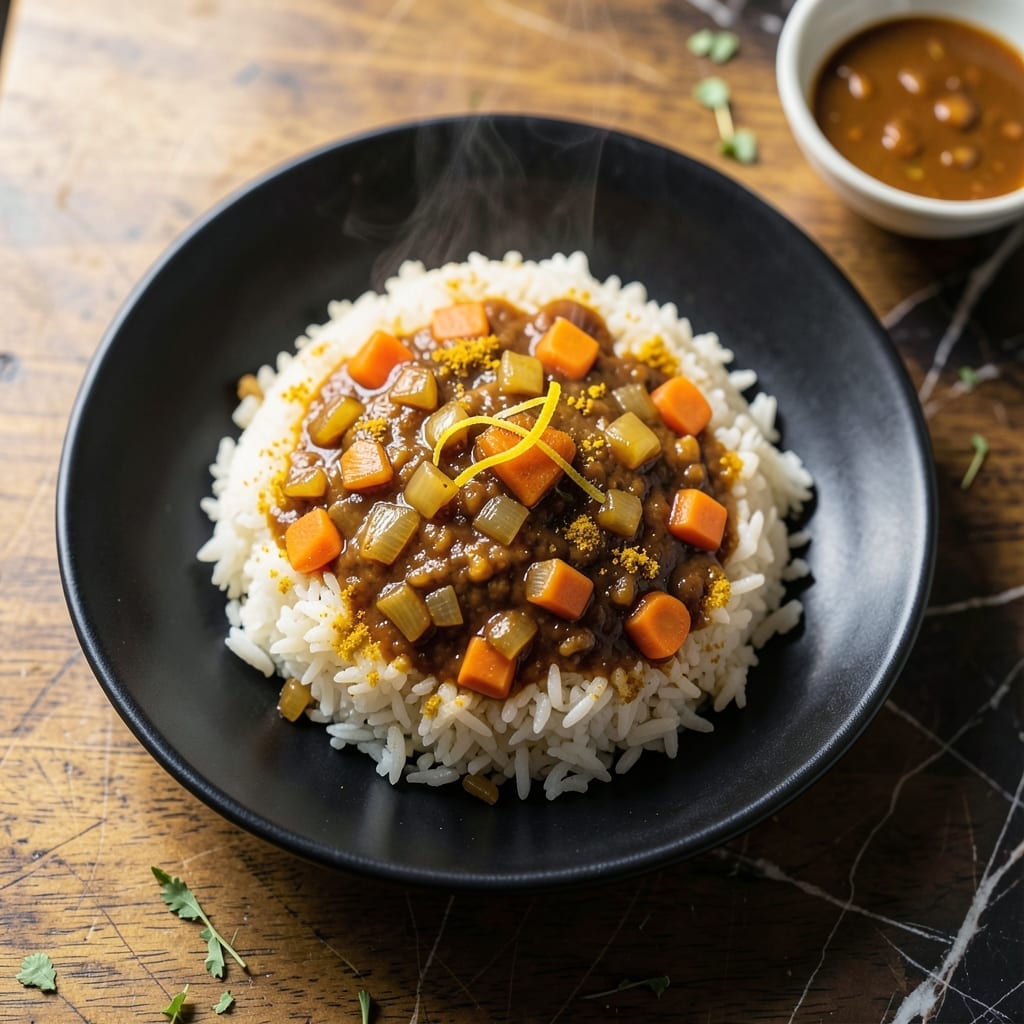
This Japanese-inspired fried rice transforms leftover ingredients into a restaurant-quality dish packed with umami depth. The golden turmeric notes create a warm, aromatic base that complements the savory curry flavor perfectly.
I developed this method after discovering how well Japanese curry powder elevates simple fried rice. The key is cooking the rice slightly dry first to prevent mushiness, then incorporating the curry spices at the right moment for maximum flavor infusion.
What emerges is a dish with distinct layers: tender rice grains, perfectly seasoned vegetables, and that signature curry warmth. Each bite delivers complex flavors without overwhelming the palate.
The beauty lies in its adaptability—use whatever proteins or vegetables you have on hand. This recipe proves that exceptional meals can come from humble beginnings.
Ingredients for Japanese Curry Fried Rice
Transform humble leftovers into a wok-tossed masterpiece with these carefully selected components.
| Ingredient | Amount | Notes |
|---|---|---|
| Cooked White Rice 🍚 | 4 cups | Day-old, chilled for firmness |
| Japanese Curry Powder 🌶️ | 2 tbsp | S&B Golden Curry preferred |
| Ground Turmeric 🟡 | ½ tsp | For golden color and warmth |
| Vegetable Oil 🫒 | 2 tbsp | High smoke point for frying |
| Yellow Onion 🧅 | 1 whole | Medium size, finely diced |
| Carrots 🥕 | 2 whole | Medium, julienned or diced |
| Green Peas 🌱 | ¾ cup | Fresh or frozen, thawed |
| Garlic Cloves 🧄 | 3 cloves | Minced for aromatic base |
| Fresh Ginger 🌿 | 1 tbsp | Grated or minced finely |
| Soy Sauce 🥢 | 2 tbsp | Low-sodium for balance |
| Large Eggs 🥚 | 2 whole | Beaten, for protein richness |
| Green Onions 🌱 | 3 whole | Thinly sliced for garnish |
| Sesame Oil 🫒 | 1 tsp | Toasted, for finishing aroma |
| Salt 🧂 | ½ tsp | Adjust to taste after cooking |
| Black Pepper 🌶️ | ¼ tsp | Freshly cracked preferred |
The Japanese curry powder is non-negotiable here. S&B Golden Curry is the gold standard—available at most Asian markets or online. Turmeric adds that signature golden hue and subtle earthiness; opt for freshly ground if possible. Day-old rice is essential (fresh rice turns mushy), and jasmine or short-grain varieties absorb the flavors best. The vegetables should be uniformly cut for even cooking.
No Japanese curry powder? Madras curry powder plus a pinch of cinnamon gets you 80% there. Fresh ginger paste works in a pinch (use half the amount). For a vegetarian version, skip the eggs and add firm tofu instead. Frozen peas are fine—just thaw and drain first. The soy sauce can be swapped for tamari if you need gluten-free.
Store curry powder in an airtight container away from light—it keeps for 6-12 months. Cooked leftovers stay fresh in the fridge for 4-5 days and freeze beautifully for 3 months. Reheat gently to preserve the turmeric’s vibrant color and aroma.
Why You’ll Love This Recipe
- One Pan Wonder: I just toss the cooked rice with sautéed onions, a shake of Japanese curry powder, and a pinch of turmeric—no extra pots, no fuss.
- Warm Spice Hug: The curry powder and turmeric turn simple rice into something rich and aromatic. Honestly, it’s the kind of dish I crave on chilly evenings.
- Feeds My Week: I make a big batch on Sunday and pack it for lunches—still tastes amazing reheated.
- Budget Stretcher: Between us, a cup of rice and a spoonful of spices feed me for days. Cheaper than takeout, and just as satisfying.
Step-by-Step Instructions for Japanese Curry Fried Rice
This method ensures perfectly seasoned grains with vibrant color and layered umami flavors.
Step 1: Prepare and Sauté the Aromatic Base
Heat the 2 tbsp vegetable oil in a wok or large skillet over medium-high heat until shimmering. Add the finely diced yellow onion and cook for 3-4 minutes, stirring frequently, until the edges turn translucent and begin to caramelize.
Add the julienned carrots and continue cooking for another 2-3 minutes until they soften slightly but retain a bit of crispness. Stir in the minced garlic cloves and 1 tbsp fresh ginger, cooking for 30 seconds until fragrant. This builds the aromatic foundation essential for depth of flavor.
Step 2: Combine Rice and Seasonings
Increase heat to high and add the 4 cups cooked white rice, breaking up any clumps with a spatula. Spread the rice evenly across the pan and press down lightly to ensure maximum contact with the heat. Cook undisturbed for 1-2 minutes to develop a slight crust on the bottom.
Sprinkle the 2 tbsp Japanese curry powder and 0.5 tsp ground turmeric evenly over the rice. Drizzle the 2 tbsp soy sauce around the edges of the pan, then toss everything together vigorously for 2-3 minutes until the rice is uniformly coated and the spices are fully incorporated. The turmeric will give the dish its signature golden hue.
Step 3: Incorporate Vegetables and Finish Cooking
Add the 0.75 cup green peas and stir-fry for 1-2 minutes until they are heated through and vibrant in color. Push all the ingredients to one side of the pan to create a well. Pour the beaten large eggs into the empty space and scramble quickly until just set but still slightly runny.
Immediately fold the eggs into the rice mixture. Season with 0.5 tsp salt and 0.25 tsp black pepper, adjusting to taste. The eggs should coat the grains lightly, adding richness without dominating the texture.
Step 4: Garnish and Serve
Remove from heat and stir in the 1 tsp sesame oil, ensuring it’s evenly distributed. The toasted sesame oil will add a nutty aroma that ties all the flavors together. Transfer to a serving dish and top with the thinly sliced green onions for a fresh, crisp finish.
Let the dish rest for 2 minutes before serving to allow the flavors to meld. Each grain should be distinct yet infused with the warm, savory notes of curry and the earthy brightness of turmeric.
Pro Tips For Making Japanese Curry Fried Rice
- Use Day-Old Rice: Fresh rice turns mushy—spread leftover cooked white rice on a tray and refrigerate overnight to dry it out. I learned this the hard way after my first three batches turned to paste.
- Bloom the Spices: Heat the Japanese curry powder and turmeric in oil for 30 seconds before adding onions. Sounds weird, but it works: it wakes up the flavors in a way raw spices just can’t.
- Skip the Wet Ingredients: Resist the urge to add sauces or fresh veggies straight in—they’ll steam the rice instead of frying it. Stick to dry ingredients until the very end.
- High Heat Only: Crank the burner to medium-high and keep it there. After burning one batch at low heat, I finally figured out that this dish needs serious heat to get that slight crisp on the rice.
Health Benefits of This Dish
Anti-Inflammatory Power
The ground turmeric in this dish contains curcumin, a compound with powerful anti-inflammatory properties. Studies show 0.5-1 tsp daily can reduce joint pain and support immune function. I notice less morning stiffness when I eat turmeric regularly. 💪
Digestive Health Boost
Fresh ginger aids digestion by accelerating gastric emptying, which helps prevent bloating. The 1 tbsp in this recipe works synergistically with turmeric to soothe your digestive tract. This combination has been used in traditional medicine for centuries.
Protein-Packed Energy
The 2 large eggs provide 12 grams of complete protein per serving, containing all nine essential amino acids. This sustained energy keeps you full for hours without the crash associated with refined carbs. Perfect for a post-workout meal.
Vegetable Nutrient Density
Carrots offer beta-carotene (converted to vitamin A), while green peas provide fiber and plant-based protein. Together with onions, they create a vitamin-rich base. The 0.75 cup peas alone deliver 4 grams of fiber per serving.
Heart-Healthy Fats
The 2 tbsp vegetable oil and 1 tsp sesame oil contain unsaturated fats that support cardiovascular health. Sesame oil also provides sesamol, an antioxidant that may lower cholesterol. I always use toasted sesame for maximum flavor. ✨
Low Glycemic Impact
Using 4 cups day-old rice reduces its glycemic impact compared to fresh rice. The cooling process converts some starches to resistant starch, which acts like fiber in your system. This helps maintain stable blood sugar levels after eating.
Nutrition Facts
Frequently Asked Questions
Can I use fresh rice instead of day-old?
Fresh rice contains too much moisture and will turn mushy when stir-fried. Always use day-old, chilled rice for the best texture. Spread it on a tray to dry slightly before cooking if needed.
What can I substitute for Japanese curry powder?
Use 1 tbsp madras curry powder plus 1 tsp cinnamon and 0.5 tsp cumin for a similar flavor profile. The blend won’t be identical but captures the warm, aromatic notes.
How do I prevent the eggs from overcooking?
Scramble them in a well on the side of the pan, then fold into the rice while still slightly runny. The residual heat will finish cooking them perfectly without drying out.
Can I make this dish vegetarian?
Omit the eggs and add 1 cup diced firm tofu or 1 cup chickpeas instead. Sauté the tofu first for extra texture before adding to the rice.

- Mujadara Rice and Lentils Recipe: Earthy Spiced Lentils With Caramelized Onions - November 1, 2026
- Naija Fried Rice Recipe: Street-Style Spice With Veggie Crunch - November 1, 2026
- Mushy Rice Recipe: Fluffy Grains Transformed in Minutes - November 1, 2026