
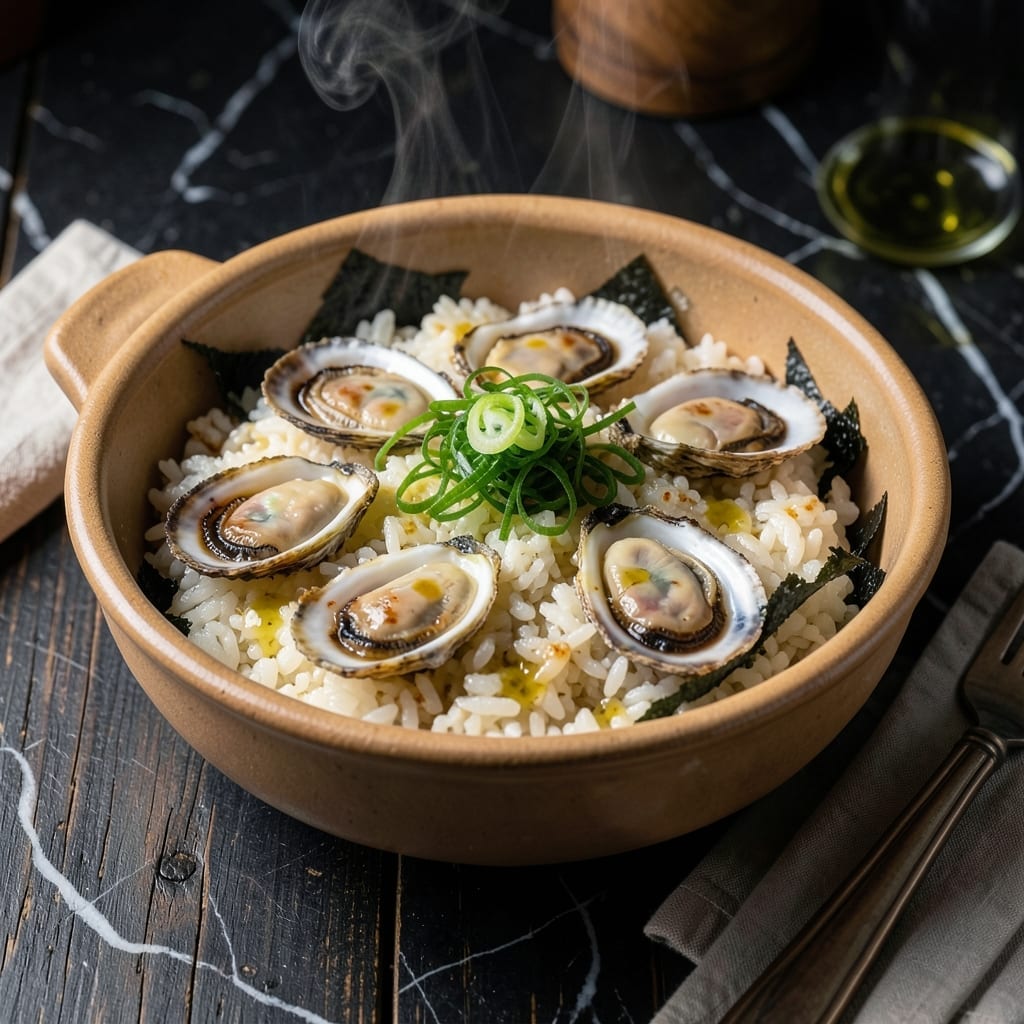
This Japanese oyster rice delivers a perfect balance of briny sweetness and charred depth that defines traditional donabe cooking. The technique transforms simple ingredients into something extraordinary through precise timing and heat control.
I developed this method after studying authentic recipes from Hiroshima, where oyster rice is a beloved local specialty. The key is cooking the oysters just until their edges crisp while maintaining their natural juiciness. Each bite offers a contrast of textures and flavors.
What you get is plump oysters with caramelized edges resting on fragrant steamed rice that absorbs their essence. The dish captures the soul of Japanese comfort food with minimal effort and maximum impact.
Serve immediately while hot, as the oysters release their briny liquor into the rice below. The result is a dish that’s both rustic and refined.
Ingredients for Japanese Oyster Rice
Simple ingredients transform into extraordinary comfort food with briny, charred depth over steamed rice.
| Ingredient | Amount | Notes |
|---|---|---|
| Fresh Oysters 🦪 | 24 pieces | Shucked, liquid reserved |
| Short-Grain White Rice 🍚 | 2 cups | Japanese sushi rice preferred |
| Soy Sauce 🫙 | 3 tbsp | Low-sodium for balance |
| Sake 🍶 | 2 tbsp | Dry variety recommended |
| Mirin 🍶 | 1 tbsp | Sweet cooking rice wine |
| Dashi Stock 🍲 | 1 ½ cups | Or substitute with fish stock |
| Green Onions 🧅 | 4 whole | Thinly sliced for garnish |
| Garlic Cloves 🧄 | 3 cloves | Minced for aromatic base |
| Fresh Ginger 🌿 | 1 tbsp | Grated for depth |
| Neutral Oil 🛢️ | 2 tbsp | High smoke point for searing |
| Sesame Oil 🫒 | 1 tsp | Toasted for finishing |
| Nori Seaweed Sheets 🌊 | 1 sheet | Cut into strips for garnish |
| White Sesame Seeds 🌰 | 1 tsp | Toasted for crunch |
| Sugar 🍚 | 1 tsp | Balances briny flavors |
The oysters are the star, so source them from a trusted seafood market or Asian grocery. Look for plump, fresh oysters with a clean, briny smell. Hiroshima-style oysters are ideal if available, but any fresh variety works. For the rice, Japanese short-grain like Koshihikari or Calrose absorbs the oyster liquor best. Dashi stock is non-negotiable for authentic flavor—find it at Japanese markets or the international aisle.
No sake? Dry white wine works in a pinch. Mirin can be swapped with 1 tbsp sugar + 1 tbsp water, though the depth won’t be the same. If you’re out of dashi, use fish stock with a splash of soy sauce. The green onions can be substituted with chives, and nori strips can be skipped if unavailable (but they add that classic touch).
Cook the rice fresh—day-old won’t absorb the flavors as well. Leftovers keep for 2 days in the fridge, but the oysters are best eaten immediately. The dashi and sake can be stored in the pantry for 6-12 months unopened, or refrigerated for 1 month after opening.
Why You’ll Love This Recipe
- One Pot Wonder: I toss everything in a rice cooker and let it work its magic—no stirring, no fuss.
- Umami Bomb: The oysters soak up the soy, sake, and mirin into every grain of rice. Ridiculously good.
- Weeknight Hero: Here’s what sold me—it’s ready before the kids finish their homework.
- Budget Friendly: Fresh oysters are cheaper than you’d think, and a little goes a long way in this dish.
Step-by-Step Instructions for Japanese Oyster Rice
This method ensures perfect texture and balanced flavors in every bite.
Step 1: Rinse and Cook the Short-Grain White Rice
Place the 2 cups Short-Grain White Rice in a fine-mesh strainer and rinse under cold water until the water runs clear. This removes excess starch and prevents the cooked rice from becoming gummy. Drain well.
Combine the rinsed rice and 1.5 cups Dashi Stock in a rice cooker or pot. Cook according to your rice cooker’s instructions or simmer on the stove for 15-20 minutes until the liquid is absorbed and the rice is tender. Fluff with a fork and cover to keep warm.
Step 2: Sear the Fresh Oysters with Aromatics
Heat 2 tbsp Neutral Oil in a large skillet or wok over high heat until shimmering. Add the 24 pieces Fresh Oysters in a single layer, reserving their liquid. Sear undisturbed for 1-2 minutes until the edges begin to curl and brown.
Add the 3 cloves Garlic Cloves (minced), 1 tbsp Fresh Ginger (grated), and 1 tsp Sugar. Stir-fry for 30 seconds until the garlic is fragrant but not browned. This builds a flavorful base for the oysters.
Step 3: Deglaze and Create the Sauce
Pour in the 2 tbsp Sake, 1 tbsp Mirin, and 3 tbsp Soy Sauce. Stir to combine, scraping up any browned bits from the pan. Add the reserved oyster liquid and simmer for 2-3 minutes until the sauce reduces slightly and coats the oysters.
The sauce should be glossy and lightly syrupy. Taste and adjust seasoning if needed, but remember the oysters are naturally briny, so the balance should be slightly sweet and umami-rich.
Step 4: Finish and Garnish
Drizzle the 1 tsp Sesame Oil over the oyster mixture and stir to combine. Spoon the oysters and sauce over the cooked rice, dividing evenly among four bowls.
Garnish with 4 whole Green Onions (thinly sliced), 1 sheet Nori Seaweed Sheets (cut into strips), and 1 tsp White Sesame Seeds. Serve immediately while the oysters are hot and the rice is steaming.
Pro Tips For Making Japanese Oyster Rice
- Rinse the rice: Wash the short-grain rice until the water runs clear—skipping this leaves your dish gummy instead of fluffy.
- Drain oysters well: Pat the fresh oysters thoroughly with paper towels before cooking or they’ll release too much liquid and dilute the flavors.
- Simmer, don’t boil: Keep the heat at a gentle simmer once the oysters go in—boiling toughens them and turns the rice mushy.
- Add sake last: Stir in the sake just before the oysters finish cooking to preserve its aroma and prevent it from evaporating too soon.
Troubleshooting This Dish
Oysters Too Watery
If your oysters release too much liquid, drain them on a paper towel-lined plate before searing. This prevents steaming instead of charring. I also pat them dry with another paper towel right before they hit the hot pan. 💡
Sauce Too Thin
When your sauce isn’t reducing, simmer it uncovered for an extra 2-3 minutes. The oyster liquor needs time to concentrate. I find a wide skillet helps evaporation more than a deep pan.
Rice Too Dry
If your rice seems dry, drizzle 1-2 tbsp of the oyster cooking liquid over it before serving. Alternatively, use 1.75 cups Dashi Stock instead of 1.5 cups next time. The rice should be slightly sticky.
Oysters Overcooked
They’re done when the edges just start to curl—usually 1-2 minutes max. Any longer and they’ll shrink and toughen. I use tongs to flip them quickly if needed.
Sauce Too Salty
Balance it with 1 tsp sugar or 1 tbsp mirin. The oysters’ natural brininess can vary, so taste as you go. I keep a small bowl of cooked rice nearby to test the sauce.
Burnt Garlic
Lower the heat slightly when adding aromatics. Garlic burns in 30 seconds over high heat. I remove the pan from heat briefly when adding it to prevent this common issue.
Nutrition Facts
Frequently Asked Questions
Can I use canned oysters instead of fresh?
Fresh oysters are ideal for authentic texture and flavor. Canned oysters can work in a pinch, but they lack the briny sweetness and may become rubbery when cooked. If using canned, drain and pat them very dry first.
What if I don’t have a rice cooker?
Cook the rice on the stove using a 1:1.25 rice-to-liquid ratio. Bring to a boil, then reduce to low heat, cover, and simmer for 15 minutes. Remove from heat and let sit covered for 10 minutes.
How can I make this dish gluten-free?
Use tamari or certified gluten-free soy sauce. Check that your dashi stock is gluten-free, as some brands contain wheat. All other ingredients should be naturally gluten-free.
Can I prepare this dish ahead of time?
Cook the rice ahead and keep warm, but sear the oysters just before serving. They lose their texture and warmth quickly. The sauce can be made 1 day ahead and reheated gently.

- Mujadara Rice and Lentils Recipe: Earthy Spiced Lentils With Caramelized Onions - November 1, 2026
- Naija Fried Rice Recipe: Street-Style Spice With Veggie Crunch - November 1, 2026
- Mushy Rice Recipe: Fluffy Grains Transformed in Minutes - November 1, 2026