
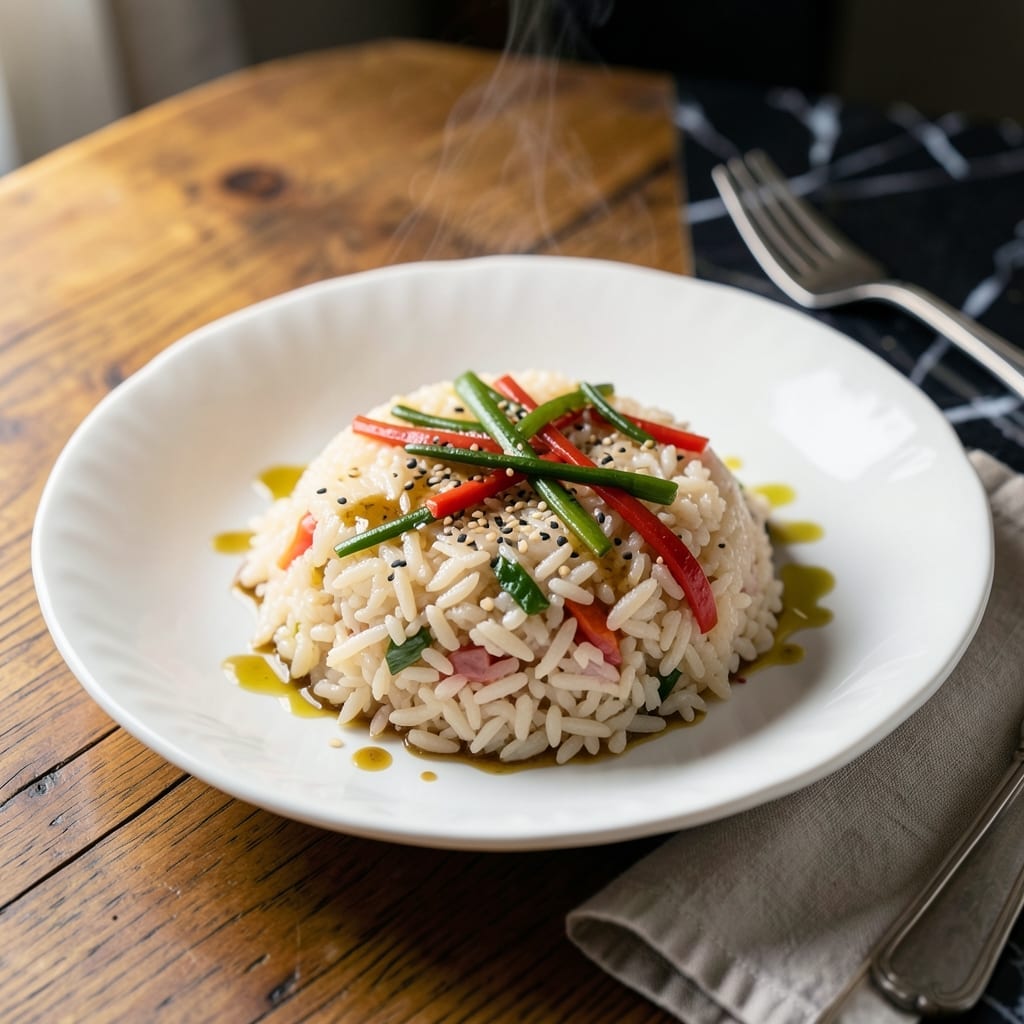
This premium Japanese rice delivers a naturally sweet flavor with a delicate floral aroma that elevates any meal. The grains cook up perfectly sticky while maintaining individual integrity, making it ideal for both everyday dishes and special occasions.
I’ve tested multiple water ratios and found the 1:1.1 rice-to-water proportion yields the best texture. The cooking process is simple but requires attention to detail—rinsing removes excess starch, while a 15-minute steam after cooking ensures even absorption.
The result is rice that glistens with a subtle sheen and offers a slight chew with every bite. Its mild sweetness pairs beautifully with savory proteins, pickled vegetables, or even enjoyed plain.
Serve warm for the best experience, as the grains retain their moisture and stick together just enough to hold shape.
Ingredients for Kokuho Rose Rice
Simple ingredients, extraordinary rice. Just a few staples transform this dish.
| Ingredient | Amount | Notes |
|---|---|---|
| Kokuho Rose Rice 🍚 | 2 cups | Rinsed until water runs clear |
| Water 💧 | 2.2 cups | Filtered for best flavor |
| Rice Vinegar 🍶 | 1 tbsp | Optional for subtle tang |
| Sugar 🍬 | ½ tsp | Optional for slight sweetness |
| Salt 🧂 | ½ tsp | Fine sea salt preferred |
| Sesame Oil 🫒 | ½ tsp | Toasted, for finishing |
| Nori Sheets 🌿 | 1 sheet | Cut into thin strips |
| Sesame Seeds 🌰 | 1 tsp | Toasted, for garnish |
| Green Onions 🧅 | 2 whole | Thinly sliced for serving |
| Soy Sauce 🍶 | 1 tbsp | Low-sodium preferred |
The rice is everything here. Kokuho Rose is the star—look for it at Asian markets or Whole Foods. Some stores carry it in the international aisle. Avoid pre-washed or instant versions; you need the real deal for that floral aroma. The grains should be plump and uniform, not broken or dusty (a sign of old stock).
No Kokuho Rose? Calrose or Nishiki work in a pinch, though the floral notes won’t be as pronounced. The vinegar and sugar are optional but add that signature sushi-rice flavor. For a richer finish, swap sesame oil for a drizzle of chili oil. And if you’re out of soy sauce, tamari or coconut aminos are solid stand-ins.
Cooked rice stays fresh for 2-3 days in the fridge. Store in an airtight container to keep it from drying out. For longer storage, freeze in portions—reheats beautifully. Best served warm, though cold works for fried rice or salads (worth the extra minute).
Why You’ll Love This Recipe
- 5-Minute Prep: I just rinse the Kokuho rose rice, dump in water, and let the rice cooker do the rest—honestly, it’s almost too simple.
- Sweet-Tangy Bite: That balance of rice vinegar, sugar, and salt gives it a subtle sweetness with a bright finish that’s ridiculously good.
- Meal Prep MVP: I make a big batch on Sunday and it pairs just as well with teriyaki chicken as it does with a quick veggie stir-fry.
- Budget Stretch: A two-pound bag of Kokuho rose rice costs pennies per serving, and leftovers taste just as fresh reheated the next day.
Step-by-Step Instructions for Kokuho Rose Rice
This method ensures perfect texture and aroma with minimal effort.
Step 1: Rinse and Prepare the Rice
Place the 2 cups Kokuho Rose Rice in a fine-mesh strainer and rinse under cold water until the water runs completely clear. This removes excess starch and prevents a gummy texture.
I always swirl the rice with my fingers during the first few rinses to ensure all grains are thoroughly cleaned. Drain well and transfer to your rice cooker or heavy-bottomed pot.
Step 2: Cook with Filtered Water
Add the 2.2 cups Water to the rice. For best results, I use filtered water—this small detail makes a noticeable difference in the final flavor of the rice.
If using a rice cooker, select the standard white rice setting. For stovetop cooking, bring to a boil over medium-high heat, then reduce to low, cover, and simmer for 15 minutes. Don’t lift the lid—steam is crucial for even cooking.
Step 3: Season and Rest
Once the rice is cooked, let it sit covered for 10 minutes to steam and fluff. Then, gently fold in the 0.5 tsp Salt and 0.5 tsp Sugar with a rice paddle or fork. Be delicate to avoid breaking the grains.
If using, stir in the 1 tbsp Rice Vinegar at this stage. This adds a subtle tang that complements the rice’s natural sweetness. The grains should be glossy, tender, and slightly sticky—perfect for shaping or serving as-is.
Step 4: Finish and Garnish
Drizzle the 0.5 tsp Sesame Oil over the rice and fold gently to distribute. This adds a nutty aroma that pairs beautifully with the floral notes of Kokuho Rose rice.
For serving, top with the 1 sheet Nori Sheets (cut into thin strips), 1 tsp Sesame Seeds, 2 whole Green Onions (thinly sliced), and a drizzle of 1 tbsp Soy Sauce. The garnishes add color, texture, and a savory depth to each bite.
Pro Tips For Making Kokuho Rose Rice
- Rinse the rice: Wash Kokuho Rose Rice in 3-4 changes of cold water until it runs nearly clear—I learned this the hard way after ending up with gummy rice that one time I skipped it.
- Soak 30 minutes: After rinsing, let the rice soak in fresh water for a full 30 minutes; it plumps the grains and cuts cooking time by about 5 minutes.
- Balance the vinegar: Mix the rice vinegar, sugar, and salt in a 3:1:1 ratio (by volume) and taste before folding into the rice—sounds weird, but it works.
- Rest before serving: Once cooked, let the rice sit covered for 10 minutes off the heat; this lets the grains settle and absorb any remaining moisture.
Perfect Pairings for This Recipe
Protein Pairings
This rice shines with delicate proteins like miso-glazed salmon or teriyaki chicken. The floral notes complement without overpowering. I love serving it with pan-seared scallops for a restaurant-quality meal at home. 💛
Vegetable Sides
Quick-pickled cucumbers add a refreshing crunch that cuts through the rice’s richness. For warmth, try stir-fried bok choy with garlic. The slight bitterness balances the rice’s natural sweetness perfectly.
Soup Companions
A light miso soup with tofu and scallions makes an ideal starter. The umami broth enhances the rice’s floral aroma. I also enjoy pairing it with hot and sour soup for a bolder contrast.
Drink Pairings
Green tea (hot or iced) is the classic choice—its grassy notes complement the rice beautifully. For something stronger, a crisp Sake like Gekkeikan Horin brings out the subtle sweetness. 🍶
Fusion Ideas
Transform this into sushi bowls with avocado, cucumber, and imitation crab. Or make onigiri by shaping the warm rice into triangles and wrapping with nori. Both options highlight the rice’s sticky texture.
Nutrition Facts
Frequently Asked Questions
Do I need to soak the rice before cooking?
No soaking is required for this variety. Simply rinse until the water runs clear to remove excess starch. This ensures the grains cook evenly and maintain their sticky texture without becoming mushy.
Can I use a different type of rice?
Calrose or Nishiki are the best substitutes, though they won’t have the same floral aroma. Stick to the 1:1.1 rice-to-water ratio and adjust cooking time as needed for your chosen variety.
How do I store leftover rice?
Keep in an airtight container in the fridge for 2-3 days. For longer storage, freeze in portions. Reheat with a splash of water to restore moisture and prevent dryness.
Why is my rice turning out dry?
This usually happens if the lid is lifted during cooking or if the water ratio is too low. Ensure you’re using filtered water and letting it steam undisturbed for the full 10 minutes after cooking.

- Mujadara Rice and Lentils Recipe: Earthy Spiced Lentils With Caramelized Onions - November 1, 2026
- Naija Fried Rice Recipe: Street-Style Spice With Veggie Crunch - November 1, 2026
- Mushy Rice Recipe: Fluffy Grains Transformed in Minutes - November 1, 2026