
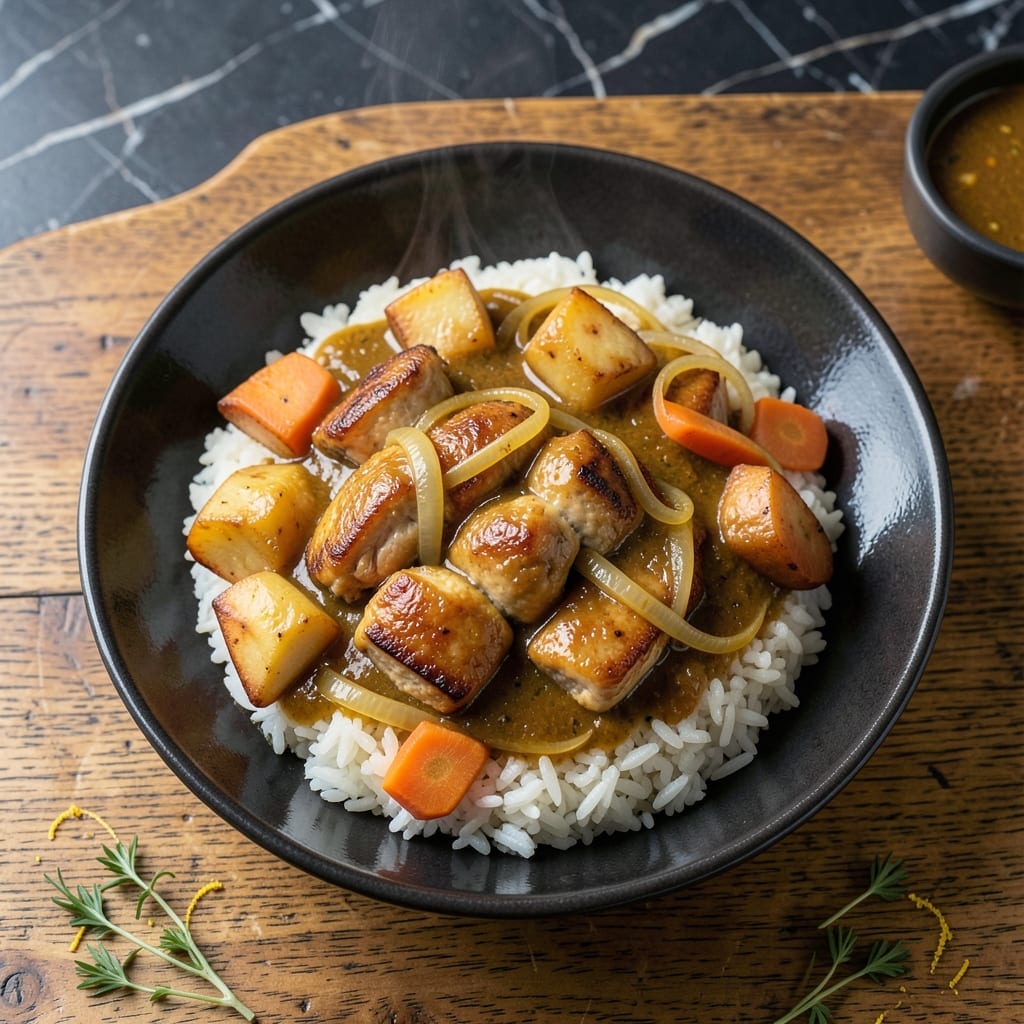
This recipe delivers the authentic taste of Japanese curry houses using Golden Curry roux blocks. The technique creates a rich, velvety sauce that clings perfectly to rice and vegetables.
I’ve refined this method to balance the roux’s deep flavors with tender proteins and the right vegetables. The key is simmering just long enough to meld everything without losing texture.
The result is a restaurant-quality dish with a thick, savory sauce and perfectly cooked ingredients. Every bite captures the comforting warmth of a traditional Japanese meal.
Serve it over steamed rice for a complete, satisfying experience that stays true to its roots.
Ingredients for Japanese Curry Rice Recipe Golden Curry
Golden Curry roux plus fresh ingredients create authentic Japanese comfort in every bite.
| Ingredient | Amount | Notes |
|---|---|---|
| Golden Curry Roux Blocks 🍛 | 4 pieces | Japanese brand, any heat level |
| Boneless Chicken Thighs 🍗 | 1 ½ lb | Skin-on or skinless, cut into bite-sized pieces |
| Yellow Onion 🧅 | 1 whole | Large, thinly sliced |
| Carrots 🥕 | 2 whole | Peeled, cut into chunks |
| Russet Potatoes 🥔 | 2 whole | Peeled, cubed into 1-inch pieces |
| Garlic Cloves 🧄 | 3 cloves | Minced for depth of flavor |
| Fresh Ginger 🌿 | 1 tbsp | Grated from fresh root |
| Soy Sauce 🫒 | 2 tbsp | Low-sodium for balance |
| Honey 🍯 | 1 tbsp | Adds subtle sweetness to curry |
| Water 💧 | 4 cups | For simmering roux and vegetables |
| Japanese Short-Grain Rice 🍚 | 2 cups | Uncooked, rinsed before use |
| Vegetable Oil 🫒 | 2 tbsp | Neutral flavor for searing |
| Salt 🧂 | ½ tsp | Adjust to taste after simmering |
| Black Pepper 🌶️ | ¼ tsp | Freshly ground preferred |
The Golden Curry roux is non-negotiable for authenticity—look for it in the international aisle at Asian markets or Amazon. The chicken thighs should be bone-in for richer flavor (remove bones after cooking if preferred). For vegetables, firm, fresh produce holds up best during simmering. I source my rice from Japanese specialty stores for the proper short-grain texture (Koshihikari or Nishiki brands are ideal).
Substitute beef for chicken if preferred—chuck roast cut into chunks works well. For a vegetarian version, use firm tofu or chickpeas instead of meat. No fresh ginger? Ground ginger at one-third the amount in a pinch. The honey can be replaced with brown sugar or maple syrup. If you can’t find Golden Curry, SBS or Vermont Curry blocks are acceptable alternatives.
Store the roux blocks in a cool, dry place—they keep for years unopened. Once opened, use within 3 months. Leftovers taste even better the next day and keep in the fridge for 4-5 days or freeze for 3 months. Reheat gently to maintain the sauce’s velvety texture.
Why You’ll Love This Recipe
- One Pot Wonder: I just toss the chicken, onions, carrots, and potatoes in a single pot—minimal cleanup, maximum flavor.
- Rich & Comforting: That Golden Curry roux gives it a deep, slightly sweet taste that coats every bite of rice.
- Meal Prep Magic: It reheats beautifully, so I make a big batch for lunches all week.
- Budget Stretcher: Boneless chicken thighs and basic veggies keep it affordable without sacrificing taste.
Step-by-Step Instructions for Japanese Curry Rice
Follow this authentic method to achieve the rich, velvety texture that defines Golden Curry.
Step 1: Prepare and Sear the Chicken Thighs
Cut the 1.5 lb boneless chicken thighs into bite-sized pieces. Pat them dry with paper towels to ensure a good sear. Heat 2 tbsp vegetable oil in a large pot or deep skillet over medium-high heat until it shimmers.
Add the chicken in a single layer and cook undisturbed for 3-4 minutes until the pieces develop a golden-brown crust. Flip and cook for another 3-4 minutes until evenly browned and cooked through. Remove the chicken to a plate and set aside.
Step 2: Sauté Aromatics and Vegetables
In the same pot, add the thinly sliced yellow onion, chunked carrots, and cubed russet potatoes. Cook over medium heat for 5 minutes, stirring occasionally, until the onions soften and begin to turn translucent.
Add the minced garlic cloves and 1 tbsp grated fresh ginger. Sauté for 1 minute until fragrant, stirring constantly to prevent burning. This builds the deep, aromatic base essential for authentic flavor.
Step 3: Simmer with Roux Blocks and Seasonings
Return the chicken to the pot. Pour in the 4 cups water, 2 tbsp soy sauce, and 1 tbsp honey. Stir to combine, then add the 4 pieces Golden Curry Roux Blocks. Break them into smaller pieces as they soften to help them dissolve faster.
Bring the mixture to a boil, then reduce heat to medium-low. Simmer uncovered for 15-20 minutes, stirring occasionally, until the potatoes and carrots are fork-tender and the sauce has thickened enough to coat the back of a spoon.
Step 4: Cook the Japanese Short-Grain Rice
While the curry simmers, rinse the 2 cups Japanese short-grain rice under cold water until the water runs clear. This removes excess starch and prevents a gummy texture. Drain well in a fine-mesh sieve.
Combine the rice with 2¼ cups water in a rice cooker or saucepan. Cook according to your rice cooker’s instructions or bring to a boil, then reduce to low heat, cover, and simmer for 15 minutes. Remove from heat and let it steam, covered, for an additional 10 minutes.
Step 5: Serve and Enjoy
Once the curry reaches your desired consistency, season with 0.5 tsp salt and 0.25 tsp black pepper, adjusting to taste. Ladle the hot curry over the steamed rice in individual bowls.
The curry should have a glossy finish with tender chunks of chicken and vegetables suspended in a thick, flavorful sauce. Serve immediately while hot, as the rice will continue to absorb the rich sauce upon standing.
Pro Tips For Making Japanese Curry Rice Recipe Golden Curry
- Brown the Chicken: Sear the boneless chicken thighs until golden before adding veggies—this builds a deep, savory base that the Golden Curry roux will cling to.
- Cut Potatoes Evenly: Dice the russet potatoes into 1-inch cubes so they cook at the same rate as the carrots and onions. I learned this the hard way after pulling out half-raw chunks from a rushed batch.
- Skip the Water Shortcut: Resist the urge to use only water for the liquid—add a splash of chicken stock or even a crushed tomato for complexity. Sounds weird, but it works.
- Simmer 15 Minutes: After adding the roux, let the curry simmer for a full 15 minutes on low heat. This thickens it properly and melts the flavors together—your future self will thank you.
Wine and Beer Pairings for These Flavors
Japanese Beer Pairings
For an authentic pairing, Sapporo Premium or Asahi Super Dry are perfect choices—their crisp, clean profiles cut through the curry’s richness without overwhelming its deep flavors. The light carbonation refreshes your palate between bites. 🍺
I also love Yebisu, a premium Japanese beer with a slightly malty sweetness that complements the curry’s savory-sweet balance. Serve all beers ice-cold in frosted mugs for the best experience.
White Wine Options
A lightly oaked Chardonnay works surprisingly well, especially one with citrus notes like Kendall-Jackson Vintner’s Reserve. The wine’s buttery texture mirrors the curry’s velvety sauce while its acidity cleanses the palate.
Red Wine Choices
For red lovers, a Pinot Noir like Meiomi offers red fruit flavors that don’t overpower the dish. Its lower tannins prevent clashing with the curry’s spices. Serve slightly chilled at 60-65°F.
Non-Alcoholic Pairings
Try Ramune soda (Japanese marble soda) in lychee or melon flavors for a sweet, fizzy contrast. Green tea—especially Sencha—also pairs beautifully, with its grassy notes balancing the dish’s richness. 💚
Nutrition Facts
Frequently Asked Questions
Can I use a different protein instead of chicken?
Beef chuck or pork shoulder work wonderfully. For seafood, try shrimp or white fish, adding them 5-8 minutes before serving. Tofu is a great vegetarian option too.
What if my curry is too thick?
Thin it with warm water or broth, 1/4 cup at a time, until desired consistency. Remember the sauce thickens as it cools. Simmer for 2-3 minutes after each addition.
How spicy is Golden Curry?
It comes in mild to hot varieties. The mild version has gentle warmth, while hot offers noticeable heat. For kids, use mild and omit added black pepper.
Can I make this ahead of time?
Yes! The flavors deepen overnight. Store in an airtight container for up to 5 days in the fridge. Reheat gently with a splash of water.

- Mujadara Rice and Lentils Recipe: Earthy Spiced Lentils With Caramelized Onions - November 1, 2026
- Naija Fried Rice Recipe: Street-Style Spice With Veggie Crunch - November 1, 2026
- Mushy Rice Recipe: Fluffy Grains Transformed in Minutes - November 1, 2026