
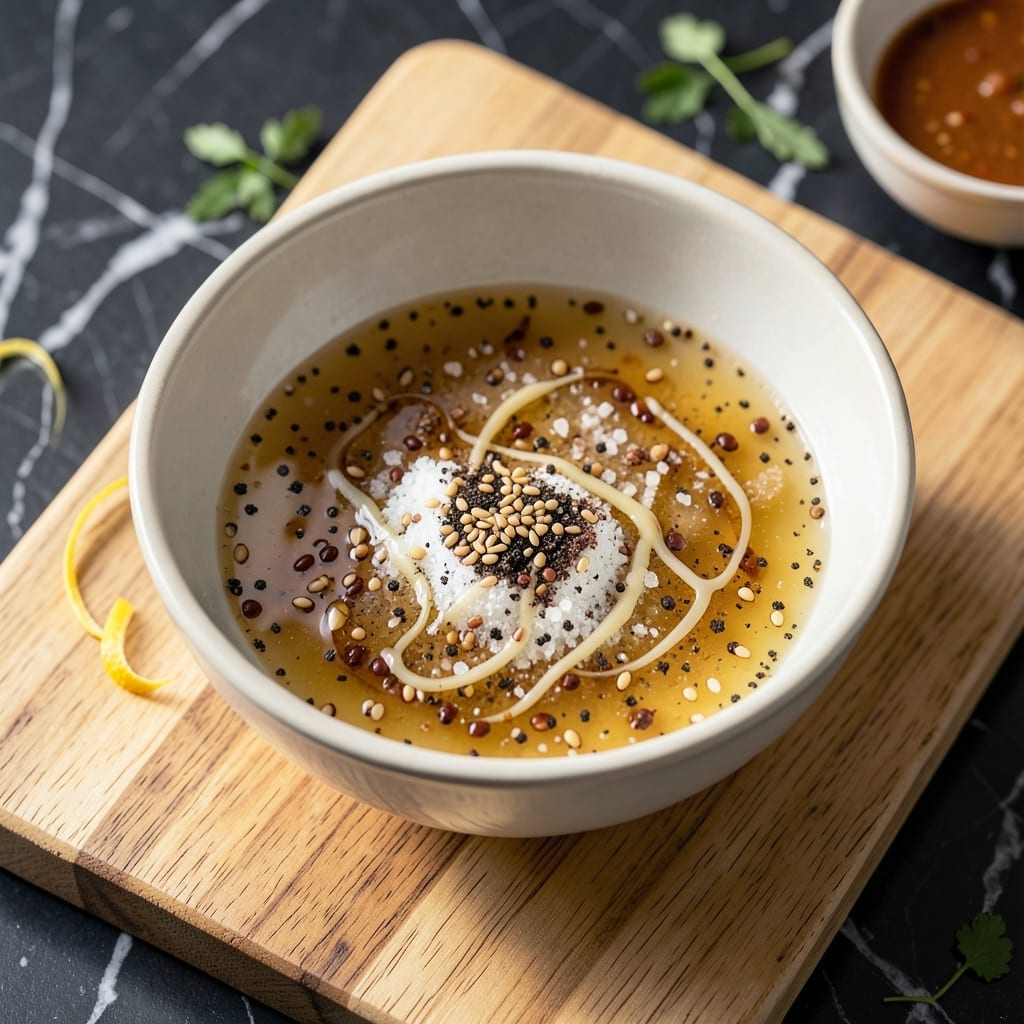
This seasoning blend transforms plain rice into the perfect foundation for authentic kimbap rolls. The balance of tangy, savory, and nutty flavors creates that signature taste Korean cooks rely on.
With just a few pantry staples, you can mix this up in under 5 minutes. The combination of sesame oil, rice vinegar, and sugar delivers the essential elements every kimbap needs.
Use this to season 4 cups of cooked rice, letting the grains absorb all the flavor before rolling. The result is rice that sticks together beautifully while maintaining distinct flavor in every bite.
Store in an airtight container for up to 1 month. This blend keeps its potency, ready to elevate your next kimbap making session.
Ingredients for Kimbap Rice Seasoning
Eight pantry staples create that signature kimbap rice flavor in minutes.
| Ingredient | Amount | Notes |
|---|---|---|
| Rice Vinegar 💧 | 2 tbsp | White or apple cider works |
| Sesame Oil 🫒 | 1 tbsp | Toasted for best flavor |
| Granulated Sugar 🍚 | 1 tbsp | White or turbinado fine |
| Salt 🧂 | ½ tsp | Fine sea salt preferred |
| Ground Black Pepper 🌶️ | ¼ tsp | Freshly cracked ideal |
| Toasted Sesame Seeds 🌰 | 1 tbsp | For nutty crunch |
| Garlic Powder 🧄 | ½ tsp | Not garlic salt |
| Onion Powder 🧅 | ½ tsp | Complements sesame well |
The sesame oil is non-negotiable here—Kadoya is my go-to brand for that deep, nutty aroma. Asian grocery stores carry it for less than specialty shops. Rice vinegar should be mild; avoid the seasoned kind (it’s already sweetened). I always keep a bag of toasted sesame seeds in the freezer to prevent them from going rancid. The sugar balances the tang, but you can adjust to taste.
No rice vinegar? White vinegar with a pinch of sugar works in a pinch. Out of sesame oil? Extra sesame seeds toasted in neutral oil adds similar flavor. The garlic and onion powders can be swapped for fresh minced at one-third the amount, but the dry versions blend more evenly. Skip the black pepper if you prefer a cleaner taste.
This keeps 1 month at room temperature in an airtight jar. The sesame seeds might settle, so give it a shake before using. For best results, mix this fresh each time you make kimbap—it’s worth the 5 minutes.
Why You’ll Love This Recipe
- 5-Minute Mix: I stir these 5 pantry staples together while the rice cooks—no chopping, no fuss.
- Sweet-Savory Magic: The sugar and rice vinegar balance is spot-on, and that sesame oil finish? Ridiculously good.
- Roll With Anything: I use this seasoning for kimbap, grain bowls, or even as a quick marinade for tofu.
- Penny-Wise Flavor: A batch costs pennies and lasts weeks in my fridge, so I’m never without that authentic taste.
Step-by-Step Instructions for Kimbap Rice Seasoning
This simple blending method ensures every grain of rice gets coated with bright, savory flavor.
Step 1: Combine the Liquid Base
In a small bowl, whisk together the 2 tbsp Rice Vinegar and 1 tbsp Granulated Sugar until the sugar fully dissolves. I use a fork for this—it breaks up any clumps quickly.
You’ll notice the mixture becomes slightly cloudy and syrupy as the sugar incorporates. This base creates the signature tangy-sweet foundation that balances the richness of the sesame oil to come.
Let it sit for 1-2 minutes to ensure complete dissolution. The vinegar’s acidity will slightly thin out as it absorbs the sugar.
Step 2: Add the Aromatic Powders
Sprinkle in the 0.5 tsp Salt, 0.25 tsp Ground Black Pepper, 0.5 tsp Garlic Powder, and 0.5 tsp Onion Powder. These dry ingredients need to be evenly distributed before adding the oil.
Whisk vigorously for 20-30 seconds until no dry specks remain. The salt will help draw out the flavors of the garlic and onion powders, creating a more cohesive seasoning.
Here’s the thing—these powders can clump if added directly to oil, so combining them with the vinegar mixture first ensures perfect dispersion.
Step 3: Emulsify with Sesame Oil
Drizzle in the 1 tbsp Sesame Oil in a slow, steady stream while whisking constantly. This creates a temporary emulsion that keeps the oil suspended in the mixture.
You’ll see the liquid take on a beautiful golden hue as the oil incorporates. The toasted sesame oil adds that unmistakable nutty aroma that makes this seasoning so special.
If the mixture separates slightly, don’t worry—it will come together when tossed with warm rice. The oil will coat each grain beautifully.
Step 4: Finish with Toasted Sesame Seeds
Stir in the 1 tbsp Toasted Sesame Seeds. Unlike the other ingredients, these should be folded in gently rather than whisked to prevent crushing their delicate texture.
The seeds will float to the top initially, but they’ll distribute evenly when you mix this with the rice. Their nutty crunch provides a delightful contrast to the tender rice.
Real talk: freshness matters here. If your sesame seeds aren’t aromatic when you open the container, toast new ones in a dry pan until golden brown before adding.
Let the mixture sit for 5 minutes before using to allow the flavors to meld completely. The seasoning should be glossy with visible sesame seeds throughout.
Pro Tips For Making Kimbap Rice Seasoning
- Warm the vinegar: I learned this the hard way—cold rice vinegar won’t dissolve the sugar properly. Heat it just until warm (about 30 seconds in the microwave) before mixing with the other ingredients.
- Toast the sesame oil: Lightly toasting the sesame oil in a dry pan for 1-2 minutes deepens its nutty flavor. Sounds small, but it makes the seasoning taste way more complex.
- Dissolve sugar first: Mix the granulated sugar into the warm rice vinegar before adding anything else. This prevents grainy bits in your final seasoning.
- Season while hot: Toss the seasoning into the rice when it’s still steaming hot—it absorbs better. I used to wait until it cooled and wondered why the flavor was so dull.
Troubleshooting kimbap rice seasoning
Too Salty
If your seasoning tastes too salty, balance it by adding ½ tsp sugar and 1 tsp rice vinegar. This won’t dilute the flavor but will round out the sharpness. I always taste after adding salt to avoid this issue. 💡
Separation Issues
If the mixture separates, simply whisk it vigorously again before using. For stubborn separation, add ½ tsp warm water to help re-emulsify. The oil will fully incorporate when tossed with warm rice.
Weak Flavor
If the seasoning tastes bland, add ½ tsp sesame oil and a pinch more salt. Remember, the flavor intensifies when mixed with rice. Use fresh toasted sesame seeds for maximum impact.
Grainy Texture
Undissolved sugar causes graininess. Ensure the sugar fully dissolves in the vinegar before adding other ingredients. If needed, warm the vinegar slightly in the microwave for 10-15 seconds first.
Sesame Seed Clumping
To prevent sesame seeds from clumping, store them in the freezer and bring to room temperature before using. If they’ve already clumped, gently break them apart with your fingers before adding to the mixture.
For best results, use seeds within 3 months of opening the package.
Nutrition Facts
Frequently Asked Questions
Can I use a different type of vinegar?
White or apple cider vinegar works best for authentic flavor. In a pinch, use white vinegar with ½ tsp extra sugar to balance the sharpness. Avoid balsamic or red wine vinegar as they’ll overpower the delicate taste.
How long does the seasoning last?
Store in an airtight container at room temperature for up to 1 month. The sesame oil may solidify in cold weather—just warm the jar in warm water for 5 minutes to restore consistency.
Can I make this ahead for a party?
Yes! Mix the dry ingredients in advance, but add the sesame oil and seeds just before using. This prevents separation and keeps the sesame seeds crisp.
Why is my rice sticky after seasoning?
This is normal! The vinegar and sugar help the rice grains cling together for easier rolling. Use short-grain rice and let it cool slightly before seasoning to avoid mushiness.

- Mujadara Rice and Lentils Recipe: Earthy Spiced Lentils With Caramelized Onions - November 1, 2026
- Naija Fried Rice Recipe: Street-Style Spice With Veggie Crunch - November 1, 2026
- Mushy Rice Recipe: Fluffy Grains Transformed in Minutes - November 1, 2026