
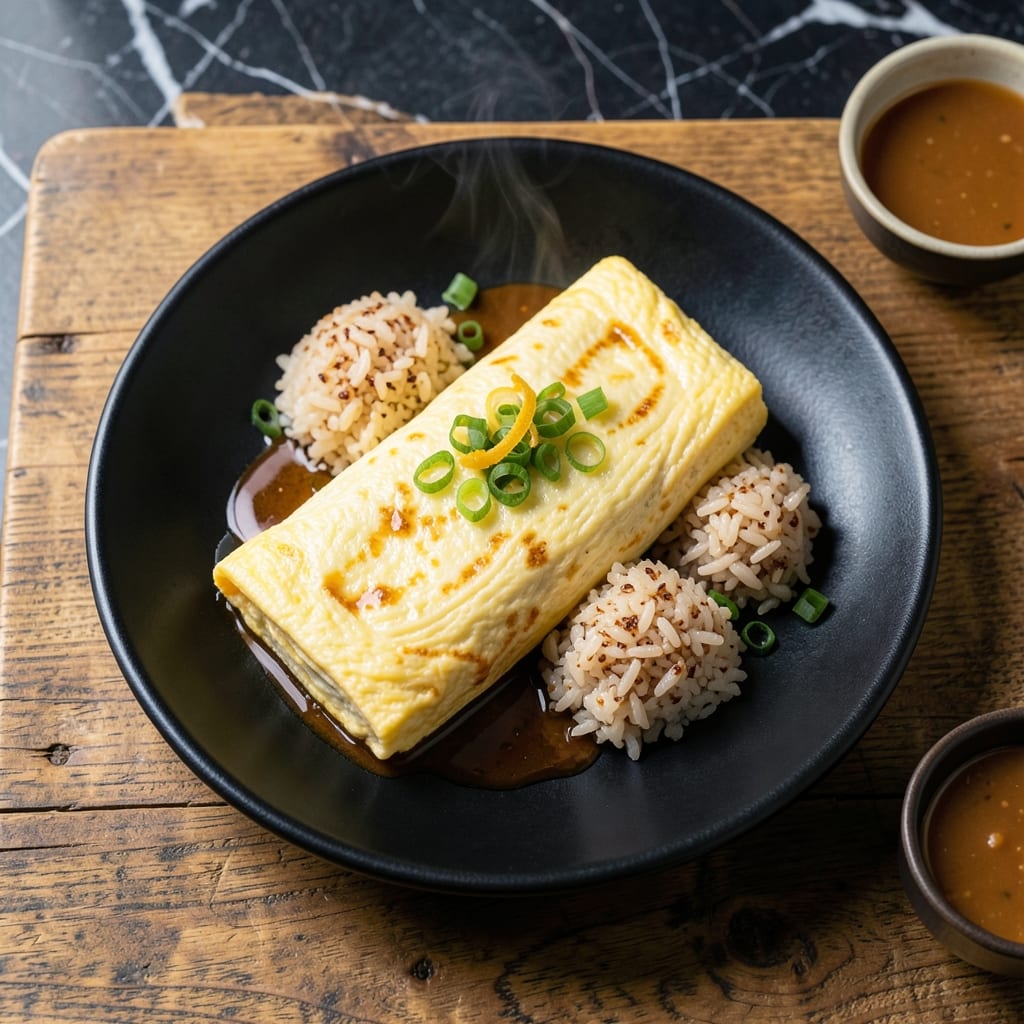
This Japanese egg rice omelette brings layers of comfort to your breakfast table with minimal effort. I developed this recipe after testing multiple versions in my small Boston kitchen, perfecting the balance of fluffy eggs and savory rice.
The technique involves rolling thin layers of seasoned eggs around a filling of rice, creating a dish that’s both hearty and delicate. Each bite delivers the soft texture of tamagoyaki-style eggs with the satisfying chew of rice.
What makes this dish special is its simplicity. With just a few ingredients and a non-stick pan, you can achieve restaurant-quality results at home. The eggs cook quickly, forming tender, slightly sweet layers that wrap around the rice.
Serve warm for a filling breakfast or light lunch. This recipe proves that comfort food doesn’t need to be complicated.
Ingredients for Japanese Egg Rice Omelette
Minimal ingredients create maximum flavor in this comforting breakfast dish.
| Ingredient | Amount | Notes |
|---|---|---|
| Large Eggs 🥚 | 8 whole | Room temperature preferred |
| Cooked Short-Grain Rice 🍚 | 2 cups | Sushi rice works best |
| Granulated Sugar 🍚 | 2 tbsp | For egg mixture sweetness |
| Soy Sauce 🫒 | 2 tbsp | Low-sodium if preferred |
| Dashi Stock 💧 | 1 tbsp | Or substitute water |
| Mirin 🍶 | 1 tbsp | Sweet rice wine essential |
| Vegetable Oil 🫒 | 2 tbsp | For cooking, divided |
| Salt 🧂 | ½ tsp | Kosher or sea salt |
| Black Pepper 🌶️ | ¼ tsp | Freshly ground preferred |
| Green Onions 🧅 | 2 whole | Thinly sliced for garnish |
| Sesame Seeds 🌾 | 1 tsp | Toasted, for garnish |
| Nori Sheets 🍱 | 1 sheet | Optional, cut into strips |
The eggs are the foundation here. Fresh, high-quality eggs yield the fluffiest texture—avoid older eggs that spread too thin. For the rice, short-grain sushi rice gives the authentic sticky bite. Japanese markets or the international aisle at Whole Foods carry mirin and dashi, but Amazon works too. The sugar balances the soy, so don’t skip it (the tamagoyaki-style sweetness is key).
No mirin? 1 tbsp sugar + 1 tbsp water mimics the sweetness. Missing dashi? Water with half a teaspoon of soy sauce added works fine. Short on green onions? Chives at the same amount substitute well. For extra depth, swap half the soy sauce for oyster sauce (if you’re not vegan). The nori is optional but adds that classic umami finish.
Leftovers keep 3-4 days in the fridge, though best fresh. Reheat gently in a pan to revive the texture. Freezing isn’t ideal—the eggs get rubbery. Prep the rice ahead (it needs to be completely cooled), but cook the eggs fresh. Always store the nori separately to keep it crisp.
Why You’ll Love This Recipe
- One-Bowl Wonder: I just dump the rice, eggs, soy sauce, and dashi in a bowl, mix, and cook—no fancy prep.
- Umami Bomb: That first bite of sweet-savory egg with the dashi and soy sauce? Ridiculously good.
- Breakfast or Dinner: I’ll eat this for breakfast, pack it for lunch, or serve it with a salad for dinner.
- Stretches Leftovers: Last night’s rice becomes tonight’s star dish—no waste, just flavor.
Step-by-Step Instructions for Japanese Egg Rice Omelette
Here is the method. Tested, reliable, and designed to deliver comfort in every bite.
Step 1: Prepare the Egg Mixture
In a large bowl, crack all 8 whole Large Eggs and beat them lightly with a whisk. Add the 2 tbsp Granulated Sugar, 2 tbsp Soy Sauce, 1 tbsp Dashi Stock, 1 tbsp Mirin, 0.5 tsp Salt, and 0.25 tsp Black Pepper.
Whisk until the mixture is uniform and slightly frothy, but avoid over-beating to keep the texture tender. The sugar and mirin add subtle sweetness that balances the savory depth from the soy sauce and dashi. This mixture forms the foundation of your omelette.
Step 2: Heat the Pan and Add Rice
Heat 1 tbsp Vegetable Oil in a non-stick skillet over medium heat. Add the 2 cups Cooked Short-Grain Rice and press it into an even layer across the pan. Cook for 2-3 minutes until the bottom of the rice develops a light golden crust.
This step ensures the rice stays intact when you add the egg mixture. The rice should be warm and slightly crisp at the edges—this adds texture to the final dish. Avoid stirring; let it set to form a cohesive base.
Step 3: Pour and Cook the Egg Mixture
Pour the egg mixture evenly over the rice, tilting the pan slightly to ensure it spreads to the edges. Reduce the heat to medium-low and cook undisturbed for 4-5 minutes until the edges begin to set and the top is just beginning to firm up.
Use a spatula to gently lift the edges, allowing any uncooked egg to flow underneath. The top should look slightly moist but not liquidy. This slow cooking process ensures the eggs remain fluffy and light, rather than dense or rubbery.
Step 4: Fold and Finish the Omelette
Once the top is nearly set, carefully fold the omelette in thirds, using the spatula to lift and roll it gently. Add the remaining 1 tbsp Vegetable Oil to the pan if needed to prevent sticking. Cook for another 1-2 minutes to ensure the center is fully cooked through.
The omelette should be golden brown on the outside with a soft, custardy interior. Press lightly on the top—it should spring back slightly. This step locks in the layers, creating that signature fluffy texture.
Step 5: Garnish and Serve
Transfer the omelette to a cutting board and let it rest for 2 minutes. Slice it into portions and garnish with the 2 whole Green Onions (thinly sliced), 1 tsp Sesame Seeds, and optional 1 sheet Nori Sheets (cut into strips).
The garnishes add freshness and a pop of color, while the nori introduces a subtle oceanic note that complements the savory-sweet egg mixture. Serve warm for the best experience.
Pro Tips For Making Japanese Egg Rice Omelette
- Preheat the Pan: A well-heated nonstick pan is non-negotiable—about 30 seconds on medium-high before adding oil. I learned this the hard way after too many omelettes stuck to the surface.
- Use Day-Old Rice: Fresh rice turns mushy. Day-old short-grain rice holds its shape and gives that perfect texture.
- Beat Eggs Vigorous: Whisk the eggs for a full minute until no streaks remain—this guarantees a uniform, silky omelette that wraps neatly around the rice.
- Add Dashi Last: Mix the dashi stock into the egg mixture right before cooking. Adding it too early makes the eggs watery and weakens the flavor.
Creative Variations of These Flavors
Cheesy Western Twist
Add ½ cup shredded cheddar and ¼ cup diced ham to the rice layer before pouring the egg mixture. The cheese melts beautifully into the eggs, creating a gooey, savory version that reminds me of diner omelettes. Perfect for when I’m craving something heartier. 🧀
Vegetable Medley
Mix ½ cup finely diced carrots, zucchini, and red bell pepper into the rice. Sauté the veggies first in 1 tsp oil for 3-4 minutes until tender. This adds color and crunch, making it a great way to use up leftover produce.
Spicy Sriracha Kick
Stir 1 tbsp sriracha into the egg mixture before cooking, and drizzle an extra 1 tsp on top before serving. The heat cuts through the sweetness, balancing the flavors. I love this version when I want a little extra energy in the morning. 🌶️
Miso Glaze Option
Whisk 1 tbsp white miso paste with 1 tsp honey and 1 tsp water, then brush it over the omelette after folding. The umami-rich glaze adds depth and a glossy finish. It’s a trick I picked up from a small ramen shop in Boston.
Breakfast Burrito Style
Wrap the sliced omelette in a warm flour tortilla with a spoonful of sour cream and salsa. This fusion idea came to me during a lazy Sunday brunch. It’s messy but delicious, and perfect for eating on the go.
Herb-Infused Eggs
Add 1 tbsp chopped fresh cilantro and 1 tsp grated ginger to the egg mixture. The herbs brighten the dish, while the ginger adds a zingy warmth. It’s a great way to switch things up without straying too far from the original.
Nutrition Facts
Frequently Asked Questions
Can I use long-grain rice instead of short-grain?
Short-grain rice is ideal for its sticky texture, but long-grain can work if that’s what you have. Cook it slightly softer than usual to help it hold together in the omelette.
Why does the recipe include sugar in the eggs?
The 2 tbsp sugar balances the savory soy sauce, creating the signature sweet-savory flavor of Japanese tamagoyaki-style eggs. It’s traditional and essential for authentic taste.
How do I prevent the omelette from sticking?
Use a good non-stick pan and the specified 2 tbsp oil, divided. Make sure the pan is fully heated before adding the rice, and don’t disturb the omelette as it cooks.
Can I make this ahead of time?
It’s best served fresh, but you can prep the rice in advance. Store leftovers in an airtight container for up to 3 days, then reheat gently in a pan.

- Gambia Jollof Rice Recipe: West African One-Pot Spice Fusion - October 5, 2026
- Cream of Wild Rice Soup Recipe Minnesota: Northwoods Creaminess With Foraged Grains - October 5, 2026
- Frozen Cauliflower Fried Rice Recipe: Quick Low-Carb Wok Magic - October 5, 2026