
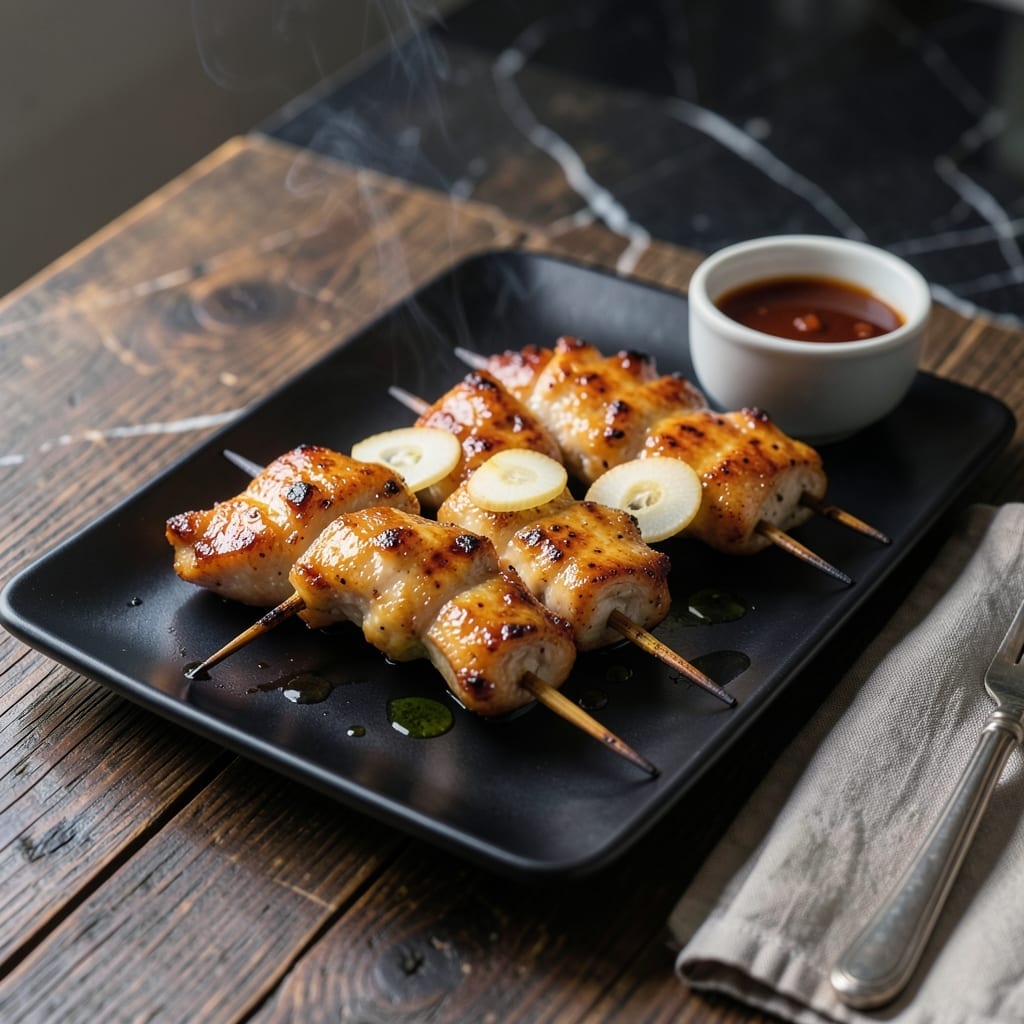
I developed this yakitori-style chicken after years of perfecting the balance between sweet and savory. The key is a simple glaze that caramelizes beautifully on the grill.
This method uses 30 minutes of marinating time and 10 minutes of grilling to achieve tender meat with charred edges. The soy-based glaze creates that signature sticky coating.
What you get is juicy chicken pieces with a glossy, slightly smoky exterior. The flavor is complex yet approachable, with hints of garlic and ginger complementing the sweet soy.
Serve these skewers with steamed rice and pickled vegetables for a complete meal. The glaze works equally well on thighs, wings, or breast meat.
Ingredients for Japanese Grilled Chicken
Simple, bold ingredients for sticky, smoky yakitori at home.
| Ingredient | Amount | Notes |
|---|---|---|
| Boneless, Skinless Chicken Thighs 🍗 | 1 ½ lb | Cut into 1-inch pieces |
| Soy Sauce 🫒 | ½ cup | Low-sodium preferred |
| Mirin 🍶 | ¼ cup | Sweet rice wine |
| Sake 🍶 | ¼ cup | Dry rice wine |
| Granulated Sugar 🍚 | 2 tbsp | For caramelization |
| Fresh Ginger 🌿 | 1 tbsp | Finely grated |
| Garlic Cloves 🧄 | 3 cloves | Minced |
| Green Onions 🧅 | 4 whole | Thinly sliced for garnish |
| Vegetable Oil 🫒 | 1 tbsp | For greasing grill |
| Wooden Skewers 🪵 | 12 pieces | Soaked in water 30 minutes |
| Sesame Seeds 🌰 | 1 tbsp | Toasted, for garnish |
| Rice Vinegar 🍶 | 1 tsp | Balances sweetness |
The chicken matters most here. Thighs stay juicier than breasts on the grill—look for skinless, boneless at Whole Foods or your butcher. Mirin and sake are non-negotiable for authentic flavor; Kikkoman makes reliable versions sold in the Asian aisle. If you can’t find them, dry sherry works in a pinch (not as good, but serviceable). The sugar caramelizes into that glossy coating, so don’t swap it for honey.
No mirin? One tablespoon sugar plus one tablespoon water mimics the sweetness. Out of sake? Dry white wine at half the amount works. Fresh ginger is key—powdered lacks the zing. The skewers? Bamboo from any grocery store, but soak them so they don’t burn. Green onions add freshness; chives can stand in if that’s what you’ve got.
Glaze keeps in the fridge for 1 week in a sealed jar. Skewers are best hot off the grill, but leftovers reheat okay—just microwave briefly. Chicken itself? Use within 2 days of purchase for best texture.
Why You’ll Love This Recipe
- One Pan Magic: I just toss the thighs in soy, mirin, and sake, then grill—no fuss, no extra dishes.
- Sticky Sweet Perfection: The sugar caramelizes with the soy-mirin glaze, creating that irresistible sticky lacquer on every bite.
- Weeknight Hero: Honestly, I make this for quick dinners, lunch boxes, or even when friends drop by unannounced.
- Budget Stretcher: A pack of thighs and pantry staples feed my family for days, and leftovers taste even better cold.
Step-by-Step Instructions for Yakitori-Style Chicken Skewers
This method delivers authentic flavor and perfect char without complicated techniques.
Step 1: Prepare Skewers and Make the Glaze
Soak the 12 pieces wooden skewers in cold water for 30 minutes to prevent burning. Meanwhile, combine the 0.5 cup soy sauce, 0.25 cup mirin, 0.25 cup sake, 2 tbsp granulated sugar, 1 tbsp fresh ginger, and 3 cloves garlic cloves in a saucepan.
Bring to a gentle simmer over medium heat, stirring until the granulated sugar dissolves completely. Reduce heat to low and let it thicken for 8-10 minutes until syrupy. The glaze should coat the back of a spoon. Remove from heat and stir in the 1 tsp rice vinegar.
Step 2: Thread the Chicken onto Skewers
Cut the 1.5 lb boneless, skinless chicken thighs into 1-inch pieces and pat them dry with paper towels. Thread 3-4 pieces onto each soaked skewer, leaving a little space between each piece for even cooking.
I like to alternate the direction of the chicken pieces for a more secure hold. Place the skewers on a plate, cover with plastic wrap, and refrigerate while you preheat your grill. This keeps the chicken cold so it stays juicy during the initial searing.
Step 3: Grill the Skewers to Perfection
Preheat your grill to medium-high heat and clean the grates thoroughly. Brush the grates with the 1 tbsp vegetable oil to prevent sticking. Place the skewers on the grill and cook for 4-5 minutes per side, basting with the reserved glaze during the last 2 minutes of cooking.
You want to see char marks forming and the chicken should reach an internal temperature of 165°F. Don’t baste too early or the sugars in the glaze will burn. Keep a close eye on the heat—if the glaze starts to blacken, move the skewers to a cooler part of the grill.
Step 4: Rest and Garnish for Serving
Transfer the cooked skewers to a serving platter and let them rest for 3-4 minutes. This allows the juices to redistribute throughout the chicken. While they rest, thinly slice the 4 whole green onions and toast the 1 tbsp sesame seeds in a dry pan over low heat for 1-2 minutes until fragrant.
Sprinkle the toasted sesame seeds and sliced green onions over the skewers just before serving. The contrast of the crispy edges, tender chicken, and sweet-savory glaze with the fresh garnish makes these irresistible. Serve immediately while hot.
Pro Tips For Making Japanese Grilled Chicken
- Score the Thighs: Cut shallow slits across the chicken thighs before marinating—this lets the soy-mirin-sake mix penetrate deeper and cooks them more evenly on the grill.
- Reduce the Marinade: After soaking the chicken, simmer the leftover marinade for 3-4 minutes to kill bacteria, then brush it on while grilling for extra flavor without waste.
- Skip the High Heat: I learned this the hard way—medium heat prevents the sugar in the marinade from burning before the chicken cooks through.
- Use Full-Fat Thighs: Sounds obvious, but boneless, skinless thighs with a little fat stay juicier than lean cuts when grilled with this sweet-savory glaze.
Dietary Considerations for japanese grilled chicken
Gluten-Free Adaptation
Use tamari instead of soy sauce—it’s naturally gluten-free and has a similar depth of flavor. I recommend San-J Tamari for the best results. The rest of the glaze ingredients remain the same, so you won’t miss out on any of that signature sweet-savory taste.
Lower-Sodium Option
Swap the regular soy sauce for low-sodium soy sauce and reduce the amount to ⅓ cup. Balance the flavor by adding an extra 1 tsp rice vinegar and a pinch of white pepper—this keeps the glaze bright without the salt overload. 💡
Dairy-Free Note
This recipe is inherently dairy-free, with no butter, milk, or cheese involved. The only thing to watch for is cross-contamination if you’re using a shared grill. Clean the grates thoroughly with a wire brush before cooking to avoid any issues.
Keto-Friendly Version
Replace the 2 tbsp granulated sugar with 1 tbsp erythritol or your preferred keto-friendly sweetener. The mirin contributes some carbs, so you might reduce it to 2 tbsp and add a splash of water to maintain the glaze consistency.
Nut Allergy Considerations
While this dish doesn’t contain nuts, sesame seeds are technically a seed, not a nut. If you have a sesame allergy, simply omit the 1 tbsp sesame seeds garnish. The dish will still be delicious with just the green onions.
Pescatarian Alternative
Swap the chicken for firm tofu cubes or shrimp. For tofu, press and drain it first, then marinate for 1 hour to absorb the flavors. Shrimp cooks in just 2-3 minutes per side, so keep a close eye to avoid overcooking. 🌱
Nutrition Facts
Frequently Asked Questions
Can I use chicken breast instead of thighs?
Yes, but thighs stay juicier on the grill. If using breast, reduce cooking time to 3-4 minutes per side and watch closely to prevent drying out.
How do I store leftovers?
Place cooked skewers in an airtight container and refrigerate for up to 3 days. Reheat gently in a pan or microwave to avoid making the glaze rubbery.
Why did my glaze burn on the grill?
This happens if you baste too early. Wait until the last 2 minutes of cooking, and keep the heat at medium-high to prevent charring.
What can I substitute for mirin?
Mix 1 tbsp sugar with 1 tbsp water for each ¼ cup mirin. It won’t be identical, but it’ll add the needed sweetness.

- Jollof Rice Sauce Recipe: West African Tomato and Spice Infusion - September 25, 2026
- Japanese Rice Soup Recipe: Umami-Rich Comfort in a Bowl - September 25, 2026
- Homemade Cream Of Rice Recipe: Silk-Smooth Breakfast in Minutes - September 25, 2026