
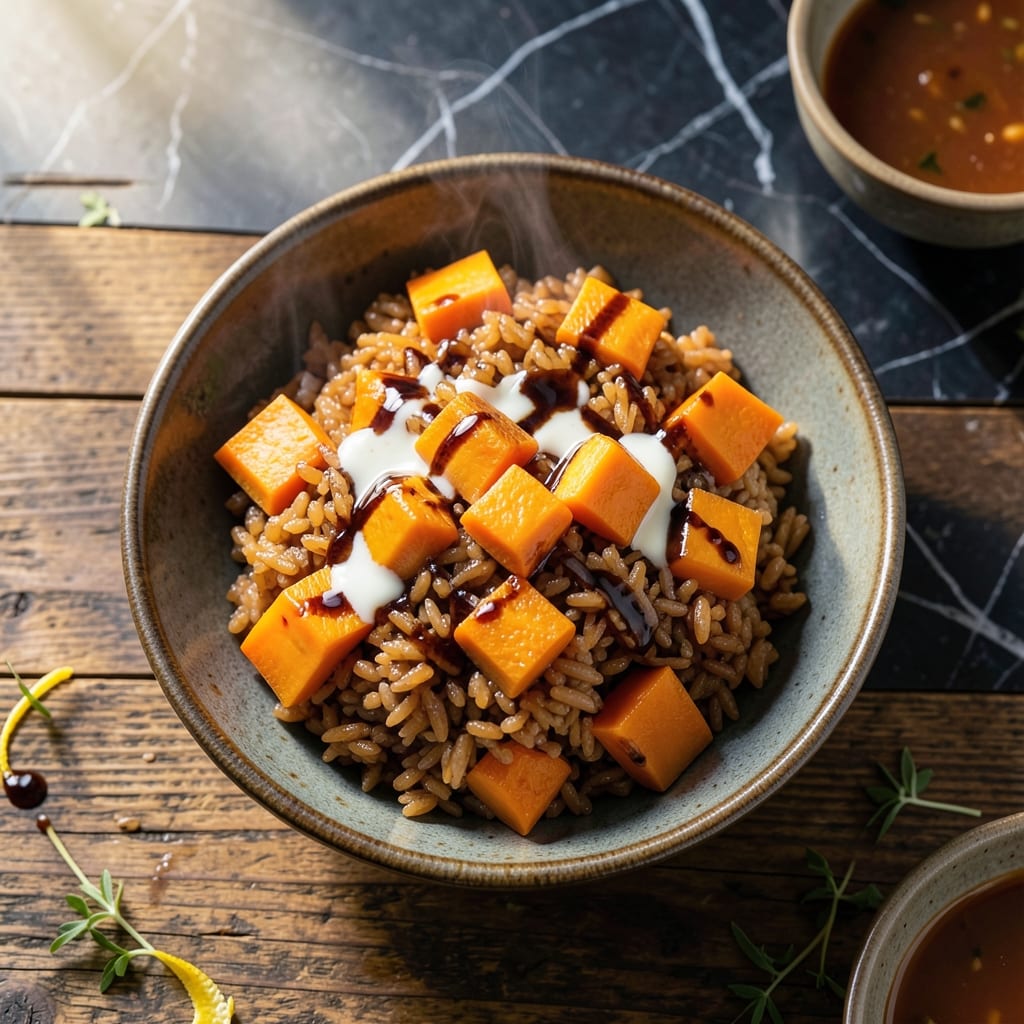
This Japanese pumpkin rice transforms simple ingredients into a comforting, naturally sweet main dish. The secret lies in using kabocha squash, which breaks down into creamy, caramelized bits as it cooks with the rice.
I’ve perfected the balance of sweet pumpkin and savory seasoning to create a dish that’s both hearty and delicate. A touch of coconut milk adds richness, while soy sauce and dashi provide depth without overpowering the squash’s natural flavor.
By the time it finishes, you’ll have sticky, fragrant rice with tender pumpkin pieces that melt in your mouth. The texture is a perfect harmony of soft and slightly chewy.
Serve it as a side or a vegetarian main—either way, it’s a dish that feels both nourishing and special.
Ingredients for Japanese Pumpkin Rice
Few ingredients, bold flavors. Kabocha and coconut rice come together beautifully here.
| Ingredient | Amount | Notes |
|---|---|---|
| Kabocha Squash 🎃 | 2 lb | Peeled, seeded, cubed |
| Japanese Short-Grain Rice 🍚 | 2 cups | Rinsed until water runs clear |
| Coconut Milk 🥥 | 1 cup | Full-fat for creaminess |
| Dashi Stock 🍜 | 2 cups | Vegetarian dashi preferred |
| Soy Sauce 🫕 | 3 tbsp | Low-sodium or tamari |
| Mirin 🍶 | 2 tbsp | Sweet rice wine |
| Sake 🍶 | 2 tbsp | Dry cooking sake |
| Granulated Sugar 🍬 | 1 tbsp | Balances savory notes |
| Neutral Oil 🫒 | 1 tbsp | For sautéing squash |
| Toasted Sesame Seeds 🌰 | 1 tbsp | For garnish |
| Green Onions 🧅 | 2 whole | Thinly sliced for topping |
| Kosher Salt 🧂 | ½ tsp | Adjust to taste |
The kabocha is non-negotiable for that natural sweetness and creamy texture—look for firm, heavy squash with dull skin at Asian markets or well-stocked Whole Foods. Japanese short-grain rice (like Koshihikari or Nishiki) is ideal, but sushi rice works too. The coconut milk should be full-fat for that luxurious mouthfeel. Vegetarian dashi is easy to find at H Mart or online.
No mirin? 1 tbsp sugar + 1 tbsp water + 1 tbsp rice vinegar gets you close. Sake can be swapped with dry white wine in a pinch. For a nutty twist, use brown rice instead of white (add extra 10 minutes cooking time). The soy sauce can be gluten-free tamari if needed. If kabocha is hard to find, butternut squash works (though slightly less sweet).
Leftover rice keeps 3-4 days in the fridge, but the pumpkin pieces are best fresh. Reheat gently with a splash of water to restore moisture. Freezes well for 1 month—portion before freezing for easy meals.
Why You’ll Love This Recipe
- One Pot Wonder: I toss everything in a rice cooker—kabocha, rice, coconut milk—and walk away.
- Creamy & Umami: The dashi and soy sauce give it that deep savory kick, while the squash melts into the rice.
- Meal Prep Hero: Honestly, it tastes even better the next day for lunch.
- Budget Stretcher: A single kabocha makes multiple meals, and the rice soaks up every flavor.
Step-by-Step Instructions for Japanese Pumpkin Rice
Here’s my trusted method for infusing sticky rice with sweet kabocha and coconut richness.
Step 1: Prepare the Kabocha Squash
Cut the 2 lb kabocha squash in half and scoop out the seeds. Peel the skin with a vegetable peeler, then dice into ½-inch cubes. I find that uniform pieces ensure even cooking and consistent texture throughout the dish.
Heat the 1 tbsp neutral oil in a large pot over medium heat. Add the cubed kabocha and sauté for 5-6 minutes until the edges start to soften and turn light golden brown. This caramelizes the natural sugars and deepens the flavor.
Sprinkle the 0.5 tsp kosher salt over the squash while cooking to enhance its natural sweetness. Stir occasionally but don’t overmix—you want those beautiful browned edges to develop.
Step 2: Cook the Rice Base
In a separate bowl, combine the 2 cups Japanese short-grain rice, 1 cup coconut milk, and 2 cups dashi stock. The coconut milk adds a luscious creaminess that pairs perfectly with the earthy kabocha.
Transfer this mixture to the pot with the sautéed squash. Add the 3 tbsp soy sauce, 2 tbsp mirin, 2 tbsp sake, and 1 tbsp granulated sugar. Stir gently to distribute the ingredients evenly without breaking up the squash.
Bring to a boil over high heat, then immediately reduce to low heat. Cover with a tight-fitting lid and let it simmer undisturbed for 15 minutes—this allows the rice to absorb all the liquid and flavors.
Step 3: Steam and Infuse the Flavors
After 15 minutes, turn off the heat but keep the pot covered. Let it steam for an additional 10 minutes—this is crucial for achieving that perfect sticky texture and ensuring the kabocha is tender.
Resist the urge to peek during this time. The trapped steam continues to cook the rice and squash gently, melding all the flavors together. You’ll know it’s ready when the liquid is fully absorbed and the rice is glossy and plump.
Step 4: Rest and Garnish
Once the steaming time is complete, let the rice rest covered for another 5 minutes. This final rest allows the grains to settle and absorb any remaining moisture, making the dish cohesive and flavorful.
Fluff the rice gently with a rice paddle or fork, taking care to mix the kabocha evenly throughout. Taste and adjust seasoning if needed, though the combination of soy sauce, mirin, and sake should provide a balanced savory-sweet profile.
Transfer to a serving bowl and garnish with the 1 tbsp toasted sesame seeds and thinly sliced 2 whole green onions. The sesame seeds add a nutty crunch, while the green onions bring a fresh, vibrant finish to each bite.
Pro Tips For Making Japanese Pumpkin Rice
- Pre-cook the Kabocha: Roast or steam the kabocha for 10-12 minutes before adding to the rice cooker—this guarantees it softens fully during cooking and doesn’t leave hard chunks in your rice.
- Rinse the Rice Well: Wash the short-grain rice until the water runs nearly clear, about 4-5 rinses, to remove excess starch so your pumpkin rice doesn’t turn into a gummy mess.
- Balance the Liquids: Use a 1:1 ratio of dashi to coconut milk for the cooking liquid, and reduce each by 20% from the usual rice water amount to account for the moisture from the kabocha.
- Skip the Overmixing: After cooking, let the rice sit covered for 10 minutes, then gently fold in the kabocha and seasonings—stirring too much breaks the grains and turns it mushy.
Make-Ahead Tips for This Recipe
Prep Ahead Strategy
You can peel and cube the 2 lb kabocha squash up to 2 days ahead. Store it in an airtight container in the fridge with a damp paper towel to maintain freshness. I do this when I know I’ll be short on time the day of cooking.
Rice Preparation
Rinse and measure the 2 cups Japanese short-grain rice the night before—it saves 10 minutes on cooking day. Keep it covered in the fridge in a fine-mesh strainer set over a bowl. This ensures it stays fresh and ready to go. 💡
Make the Full Dish
This recipe actually tastes better the next day as the flavors meld. Cook the entire dish, let it cool, then refrigerate in a sealed container for up to 3 days. The coconut milk and dashi will deepen in flavor overnight.
Freezing for Later
Portion cooled leftovers into freezer-safe containers (I use glass containers for eco-friendliness). Freeze for up to 1 month. Thaw overnight in the fridge before reheating to preserve texture and taste.
Reheating Tips
For best results, reheat in a pot with 2 tbsp water over low heat for 5-7 minutes, stirring gently. Microwave works too—cover and heat in 1-minute intervals until hot. 🔥
Nutrition Facts
Frequently Asked Questions
Can I use butternut squash instead of kabocha?
Yes, butternut works in a pinch, though it’s slightly less sweet and creamy. Use the same amount and follow identical prep steps for best results.
Why do I need to sauté the squash first?
Sautéing caramelizes the natural sugars, intensifying flavor and preventing mushiness. It also helps the cubes hold shape during cooking.
How do I know when the rice is fully cooked?
Check for glossy, plump grains with no liquid remaining. The kabocha should be tender but intact.
Can I make this in a rice cooker?
Sauté squash first, then add all ingredients to the cooker. Use the standard setting and let it steam 10 minutes after cooking.

- Mujadara Rice and Lentils Recipe: Earthy Spiced Lentils With Caramelized Onions - November 1, 2026
- Naija Fried Rice Recipe: Street-Style Spice With Veggie Crunch - November 1, 2026
- Mushy Rice Recipe: Fluffy Grains Transformed in Minutes - November 1, 2026