
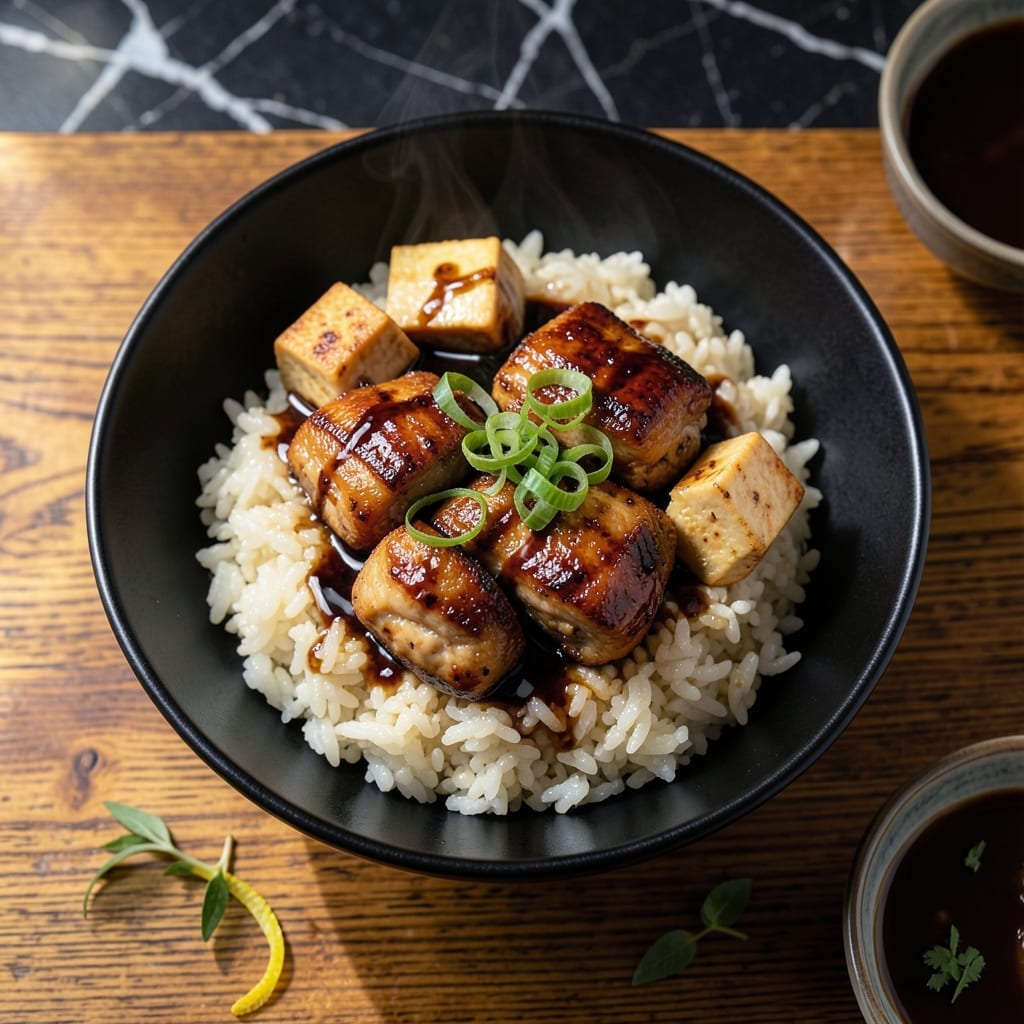
There’s a reason Japanese rice bowls have become a global favorite—they transform simple ingredients into a perfect harmony of texture and flavor.
This dish starts with steamed rice as the foundation, then layers on savory proteins, fresh vegetables, and umami-rich sauces. The beauty lies in the balance: tender meat or tofu, crisp greens, and a glossy drizzle that ties it all together.
What makes it special is the customization. Swap proteins, adjust vegetables, or change the sauce to create endless variations. Every bowl feels personal yet authentically Japanese.
The result is a meal that’s satisfying, nourishing, and visually stunning. Warm rice meets vibrant toppings for a dish that’s as comforting as it is impressive.
Ingredients for Japanese Rice Bowl
Steamed rice forms the foundation with vibrant proteins and vegetables layered on top for authentic flavor.
| Ingredient | Amount | Notes |
|---|---|---|
| Japanese Short-Grain Rice 🍚 | 2 cups | Rinsed until water runs clear |
| Chicken Thighs 🍗 | 1 lb | Boneless, skinless, diced |
| Firm Tofu 🧈 | 14 oz | Pressed and cubed |
| Soy Sauce 🫒 | ¼ cup | Low-sodium preferred |
| Mirin 🍶 | 2 tbsp | Sweet rice cooking wine |
| Sake 🍶 | 2 tbsp | Dry variety recommended |
| Brown Sugar 🍚 | 1 tbsp | Light or dark works |
| Fresh Ginger 🌿 | 1 tbsp | Peeled and grated |
| Garlic Cloves 🧄 | 3 cloves | Minced finely |
| Cucumber 🥒 | 1 whole | Thinly sliced for topping |
| Carrots 🥕 | 2 whole | Julienned or shredded |
| Green Onions 🧅 | 4 whole | Thinly sliced on diagonal |
| Sesame Seeds 🌾 | 2 tbsp | Toasted for garnish |
| Vegetable Oil 🫒 | 2 tbsp | For cooking proteins |
| Dashi Stock 🍲 | 1 cup | Optional for added depth |
The rice is non-negotiable—Japanese short-grain (Koshihikari or Nishiki from Asian markets or Whole Foods) delivers the sticky texture essential for proper bowls. For proteins, chicken thighs stay juicier than breasts, while firm tofu (I prefer Wildwood or House Foods brands) holds its shape beautifully. The mirin and sake are worth hunting down at H Mart or Mitsua—they add authentic depth.
No short-grain rice? Sushi rice works identically. Swap chicken for shrimp or thinly sliced beef (freeze for 20 minutes first for easier slicing). Tofu not your thing? Edamame or tempura shrimp are excellent alternatives. The soy sauce can be tamari for gluten-free needs. For the vegetables, shredded cabbage or avocado add great texture. Want extra umami? Miso paste whisked into the sauce works wonders.
Cooked rice stays fresh for 2-3 days in the fridge (store with a damp towel on top to prevent drying). Prepped veggies last 4-5 days in airtight containers. The sauce keeps for 1 week refrigerated—make extra for quick meals. Toast sesame seeds just before serving for maximum crunch (worth the extra minute).
Why You’ll Love This Recipe
- One Pan Wonder: I toss the chicken, tofu, and rice in the same pan with soy and mirin—minimal cleanup, maximum flavor.
- Umami Bomb: The soy-mirin glaze on crispy chicken thighs and chewy rice? Ridiculously good, every single time.
- Meal Prep Hero: I make a big batch on Sunday and it tastes just as fresh microwaved on Thursday.
- Budget Stretcher: Chicken thighs and tofu feed my whole family for less than takeout, with leftovers for lunch.
Step-by-Step Instructions for Japanese Rice Bowl
Master the technique for perfectly balanced rice and protein with these precise steps.
Step 1: Prepare and Cook the Rice
Rinse the 2 cups Japanese Short-Grain Rice under cold water until the water runs clear. This removes excess starch and ensures fluffy, separate grains. I use a fine-mesh strainer and rinse until I see no cloudiness in the water.
Combine the rinsed rice with 2 cups water in a rice cooker or heavy pot. Cook according to your rice cooker’s settings or bring to a boil, then reduce to a simmer, cover, and cook for 15 minutes. Remove from heat and let it steam, covered, for an additional 10 minutes.
Step 2: Cook the Chicken and Tofu
Heat 1 tablespoon Vegetable Oil in a large skillet over medium-high heat. Add the diced 1 lb Chicken Thighs and cook for 6-8 minutes until golden brown and cooked through. Remove the chicken from the skillet and set aside.
In the same skillet, add the remaining 1 tablespoon Vegetable Oil and the pressed and cubed 14 oz Firm Tofu. Cook for 5-7 minutes, turning occasionally, until the tofu is lightly browned on all sides. Transfer to the plate with the chicken.
Step 3: Create the Savory Sauce
In a small bowl, whisk together the 0.25 cup Soy Sauce, 2 tbsp Mirin, 2 tbsp Sake, 1 tbsp Brown Sugar, grated 1 tbsp Fresh Ginger, and minced 3 cloves Garlic Cloves. Pour this mixture into the same skillet used for the chicken and tofu.
Add the 1 cup Dashi Stock and bring to a gentle simmer over medium heat. Let it cook for 3-4 minutes until the sauce thickens slightly and becomes fragrant. Return the chicken and tofu to the skillet, coating them evenly in the sauce.
Step 4: Prepare the Fresh Toppings
Thinly slice the 1 whole Cucumber and julienne or shred the 2 whole Carrots. Thinly slice the 4 whole Green Onions on the diagonal for a decorative touch. Toast the 2 tbsp Sesame Seeds in a dry pan over low heat for 2-3 minutes until lightly golden and aromatic.
These toppings add freshness, crunch, and visual appeal to the dish. Arrange them neatly on top of the rice and protein for a beautiful presentation.
Step 5: Assemble and Serve
Divide the cooked rice among four bowls. Top each bowl with an equal portion of the chicken and tofu, along with a generous drizzle of the savory sauce. Arrange the sliced cucumber, carrots, and green onions on top, and sprinkle with the toasted sesame seeds.
Serve immediately while the rice is hot and the toppings are fresh. Each bite should deliver a harmonious blend of savory protein, fragrant rice, and crisp vegetables.
Pro Tips For Making Japanese Rice Bowl
- Rinse the Rice: Wash the short-grain rice 3-4 times until the water runs clear—this removes excess starch and keeps the grains separate and fluffy.
- Pat Dry the Tofu: Press the firm tofu between paper towels for 10 minutes, then cube it. I learned this the hard way—skipping this step means soggy, flavorless tofu.
- Sear Chicken First: Brown the chicken thighs in a hot pan before simmering in soy and mirin—it locks in juices and adds depth to the sauce.
- Use Warm Rice: Serve the rice hot or at least warm—cold rice soaks up sauce unevenly and turns the bowl into a mushy mess.
Perfect Pairings for This Dish
Beverage Pairings
I love serving this with green tea—hot or iced—because its clean, grassy notes complement the umami flavors beautifully. For something stronger, a crisp Sapporo beer or light Asahi cuts through the richness without overwhelming the dish. 🍵
Side Dish Ideas
A simple miso soup with tofu and wakame seaweed adds warmth and depth. Or try edamame tossed with sea salt for a quick, protein-packed side. Both keep the meal light yet satisfying.
For a refreshing contrast, sunomono salad with rice vinegar and cucumber offers a crisp, tangy bite that balances the savory rice bowl perfectly.
Condiment Suggestions
Keep sriracha or chili oil on hand for those who want extra heat. A drizzle of eel sauce adds a sweet-savory depth, while pickled ginger provides a bright, zingy pop of flavor. 🌶️
Dessert Pairings
End the meal with mochi ice cream—its chewy texture and sweetness are a delightful contrast. Matcha cookies or black sesame balls also offer a traditional Japanese finish.
Nutrition Facts
Frequently Asked Questions
Can I use a different type of rice?
For best results, stick with Japanese short-grain or sushi rice. Other varieties won’t have the same sticky texture that holds toppings well. In a pinch, jasmine rice works but the experience won’t be as authentic.
How do I store leftovers?
Keep components separate in airtight containers in the fridge for up to 3 days. Reheat proteins gently in a pan with a splash of water. Assemble just before serving to maintain texture.
What protein substitutes work well?
Try shrimp, thinly sliced beef, or salmon instead of chicken. For vegetarians, tempeh or edamame add great texture. All should be cooked to 165°F for safety.
Can I make the sauce ahead?
The sauce keeps for 1 week refrigerated. Make extra for quick meals—it’s delicious on grilled veggies or noodles too. Just reheat gently before using.

- Mujadara Rice and Lentils Recipe: Earthy Spiced Lentils With Caramelized Onions - November 1, 2026
- Naija Fried Rice Recipe: Street-Style Spice With Veggie Crunch - November 1, 2026
- Mushy Rice Recipe: Fluffy Grains Transformed in Minutes - November 1, 2026