
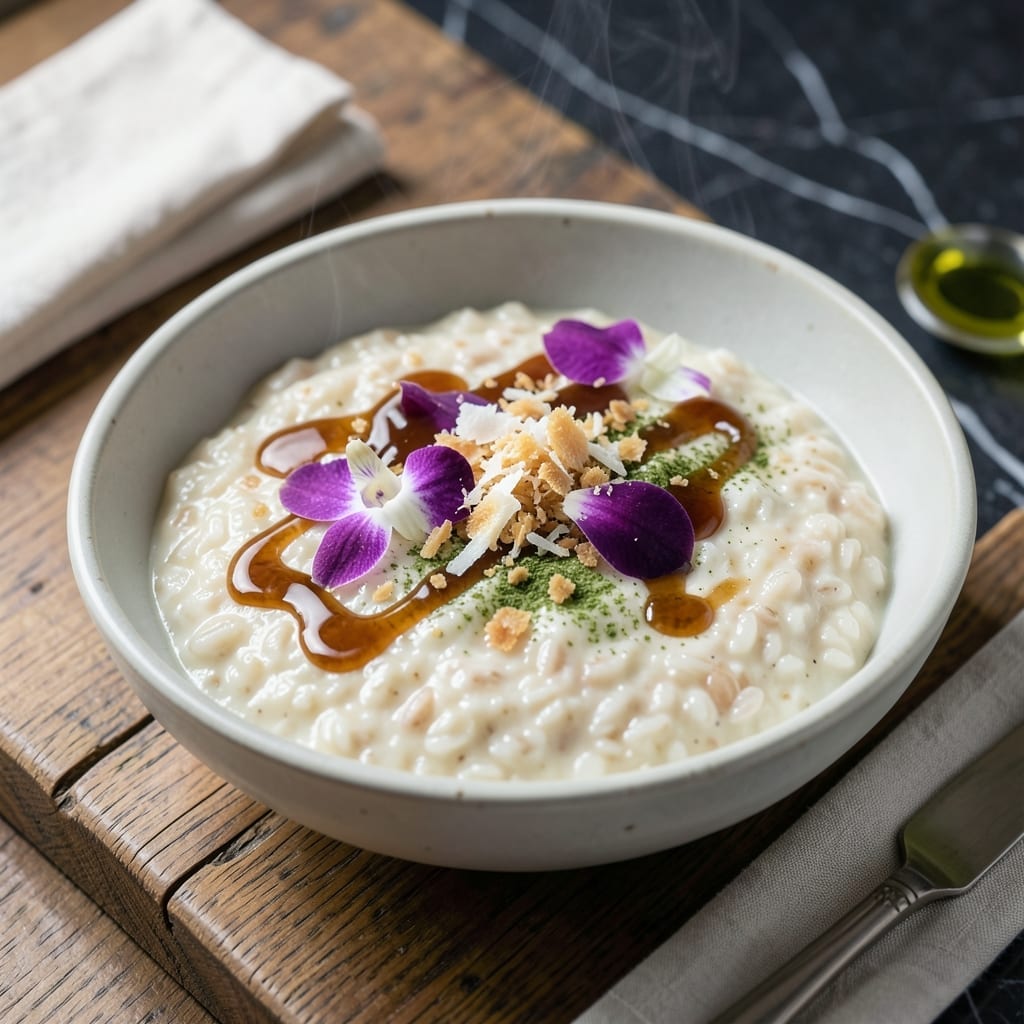
This Japanese-inspired rice pudding redefines comfort food with its silky texture and delicate coconut infusion. A perfect balance of sweetness and creaminess makes it irresistible.
The secret lies in using short-grain rice, which breaks down beautifully during cooking to create that signature velvety consistency. Coconut milk adds a subtle tropical note that elevates the dish.
What you’ll achieve is a dessert that’s both familiar and exotic—creamy, fragrant, and just sweet enough. It’s the kind of dish that feels indulgent yet surprisingly light.
Serve warm or chilled, with fresh fruit or a sprinkle of toasted coconut for added texture. This creation is sure to impress.
Ingredients for Japanese Rice Pudding
Silky coconut rice pudding starts with these pantry staples and a few special touches.
| Ingredient | Amount | Notes |
|---|---|---|
| Short-Grain White Rice 🍚 | ¾ cup | Arborio or sushi rice preferred |
| Full-Fat Coconut Milk 🥥 | 2 cups | Canned, well-shaken before measuring |
| Whole Milk 🥛 | 1 ½ cups | Or substitute coconut milk beverage |
| Granulated Sugar 🍚 | ½ cup | Adjust for preferred sweetness |
| Vanilla Extract 🌿 | 1 tsp | Pure extract for best flavor |
| Salt 🧂 | ¼ tsp | Sea salt or kosher salt |
| Cornstarch 🌾 | 2 tbsp | For thickening silky texture |
| Unsalted Butter 🧈 | 1 tbsp | Melted for richness |
| Toasted Coconut Flakes 🥥 | ¼ cup | For garnish, optional |
| Fresh Mango 🥭 | 1 whole | Diced for serving |
| Lime Zest 🍈 | 1 tsp | Freshly grated for brightness |
| Cardamom Pods 🌿 | 2 whole | Lightly crushed for infusion |
The rice is non-negotiable here. Short-grain Arborio or sushi rice breaks down perfectly for that signature creamy texture—long-grain stays too firm. Coconut milk needs to be full-fat, canned (not the carton stuff), and Thai Kitchen or Native Forest brands are my go-to. The cardamom adds that subtle exotic note, but skip it if you’re not a fan (though I highly recommend tracking it down at Whole Foods).
Need a dairy-free version? Swap the whole milk for another can of coconut milk. Out of cardamom? Half a cinnamon stick works in a pinch. The cornstarch thickens it up, but if you’re in a bind, arrowroot powder at the same amount does the trick. Fresh mango not available? Pineapple or berries make great substitutes for serving.
Pudding keeps beautifully in the fridge for 4-5 days—actually gets creamier as it sits. Freeze without garnishes for up to 3 months. Reheat gently with a splash of milk (any kind) to restore that silky texture. Always toast the coconut flakes fresh (takes 2 minutes in a dry pan).
Why You’ll Love This Recipe
- One-Pot Wonder: Honestly, it’s just dump, stir, and simmer—no fancy techniques, just short-grain rice soaking up coconut and whole milk until it’s creamy.
- Velvety Dream: That combo of full-fat coconut milk and vanilla? It’s like dessert in a bowl, rich but not too sweet.
- Breakfast or Dessert: I’ve served it warm for brunch and chilled for a late-night treat—my kids don’t care when they get it.
- Stretch Your Dollar: A cup of rice and pantry staples feed four, and leftovers (if there are any) taste even better the next day.
Step-by-Step Instructions for Japanese Rice Pudding
This method delivers that signature silky texture with minimal effort and maximum flavor.
Step 1: Infuse the Liquids with Cardamom
In a medium saucepan, combine the 2 cups full-fat coconut milk and 1.5 cups whole milk. Lightly crush the 2 whole cardamom pods to release their aromatic seeds, then add them to the pan. Heat over medium-low heat until the mixture just begins to simmer—you’ll see tiny bubbles forming at the edges.
Let it steep for 5 minutes to infuse the cardamom flavor. Don’t let it boil vigorously, as this can cause the milk to scorch. The fragrance should become noticeably warm and floral. After steeping, remove the cardamom pods to prevent over-extraction, which can turn bitter.
Step 2: Cook the Rice to Tenderness
Add the 0.75 cup short-grain white rice to the infused milk mixture. Stir well to distribute the rice evenly. Increase the heat to medium and bring to a gentle simmer. Cook uncovered for 20-25 minutes, stirring occasionally to prevent sticking.
The rice should become tender and the mixture will thicken slightly as the grains absorb the liquid. You’re aiming for soft, plump rice with a pudding-like consistency. If the mixture looks too dry before the rice is fully cooked, add a splash of water and continue cooking.
Step 3: Sweeten and Thicken the Pudding
In a small bowl, whisk together the 0.5 cup granulated sugar, 2 tbsp cornstarch, and 0.25 tsp salt. Gradually sprinkle this mixture into the saucepan while stirring constantly to avoid lumps. Stir in the 1 tsp vanilla extract and 1 tbsp unsalted butter.
Cook over medium-low heat for 5-7 minutes, stirring frequently, until the pudding thickens enough to coat the back of a spoon. The texture should be creamy and luxurious, not runny or gelatinous. Keep an eye on the edges—they’ll start to pull away slightly when it’s ready.
Step 4: Chill and Develop the Flavors
Remove the saucepan from the heat and let the pudding cool for 10 minutes at room temperature, stirring occasionally to release steam and prevent a skin from forming. The pudding will thicken further as it cools.
Transfer to a serving bowl or individual ramekins and refrigerate for at least 2 hours, or until completely chilled. This resting time allows the flavors to meld and the texture to set perfectly. The pudding should be cool and firm but still silky smooth.
Step 5: Serve with Tropical Garnishes
Before serving, dice the 1 whole fresh mango into small, even pieces. Spoon the chilled pudding into bowls and top with the diced mango, 0.25 cup toasted coconut flakes, and a sprinkle of 1 tsp lime zest. The brightness of the lime and sweetness of the mango complement the creamy cardamom-infused pudding beautifully.
For the best texture, serve the pudding straight from the fridge. The contrast of warm tropical toppings against the cool pudding creates a delightful balance in every bite.
Pro Tips For Making Japanese Rice Pudding
- Rinse the Rice: Wash the short-grain rice until the water runs clear to remove excess starch—I learned this the hard way after ending up with a gummy pudding.
- Low and Slow: Keep the heat at a gentle simmer, stirring often, or the coconut milk will separate and the bottom will scorch. About 30-40 minutes is the sweet spot.
- Use Full-Fat Coconut Milk: Skip the light version; the fat is what gives the pudding its rich, creamy texture. After trying both, I can taste the difference every time.
- Add Vanilla Last: Stir in the vanilla extract at the very end to preserve its flavor. My first few batches lost that aromatic punch because I added it too early.
Troubleshooting Great japanese rice pudding
Grainy Texture
If your pudding turns out grainy, the rice likely didn’t cook long enough. Short-grain rice needs 20-25 minutes to break down properly. I always check by rubbing a spoonful between my fingers—it should feel smooth, not gritty. 💡
Too Thin or Runny
This usually means the cornstarch didn’t activate fully. Make sure you cook the mixture for the full 5-7 minutes after adding it. Also, stir constantly while adding the cornstarch to prevent lumps from forming in the first place.
Skin Forms on Top
To prevent a skin from forming while cooling, stir the pudding occasionally during the first 10 minutes off the heat. If it does form, just whisk it back in before chilling. I cover mine loosely with parchment paper pressed directly on the surface.
Overly Thick After Chilling
If the pudding sets too firmly in the fridge, stir in 1-2 tbsp warm milk to restore that silky texture. Avoid microwaving, as it can create hot spots that make the pudding separate or become watery.
Cardamom Bitterness
Bitterness comes from over-steeping the pods. Remove them after exactly 5 minutes of infusion. If you accidentally leave them in, a pinch of sugar can help balance the bitterness, but prevention is key. 🌿
Milk Scorching
To avoid scorching, use medium-low heat and a heavy-bottomed saucepan. I swear by my All-Clad for even heat distribution. If you see brown bits forming, immediately lower the heat and stir to incorporate them before they burn.
Nutrition Facts
Frequently Asked Questions
Can I use long-grain rice instead?
Stick with short-grain for best results. Long-grain stays firm and won’t create that signature silky texture. Arborio or sushi rice are ideal choices for this dish.
How long can I store leftovers?
It keeps beautifully in the fridge for 4-5 days. The texture actually improves as it sits, becoming creamier. Just stir before serving.
Can I make this dairy-free?
Yes! Replace whole milk with another can of coconut milk. The flavor will be richer, but just as delicious.
Why did my pudding turn out grainy?
Graininess usually means the rice didn’t cook long enough. Short-grain needs 20-25 minutes to break down properly. Check by rubbing a spoonful between your fingers—it should feel smooth.

- Mujadara Rice and Lentils Recipe: Earthy Spiced Lentils With Caramelized Onions - November 1, 2026
- Naija Fried Rice Recipe: Street-Style Spice With Veggie Crunch - November 1, 2026
- Mushy Rice Recipe: Fluffy Grains Transformed in Minutes - November 1, 2026