
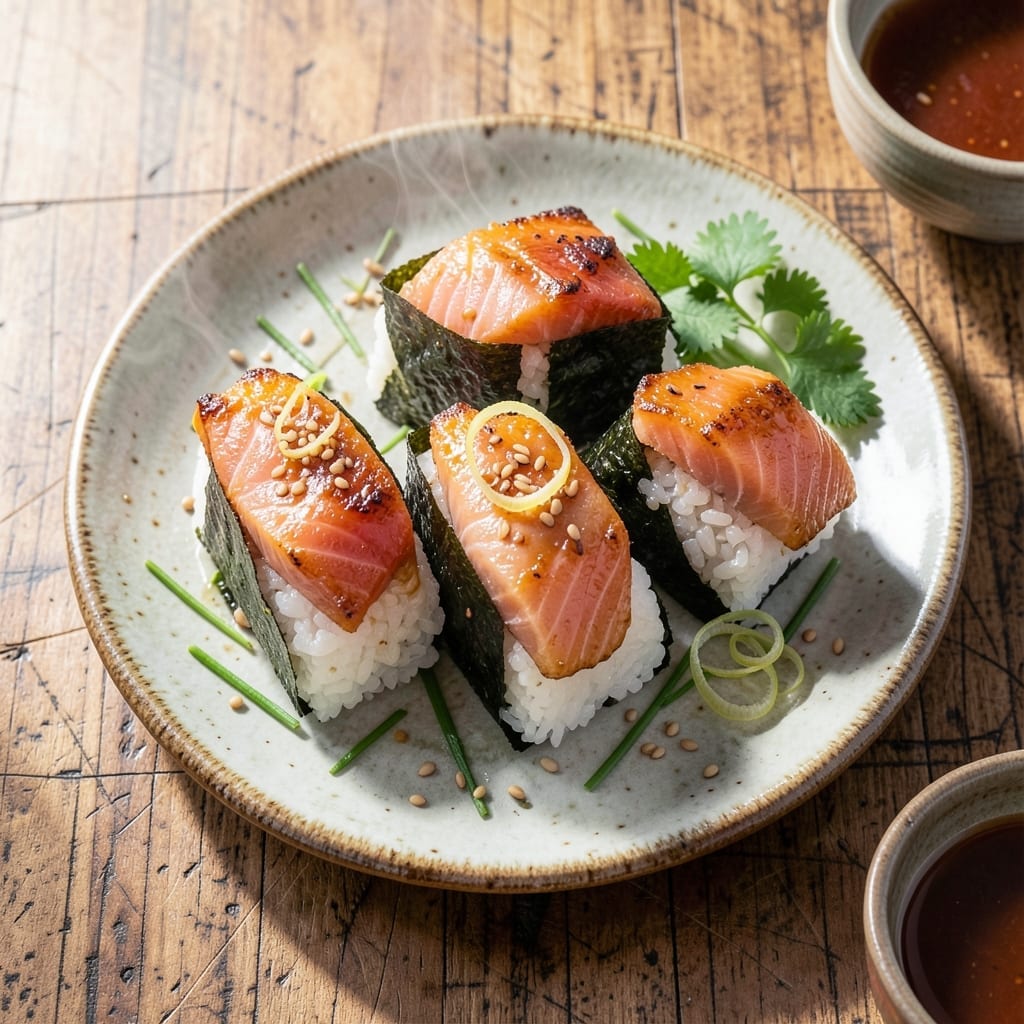
These sticky rice triangles with tender salmon offer a taste of authentic Japanese home cooking. The short-grain rice develops just the right chew when seasoned properly, creating the perfect base for the flaky fish.
I use fresh salmon that’s been lightly seasoned and cooked until it breaks apart effortlessly. The key is handling the rice while it’s still warm, which makes shaping much easier and helps the triangles hold together.
Each bite delivers soft rice with pieces of salmon that melt in your mouth. The simplicity of the ingredients lets the natural flavors shine through without any distractions.
This dish works beautifully as a portable snack, lunch, or light dinner. The technique takes practice but yields consistently excellent results.
Ingredients for Japanese Salmon Rice Onigiri
Simple ingredients create these authentic Japanese rice triangles with tender salmon at the heart.
| Ingredient | Amount | Notes |
|---|---|---|
| Short-Grain White Rice 🍚 | 2 cups | Also called sushi rice |
| Water 💧 | 2 ½ cups | For cooking rice |
| Fresh Salmon Fillet 🐟 | ¾ lb | Skin removed, pounded thin |
| Rice Vinegar 🍶 | 2 tbsp | For seasoning rice |
| Sugar 🍚 | 1 tsp | Dissolved in vinegar |
| Salt 🧂 | ½ tsp | Divided for rice and salmon |
| Soy Sauce 🫙 | 1 tbsp | For salmon seasoning |
| Sake 🍶 | 1 tbsp | Optional for salmon |
| Neutral Oil 🫒 | 1 tbsp | For cooking salmon |
| Sesame Seeds 🌰 | 1 tsp | For garnish, optional |
| Nori Sheets 🍱 | 2 sheets | For wrapping, optional |
| Green Onions 🧅 | 2 whole | Thinly sliced for garnish |
The rice is everything here. Short-grain white rice (sushi rice) gives you that sticky texture essential for onigiri. Look for brands like Koshihikari or Nishiki at Asian markets or the international aisle. The salmon should be sushi-grade fresh if you plan to eat it raw-style, but cooked works perfectly too. I always check for vibrant color and no fishy odor at Whole Foods.
No sake? Dry white wine works in a pinch (use half the amount). Short on rice vinegar? Apple cider vinegar at the same ratio, though the flavor differs slightly. The nori (seaweed sheets) are traditional but optional—toasted sesame seeds add great crunch without it. For the salmon, skin-on fillets can be used, just remove the skin after cooking.
Shape onigiri while rice is warm (it sticks better). Keeps in the fridge for 2 days—best eaten fresh though. Freeze without nori for up to 1 month, then wrap after thawing. Always handle rice with damp hands to prevent sticking.
Why You’ll Love This Recipe
- No Fuss Cooking: It’s just rice, salmon, and a quick vinegar-sugar mix—no fancy tools or techniques.
- Craving the Flavor: That sweet-tangy rice vinegar glaze on the salmon makes every bite irresistible.
- Lunchbox Hero: I pack these for picnics, work lunches, or even a quick dinner on busy nights.
- Budget Stretcher: A single salmon fillet goes a long way when paired with affordable short-grain rice.
Step-by-Step Instructions for Japanese Salmon Rice Onigiri
My tested method ensures tender salmon and perfectly seasoned rice for authentic flavor in every bite.
Step 1: Cook the Short-Grain White Rice
Rinse the 2 cups Short-Grain White Rice in a fine-mesh strainer under cold water until the water runs clear. This removes excess starch and prevents gummy rice. Drain well, then combine with the 2.5 cups Water in your rice cooker.
Cook according to your rice cooker’s instructions. When done, let it steam for 10 minutes with the lid closed. The rice should be sticky and glossy—this texture is crucial for onigiri that hold their shape without being dense.
Step 2: Season the Rice and Prepare Salmon
In a small bowl, dissolve the 1 tsp Sugar into the 2 tbsp Rice Vinegar. Transfer the warm rice to a large bowl and gently fold in the vinegar mixture. Sprinkle with ¼ tsp Salt and mix carefully with a rice paddle or silicone spatula to avoid crushing the grains.
Pat the 0.75 lb Fresh Salmon Fillet dry with paper towels. Season both sides with the remaining ¼ tsp Salt, 1 tbsp Soy Sauce, and 1 tbsp Sake. Let it marinate for 5 minutes while you prep the other ingredients.
Step 3: Cook the Salmon
Heat the 1 tbsp Neutral Oil in a non-stick skillet over medium heat. When the oil shimmers, add the salmon and cook for 3-4 minutes per side until the fish flakes easily with a fork and reaches an internal temperature of 145°F.
Remove from heat and let it rest for 2 minutes before flaking into small pieces with a fork. The salmon should be tender and slightly pink in the center—this ensures it stays moist when mixed with the rice.
Step 4: Shape the Onigiri
Wet your hands with water to prevent sticking, then take about ½ cup of the seasoned rice in your palm. Press a small indentation in the center and add a spoonful of the flaked salmon. Fold the rice over the salmon, enclosing it completely.
Gently shape the rice into a triangle or ball, pressing firmly but not too tightly—you want the onigiri to hold together but still feel light. Repeat with the remaining rice and salmon to make 8 onigiri.
Step 5: Garnish and Serve
Thinly slice the 2 whole Green Onions and sprinkle over the onigiri along with the 1 tsp Sesame Seeds. If using, cut the 2 sheets Nori Sheets into strips and wrap around the base of each onigiri for easy handling and extra flavor.
Serve immediately while warm, or let them cool to room temperature. The onigiri should have a delicate balance of sticky rice and flaky salmon, with each bite offering a hint of sweetness from the seasoned rice and savory depth from the fish.
Pro Tips For Making Japanese Salmon Rice Onigiri
- Use Sushi Rice: Short-grain white rice is non-negotiable here—it sticks together better than long-grain, so your onigiri won’t fall apart when you shape it.
- Salt the Salmon: Sprinkle a pinch of salt on the salmon fillet before cooking to enhance its natural flavor, especially if it’s fresh but a bit bland.
- Wet Your Hands: Keep a bowl of water nearby and dip your hands in it before shaping each onigiri to prevent the rice from sticking to your fingers.
- Rest the Rice: Let the cooked rice cool for about 10 minutes before shaping—it’s easier to handle and won’t be as mushy when you form the onigiri.
Creative Variations of japanese salmon rice onigiri
Spicy Miso Glaze
Mix 1 tbsp white miso paste with 1 tsp sriracha and 1 tsp honey. Brush this glaze over the cooked salmon before flaking. The combination adds a sweet, spicy depth that pairs beautifully with the sticky rice. 🌶️
Teriyaki Style
Replace the soy sauce with 2 tbsp teriyaki sauce when marinating the salmon. After cooking, drizzle an extra 1 tbsp teriyaki sauce over the flaked fish. This creates a glossy, slightly sweet variation that kids especially love.
Wasabi Cream Addition
Stir 1 tsp wasabi paste into 2 tbsp mayonnaise for a creamy kick. Add a small dollop inside each onigiri with the salmon. The heat from the wasabi complements the richness of the fish perfectly.
Citrus Zest Twist
Add 1 tsp lemon zest and 1 tsp orange zest to your rice seasoning mixture. The citrus brightens the dish and cuts through the richness of the salmon. I love how this makes the flavors pop.
Furikake Seasoning
Roll your shaped onigiri in 1 tbsp furikake seasoning instead of sesame seeds. This Japanese blend of seaweed, sesame, and salt adds an umami punch and extra texture. It’s my go-to for a quick flavor boost.
Avocado Addition
Add ¼ cup diced avocado to each onigiri along with the salmon. The creamy texture pairs wonderfully with the fish and rice. Sprinkle with a pinch of salt and a squeeze of lime to prevent browning.
Nutrition Facts
Frequently Asked Questions
Can I use leftover cooked rice?
Freshly cooked rice works best for onigiri. Leftover rice tends to be too dry and won’t stick as well. If you must use it, sprinkle a little water and microwave for 20-30 seconds to restore moisture before shaping.
How do I prevent the rice from sticking to my hands?
Keep a bowl of water nearby and wet your hands frequently while shaping. This creates a barrier so the rice doesn’t cling. Some cooks also rub a little salt on their palms for extra slip.
Can I bake the salmon instead of pan-frying?
Yes! Bake at 400°F for 12-15 minutes until it flakes easily. This method is hands-off and works well for larger batches. Just be sure not to overcook the fish.
How long will onigiri keep?
They’re best eaten fresh but will last in the fridge for 2 days in an airtight container. For longer storage, freeze without nori for up to 1 month and wrap after thawing.

- Mujadara Rice and Lentils Recipe: Earthy Spiced Lentils With Caramelized Onions - November 1, 2026
- Naija Fried Rice Recipe: Street-Style Spice With Veggie Crunch - November 1, 2026
- Mushy Rice Recipe: Fluffy Grains Transformed in Minutes - November 1, 2026