
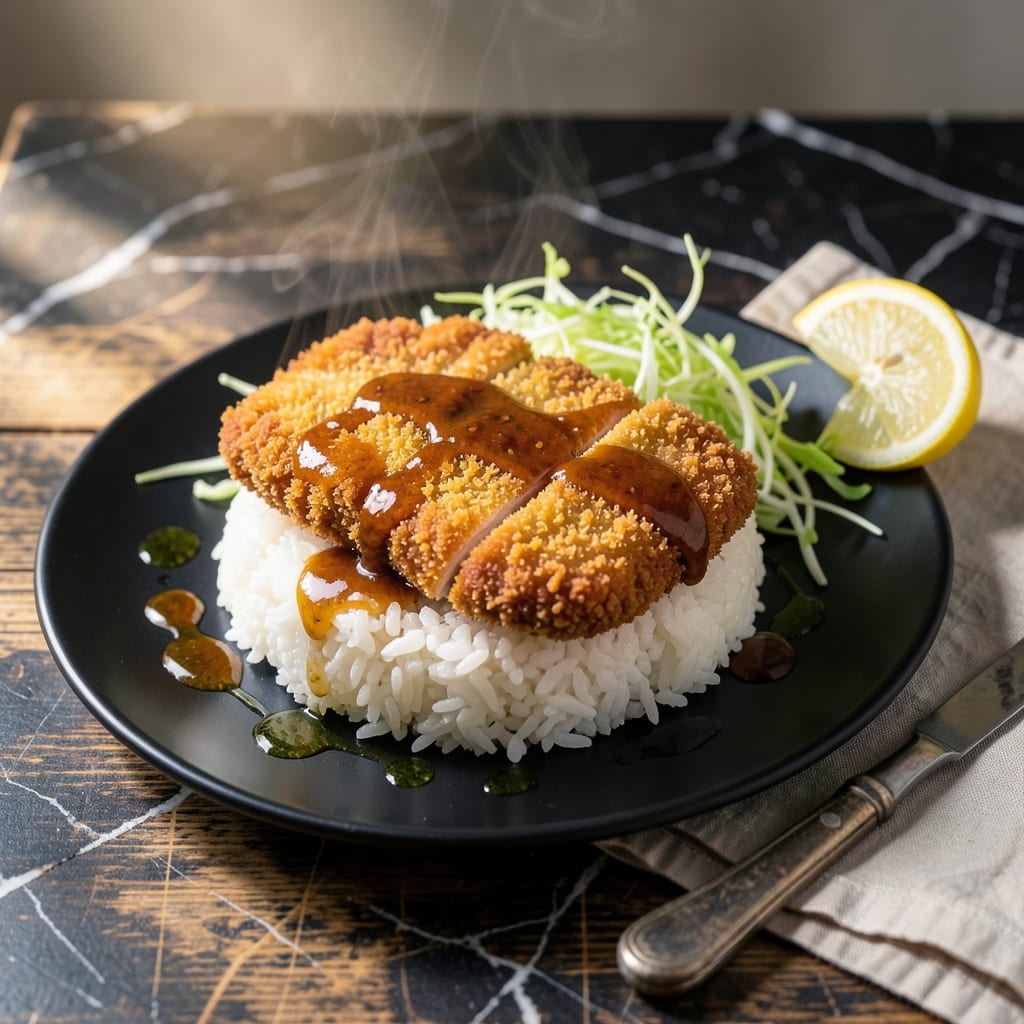
This Japanese-inspired dish brings together a crispy breaded cutlet with perfectly steamed rice for a satisfying meal. The cutlet stays golden and crunchy while the rice remains fluffy and light.
I developed this method after testing multiple breading techniques to ensure that signature crispy texture. The key is using panko breadcrumbs and frying at the right temperature for an even, golden finish.
You’ll achieve a cutlet so crispy it shatters with each bite, paired with rice that soaks up the flavors beautifully. The contrast in textures makes every mouthful memorable.
Serve the cutlet over rice with a drizzle of tonkatsu sauce for an authentic experience. This dish delivers on both texture and taste.
Ingredients for Katsu Rice
Pantry staples meet Japanese specialty items for that perfect crispy texture over fluffy rice.
| Ingredient | Amount | Notes |
|---|---|---|
| Pork Cutlets 🥩 | 4 whole | Boneless, pounded to 1/4-inch thickness |
| Panko Breadcrumbs 🍞 | 2 cups | Japanese-style for maximum crispiness |
| All-Purpose Flour 🌾 | ½ cup | For initial dredging |
| Large Eggs 🥚 | 2 whole | Beaten for egg wash |
| Neutral Oil 🫒 | 2 cups | For deep frying, like vegetable or canola |
| Japanese Short-Grain Rice 🍚 | 2 cups | Rinsed until water runs clear |
| Water 💧 | 2 ½ cups | For cooking rice |
| Tonkatsu Sauce 🍯 | ½ cup | Store-bought or homemade |
| Salt 🧂 | 1 tsp | For seasoning cutlets and rice |
| Black Pepper 🌶️ | ½ tsp | Freshly ground preferred |
| Garlic Powder 🧄 | 1 tsp | Optional, for breading mixture |
| Onion Powder 🧅 | 1 tsp | Optional, for breading mixture |
The panko breadcrumbs are non-negotiable for authentic texture—look for Japanese brands like Kikkoman or Nissin at Asian markets or the international aisle. Pork cutlets should be boneless and pounded thin (a meat mallet or rolling pin works). For the rice, short-grain varieties like Koshihikari or Calrose deliver the right sticky yet fluffy consistency. Avoid long-grain rice, which stays too firm.
No pork? Chicken cutlets or even firm tofu work beautifully—adjust frying time accordingly. Out of panko? Regular breadcrumbs in a pinch, but the texture won’t be as light and crispy. Tonkatsu sauce can be swapped with Worcestershire plus ketchup and a touch of soy sauce. For the oil, any neutral variety with a high smoke point works—peanut oil is a great alternative.
Fry cutlets fresh for the best texture—2-3 minutes per side at 350°F. Leftover katsu can be reheated in an air fryer at 375°F for 3-4 minutes to revive crispiness. Cooked rice keeps in the fridge for 3-4 days and freezes well for up to 1 month.
Why You’ll Love This Recipe
- No-Fuss Coating: I just dip the pork in flour, egg, then panko—no fancy steps, and it crisps up perfectly every time.
- Crunch & Comfort: That golden panko crust with tender pork over rice? Pure satisfaction.
- Crowd Pleaser: From picky kids to dinner guests, everyone cleans their plate.
- Budget Friendly: Pork cutlets and pantry staples mean I can feed four for less than takeout.
Step-by-Step Instructions for Katsu Rice
Master this technique for crispy cutlets served atop perfectly steamed Japanese rice every time.
Step 1: Prepare and Bread the Pork Cutlets
Pat the 4 whole pork cutlets dry with paper towels. Season both sides with 1 tsp salt, 0.5 tsp black pepper, 1 tsp garlic powder, and 1 tsp onion powder. This seasoning layer ensures flavor penetrates the meat.
Set up a breading station: place 0.5 cup all-purpose flour in one shallow dish, beat the 2 whole large eggs in another, and put 2 cups panko breadcrumbs in a third. Dredge each cutlet in flour, shaking off excess, then dip in egg, and finally press into panko until fully coated. The panko’s coarse texture guarantees maximum crispiness.
Step 2: Fry the Cutlets to Golden Perfection
Heat 2 cups neutral oil in a deep skillet or Dutch oven over medium-high heat to 350°F. To test readiness, drop in a pinch of panko—it should sizzle immediately. Carefully lower each breaded cutlet into the oil, working in batches to avoid crowding.
Fry for 3-4 minutes per side until deep golden brown and the internal temperature reaches 145°F. Use tongs to flip only once—this prevents the breading from detaching. Transfer to a wire rack set over a baking sheet to drain excess oil while maintaining crispness.
Step 3: Cook the Japanese Short-Grain Rice
Rinse the 2 cups Japanese short-grain rice in a fine-mesh strainer under cold water until the water runs clear. This removes excess starch, yielding fluffier grains. Combine the drained rice with 2.5 cups water in a saucepan with a tight-fitting lid.
Bring to a boil over high heat, then immediately reduce to low heat, cover, and simmer for 15 minutes. Remove from heat and let it steam, undisturbed, for another 10 minutes. The rice should be tender and slightly sticky, with no crunchy bits remaining.
Step 4: Assemble and Serve
Slice each fried cutlet into ½-inch strips for easy serving. Spoon a generous portion of the steamed rice onto each plate, creating a bed for the pork. Arrange the sliced cutlets over the rice, slightly overlapping for visual appeal.
Drizzle with 0.5 cup tonkatsu sauce or serve it on the side for dipping. The sauce’s sweet and tangy flavor complements the savory pork and mild rice perfectly. Serve immediately while the cutlets are still crispy and the rice is hot.
Pro Tips For Making Katsu Rice
- Double Fry the Cutlets: I learned this the hard way—fry once at 340°F until golden, then rest 2 minutes and fry again at 375°F for that shatteringly crisp panko crust that stays crunchy over rice.
- Press Hard on Panko: After dredging in egg, press the panko into the pork with your palms for 10 seconds—this makes the crumbs stick like glue and prevents sad, bare spots.
- Skip Cold Pork: Pull your cutlets from the fridge 30 minutes before cooking; cold meat lowers the oil temp fast and gives you a greasy, undercooked center instead of juicy pork.
- Use a Wire Rack: After frying, place cutlets on a wire rack over a sheet pan, not paper towels—this keeps the bottom crisp while you finish the rice and sauce, no soggy undersides.
Creative Variations of This katsu rice
Chicken Katsu Variation
Swap pork for boneless chicken thighs pounded to ¼-inch thickness. The cooking time reduces to 3-4 minutes per side at 350°F. Chicken stays juicier than breast meat and pairs perfectly with the same panko breading. I prefer thighs for their rich flavor. 🔥
Vegetarian Tofu Katsu
Use extra-firm tofu pressed for 30 minutes to remove moisture, then slice into ½-inch thick cutlets. Bread and fry as directed, but reduce frying time to 2-3 minutes per side. The tofu soaks up tonkatsu sauce beautifully while maintaining a crispy exterior.
Curry Katsu Style
Serve the cutlet over rice with Japanese curry sauce instead of tonkatsu. I recommend S&B Golden Curry blocks for an easy, authentic flavor. The rich, spiced curry contrasts wonderfully with the crispy breading and tender meat.
Double-Crisp Method
For extra crunch, double-dip in egg and panko before frying. This creates a thicker, more textured coating. I learned this trick from a Tokyo chef—it’s a game-changer for anyone who loves that satisfying crunch. ✨
Katsu Don Bowl
Transform this into a rice bowl by placing the cutlet over rice in a deep dish. Top with thinly sliced onions, a beaten egg, and ¼ cup dashi broth, then simmer until the egg sets. It’s a heartier, soupier version of the classic.
Spicy Mayo Drizzle
Mix ¼ cup mayo with 1 tbsp sriracha for a quick spicy sauce. Drizzle over the cutlet before serving for a creamy, fiery kick. This adds a modern twist while keeping the dish’s comforting essence.
Nutrition Facts
Frequently Asked Questions
Can I bake the cutlet instead of frying?
Yes, bake at 400°F for 15-20 minutes, flipping halfway. Use a wire rack on a baking sheet for even crisping. The texture won’t be as shatteringly crisp as frying, but still delicious
What’s the best oil for frying?
Use a neutral oil with a high smoke point like vegetable, canola, or peanut oil. Avoid olive oil as it can burn at 350°F. Peanut oil adds a subtle nutty flavor
How do I keep the breading from falling off?
Press the panko firmly onto the cutlet and let the breaded cutlets rest for 5-10 minutes before frying. This helps the coating adhere better. Also, avoid flipping too soon in the oil
Can I make this ahead of time?
Fry the cutlets and keep them warm in a 200°F oven for up to 30 minutes. Reheat in an air fryer at 375°F for 3-4 minutes to restore crispiness. Cook rice fresh for best texture

- Curd Rice Recipe: South Indian Comfort With Cooling Yogurt - September 25, 2026
- Rice Mix Recipe: Fluffy Grains With Customizable Flavor Boost - September 25, 2026
- Soupy Rice Recipe: Broth-Soaked Grains With Rustic Depth - September 25, 2026