
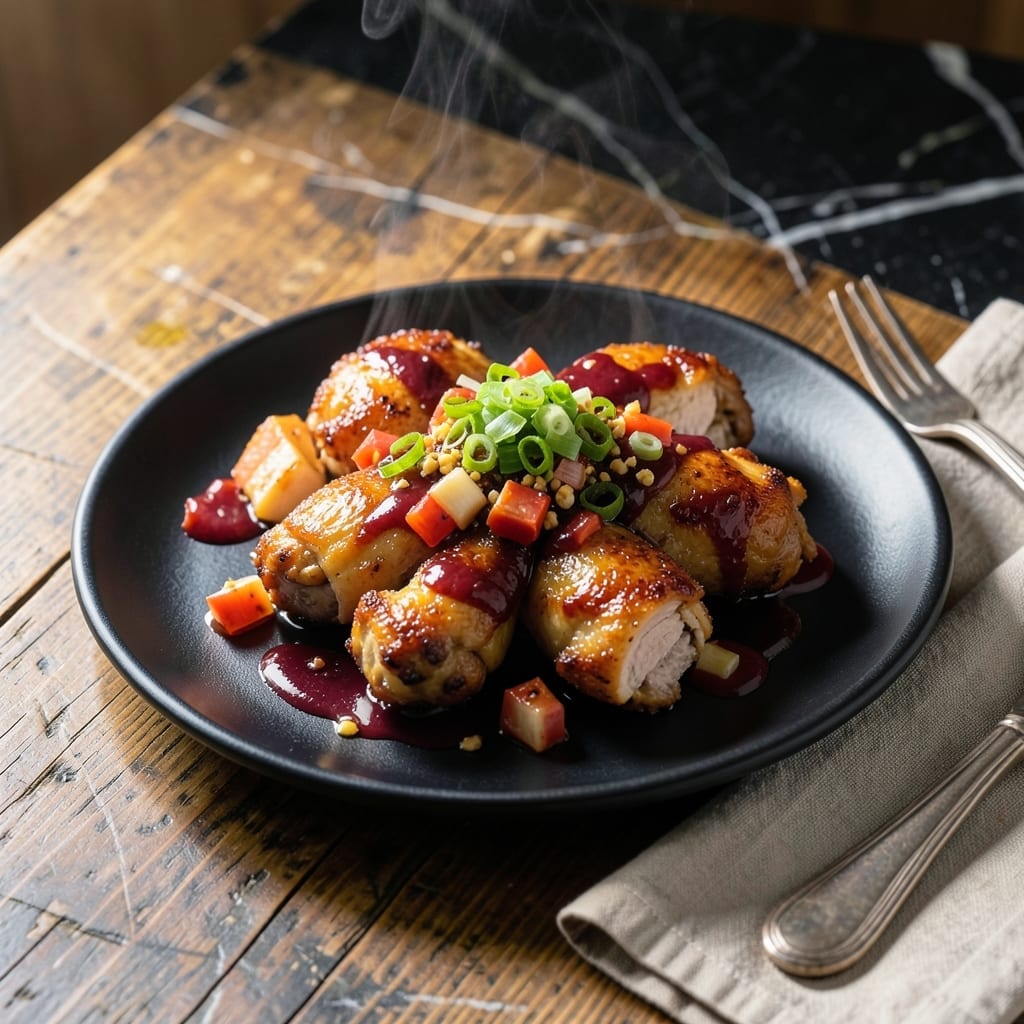
This Korean-inspired dish brings bold, spicy flavors to your dinner table in just 30 minutes. I’ve refined this recipe to balance kimchi’s tangy heat with tender chicken and a rich, savory sauce.
The secret is using well-fermented kimchi for depth and a touch of gochujang for extra kick. A quick sear locks in juices, while the sauce coats every piece in a glossy, umami-packed glaze.
You’ll end up with juicy chicken thighs, caramelized kimchi, and a sauce that’s perfect over rice. The aroma alone will have everyone gathered around the table.
Simple ingredients, big flavor—this is fusion cooking at its best.
Ingredients for Kimchi Chicken
Bold Korean flavors come together with simple pantry staples and juicy chicken thighs.
| Ingredient | Amount | Notes |
|---|---|---|
| Chicken Thighs 🍗 | 1 ½ lb | Boneless, skinless preferred |
| Kimchi 🥬 | 2 cups | Well-fermented for depth |
| Gochujang 🌶️ | 2 tbsp | Korean chili paste |
| Soy Sauce 🫒 | 3 tbsp | Low-sodium recommended |
| Brown Sugar 🍚 | 1 tbsp | Light or dark works |
| Garlic Cloves 🧄 | 4 cloves | Minced for sauce |
| Fresh Ginger 🌿 | 1 tbsp | Grated or minced |
| Sesame Oil 🫒 | 1 tbsp | Toasted for aroma |
| Rice Vinegar 🍋 | 1 tbsp | Adds tangy brightness |
| Cornstarch 🌾 | 1 tbsp | For thickening sauce |
| Green Onions 🧅 | 4 whole | Thinly sliced for garnish |
| Sesame Seeds 🌰 | 1 tbsp | Toasted for garnish |
| Vegetable Oil 🫒 | 1 tbsp | For searing chicken |
| Jasmine Rice 🍚 | 2 cups | Uncooked, for serving |
The kimchi is non-negotiable here. Look for well-fermented, spicy kimchi (the kind with a strong aroma and vibrant red color) at an Asian market or the refrigerated section of Whole Foods. Napa cabbage kimchi is classic, but radish kimchi works too. The gochujang should be Korean-made—brands like Sempio or Kochukaru are solid. Chicken thighs stay juicier than breasts, but either works in a pinch.
No gochujang? Sriracha mixed with a little miso paste gets you close. Fresh ginger is ideal, but ground ginger at half the amount works. Skip the brown sugar? Honey or maple syrup at the same quantity. For a gluten-free version, swap soy sauce for tamari. The cornstarch can be arrowroot powder if that’s what you’ve got (trust me on this).
Leftovers keep 3-4 days in the fridge. Reheat gently to avoid drying out the chicken. The sauce thickens as it cools, so thin with a splash of water when reheating. Freezes well for up to 3 months—just leave off the garnishes until serving.
Why You’ll Love This Recipe
- One Pan Magic: I toss everything in a skillet—chicken, kimchi, and that sticky gochujang glaze—and walk away until it’s caramelized.
- Flavor Explosion: The tangy kimchi and sweet-spicy gochujang make the chicken so addictive I catch myself sneaking bites straight from the pan.
- Meal Prep Hero: It tastes even better the next day, so I double the batch for lunches that actually get me excited to open my container.
- Budget Stretcher: Chicken thighs stay juicy and cheap, and a little kimchi goes a long way to pack in serious flavor without breaking the bank.
Step-by-Step Instructions for Kimchi Chicken
This fusion dish comes together fast with bold flavors and simple techniques.
Step 1: Sear the Chicken Thighs
Heat the 1 tbsp Vegetable Oil in a large skillet over medium-high heat until it shimmers. Add the 1.5 lb Chicken Thighs and sear for 4-5 minutes per side until golden brown and crispy.
Don’t crowd the pan—work in batches if needed to ensure proper browning. You want a deep, rich color on the chicken, which builds the flavor base for the sauce. The thighs should release easily from the pan when they’re ready to flip.
Transfer the seared thighs to a plate and set aside. The residual heat will keep them warm while you build the sauce in the same skillet.
Step 2: Build the Flavor Base with Aromatics
In the same skillet (no need to clean it—those browned bits are flavor gold), add the 2 cups Kimchi, 4 cloves Garlic Cloves, and 1 tbsp Fresh Ginger. Cook for 3-4 minutes over medium heat until the kimchi softens and the aromatics become fragrant.
The kimchi should start to caramelize slightly at the edges, and the garlic and ginger should lose their raw bite. Stir occasionally to prevent burning, but let some bits get crispy for texture contrast.
This step transforms the kimchi from a tangy side into a complex sauce foundation.
Step 3: Create the Sauce and Finish Cooking
Add the 2 tbsp Gochujang, 3 tbsp Soy Sauce, 1 tbsp Brown Sugar, 1 tbsp Rice Vinegar, and 1 tbsp Sesame Oil to the skillet. Stir well to combine, then pour in ½ cup water to deglaze the pan.
Return the chicken thighs to the skillet, spooning the sauce over them. Reduce heat to medium-low, cover, and simmer for 8-10 minutes until the chicken is cooked through and the sauce has thickened slightly.
For a glossier finish, mix the 1 tbsp Cornstarch with 1 tbsp of the sauce, then stir it back into the pan.
Step 4: Garnish and Serve
Thinly slice the 4 whole Green Onions and toast the 1 tbsp Sesame Seeds in a dry pan over low heat for 1-2 minutes until fragrant. Sprinkle both over the dish just before serving.
Serve the kimchi chicken hot over steamed 2 cups Jasmine Rice. The rice soaks up the spicy, tangy sauce perfectly. Each bite should deliver tender chicken, punchy kimchi, and a balance of sweet, spicy, and umami flavors.
Real talk: the sauce tastes even better the next day as the flavors meld.
Pro Tips For Making Kimchi Chicken
- Sear Chicken First: Brown the chicken thighs in a hot pan for 3-4 minutes per side before adding kimchi—this locks in juices and keeps the meat from turning mushy in the sauce.
- Drain the Kimchi: Squeeze excess liquid from the kimchi before cooking, or your sauce will be watery instead of thick and clinging to the chicken.
- Balance the Sweetness: Taste as you go and add the brown sugar in two stages—kimchi and gochujang can be tangy or spicy, and you might not need the full amount.
- Simmer Uncovered: After combining everything, let it simmer uncovered for 8-10 minutes so the sauce reduces and coats the chicken instead of drowning it.
Creative Variations of This Recipe
Spicy Extra Kick
Add 1 tbsp gochugaru (Korean chili flakes) to the sauce for deeper heat. I also toss in 1 sliced jalapeño with the kimchi for fresh, bright spice. The extra chili flakes bloom beautifully in the hot sauce. 🌶️
Coconut Milk Twist
For a creamy, Thai-inspired variation, stir in ½ cup coconut milk when building the sauce. This mellows the spice while adding richness. Finish with fresh cilantro instead of green onions.
Quick Stir-Fry Style
Cut the chicken into 1-inch pieces before searing for a faster cook. Add 1 cup sliced bell peppers and 1 cup snap peas with the kimchi for extra crunch. This version cooks in under 20 minutes. ⚡
Sweet and Spicy
Double the brown sugar to 2 tbsp and add 2 tbsp honey for a sweeter glaze. Balance it with an extra 1 tbsp rice vinegar to cut through the richness. The caramelization is next-level.
Baked Option
Transfer everything to a baking dish after step 2, then bake at 375°F for 20-25 minutes. This hands-off method lets the flavors meld while keeping the chicken juicy.
Nutrition Facts
Frequently Asked Questions
Can I use chicken breast instead of thighs?
Yes, but thighs stay juicier. If using breasts, sear for 3-4 minutes per side and reduce simmering to 5-6 minutes to prevent drying.
How spicy is this dish?
Moderately spicy from kimchi and gochujang. Reduce heat by using mild kimchi or halving the gochujang to 1 tbsp.
What if I don’t have gochujang?
Substitute 1 tbsp sriracha mixed with 1 tsp miso paste. The flavor won’t be identical but will still be delicious.
Can I make this ahead of time?
The flavors deepen overnight. Store in an airtight container for up to 3 days in the fridge.

- Jollof Rice Sauce Recipe: West African Tomato and Spice Infusion - September 25, 2026
- Japanese Rice Soup Recipe: Umami-Rich Comfort in a Bowl - September 25, 2026
- Homemade Cream Of Rice Recipe: Silk-Smooth Breakfast in Minutes - September 25, 2026