
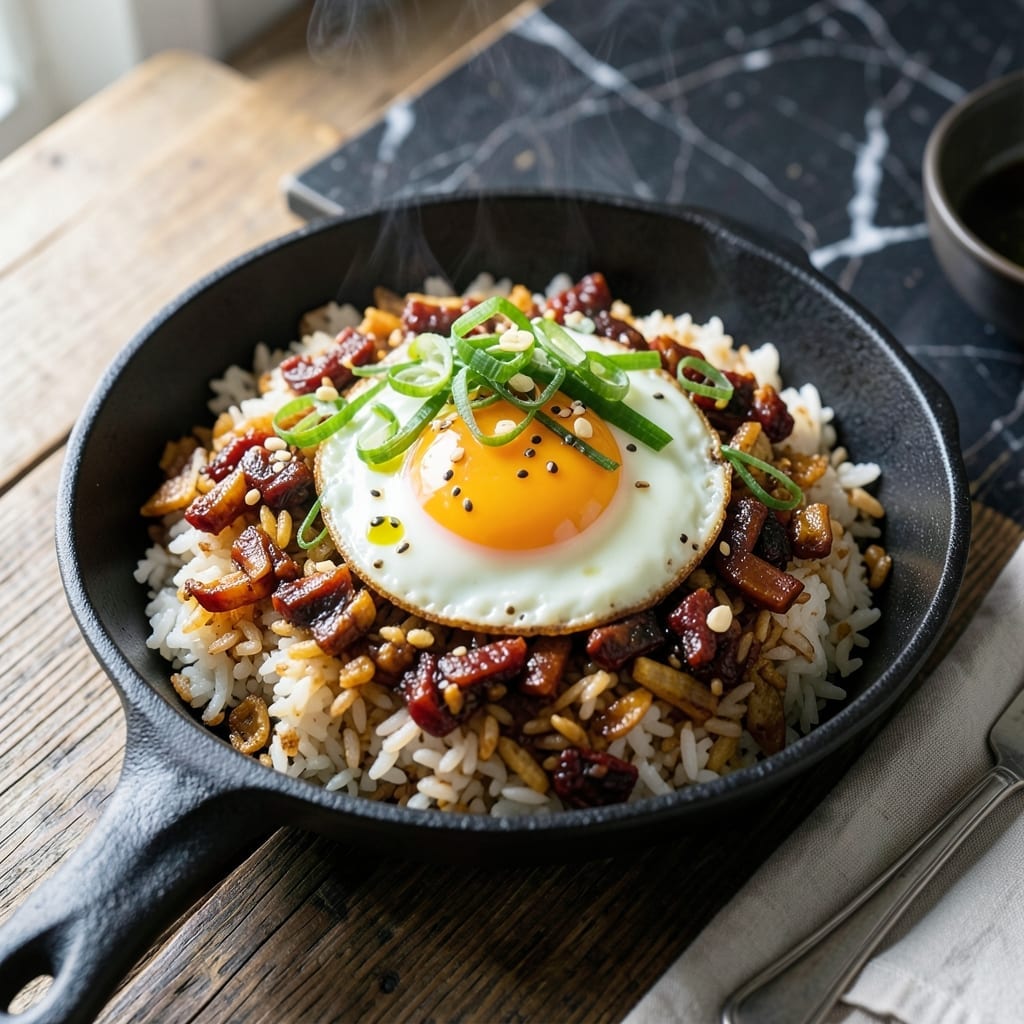
I developed this dish after realizing how much flavor aged kimchi brings to simple rice. The fermentation creates a depth that transforms leftovers into something extraordinary.
This method uses high heat and a cast iron skillet to achieve that signature crispy texture. The kimchi’s tang balances the richness of the egg and rice, while sesame oil adds authentic aroma.
What results is a hot, savory dish with layers of spice and umami. Each bite delivers the perfect combination of chewy rice, crispy edges, and bold kimchi flavor.
Serve immediately with extra sesame seeds and sliced green onions for garnish. The dish comes together in 20 minutes with minimal effort.
Ingredients for Kimchi Fried Rice
Transform last night’s rice into something extraordinary with these bold ingredients.
| Ingredient | Amount | Notes |
|---|---|---|
| Cooked White Rice 🍚 | 4 cups | Day-old, chilled preferred |
| Aged Kimchi 🥬 | 2 cups | Chopped, with liquid reserved |
| Large Eggs 🥚 | 4 whole | Beaten lightly for frying |
| Green Onions 🧅 | ½ cup | Thinly sliced, white and green parts |
| Garlic Cloves 🧄 | 4 cloves | Minced finely for aroma |
| Sesame Oil 🫒 | 2 tbsp | Toasted for authentic flavor |
| Vegetable Oil 🛢️ | 2 tbsp | High smoke point for frying |
| Gochujang 🌶️ | 1 tbsp | Korean chili paste, optional |
| Soy Sauce 🫙 | 2 tbsp | Low-sodium preferred for balance |
| Sesame Seeds 🌰 | 1 tbsp | Toasted for garnish |
| Salt 🧂 | ½ tsp | Kosher or sea salt to taste |
| Black Pepper 🌶️ | ¼ tsp | Freshly ground for finish |
The kimchi quality is paramount here. Aged kimchi (at least a week old) develops the deep, tangy complexity that defines this dish. Korean markets or H Mart are ideal for authentic options, but well-stocked grocery stores often carry decent brands. Look for kimchi with vibrant color and plenty of liquid—this adds both flavor and moisture to the fried rice.
No gochujang? Sriracha or additional soy sauce can provide heat and depth, though the flavor profile will differ slightly. Fresh kimchi is essential—canned versions lack the necessary texture and fermented punch. The rice must be cold (preferably day-old) to achieve that signature crispiness in the skillet. If using freshly cooked rice, spread it on a tray to cool completely before starting.
Leftover kimchi fried rice reheats well, though the texture is best fresh. Store in an airtight container in the fridge for up to 3 days. The dish freezes for 1 month, but the eggs may lose their ideal consistency upon thawing. Reheat in a skillet to restore crispiness.
Why You’ll Love This Recipe
- One Pan Magic: I toss the rice, kimchi, and eggs straight into the pan—no extra bowls, no fuss.
- Flavor Bomb: That aged kimchi and garlic hit with a spicy, tangy punch that makes every bite unforgettable.
- Weeknight Hero: Between us, it’s my go-to for lazy dinners or when I need to feed a crowd fast.
- Budget Savior: I use leftover rice and whatever kimchi’s been sitting in the fridge—waste nothing, spend less.
Step-by-Step Instructions for Kimchi Fried Rice
Master the technique for perfectly balanced spice, texture, and umami in every bite.
Step 1: Sauté Aromatics and Kimchi Base
Heat a large skillet or wok over medium-high heat and add the 2 tbsp vegetable oil. Once shimmering, add the 4 cloves garlic cloves and sauté for 30 seconds until fragrant but not browned.
Immediately add the 2 cups aged kimchi with its reserved liquid. Cook for 3-4 minutes, stirring frequently, until the kimchi softens and the liquid reduces slightly. This step develops the deep, tangy base flavor that defines the dish.
Stir in the 1 tbsp gochujang and 2 tbsp soy sauce, ensuring the paste dissolves completely into the kimchi mixture. The sauce should turn a rich, glossy red with a balanced sweet-spicy aroma.
Step 2: Incorporate Rice and Season
Add the 4 cups cooked white rice to the skillet, breaking up any clumps with your spatula. The day-old, chilled rice will crisp slightly against the hot pan, creating desirable texture contrast.
Drizzle the 2 tbsp sesame oil over the rice and stir-fry for 4-5 minutes until the grains are thoroughly coated and heated through. Season with 0.5 tsp salt and 0.25 tsp black pepper, adjusting to taste.
Watch for the rice to develop a slight toasted aroma and take on a vibrant orange hue from the kimchi and gochujang. This visual transformation signals the flavors have fully melded.
Step 3: Create Wells for Perfect Fried Eggs
Push the rice mixture to the sides of the skillet, creating 4 small wells in the center. Crack each of the 4 whole large eggs into these spaces, ensuring they remain separate.
Cover the skillet and cook for 3-4 minutes until the egg whites are set but yolks remain runny. The residual heat from the rice will gently cook the tops without overcooking the yolks.
For restaurant-style presentation, the yolks should maintain their bright orange color and liquid center, ready to be broken and mixed into the rice when served.
Step 4: Finish and Garnish
Sprinkle the 0.5 cup green onions evenly over the entire dish, allowing some to fall onto the eggs for color contrast. The green onions will soften slightly from the heat but retain their bright, fresh flavor.
Remove from heat and immediately garnish with the 1 tbsp sesame seeds. The seeds should toast slightly from the residual heat, releasing their nutty aroma without burning.
Serve hot, with each portion featuring a fried egg on top. The runny yolk will create an additional sauce when broken, enriching the already flavorful rice with its creamy texture.
Pro Tips For Making Kimchi Fried Rice
- Use Day-Old Rice: Fresh rice turns mushy—spread leftover rice on a tray and refrigerate overnight to dry it out. I learned this the hard way after my first few batches turned to paste.
- Sear the Kimchi: Cook the aged kimchi for 2-3 minutes on medium-high heat before adding rice—this deepens the flavor and drives off excess moisture. Sounds weird, but it works.
- Push Rice to the Side: When adding the eggs, push the rice to one side of the pan to create a clear space for scrambling. Skipping this leads to rubbery, unevenly cooked eggs.
- Finish with Sesame Oil: Drizzle about 1 teaspoon of toasted sesame oil at the very end, just before serving. My grandmother swore by this, and she was right.
Health Benefits of This Recipe
Probiotic Powerhouse
Kimchi is packed with lactobacillus bacteria that support gut health. Just ½ cup provides billions of beneficial microbes. I noticed my digestion improved after adding kimchi to my weekly meals. 💪
Rich in Vitamins
This dish delivers vitamin A and vitamin C from the fermented napa cabbage. The aged kimchi also contains B vitamins like folate and B6, essential for energy metabolism and red blood cell production.
Low-Calorie Boost
A serving of kimchi fried rice has about 300-350 calories, making it a nutritious yet light option. The spice from kimchi and gochujang can also boost metabolism slightly, helping you feel satisfied longer.
Antioxidant Benefits
Garlic and kimchi are both rich in antioxidants that combat oxidative stress. The 4 garlic cloves in this recipe provide allicin, a compound known for its immune-boosting properties. Regular consumption may help reduce inflammation.
Protein-Packed
The 4 large eggs add 24 grams of protein to this dish, supporting muscle repair and growth. Eggs also provide choline, a nutrient vital for brain health and function.
Combined with the amino acids from rice, this creates a complete protein profile.
Nutrition Facts
Frequently Asked Questions
Can I use fresh rice instead of day-old?
Fresh rice can work in a pinch, but spread it on a tray to cool completely first. Day-old rice yields the best crispy texture because it has less moisture.
What if I don’t have gochujang?
Substitute with 1 tbsp sriracha or extra soy sauce, though the flavor will differ slightly. The dish will still be delicious but less complex.
How do I make it less spicy?
Use milder kimchi or rinse it before cooking. Reduce or omit gochujang entirely. Balance heat with a drizzle of honey or extra sesame oil.
Can I add other proteins?
Try adding cooked chicken, shrimp, or tofu with the rice. Cook meats first, then set aside before starting the recipe.

- Jollof Rice Sauce Recipe: West African Tomato and Spice Infusion - September 25, 2026
- Japanese Rice Soup Recipe: Umami-Rich Comfort in a Bowl - September 25, 2026
- Homemade Cream Of Rice Recipe: Silk-Smooth Breakfast in Minutes - September 25, 2026