
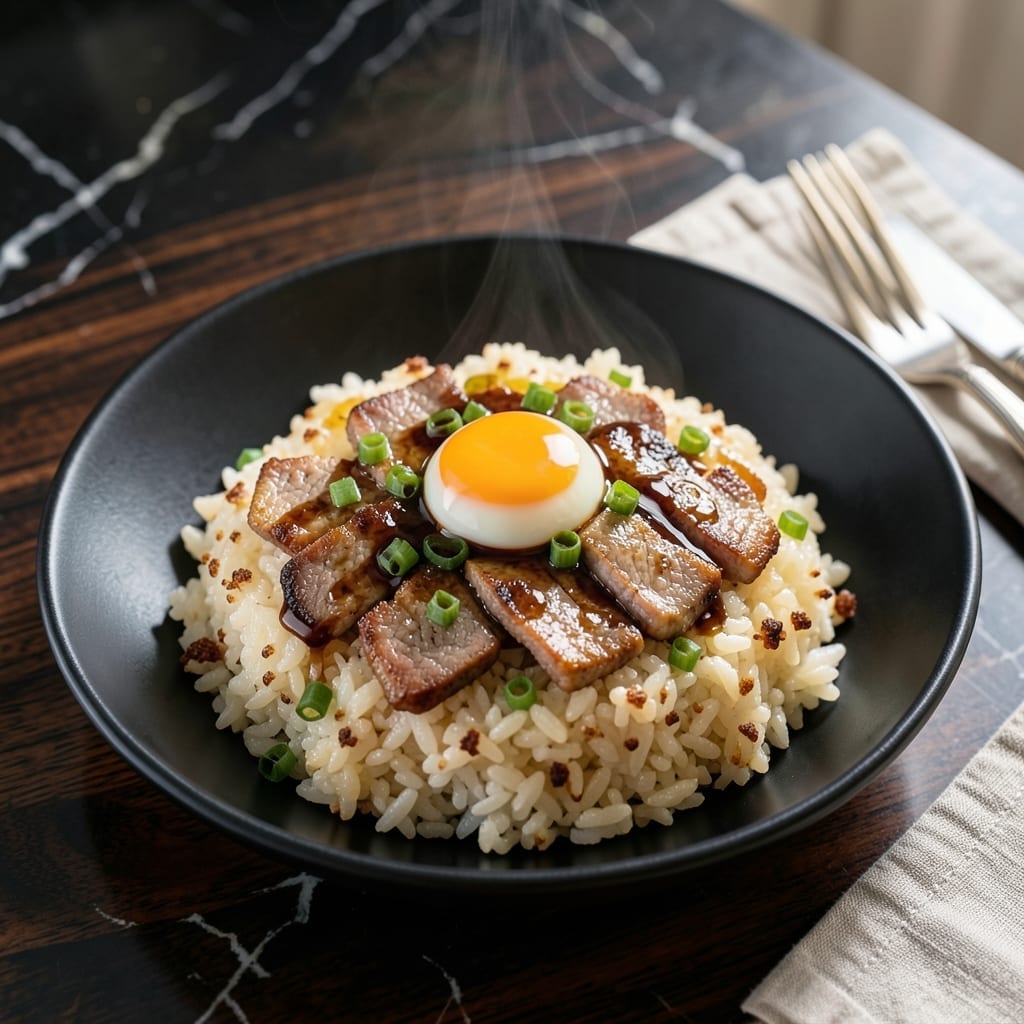
This Japanese-style rice dish elevates simple grains into something extraordinary through a precise cooking method.
I developed this recipe to highlight the natural richness of Kobe beef while keeping the rice light and fluffy. The key is using short-grain rice and a specific water ratio that ensures each grain stays separate yet tender.
The result is buttery rice with subtle depth of flavor that perfectly complements the beef. It’s a dish that proves simple ingredients can create restaurant-quality results.
Serve it as a base for Kobe beef or enjoy it on its own with a drizzle of soy sauce. Here’s how to make it.
Ingredients for Kobe Rice
Short grain rice, rich fats, and umami boosters create this luxurious Japanese-style dish.
| Ingredient | Amount | Notes |
|---|---|---|
| Japanese Short-Grain Rice 🍚 | 2 cups | Rinsed until water runs clear |
| Water 💧 | 2 ½ cups | Filtered or spring preferred |
| Kobe Beef Fat 🥩 | 2 tbsp | Rendered from Kobe beef trimmings |
| Unsalted Butter 🧈 | 2 tbsp | European-style preferred for richness |
| Soy Sauce 🫙 | 1 tbsp | Low-sodium for controlled seasoning |
| Sake 🍶 | 2 tbsp | Dry variety for subtle depth |
| Mirin 🍶 | 1 tbsp | Sweet cooking rice wine |
| Dashi Stock 🍜 | ½ cup | Optional for umami enhancement |
| Kosher Salt 🧂 | ½ tsp | Diamond Crystal brand preferred |
| Sugar 🍚 | 1 tsp | Granulated white sugar |
| Rice Vinegar 🍶 | 1 tsp | Seasoned or unseasoned |
| Fresh Ginger 🌿 | 1 piece | 1-inch knob, grated |
| Green Onions 🧅 | 3 whole | Thinly sliced for garnish |
| Toasted Sesame Seeds 🌰 | 1 tsp | For finishing garnish |
The rice is non-negotiable—Japanese short-grain (Koshihikari or Nishiki brands) gives that perfect sticky-yet-separate texture. For the Kobe beef fat, ask your butcher to render trimmings or use high-quality beef tallow as a substitute. Whole Foods or specialty Asian markets often carry it. The sake and mirin add depth; Gekkeikan is a reliable brand for both.
No Kobe fat? Equal parts butter and neutral oil works in a pinch. Skip the sake and mirin? Dry white wine and a pinch of sugar mimic the flavor. Dashi not on hand? Chicken stock with a dash of soy adds similar umami. The ginger can be skipped if needed, but fresh is far superior to powdered for that bright, zingy note.
Cooked rice stays fresh for 2-3 days in the fridge. Reheat with a splash of water to restore moisture. The garnishes (green onions, sesame seeds) are best added fresh. This dish tastes even better the next day as flavors meld.
Why You’ll Love This Recipe
- One Pot Magic: I just dump rice, water, and Kobe beef fat in a pot—no fancy steps, no stress.
- Rich Umami Bomb: The butter and soy sauce make every bite taste like a fancy steakhouse side.
- Pairs with Anything: I serve it with grilled veggies one night, fried eggs the next—so versatile.
- Leftovers? Even Better: Honestly, the rice soaks up more flavor overnight—breakfast fried rice is a win.
Step-by-Step Instructions for Kobe-Style Japanese Rice
Here’s the method. Straightforward, tested, works every time.
Step 1: Rinse and Soak the Rice
Place the 2 cups Japanese Short-Grain Rice in a fine-mesh strainer and rinse under cold water, swirling gently with your hand. Continue until the water runs completely clear—this removes excess starch and prevents gummy rice.
Transfer the drained rice to a medium bowl and add the 2.5 cups Water. Let it soak for 20-30 minutes. This step ensures even hydration and consistent cooking. I always set a timer here—it’s easy to forget when prepping other ingredients.
Step 2: Infuse the Cooking Liquid
In a medium saucepan, combine the 2 tbsp Kobe Beef Fat, 2 tbsp Unsalted Butter, 1 tbsp Soy Sauce, 2 tbsp Sake, 1 tbsp Mirin, 0.5 cup Dashi Stock, 0.5 tsp Kosher Salt, 1 tsp Sugar, and 1 tsp Rice Vinegar.
Heat over medium-low heat for 3-4 minutes, stirring occasionally, until the butter and beef fat melt and the mixture becomes fragrant. Don’t let it boil—just warm it enough to blend the flavors. Remove from heat once the sugar fully dissolves.
Step 3: Cook the Rice with Precision
Drain the soaked rice completely and transfer it to your rice cooker or heavy-bottomed pot. Pour the warm infused liquid over the rice and add the grated 1 piece Fresh Ginger. Stir once to distribute the ginger evenly.
If using a rice cooker, select the standard cycle. For stovetop, bring to a boil over medium-high heat, then reduce to low, cover, and simmer for 15 minutes. Turn off the heat and let it steam, covered, for an additional 10 minutes. The rice is done when all liquid is absorbed and the grains are tender but still distinct.
Step 4: Rest and Garnish for Serving
Once cooked, let the rice rest in the pot, covered, for 5-10 minutes. This allows the grains to firm up slightly and absorb any remaining moisture. Gently fluff the rice with a rice paddle or fork, taking care not to crush the grains.
Transfer to serving bowls and garnish with the thinly sliced 3 whole Green Onions and 1 tsp Toasted Sesame Seeds. The rice should have a subtle sheen from the beef fat and butter, with each grain distinct yet cohesive. Serve immediately while warm and fragrant.
Pro Tips For Making Kobe Rice
- Render the Fat First: Melt the Kobe beef fat on low heat before adding butter to deepen the umami flavor—rushing this step leaves the fat greasy instead of rich.
- Rinse the Rice Well: Wash the short-grain rice until the water runs clear to remove excess starch, otherwise your Kobe rice will turn gummy instead of fluffy.
- Skip the Salt: Soy sauce already brings enough saltiness, so resist the urge to season the water—it’ll overpower the beef’s natural taste.
- Rest Before Serving: Let the rice sit covered off heat for 5 minutes after cooking so the grains absorb the fat and butter evenly, like my grandmother always did.
Make-Ahead Tips for This Recipe
Prep Ahead Strategy
You can rinse and soak the 2 cups Japanese Short-Grain Rice up to 24 hours in advance. Store it covered in the fridge with its soaking water. This actually improves texture as the grains absorb moisture evenly. 💡
Infusion Shortcut
The flavored cooking liquid can be made 2 days ahead and refrigerated. Simply reheat until the butter and Kobe beef fat melt again before combining with rice. The flavors deepen as they meld together.
Cooked Rice Storage
Cooked rice stays perfect for 3-4 days in the fridge in an airtight container. I use glass containers to prevent any plastic odors from seeping in. The buttery richness actually intensifies overnight.
Freezing for Later
Portion cooled rice into freezer bags, squeezing out excess air. It freezes beautifully for up to 1 month. Thaw overnight in the fridge before reheating.
Reheating Method
Sprinkle 1-2 tbsp water over each cup of rice and microwave covered for 1-2 minutes. Alternatively, steam in a pot with ¼ cup water for 5 minutes. Stir gently to restore that fresh-cooked texture. 🔥
Garnish Last
Always add the green onions and sesame seeds fresh when serving. Their vibrant color and crunch are best preserved this way. I keep pre-sliced onions in a damp paper towel in the fridge for quick assembly.
Nutrition Facts
Frequently Asked Questions
Can I use regular beef fat instead of Kobe?
Yes, high-quality beef tallow works as a substitute. While it won’t have the same luxurious depth as Kobe fat, it still adds rich flavor to the rice.
How do I know when the rice is done?
It’s ready when all liquid is absorbed and grains are tender but separate. For stovetop, this takes 15 minutes simmering plus 10 minutes steaming.
What if my rice turns out mushy?
This usually means too much water or not rinsing the rice enough. Use exactly 2.5 cups liquid for 2 cups rice and rinse until water runs clear.
Can I make this in a rice cooker?
Just use the standard cycle with the infused liquid. The cooker will handle the timing automatically.

- Jollof Rice Sauce Recipe: West African Tomato and Spice Infusion - September 25, 2026
- Japanese Rice Soup Recipe: Umami-Rich Comfort in a Bowl - September 25, 2026
- Homemade Cream Of Rice Recipe: Silk-Smooth Breakfast in Minutes - September 25, 2026