
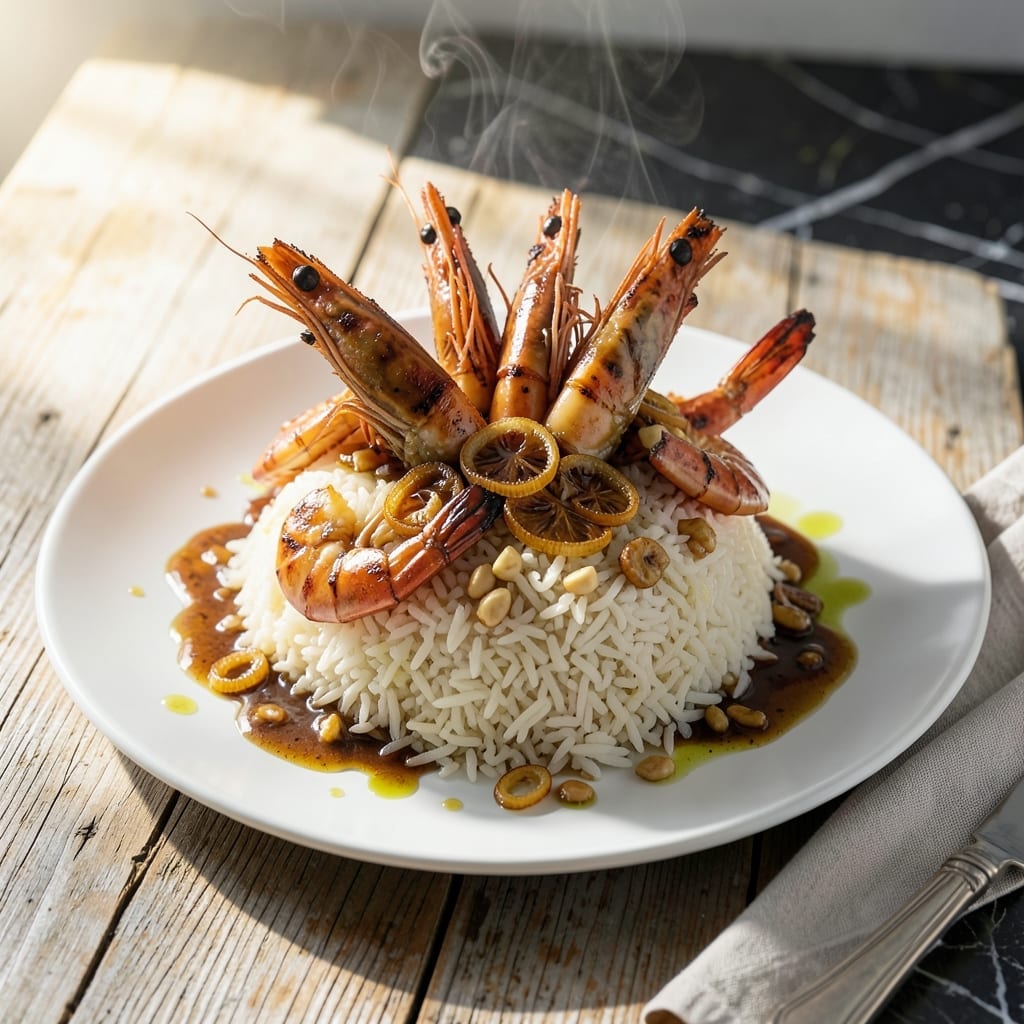
This dish transforms simple ingredients into a restaurant-quality meal with minimal effort.
The wok-charred prawns and garlic-infused rice create a savory depth that’s hard to resist. Perfect for a weeknight dinner that feels special.
Ingredients for King Prawn Rice
Restaurant-quality ingredients for wok-charred seafood with aromatic rice and bold flavors ready in minutes.
| Ingredient | Amount | Notes |
|---|---|---|
| King Prawns 🦐 | 1 ½ lb | Peeled, deveined, tails on |
| Jasmine Rice 🍚 | 2 cups | Rinsed until water runs clear |
| Garlic Cloves 🧄 | 6 cloves | Minced finely for aroma |
| Shallots 🧅 | 2 whole | Finely diced for sweetness |
| Soy Sauce 🫒 | 3 tbsp | Low-sodium preferred for balance |
| Oyster Sauce 🫒 | 1 tbsp | For umami depth (vegetarian if needed) |
| Sesame Oil 🫒 | 1 tsp | Toasted variety for fragrance |
| Vegetable Oil 🫒 | 3 tbsp | High smoke point for wok cooking |
| Green Onions 🌿 | 4 whole | Thinly sliced for garnish |
| Fresh Cilantro 🌿 | ¼ cup | Chopped, for brightness |
| Fresh Ginger 🌿 | 1 tbsp | Grated for warmth |
| White Pepper 🌶️ | ½ tsp | Ground for subtle heat |
| Chicken Stock 🥣 | 1 cup | Or substitute vegetable stock |
| Lime 🍋 | 1 whole | Juiced for acidity |
The prawns are the centerpiece—sourced fresh from a trusted seafood counter is ideal, but high-quality frozen (thawed completely) works well. Look for wild-caught if available, as they hold up better to high heat. Asian markets often have the best selection of jasmine rice, which provides the perfect sticky texture. The garlic and shallots should be firm and fragrant, with no sprouting or soft spots.
No oyster sauce? Hoisin sauce at half the amount offers a similar sweet-savory profile. For a vegetarian touch, mushroom-based oyster sauce is an excellent substitute. If jasmine rice isn’t on hand, basmati or long-grain white rice will do, though the texture will differ slightly. The soy sauce can be swapped for tamari for a gluten-free option, but adjust saltiness to taste.
Cooked rice and prawns are best served immediately, but leftovers can be stored in the fridge for up to 2 days. Reheat gently in a wok or skillet to avoid drying out. For longer storage, freeze the uncooked prawns and rice separately for up to 3 months.
Why You’ll Love This Recipe
- One Pan Meal: I love that this comes together in a single skillet—prawns, rice, and aromatics all in one go.
- Umami Bomb: The soy sauce and garlic turn the jasmine rice into something ridiculously good, with every bite packed with flavor.
- Weeknight Hero: Honestly, it’s my go-to for busy evenings when I need something quick but still impressive.
- Budget Friendly: King prawns feel fancy, but a little goes a long way, and the rice stretches it into a solid, filling meal.
Step-by-Step Instructions for King Prawn Rice
Master the wok technique for perfectly charred prawns and fragrant jasmine rice with these precise steps.
Step 1: Prepare the Rice Foundation
Rinse the 2 cups Jasmine Rice under cold water until the water runs completely clear. This removes excess starch and prevents the rice from becoming gummy during cooking. Drain thoroughly in a fine-mesh sieve, then transfer to your rice cooker or pot.
Add the 1 cup Chicken Stock and enough water to reach the standard rice-to-liquid ratio (typically 1:1.5). I prefer using chicken stock for the rice base as it infuses every grain with subtle savory depth. Start the rice cooking cycle—it should be finished by the time you complete the prawn preparation.
Step 2: Create the Aroma Base
Heat 2 tbsp Vegetable Oil in a wok or large skillet over high heat until it shimmers but doesn’t smoke. Add the 2 whole Shallots (finely diced) and stir-fry for 1-2 minutes until they turn translucent and just begin to brown at the edges.
Immediately add the 6 cloves Garlic Cloves (minced) and 1 tbsp Fresh Ginger (grated). Stir constantly for 30-45 seconds until the garlic turns light golden and releases its aroma. Be vigilant—burnt garlic will impart a bitter taste to the entire dish. The ginger should become fragrant but not brown.
Step 3: Cook the King Prawns to Perfection
Increase the heat to maximum and add the remaining 1 tbsp Vegetable Oil. When it’s nearly smoking, add the 1.5 lb King Prawns in a single layer. Let them sear undisturbed for 1 minute to develop a deep char on one side—this creates the signature wok hei flavor.
Flip the prawns and add the 3 tbsp Soy Sauce, 1 tbsp Oyster Sauce, and 0.5 tsp White Pepper. Stir-fry for another 1-2 minutes until the prawns turn opaque pink and curl into a C-shape. The sauce should coat each prawn evenly and reduce slightly, creating a glossy sheen.
Step 4: Combine and Finish
Once the rice is cooked, fluff it gently with a fork and transfer it to the wok with the prawns. Drizzle the 1 tsp Sesame Oil over the mixture. Toss everything together over medium-high heat for 2-3 minutes until the rice is thoroughly coated with the sauce and heated through.
The rice grains should be separate and glistening, with the prawns distributed evenly throughout. Taste and adjust seasoning if needed, though the combination of soy and oyster sauces typically provides perfect balance.
Step 5: Garnish and Serve Immediately
Remove from heat and stir in the juice from the 1 whole Lime. The acidity will brighten all the flavors and cut through the richness. Transfer to a serving platter and garnish with the 4 whole Green Onions (thinly sliced) and 0.25 cup Fresh Cilantro (chopped).
Serve immediately while the prawns are still hot and the rice maintains its individual grain texture. The contrast of the charred prawns, fragrant rice, and fresh herbs creates a harmonious balance in every bite.
Pro Tips For Making King Prawn Rice
- Dry Your Prawns: Pat the king prawns thoroughly dry with paper towels before cooking—this guarantees a better sear and prevents the rice from turning soggy. I learned this the hard way after my first few batches came out watery.
- Toast the Rice: Lightly toast the jasmine rice in the pot with a bit of oil for 2-3 minutes before adding liquid. Sounds weird, but it works: it deepens the flavor and keeps the grains separate.
- Don’t Overcrowd Prawns: Cook the prawns in a single layer, even if it means doing it in batches. Steer clear of piling them up—it steams them instead of frying, and you’ll lose that crisp texture.
- Bloom the Aromatics: Sauté the minced garlic and shallots in oil on medium-low until fragrant, about 1-2 minutes. After burning three batches, I finally figured out that high heat turns them bitter before they release their sweetness.
Regional Styles of These Flavors
Thai Street Style
In Thailand, this dish becomes Pad Goong, with an extra kick from 1-2 Thai bird’s eye chilies added to the aroma base. They also often include 1 tsp fish sauce for that characteristic umami punch. The rice is typically jasmine, cooked slightly drier than usual. 🌶️
Chinese Wok Hei
Cantonese versions focus on wok hei—that smoky breath of the wok. Use 1 tbsp Shaoxing wine deglazed after cooking prawns, then toss with 1 tsp sugar for balance. The high heat creates those coveted charred edges on the prawns.
Vietnamese Lemongrass
For a Vietnamese twist, marinate prawns in 1 tbsp minced lemongrass and 1 tsp fish sauce for 15 minutes before cooking. Serve over rice with extra lime wedges and fresh herbs like Thai basil. The citrus-forward profile is incredibly refreshing.
Malaysian Nasi Goreng
Transform this into a prawn nasi goreng by adding 1 tbsp kecap manis (sweet soy sauce) and ½ tsp shrimp paste to the aroma base. Top with a fried egg for that classic Malaysian touch. The sweet-savory balance is unbeatable.
Filipino Sinangag
Use day-old rice for a Filipino approach, frying it in the wok until slightly crispy before adding prawns. Finish with 1 tbsp calamansi juice instead of lime. The slightly chewy rice texture contrasts beautifully with tender prawns. 💛
Nutrition Facts
Frequently Asked Questions
Can I use frozen prawns instead of fresh?
Yes! Thaw them completely in the fridge overnight first. Pat them dry before cooking to ensure proper searing. Avoid refreezing after thawing.
What if my rice turns out mushy?
Rinse the rice more thoroughly next time and use slightly less liquid. For this recipe, maintain a 1:1.5 rice-to-liquid ratio. Spread cooked rice on a tray to cool slightly before stir-frying.
How do I prevent the garlic from burning?
Keep the heat at medium-high and stir constantly once added. Remove the wok from heat if needed—garlic burns in seconds. Golden color is perfect; dark brown means it’s bitter.
Can I make this dish gluten-free?
Easily! Swap regular soy sauce for tamari and verify your oyster sauce is gluten-free. Most other ingredients are naturally gluten-free. Always check labels to be sure.

- Mujadara Rice and Lentils Recipe: Earthy Spiced Lentils With Caramelized Onions - November 1, 2026
- Naija Fried Rice Recipe: Street-Style Spice With Veggie Crunch - November 1, 2026
- Mushy Rice Recipe: Fluffy Grains Transformed in Minutes - November 1, 2026