
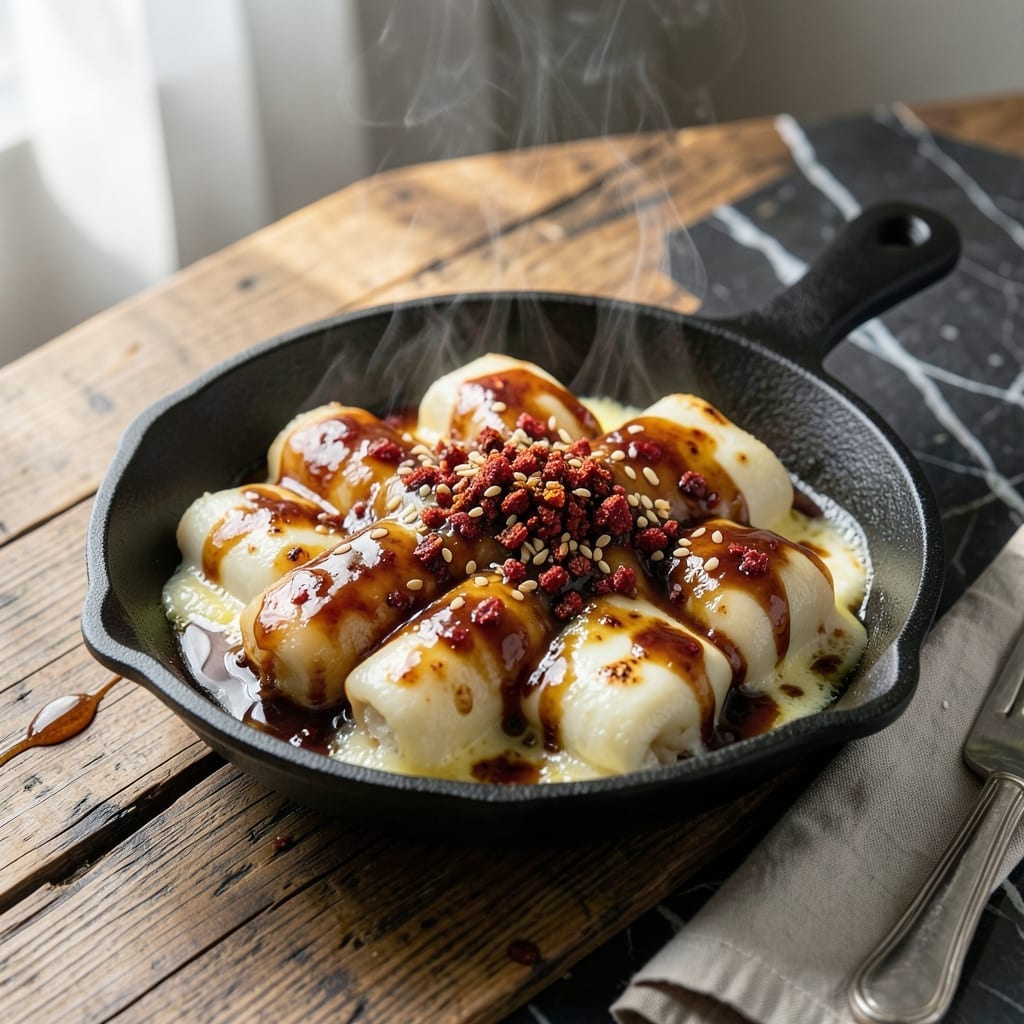
This modern twist on a Korean classic combines chewy rice cakes with melted mozzarella for a dish that’s both comforting and bold. The spicy tteokbokki sauce pairs perfectly with the gooey cheese, creating a balance of heat and creaminess.
I developed this recipe to bring restaurant-quality flavors to your home kitchen with minimal effort. The rice cakes soak up the sauce while the cheese adds a rich, stretchy texture that’s impossible to resist.
The process is straightforward: simmer the rice cakes in a spicy-sweet sauce, then top with cheese and broil until bubbly. It’s a crowd-pleaser that’s ready in under 30 minutes.
Serve this dish as a main course or shareable appetizer. The contrast of spicy, chewy, and cheesy makes every bite unforgettable.
Ingredients for Korean Cheese Rice Cake
Fresh rice cakes, bold gochujang, and melty mozzarella come together for this crowd-pleaser.
| Ingredient | Amount | Notes |
|---|---|---|
| Korean Rice Cakes 🍚 | 1 lb | Cylindrical tteok, fresh or frozen |
| Mozzarella Cheese 🧀 | 8 oz | Shredded for even melting |
| Gochujang 🌶️ | 3 tbsp | Korean red pepper paste |
| Gochugaru 🌶️ | 1 tbsp | Korean red pepper flakes |
| Soy Sauce 🫒 | 2 tbsp | Low-sodium preferred |
| Brown Sugar 🍚 | 1 tbsp | Or substitute white sugar |
| Garlic Cloves 🧄 | 3 cloves | Minced for sauce |
| Onion 🧅 | ½ whole | Finely diced |
| Vegetable Stock 🥣 | 1 ½ cups | Or water in a pinch |
| Sesame Oil 🫒 | 1 tsp | For finishing aroma |
| Green Onions 🌱 | 3 whole | Thinly sliced for garnish |
| Neutral Oil 🫒 | 1 tbsp | For sautéing vegetables |
| Sesame Seeds 🌰 | 1 tsp | Toasted for garnish |
The rice cakes are the foundation. Look for cylindrical tteok at Asian markets—they’re chewier than the flat kind. Frozen works fine (thaw in warm water first). For the gochujang and gochugaru, H-Mart or Korean grocery stores have the best selection. If you’re new to Korean cooking, these two pastes are pantry staples worth investing in—they keep for months. The mozzarella? Full-fat, low-moisture shreds melt the best.
No gochugaru? Crushed red pepper flakes work in a pinch (use half the amount). Short on gochujang? Sriracha plus a little miso gets you close. The vegetable stock can be water with a bouillon cube. For the cheese, Monterey Jack or cheddar also melt beautifully. The key is getting that balance of heat and creaminess—taste as you go and adjust the sugar or gochujang to your preference.
This keeps 2-3 days in the fridge, but honestly it’s best fresh. Reheat in a skillet with a splash of water to bring the sauce back to life. The rice cakes firm up as they cool, so don’t let it sit too long. Not freezer-friendly—the texture changes too much.
Why You’ll Love This Recipe
- One Pot Wonder: I just toss the rice cakes, cheese, and sauce in a pan—no fancy prep, no mess.
- Sweet & Spicy Magic: That gochujang heat with melty mozzarella? Ridiculously good balance.
- Feeds a Hungry Crowd: I make a big batch and watch it disappear at game night. Every time.
- Budget Stretch: Rice cakes and cheese go far—this fills us up without breaking the bank.
Step-by-Step Instructions for Korean Cheese Rice Cakes
This method delivers that perfect balance of spicy, cheesy, and chewy in every bite.
Step 1: Soak and Prep the Rice Cakes
If using frozen Korean rice cakes, soak them in warm water for 10-15 minutes until they’re soft and pliable. Drain well and pat dry with a clean towel—excess water will dilute your sauce. Fresh rice cakes can go straight into the dish.
While they soak, shred the 8 oz mozzarella cheese and set it aside. This melts beautifully into the sauce, creating those stretchy, gooey strands we all love. I like to shred it fresh rather than buying pre-shredded for better meltability.
Step 2: Build the Spicy Base Sauce
Heat the 1 tbsp neutral oil in a large skillet over medium heat. Add the 0.5 whole onion, finely diced, and cook for 3-4 minutes until translucent. Then add the 3 cloves garlic cloves, minced, and cook for 30 seconds until fragrant.
Stir in the 3 tbsp gochujang, 1 tbsp gochugaru, 2 tbsp soy sauce, and 1 tbsp brown sugar. Cook for 1-2 minutes, stirring constantly, until the mixture darkens slightly and becomes aromatic. This builds the deep, complex flavor base for your dish.
Step 3: Simmer Rice Cakes in Sauce
Pour in the 1.5 cups vegetable stock and bring to a gentle simmer. Add the drained Korean rice cakes and stir to coat evenly. Cook for 5-7 minutes until the sauce thickens and the rice cakes absorb some of the liquid—they should be tender but still chewy.
Keep an eye on the consistency. If it gets too thick before the rice cakes are done, add a splash of water. The sauce should cling to the rice cakes without being soupy.
Step 4: Add Cheese and Finish
Reduce heat to low and sprinkle the shredded mozzarella cheese evenly over the rice cakes. Cover the skillet and let it sit for 2-3 minutes until the cheese melts completely and becomes gloriously gooey.
Gently fold the melted cheese into the rice cakes to distribute it evenly. You want those cheesy strands to stretch with every bite. Drizzle with the 1 tsp sesame oil and give it one final stir.
Step 5: Garnish and Serve Hot
Transfer to a serving dish and top with thinly sliced 3 whole green onions and the 1 tsp sesame seeds. The green onions add a fresh crunch that cuts through the richness, while the sesame seeds bring a nutty aroma.
Serve immediately while hot and gooey. The cheese will start to firm up as it cools, so dig in right away for that perfect stretchy texture. This dish is best enjoyed fresh from the pan.
Pro Tips For Making Korean Cheese Rice Cake
- Soak the Rice Cakes: I learned this the hard way—if your rice cakes are rock-hard out of the package, soak them in warm water for 10-15 minutes first. They’ll soften evenly and absorb the sauce better.
- Melt Cheese Last: Add the mozzarella only after the rice cakes are fully coated in sauce and heated through. Tossing it in too early turns the dish into a gloopy, separated mess.
- Balance the Spice: Gochujang and gochugaru can overpower fast—start with 1 tablespoon of each, then adjust. Sounds mild, but the cheese mellows the heat as it melts.
- Use Fresh Mozzarella: Skip the pre-shredded stuff; it’s coated in anti-caking agents that prevent that perfect stretch. Fresh mozzarella torn by hand melts creamier and binds the whole dish together.
Common Mistakes When Making Great korean cheese rice cake
Over-Soaking Rice Cakes
Soaking frozen rice cakes for too long (over 20 minutes) makes them mushy and prone to falling apart during cooking. I learned this the hard way my first attempt—they turned into a starchy paste. Stick to 10-15 minutes in warm water. 💡
Skipping the Drain Step
Failing to drain and pat dry soaked rice cakes dilutes your sauce, creating a watery mess. Always use a colander and a clean towel to remove excess moisture. This ensures the sauce clings properly to each piece.
Overcooking the Sauce
Boiling the sauce vigorously evaporates it too quickly, leaving dry rice cakes. Keep it at a gentle simmer and add 1-2 tbsp water if it reduces too much. The sauce should coat the rice cakes without pooling at the bottom.
Using Pre-Shredded Cheese
Pre-shredded cheese contains anti-caking agents that prevent proper melting. Always shred 8 oz fresh mozzarella yourself for that perfect gooey stretch. I’ve found block cheese from Whole Foods works best for this dish.
Not Covering While Melting
Leaving the skillet uncovered while melting the cheese causes uneven heating and drying. Cover for 2-3 minutes on low heat to trap steam, ensuring even melting throughout. This creates that restaurant-quality cheese pull.
Letting It Sit Too Long
The cheese firms up quickly as it cools. Serve immediately after garnishing with green onions and sesame seeds to maintain that stretchy texture. I recommend having plates ready before you finish cooking. 🔥
Nutrition Facts
Frequently Asked Questions
Can I use frozen rice cakes?
Yes, but soak them in warm water for 10-15 minutes first until soft. Drain and pat dry to prevent a watery sauce. Frozen works just as well as fresh when prepared correctly.
What cheese works best?
Fresh mozzarella melts beautifully, but Monterey Jack or cheddar also work well. Always shred it yourself for the best texture—pre-shredded contains anti-caking agents.
How do I adjust the spice level?
Reduce the gochujang to 2 tablespoons for mild heat. For extra spice, add 1 teaspoon gochugaru. Taste as you cook and adjust to your preference.
Can I make this ahead?
It’s best served immediately, but leftovers keep 2-3 days in the fridge. Reheat gently in a skillet with a splash of water to restore the sauce.

- Jollof Rice Sauce Recipe: West African Tomato and Spice Infusion - September 25, 2026
- Japanese Rice Soup Recipe: Umami-Rich Comfort in a Bowl - September 25, 2026
- Homemade Cream Of Rice Recipe: Silk-Smooth Breakfast in Minutes - September 25, 2026