
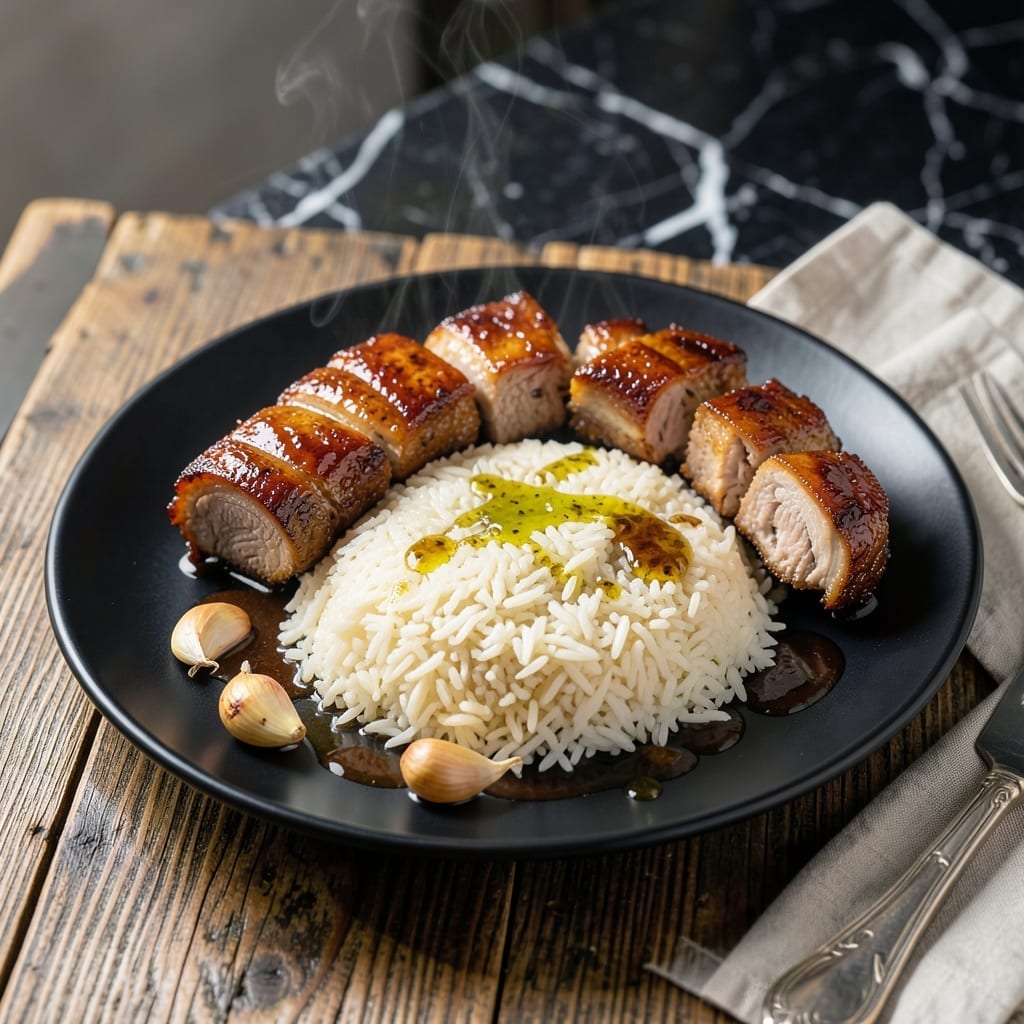
This pork rib rice delivers tender meat and fluffy grains in every bite, perfect for a hearty meal. The slow-cooking process ensures the pork becomes fall-off-the-bone tender while infusing the rice with rich, savory flavor.
I’ve refined this method to balance the meat’s richness with the rice’s light texture. The ribs are braised until perfectly tender, then served over steamed rice that soaks up all the delicious juices.
What you’ll love most is how the pork’s deep, savory notes complement the rice’s simplicity. Each mouthful offers a satisfying mix of tender meat and soft, aromatic grains.
Ideal for family dinners or comforting solo meals. Here’s how to make it at home.
Ingredients for Pork Rib Rice
Hearty pork ribs and fragrant rice make this dish unforgettable. Simple but flavorful ingredients.
| Ingredient | Amount | Notes |
|---|---|---|
| Pork Ribs 🥩 | 2 lb | Bone-in, cut into pieces |
| Jasmine Rice 🍚 | 2 cups | Rinsed until water runs clear |
| Soy Sauce 🫒 | ½ cup | Low-sodium preferred |
| Dark Soy Sauce 🫒 | 2 tbsp | For deeper color |
| Oyster Sauce 🫒 | 2 tbsp | Or vegetarian oyster sauce |
| Garlic Cloves 🧄 | 6 cloves | Minced finely |
| Fresh Ginger 🌿 | 1 tbsp | Grated or minced |
| Brown Sugar 🍚 | 2 tbsp | Light or dark variety |
| Shaoxing Wine 🍷 | ¼ cup | Or dry sherry as substitute |
| Green Onions 🧅 | 4 whole | Sliced thin, for garnish |
| Sesame Oil 🫒 | 1 tsp | Toasted for aroma |
| Water 💧 | 3 cups | For braising and rice |
| Star Anise ⭐ | 2 whole | Optional for depth |
| Bay Leaf 🍃 | 1 whole | Dried or fresh |
| Neutral Oil 🫒 | 1 tbsp | For searing ribs |
The pork ribs are key here. Look for bone-in ribs with good marbling—they stay juicy through the long braise. Most Asian markets sell them pre-cut, or ask your butcher to chop them into 2-inch pieces. I grab mine from H Mart when I’m stocking up on other Asian staples. For rice, jasmine is traditional, but long-grain white works too (just rinse it well).
No oyster sauce? Hoisin or fish sauce can stand in, but cut the salt elsewhere. Shaoxing wine is worth hunting down at an Asian grocery, but dry sherry at half the amount is a solid backup. Fresh ginger is non-negotiable—dried just doesn’t have the same zing. For a vegetarian twist, mushrooms or tofu can replace the pork (adjust cooking time).
Leftovers keep beautifully. Store in the fridge for up to 4 days or freeze for 3 months. The flavors actually deepen overnight. Reheat with a splash of water to keep the rice moist (microwave works, but stovetop is better).
Why You’ll Love This Recipe
- I’ll be real: the flavors taste even better the next day, and it reheats like a dream.
- One Pot Meal: I toss everything in a single pot—ribs, rice, and sauces—and let the oven do the work.
- Umami Bomb: The mix of soy, dark soy, and oyster sauce creates a deep, savory richness that soaks into every bite of rice.
- Feeds the Crew: Honestly, it’s my go-to for family dinners or when friends drop by unexpectedly.
Step-by-Step Instructions for Pork Rib Rice
Here’s my straightforward method to get fall-off-the-bone ribs over perfectly cooked rice every time.
Step 1: Sear and Braise the Pork Ribs
Heat the 1 tbsp neutral oil in a large pot over medium-high heat. Add the 2 lb pork ribs and sear for 3-4 minutes per side until deep golden brown. This builds flavor and locks in juices.
Pour in the 0.5 cup soy sauce, 2 tbsp dark soy sauce, 2 tbsp oyster sauce, 6 cloves minced garlic cloves, 1 tbsp fresh ginger, 2 tbsp brown sugar, 0.25 cup Shaoxing wine, and 3 cups water. Add the 2 whole star anise and 1 whole bay leaf.
Bring to a boil, then reduce to low heat. Cover and simmer for 45-50 minutes until the ribs are fork-tender.
Step 2: Cook the Jasmine Rice
While the ribs braise, rinse the 2 cups jasmine rice under cold water until the water runs clear. This removes excess starch for fluffier rice. Drain well.
In a separate pot, bring 3 cups water to a boil. Add the drained rice, stir once, then cover and reduce heat to low. Cook for 15 minutes until all water is absorbed and the rice is light and fluffy.
Remove from heat and let it sit covered for 5 minutes. Fluff with a fork before serving.
Step 3: Assemble and Finish
Once the ribs are tender, remove them from the braising liquid and set aside. Strain the liquid to remove the star anise and bay leaf, then return it to the pot.
Simmer the sauce over medium heat for 5-7 minutes until it thickens slightly. Stir in the 1 tsp sesame oil for added aroma.
To serve, spoon the rice onto plates, top with the braised ribs, and drizzle with the reduced sauce. Garnish with the 4 whole green onions, sliced thin.
Pro Tips For Making Pork Rib Rice
- Blanch the Ribs: Parboil the pork ribs for 5-7 minutes before braising—I learned this the hard way after my first few batches turned out greasy instead of rich.
- Toast the Rice: Lightly fry the jasmine rice in the pot with a bit of oil for 2 minutes before adding liquid; it adds a nutty depth that plain steamed rice just can’t match.
- Skip the Overcrowding: Braise the ribs in a single layer if possible, or they’ll steam instead of caramelize, and you’ll lose that sticky, glossy finish from the soy and oyster sauces.
- Use Both Soy Sauces: Dark soy sauce gives color, regular soy sauce gives saltiness—using just one leaves your pork rib rice looking and tasting flat, no matter how long you cook it.
Creative Variations of This Recipe
Spicy Sichuan Style
Add 1 tbsp Sichuan peppercorns and 1 tsp chili flakes to the braising liquid for a numbing heat that’s signature to Sichuan cuisine. I also stir in 2 tbsp doubanjiang (fermented chili bean paste) for depth. The result is a bold, complex heat that pairs beautifully with the rice. 🌶️
Sweet and Sticky Glaze
For a sweeter twist, mix 3 tbsp honey with 1 tbsp rice vinegar and brush it onto the ribs during the last 10 minutes of braising. This creates a glossy, caramelized coating that’s irresistible. Garnish with toasted sesame seeds for crunch.
Coconut Curry Flavor
Swap the water in the braising liquid for 1 can (13.5 oz) coconut milk and add 1 tbsp red curry paste. The creamy, aromatic curry sauce soaks into the rice, creating a Thai-inspired fusion. I love the contrast of rich coconut with tender pork.
Quick Weeknight Version
Short on time? Use 1.5 lb boneless country-style ribs and pressure cook for 25 minutes in the braising liquid. The meat becomes tender faster, and you still get all the flavor. Serve over instant jasmine rice for a 30-minute meal. ⚡
Vegetarian Mushroom Swap
Replace pork with 1.5 lb shiitake mushrooms (stems removed). Sear the caps first, then braise in the same sauce for 20-25 minutes. The mushrooms absorb the savory liquid beautifully, and the texture is surprisingly meaty.
Extra Umami Boost
Stir 1 tbsp miso paste into the braising liquid before simmering. This adds a deep, savory richness that complements the pork. I also add 3-4 dried shiitake mushrooms to the liquid for extra depth. The result is a more complex, restaurant-style dish.
Nutrition Facts
Frequently Asked Questions
Can I use baby back ribs instead?
Yes, baby back ribs work well too. Reduce braising time to 35-40 minutes since they’re smaller. They’ll be just as tender and flavorful.
Why rinse the jasmine rice?
Rinsing removes excess starch to prevent gummy rice. Stop when water runs clear for fluffiest results. This step takes just 2-3 minutes.
How do I thicken the sauce faster?
Mix 1 tsp cornstarch with 1 tbsp water and stir into simmering sauce. It’ll thicken in 1-2 minutes. Avoid boiling after adding.
Can I make this in a slow cooker?
Sear ribs first, then cook on low for 6-8 hours or high for 4 hours. Add rice during last 30 minutes.

- Jollof Rice Sauce Recipe: West African Tomato and Spice Infusion - September 25, 2026
- Japanese Rice Soup Recipe: Umami-Rich Comfort in a Bowl - September 25, 2026
- Homemade Cream Of Rice Recipe: Silk-Smooth Breakfast in Minutes - September 25, 2026