
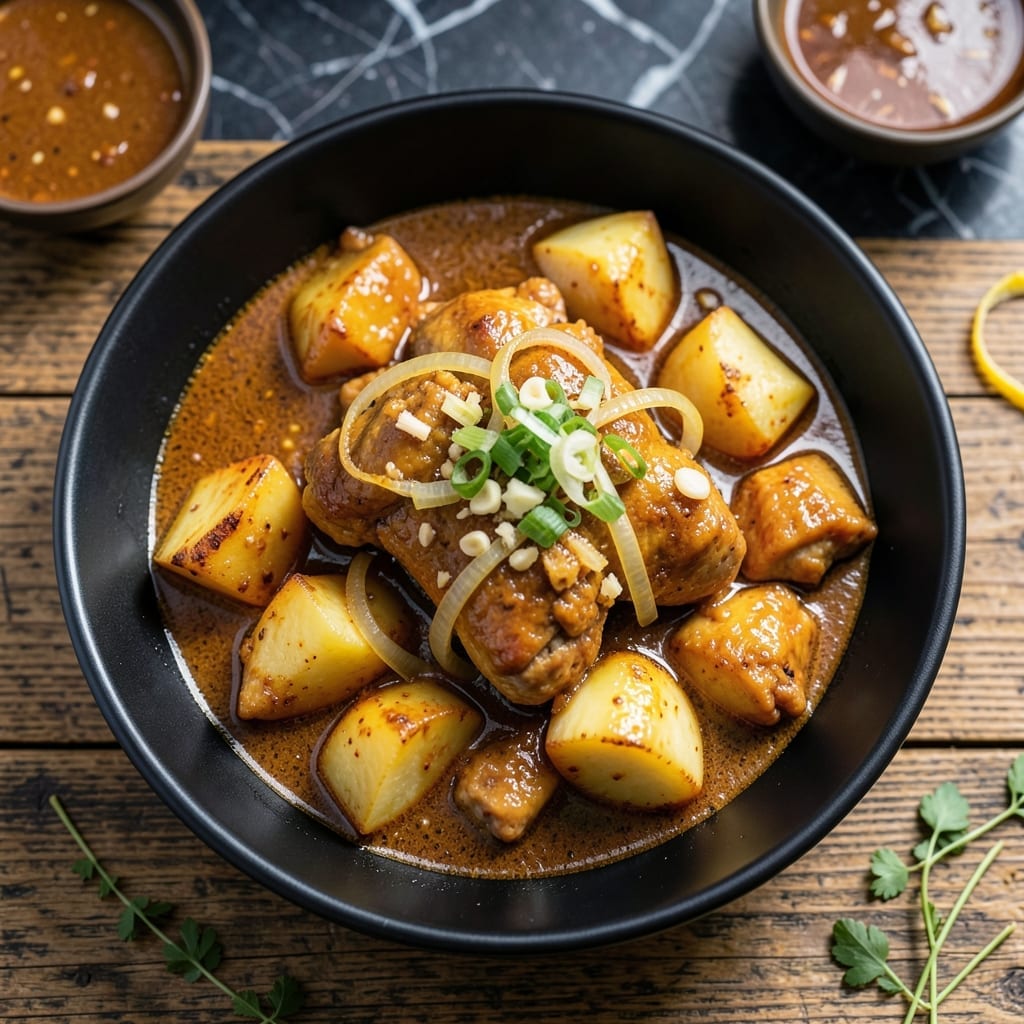
This Korean-inspired chicken curry transforms simple ingredients into a deeply satisfying meal that warms the soul. The combination of tender chicken, hearty potatoes, and aromatic spices creates layers of comfort in every bite.
I developed this recipe to bring the bold flavors of Korean curry to your home kitchen without complicated techniques. The key is building flavor through a spiced roux that coats every piece of chicken and vegetable.
What emerges is a rich, velvety sauce that clings to the chicken and potatoes, delivering restaurant-quality results with minimal effort. The potatoes soak up the curry’s warmth, making each mouthful hearty and fulfilling.
Perfect for family dinners or meal prep, this dish proves that comfort food can be both delicious and approachable. Here’s how to make it.
Ingredients for Korean Chicken Curry
Simple ingredients, big flavor. Tender chicken and potatoes soak up every spiced bite.
| Ingredient | Amount | Notes |
|---|---|---|
| Boneless Skinless Chicken Thighs 🍗 | 1 ½ lb | Cut into bite-sized pieces |
| Yukon Gold Potatoes 🥔 | 1 ½ lb | Peeled and cubed |
| Yellow Onion 🧅 | 1 whole | Diced medium |
| Garlic Cloves 🧄 | 4 cloves | Minced finely |
| Fresh Ginger Root 🌿 | 1 tbsp | Grated or minced |
| Korean Curry Powder 🌶️ | 3 tbsp | Mild or hot variety |
| All-Purpose Flour 🌾 | 2 tbsp | For thickening roux |
| Vegetable Oil 🫒 | 2 tbsp | Neutral flavor preferred |
| Low-Sodium Chicken Broth 💧 | 2 cups | Or substitute water |
| Carrots 🥕 | 2 whole | Peeled and sliced |
| Soy Sauce 🥢 | 2 tbsp | Low-sodium preferred |
| Brown Sugar 🍚 | 1 tbsp | For balancing flavors |
| Apple 🍎 | 1 whole | Peeled and grated |
| Bay Leaf 🍃 | 1 piece | Dried or fresh |
| Kosher Salt 🧂 | 1 tsp | Adjust to taste |
The chicken is the foundation—thighs stay juicier than breasts through the long simmer. Yukon Golds are my go-to for potatoes; they break down just enough to thicken the sauce. Grab Korean curry powder at an Asian market (or H-Mart if you have one nearby). The apple might seem odd, but it’s the secret to that velvety texture (trust me on this one). Fresh ginger and garlic are non-negotiable for the roux.
No Korean curry powder? Japanese curry blocks work in a pinch—just crumble them in. Out of chicken broth? Water plus bouillon does the trick. The apple can be swapped for a small grated potato if that’s what you’ve got. Low-sodium soy sauce keeps the salt in check, but regular works (just taste before adding extra). The carrots add sweetness, but zucchini or bell peppers are great too.
This curry tastes even better the next day once the flavors meld. Keeps 4-5 days in the fridge, freezes for 3 months. I always make a double batch—leftovers reheat like a dream (the potatoes just get creamier).
Why You’ll Love This Recipe
- One Pot Wonder: I toss in the chicken thighs, potatoes, and onions with the garlic and ginger, and the whole thing simmers together—minimal dishes, maximum flavor.
- Deep, Rich Taste: The ginger and garlic bloom in the curry sauce, turning those simple ingredients into something warm, aromatic, and utterly addictive.
- Feeds a Hungry Crowd: I make a big batch on Sunday and it’s ready for lunches all week—hearty enough for adults, mild enough that even my picky nephew goes back for seconds.
- Budget-Friendly Comfort: Chicken thighs stay juicy and affordable, and Yukon Golds soak up the sauce like little sponges—filling, satisfying, and kind to the wallet.
Step-by-Step Instructions for Korean Chicken Curry
This method builds deep flavor while keeping the process approachable and rewarding.
Step 1: Build the Aromatic Foundation
Heat the vegetable oil in a large Dutch oven over medium heat. Add the diced yellow onion, minced garlic cloves, and grated fresh ginger root. Sauté for 4-5 minutes until the onions turn translucent and the mixture becomes fragrant.
This base layer is crucial—it develops the complex aroma that defines the dish. I always let the onions cook until they just start to caramelize at the edges, which adds a subtle sweetness that balances the spices.
Step 2: Brown the Chicken and Vegetables
Add the bite-sized pieces of boneless skinless chicken thighs to the pot. Cook for 5-6 minutes, stirring occasionally, until the chicken loses its raw color and starts to brown lightly. Then add the cubed Yukon Gold potatoes, sliced carrots, and grated apple.
The apple might seem unusual, but trust me—it adds a natural sweetness that complements the curry powder beautifully. Stir everything together and let it cook for another 3 minutes to meld the flavors before adding the dry ingredients.
Step 3: Toast the Spices and Thicken the Sauce
Sprinkle the Korean curry powder and all-purpose flour over the chicken and vegetables. Stir well to coat everything evenly and cook for 2 minutes to toast the spices. This step deepens their flavor and removes any raw taste from the flour.
You’ll notice the mixture become slightly pasty—that’s the flour absorbing the rendered juices, which will thicken the sauce later. Don’t let the spices burn; keep the heat at medium and stir constantly during these 2 minutes.
Step 4: Simmer to Perfection
Pour in the low-sodium chicken broth, soy sauce, brown sugar, and add the bay leaf and kosher salt. Stir to combine, scraping up any browned bits from the bottom of the pot. Bring the mixture to a boil, then reduce the heat to low.
Cover and let it simmer for 25-30 minutes, stirring occasionally, until the potatoes and carrots are tender and the sauce has thickened. The sauce should coat the back of a spoon, and the chicken should be fully cooked through with no pink remaining.
If the curry seems too thick, add a splash of water to reach your desired consistency. The 1.5 lb of potatoes will absorb a lot of liquid as they cook, so keep an eye on it.
Pro Tips For Making Korean Chicken Curry
- Brown the Chicken Well: I learned this the hard way—sear the boneless thighs in batches over medium-high heat until deeply golden, about 4-5 minutes per side. Skimping here leaves the curry bland and the meat rubbery.
- Uniform Potato Cuts: Cut the Yukon Golds into 1-inch chunks, no larger. I used to eyeball it and ended up with some mushy and some undercooked pieces.
- Bloom the Aromatics: Cook the onion, garlic, and ginger in the same pot after the chicken, letting them soften and smell fragrant—about 3 minutes. Sounds simple, but it actually changes the outcome.
- Simmer Covered: Once everything’s in the pot, keep it covered at a gentle simmer for 20-25 minutes. Resist the urge to peek—steam is what makes the potatoes tender and the sauce thicken just right.
Health Benefits of korean chicken curry
Protein Powerhouse
This dish packs 35g of protein per serving from the chicken thighs, which helps build and repair muscle tissue. The 1.5 lb of chicken provides all essential amino acids your body needs for optimal function. 💪
Complex Carbohydrates
Yukon Gold potatoes deliver slow-digesting complex carbs that provide sustained energy. With 3g of fiber per potato, they also support digestive health. The 1.5 lb of potatoes makes this a satisfying, energy-rich meal.
Spice-Driven Antioxidants
Korean curry powder contains turmeric, which has powerful anti-inflammatory properties. The 3 tbsp in this recipe provides a significant dose of curcumin, the active compound in turmeric. This can help reduce oxidative stress in your body.
Vitamin-Rich Vegetables
Carrots add beta-carotene, which your body converts to vitamin A, supporting eye health. The 2 whole carrots also provide vitamin K1 and potassium. Onions contribute prebiotics that nourish your gut microbiome.
Heart-Healthy Fats
Using chicken thighs instead of breasts provides monounsaturated fats that support heart health. The vegetable oil adds a small amount of healthy fats too. These fats help your body absorb the fat-soluble vitamins in the vegetables.
Apple and ginger add natural compounds that aid digestion and boost your immune system. 🥗
Nutrition Facts
Frequently Asked Questions
Can I use chicken breast instead of thighs?
Yes, but thighs stay juicier through the 25-30 minutes simmer. If using breasts, reduce cooking time to 15-20 minutes to prevent dryness.
What can I substitute for Korean curry powder?
Japanese curry blocks work in a pinch—crumble 2 blocks into the pot. For a DIY blend, mix 1 tbsp each of turmeric, cumin, and coriander with 1 tsp ginger.
Why add grated apple to the curry?
The apple breaks down during cooking, adding natural sweetness and creating a velvety texture. It balances the spices without overpowering them.
Can I make this ahead of time?
The flavors deepen after 1-2 days in the fridge. It keeps for 4-5 days refrigerated or 3 months frozen. Reheat gently with a splash of water.

- Jollof Rice Sauce Recipe: West African Tomato and Spice Infusion - September 25, 2026
- Japanese Rice Soup Recipe: Umami-Rich Comfort in a Bowl - September 25, 2026
- Homemade Cream Of Rice Recipe: Silk-Smooth Breakfast in Minutes - September 25, 2026