
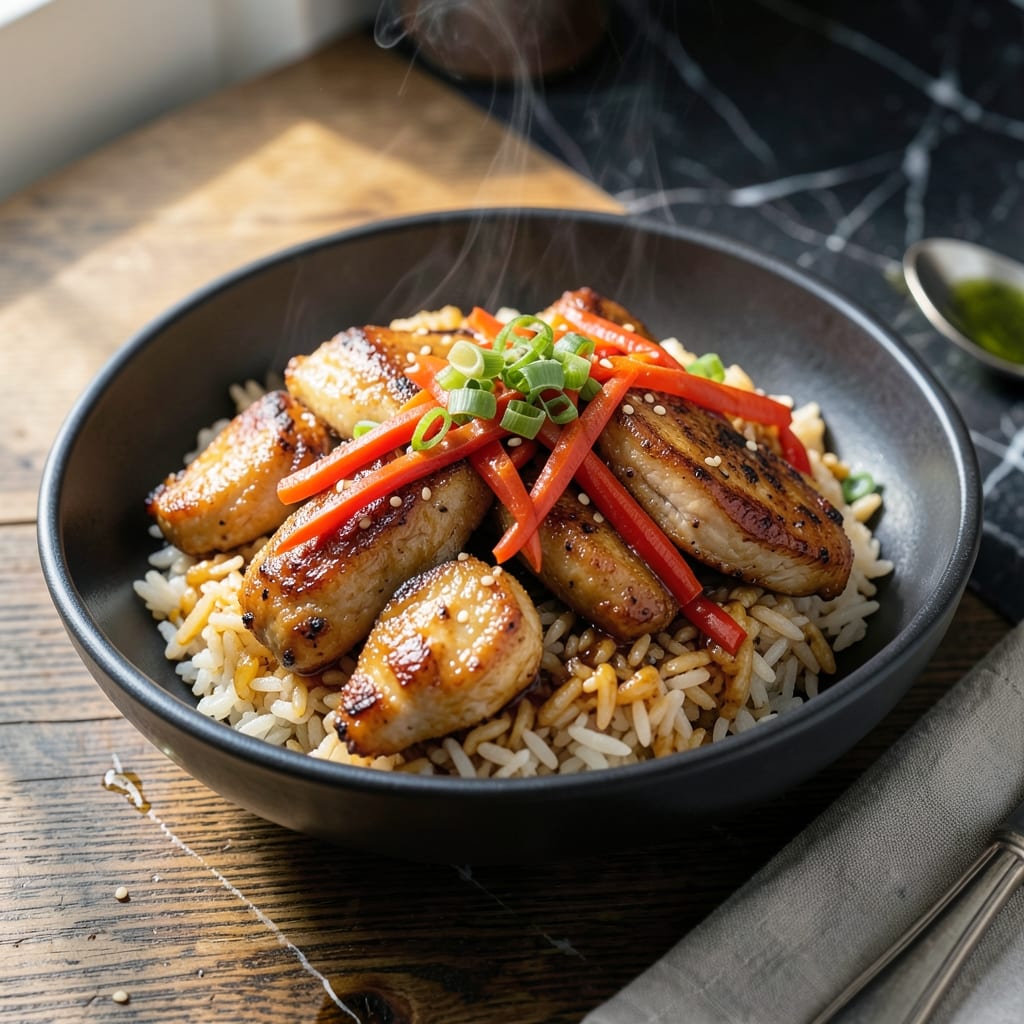
This Korean-inspired fried rice transforms leftover ingredients into a bold, satisfying meal. I developed this version after years of experimenting with traditional techniques and modern twists.
The dish combines tender chicken pieces with wok-seared kimchi and gochujang for authentic Korean flavor. Each bite delivers smoky, spicy notes balanced by the richness of the rice and chicken.
What sets this apart is the high-heat cooking method that creates that signature crispy texture while keeping the chicken juicy. The kimchi adds tangy depth that cuts through the richness.
Serve with a fried egg on top for extra richness. This recipe brings restaurant-quality Korean flavors to your home kitchen.
Ingredients for Korean Chicken Fried Rice
Transform everyday ingredients into a restaurant-quality Korean fried rice with bold, authentic flavors.
| Ingredient | Amount | Notes |
|---|---|---|
| Boneless Skinless Chicken Thighs 🍗 | 1 ½ lb | Cut into small even pieces |
| Cooked White Rice 🍚 | 4 cups | Day-old, chilled preferred |
| Kimchi 🥬 | 1 ½ cups | Well-fermented, chopped coarse |
| Gochujang 🌶️ | 2 tbsp | Korean red pepper paste |
| Soy Sauce 🫙 | 3 tbsp | Low-sodium recommended |
| Sesame Oil 🫒 | 1 tbsp | Toasted variety preferred |
| Garlic Cloves 🧄 | 4 cloves | Minced finely |
| Fresh Ginger 🌿 | 1 tbsp | Grated or minced |
| Green Onions 🧅 | 4 whole | Thinly sliced, white and green parts separated |
| Large Eggs 🥚 | 4 whole | For topping, optional |
| Vegetable Oil 🫒 | 3 tbsp | High smoke point for wok |
| Toasted Sesame Seeds 🌰 | 1 tbsp | For garnish |
| Kosher Salt 🧂 | ½ tsp | Adjust to taste |
| Ground Black Pepper 🌶️ | ¼ tsp | Freshly ground preferred |
| Sugar 🍚 | 1 tsp | Balances gochujang heat |
The chicken is critical here. Thighs stay juicy through high-heat cooking—breasts dry out too fast. For the kimchi, Napa cabbage style with visible fermentation (check the sourness) works best. H-Mart or Korean grocers carry authentic brands like Chongga. Gochujang should be thick, deep red, and slightly sweet—avoid any with added preservatives.
No gochujang? Sriracha plus 1 tsp miso paste mimics the funky-sweet depth. Substitute brown rice for white, but cook it a day ahead—fresh rice turns mushy. For a vegetarian version, swap chicken for extra-firm tofu (press and cube first). The sesame oil is non-negotiable though—Kadoya is a reliable brand. Out of kimchi? Sauerkraut in a pinch (rinse first to reduce tang).
Leftover fried rice actually improves overnight as flavors meld. Store in an airtight container for up to 4 days in the fridge. Freezing works for 3 months—reheat from frozen in a skillet with a splash of water. Prep the garnishes (green onions, sesame seeds) while the rice cooks to save time.
Why You’ll Love This Recipe
- 20-Minute Meal: I can get this from fridge to plate faster than takeout arrives, especially using leftover rice.
- Umami Bomb: The gochujang and kimchi pack that sweet-spicy depth that makes every bite ridicuously good.
- Lunchbox Hero: I pack leftovers for work and it reheats perfectly—no soggy mess, just bold flavor.
- Budget Stretcher: One pound of chicken thighs and a cup of rice feeds four, and the kimchi lasts for weeks in the fridge.
Step-by-Step Instructions for Korean Chicken Fried Rice
Master the wok technique for perfectly seared, flavor-packed fried rice with crisp edges.
Step 1: Sear the Chicken and Aromatics
Heat 2 tbsp Vegetable Oil in a wok or large skillet over high heat until shimmering. Add the 1.5 lb Boneless Skinless Chicken Thighs cut into even pieces, seasoned with 0.5 tsp Kosher Salt and 0.25 tsp Ground Black Pepper. Cook undisturbed for 2-3 minutes until deeply browned on one side.
Add the 4 cloves Garlic Cloves, 1 tbsp Fresh Ginger, and white parts of the 4 whole Green Onions. Stir-fry for 1 minute until fragrant. The chicken should be fully cooked through at this point—if not, continue cooking until no pink remains.
Step 2: Toast the Rice and Kimchi
Push the chicken to one side of the wok. Add the remaining 1 tbsp Vegetable Oil to the empty space, then add the 4 cups Cooked White Rice and 1.5 cups Kimchi. Break up any rice clumps with your spatula and press the mixture firmly against the hot surface.
Let it cook undisturbed for 2 minutes to develop a crispy bottom layer. The rice should sizzle and turn lightly golden where it contacts the pan. This step creates the coveted “nurungji” texture—slightly crispy, nutty fried rice that defines authentic Korean style.
Step 3: Build the Gochujang Sauce
Reduce heat to medium and stir in the 2 tbsp Gochujang, 3 tbsp Soy Sauce, 1 tbsp Sesame Oil, and 1 tsp Sugar. Mix thoroughly to coat every grain of rice. The sauce should turn a vibrant reddish-brown and smell deeply aromatic.
Cook for 2-3 minutes, stirring constantly, until the rice absorbs most of the liquid and the mixture looks glossy. Taste and adjust seasoning—this is your moment to balance the heat, salt, and sweetness to your preference.
Step 4: Finish with Eggs and Garnish
Create a well in the center of the wok. Add a drizzle of oil and crack the 4 whole Large Eggs into the space. Scramble gently until just set, then fold into the rice mixture. The eggs should be softly cooked with visible curds.
Remove from heat and stir in the green parts of the 4 whole Green Onions. Garnish with 1 tbsp Toasted Sesame Seeds and serve immediately. The final dish should have distinct layers of flavor: the umami from soy, the spicy-sweet from gochujang, and the tangy crunch from kimchi.
Pro Tips For Making Korean Chicken Fried Rice
- Chill Your Rice: Use day-old, cold rice straight from the fridge—fresh rice turns mushy. I learned this the hard way after my first few batches came out gummy instead of that perfect chewy texture.
- Cut Chicken Small: Dice the boneless thighs into 1/2-inch pieces so they cook through fast and evenly. Sounds obvious, but I used to rush this and ended up with chewy bits hiding in the fried rice.
- Drain the Kimchi: Squeeze excess liquid from the kimchi before adding it to the pan, or your fried rice will be soggy. My grandmother swore by this, and she was right.
- Toast the Gochujang: Cook the gochujang in the pan for 30 seconds before adding other ingredients—it mellows the heat and deepens the flavor. I was skeptical until I tried it, but now it’s non-negotiable.
Make-Ahead Tips for This Recipe
Prep the Chicken
Cut the 1.5 lb Boneless Skinless Chicken Thighs into small, even pieces the night before. Store in an airtight container with 1 tbsp Soy Sauce and 1 tsp Sesame Oil to marinate overnight. This step saves 10 minutes on cooking day and boosts flavor. 💡
Rice Preparation
Cook the 4 cups white rice a day ahead and refrigerate. Day-old rice is drier, preventing mushiness when stir-fried. Spread it on a tray to cool quickly before storing. I often make a double batch for future meals.
Pre-Chop Ingredients
Chop the 1.5 cups Kimchi, mince the 4 cloves Garlic Cloves, and grate the 1 tbsp Fresh Ginger the night before. Store in separate containers in the fridge. This cuts prep time in half when you’re ready to cook.
Sauce Mix
Combine the 2 tbsp Gochujang, 2 tbsp Soy Sauce, and 1 tsp Sugar in a small bowl. Cover and refrigerate. The flavors meld overnight, creating a more complex sauce. Just add the remaining 1 tbsp Soy Sauce and 1 tbsp Sesame Oil when cooking.
Egg Prep
Beat the 4 whole Large Eggs with a pinch of salt and pepper in a bowl. Cover and refrigerate. This allows for quick scrambling directly in the wok during the final step. 🍳
Garnish Station
Slice the green parts of the 4 whole Green Onions and measure out the 1 tbsp Toasted Sesame Seeds. Keep in small bowls at room temperature. Having these ready ensures a smooth finish to your dish.
Nutrition Facts
Frequently Asked Questions
Can I use chicken breast instead of thighs?
You can, but thighs stay juicier. Chicken breast dries out quickly with high-heat cooking. If using, cut into small pieces and cook for only 1-2 minutes per side.
What if I don’t have gochujang?
Mix 1 tbsp sriracha with 1 tsp miso paste for a similar flavor. It won’t be identical, but it adds the spicy-sweet depth you need.
How do I get crispy rice edges?
Press the rice firmly into the hot wok and let it cook undisturbed for 2 minutes. Use day-old, chilled rice—it’s drier and crisps up better.
Can I make this vegetarian?
Swap chicken for pressed, cubed extra-firm tofu. Cook it first until golden, then proceed with the recipe as written.

- Jollof Rice Sauce Recipe: West African Tomato and Spice Infusion - September 25, 2026
- Japanese Rice Soup Recipe: Umami-Rich Comfort in a Bowl - September 25, 2026
- Homemade Cream Of Rice Recipe: Silk-Smooth Breakfast in Minutes - September 25, 2026