
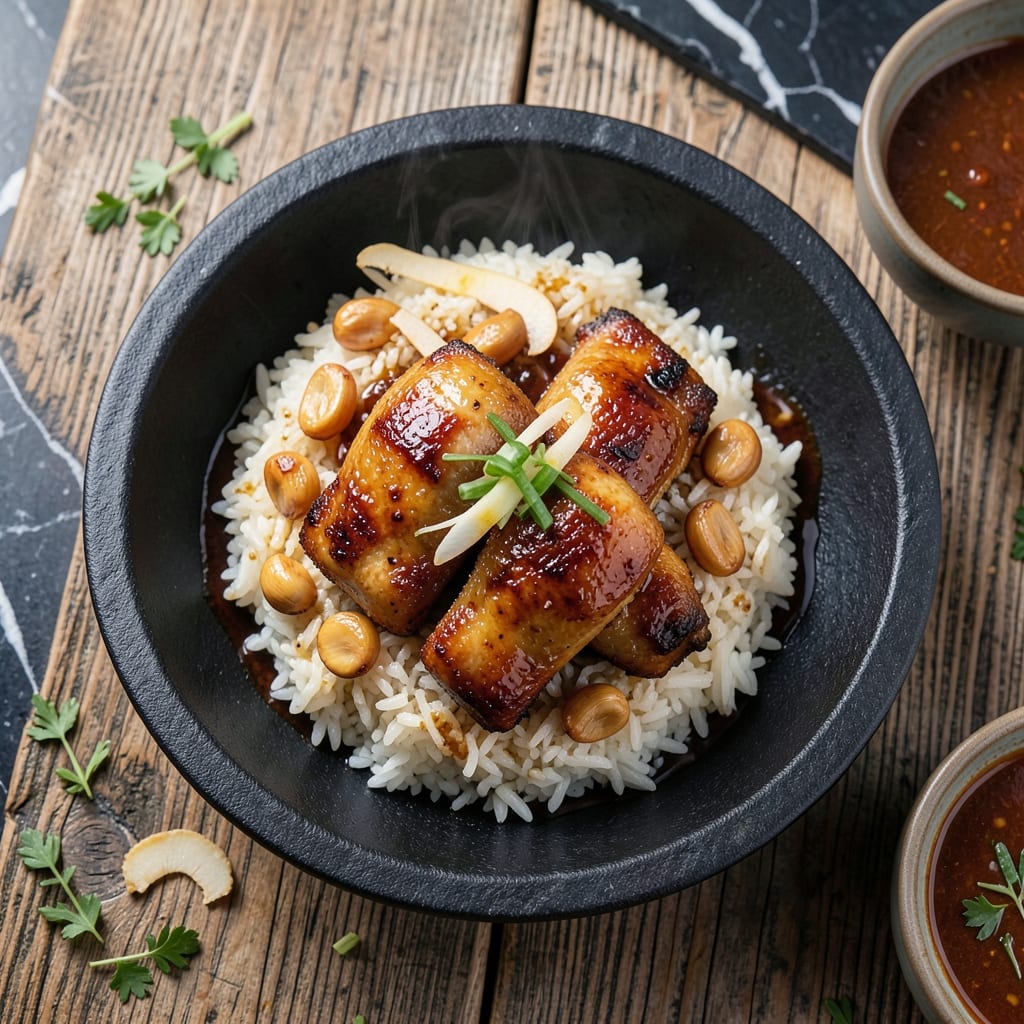
This Korean chicken and rice dish transforms simple ingredients into a restaurant-worthy meal. The chicken develops a crispy exterior while staying juicy inside, creating the perfect contrast with the fragrant ginger rice.
I developed this method after testing multiple techniques to achieve that signature texture. The rice absorbs all the savory chicken juices as it cooks, becoming incredibly flavorful without turning mushy.
What makes this special is the layering of textures – the crispy chicken skin, tender meat, and perfectly cooked rice. Each bite delivers a balance of savory, sweet, and aromatic flavors that’s uniquely Korean.
The final touch of sesame oil and seeds adds nutty depth. This one-pot wonder makes cleanup as satisfying as the meal itself.
Ingredients for Korean Chicken Pot Rice
Transform simple ingredients into a restaurant-worthy Korean one-pot with crispy chicken and fragrant rice.
| Ingredient | Amount | Notes |
|---|---|---|
| Chicken Thighs 🍗 | 1 ½ lb | Boneless, skin-on for crispiness |
| Jasmine Rice 🍚 | 2 cups | Rinsed until water runs clear |
| Fresh Ginger Root 🌿 | 1 whole | Peeled and minced |
| Garlic Cloves 🧄 | 6 cloves | Minced finely |
| Soy Sauce 🫒 | ⅓ cup | Low-sodium preferred |
| Brown Sugar 🍚 | 2 tbsp | Light or dark variety |
| Sesame Oil 🫒 | 1 tbsp | Toasted for best flavor |
| Rice Wine 🍶 | 2 tbsp | Mirin works as substitute |
| Gochujang 🌶️ | 1 tbsp | Korean chili paste |
| Green Onions 🧅 | 4 whole | Thinly sliced |
| Carrot 🥕 | 1 whole | Julienned for garnish |
| Sesame Seeds 🌱 | 1 tbsp | Toasted for garnish |
| Vegetable Oil 🫒 | 2 tbsp | For frying chicken |
| Chicken Stock 🍲 | 1 cup | Low-sodium preferred |
The chicken is key—skin-on, boneless thighs from Whole Foods or Korean markets give that signature crispy exterior. Jasmine rice is non-negotiable here; its floral aroma complements the ginger perfectly. For the gochujang, look for the red tubs at H Mart or any Asian grocery (the good stuff, not the watered-down versions). Fresh ginger root should be firm with smooth skin—avoid any that looks shriveled or has soft spots.
No gochujang? Sriracha mixed with a touch of miso paste gets you close. Out of rice wine? Dry sherry works at one-to-one ratio. If using chicken breast instead of thighs, brine them first—they dry out easily. The sesame oil must be toasted; the untoasted kind lacks depth. For a gluten-free version, tamari instead of soy sauce does the trick without sacrificing flavor.
This dish reheats surprisingly well—store leftovers in the fridge for up to 4 days. The rice absorbs more flavor overnight. Freeze without the garnishes for up to 3 months (the carrots and green onions get mushy). Always bring the chicken to room temperature before cooking for even crisping.
Why You’ll Love This Recipe
- One Pot Wonder: I toss everything in a single pot—chicken, rice, ginger, garlic—and let it work its magic.
- Umami Bomb: The soy sauce and garlic create a depth of flavor that makes every bite ridiculously good.
- Feeds a Crowd: Honestly, it’s my go-to for family dinners or when friends drop by unannounced.
- Budget Friendly: Chicken thighs and jasmine rice stretch far without skimming on taste.
Step-by-Step Instructions for Korean Chicken Pot Rice
Master the technique of crispy chicken atop fragrant ginger rice with these precise steps.
Step 1: Marinate the Chicken Thighs
In a large bowl, combine the 1.5 lb Chicken Thighs with 0.33 cup Soy Sauce, 2 tbsp Brown Sugar, 1 tbsp Sesame Oil, 2 tbsp Rice Wine, and 1 tbsp Gochujang. I use my hands to ensure every piece is evenly coated—the marinade should cling to the meat without pooling at the bottom.
Add the minced Fresh Ginger Root and 6 cloves Garlic Cloves to the bowl. These aromatics will infuse the chicken with deep, complex flavors as it marinates. Cover and refrigerate for at least 30 minutes, though I prefer 2 hours for maximum flavor penetration.
Step 2: Cook the Jasmine Rice
Rinse the 2 cups Jasmine Rice under cold water until the water runs clear—this removes excess starch and prevents a gummy texture. Drain thoroughly in a fine-mesh strainer, shaking gently to remove all surface water.
In a medium pot, bring the 1 cup Chicken Stock to a boil. Add the drained rice, stir once, then cover tightly with a lid. Reduce heat to low and cook for 15 minutes. Remove from heat and let it sit, covered, for an additional 10 minutes to steam. The rice should be tender with distinct grains.
Step 3: Sear the Chicken to Crispy Perfection
Heat the 2 tbsp Vegetable Oil in a large skillet over medium-high heat until it shimmers. Remove the chicken from the marinade (reserve the marinade) and place it skin-side down in the hot oil. Press down gently with a spatula for the first 30 seconds to ensure full contact with the pan.
Cook undisturbed for 6-7 minutes until the skin is deep golden brown and crispy. Flip and cook the other side for 5-6 minutes until the chicken reaches an internal temperature of 165°F. Transfer to a plate and tent with foil to keep warm.
Step 4: Reduce the Marinade into a Glaze
Pour the reserved marinade into the same skillet and bring to a boil over medium heat. Reduce the heat to medium-low and let it simmer for 3-4 minutes until it thickens into a glossy glaze that coats the back of a spoon.
Return the chicken to the skillet and turn to coat each piece in the glaze. Cook for an additional 1-2 minutes to caramelize the sauce onto the chicken. This step intensifies the flavors and creates a beautiful, sticky coating.
Step 5: Assemble and Garnish
Spoon the cooked jasmine rice into serving bowls. Top with the crispy chicken thighs, arranging them skin-side up. Drizzle any remaining glaze from the pan over the chicken and rice.
Garnish with thinly sliced 4 whole Green Onions, julienned 1 whole Carrot, and 1 tbsp Sesame Seeds. The contrast of the bright, fresh vegetables against the rich chicken and rice completes the dish beautifully. Serve immediately while hot.
Pro Tips For Making Korean Chicken Pot Rice
- Brown the Chicken Well: Get the thighs golden and crispy in the pot first—I learned this the hard way after my first few batches turned out pale and soggy. The fond left behind builds the base flavor for the rice.
- Toast the Rice: After browning the chicken, stir the rice in the same pot for 2-3 minutes until it smells nutty. Sounds weird, but it works: this step actually changes the outcome, giving the dish a deeper, richer taste.
- Skip the Overcrowding: Resist the urge to dump all the chicken in at once—cook in batches if needed. Steer clear of this and you’ll avoid steamed, rubbery meat instead of properly seared pieces.
- Use Fresh Aromatics: Grate the ginger and mince the garlic right before cooking. I was skeptical until I tried it, but pre-minced or old ginger just doesn’t hit the same in this dish.
Dietary Considerations for These Flavors
Gluten-Free Option
For a gluten-free version, simply swap the soy sauce with tamari—it delivers the same umami depth without the wheat. I’ve tested this with San-J Tamari and the flavor difference is minimal. Always double-check your gochujang label, as some brands contain wheat. 💡
Lower Sodium Choice
To reduce sodium, use low-sodium soy sauce and low-sodium chicken stock. The dish still packs plenty of flavor from the ginger, garlic, and sesame oil. I also cut the brown sugar to 1 tbsp without sacrificing the caramelized glaze.
Dairy-Free and Nut-Free
This dish is naturally free of dairy and nuts, making it safe for most allergies. Just ensure your gochujang and chicken stock are processed in allergen-free facilities. I always recommend Kikkoman soy sauce for its consistent safety standards.
Vegetarian Adaptation
Replace chicken with tofu or mushrooms for a plant-based twist. Press and cube 14 oz extra-firm tofu, then marinate and sear it just like the chicken. The rice and glaze work beautifully with these swaps. 🌱
Lower Fat Version
Use skinless chicken thighs to cut fat while keeping the meat juicy. You can also trim visible fat before marinating. For cooking, swap vegetable oil with 1 tbsp of oil and use a nonstick skillet to prevent sticking.
Meal Prep Friendly
This dish stores well for 4 days in the fridge. Reheat gently on the stove with a splash of water to revive the rice. I love how the flavors deepen overnight, making leftovers just as delicious. ❄️
Nutrition Facts
Frequently Asked Questions
Can I use chicken breast instead of thighs?
Yes, but brine them first in saltwater for 30 minutes to prevent dryness. Thighs stay juicier, but breasts work if that’s your preference. Cook to 165°F internal temperature.
Why is jasmine rice recommended?
Jasmine rice’s floral aroma complements the ginger and garlic perfectly. Its slightly sticky texture holds up well to the savory glaze, creating the ideal bite. Other long-grain rice may work but lacks depth.
How do I prevent the chicken skin from getting soggy?
Pat the chicken completely dry before marinating. Sear skin-side down first in medium-high heat without moving for 6-7 minutes. Don’t cover while cooking to trap steam.
Can I make this ahead of time?
Cook and store components separately for up to 4 days. Reheat rice with a splash of water and crisp chicken in a pan. Assemble just before serving for best texture.

- Jollof Rice Sauce Recipe: West African Tomato and Spice Infusion - September 25, 2026
- Japanese Rice Soup Recipe: Umami-Rich Comfort in a Bowl - September 25, 2026
- Homemade Cream Of Rice Recipe: Silk-Smooth Breakfast in Minutes - September 25, 2026