
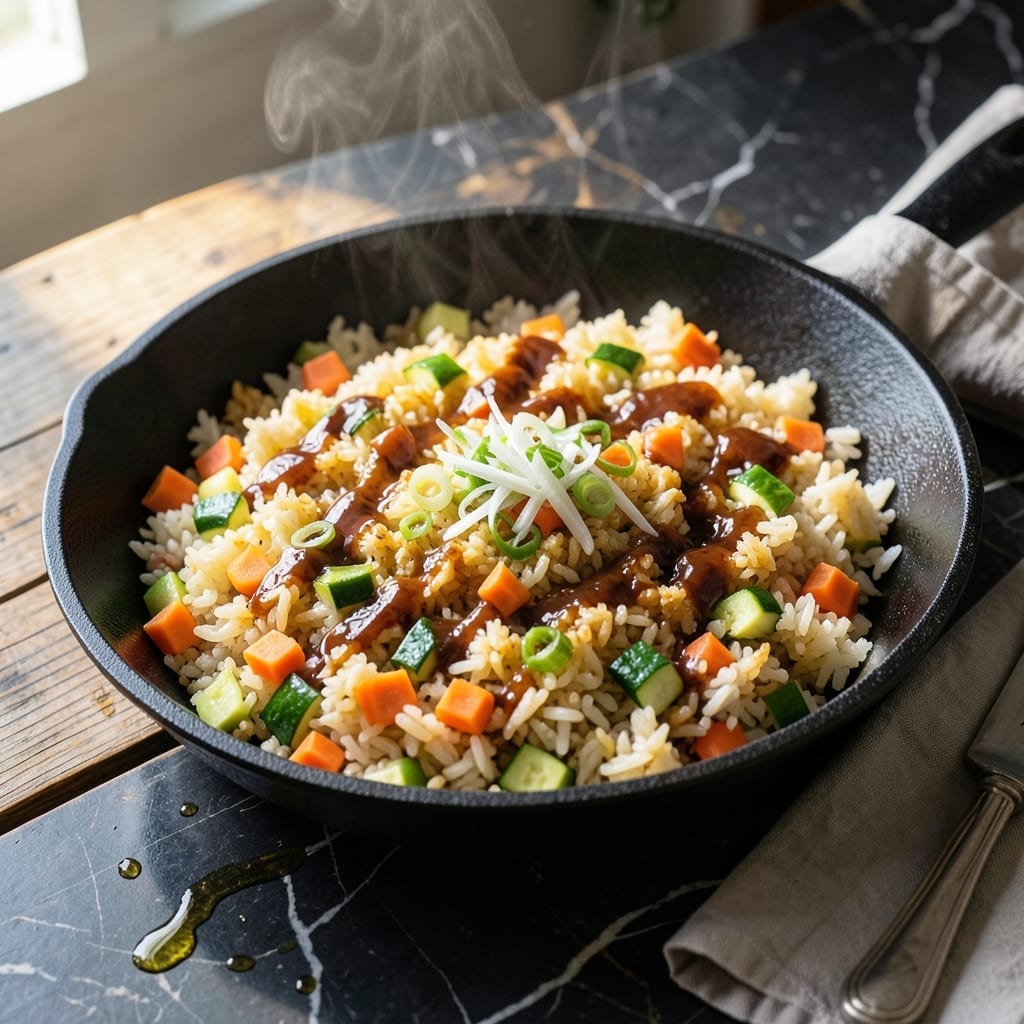
This Korean fried rice delivers bold, spicy flavors with minimal effort. The gochujang paste provides that signature heat and depth, transforming simple rice into a standout dish. I’ve refined this method to ensure every bite is packed with authentic taste.
Using day-old rice is key—it fries up perfectly without turning mushy. The combination of vegetables, protein, and that spicy gochujang kick creates a balanced, satisfying meal. It comes together in 20 minutes with just one pan.
You’ll love the contrast of textures: tender rice, crisp vegetables, and soft scrambled egg. The sauce coats every grain evenly, making each bite burst with flavor. This is comfort food with a spicy twist.
Serve it hot with extra gochujang for those who want more heat. Here’s how to make it at home.
Ingredients for Korean Fried Rice
Day-old rice plus a handful of veggies and that spicy gochujang kick. Nothing fancy.
| Ingredient | Amount | Notes |
|---|---|---|
| Day-Old Cooked White Rice 🍚 | 4 cups | Cold, preferably overnight |
| Gochujang Paste 🌶️ | 2 tbsp | Korean red pepper paste |
| Vegetable Oil 🫒 | 2 tbsp | Divided for cooking |
| Carrots 🥕 | 1 whole | Medium, finely diced |
| Zucchini 🥒 | 1 whole | Medium, finely diced |
| Green Onions 🧅 | 4 whole | Thinly sliced, whites and greens separated |
| Garlic Cloves 🧄 | 3 cloves | Minced finely |
| Large Eggs 🥚 | 2 whole | Lightly beaten |
| Soy Sauce 💧 | 2 tbsp | Low-sodium preferred |
| Sesame Oil 🫒 | 1 tsp | Toasted, for finishing |
| White Sugar 🍚 | 1 tsp | Balances the heat |
| Toasted Sesame Seeds 🌰 | 1 tsp | For garnish |
| Kosher Salt 🧂 | ½ tsp | Or to taste |
| Ground Black Pepper 🌶️ | ¼ tsp | Freshly ground preferred |
The gochujang is non-negotiable here—look for it in the Asian aisle at H Mart or Kroger (the red tub with Korean writing). Day-old rice is key (fresh gets mushy), and jasmine or short-grain works best. I always keep a stash of cooked rice in the fridge just for fried rice nights. The veggies can be whatever you’ve got, but carrots add that classic crunch. Grab organic if you can—pesticides concentrate in the skin.
No gochujang? Sriracha plus a little miso paste gets you close (but not quite there). Swap the zucchini for bell peppers or mushrooms if that’s what’s in your crisper. Tamari instead of soy sauce for gluten-free. The eggs can be skipped for a vegan version, but they add that classic texture. Want extra protein? Diced spam or leftover bulgogi beef (if you’re feeling fancy) works great.
Leftovers keep 3-4 days in the fridge—reheat in a dry pan to crisp up the rice. Freezes for 3 months (thaw overnight before reheating). I make a double batch on Sundays so weekday lunches are sorted. Just add a fried egg on top when you serve.
Why You’ll Love This Recipe
- One Pan Meal: I toss everything in my skillet—day-old rice, gochujang, and veggies—no extra dishes, no fuss.
- Spicy-Sweet Kick: The gochujang gives that perfect sweet heat, and the carrots add just enough crunch to keep it interesting.
- Weeknight Hero: Honestly, it’s my go-to when I need dinner fast but still want something packed with flavor.
- Leftover Magic: I always make extra rice just to fry it up the next day—waste nothing, taste everything.
Step-by-Step Instructions for Korean Fried Rice
Here’s the method I use for that perfect spicy, savory kick with every bite.
Step 1: Prep Vegetables and Make the Sauce Base
Finely dice the carrots and zucchini into uniform ¼-inch pieces so they cook evenly. Thinly slice the green onions, keeping whites and greens separate. Mince the 3 cloves garlic cloves until fine—this ensures it distributes evenly throughout the dish.
In a small bowl, whisk together the 2 tbsp gochujang paste, 2 tbsp soy sauce, 1 tsp white sugar, 0.5 tsp kosher salt, and 0.25 tsp ground black pepper. This sauce base delivers the signature spicy, umami-packed flavor. Set it aside while you prep the remaining ingredients.
Step 2: Scramble the Eggs and Cook the Aromatics
Heat 1 tbsp vegetable oil in a large skillet or wok over medium-high heat. Add the 2 whole large eggs and scramble until just set but still slightly runny. Remove the eggs and set aside—they’ll finish cooking when combined with the hot rice later.
In the same pan, add the remaining 1 tbsp vegetable oil. Sauté the diced carrots and zucchini for 3-4 minutes until they begin to soften but retain a slight bite. Add the minced garlic cloves and the white parts of the green onions, stirring constantly for 30 seconds until fragrant.
Step 3: Combine Rice and Sauce for Maximum Flavor
Add the 4 cups day-old cooked white rice to the skillet, breaking up any clumps with your hands or a spatula. Cold rice is key here—it fries up fluffier and absorbs the sauce better than fresh rice. Pour the prepared sauce base over the rice.
Stir-fry everything together for 4-5 minutes until the rice is heated through and evenly coated with the vibrant red sauce. The rice should be slightly crispy in spots and take on a deep, spicy aroma. Taste and adjust seasoning if needed, though the sauce base should provide plenty of flavor.
Step 4: Finish with Eggs, Green Onions, and Sesame Touches
Return the scrambled eggs to the skillet and gently fold them into the rice mixture. Remove from heat and stir in the 1 tsp sesame oil and the green parts of the green onions. The sesame oil adds a nutty depth that ties all the flavors together.
Transfer to a serving dish and garnish with the 1 tsp toasted sesame seeds. The sesame seeds add a subtle crunch and visual appeal. Serve immediately while hot—the flavors meld beautifully when fresh out of the pan.
Pro Tips For Making Korean Fried Rice
- Break Up the Rice: Use your hands to crumble any clumps in the day-old rice before frying—this ensures even cooking and prevents mushy spots in your fried rice.
- Pre-Cook the Veggies: Sauté the carrots and zucchini separately for 2-3 minutes first, then set aside. This keeps them crisp and prevents them from turning to mush when mixed with the rice.
- High Heat Only: Crank the heat to medium-high and keep it there. I learned this the hard way—low heat just steams the rice instead of giving it that coveted slightly charred texture.
- Thin the Gochujang: Mix the gochujang paste with 1-2 teaspoons of water before adding to the pan. It distributes more evenly and coats every grain instead of clumping in one spot.
Common Mistakes When Making This Recipe
Using Fresh Rice
Freshly cooked rice contains too much moisture, leading to mushy results. Always use day-old rice that’s been refrigerated overnight. The grains firm up, allowing them to crisp and absorb flavors properly.
Overcrowding the Pan
Too many ingredients at once steams the rice instead of frying it. Work in batches if needed—2 cups rice per batch in a 12-inch skillet ensures even browning. I learned this the hard way after ending up with soggy rice more than once.
Skipping High Heat
Medium heat won’t cut it for that signature crispness. Crank your burner to medium-high and let the pan get hot before adding oil. The rice should sizzle when it hits the pan. 🔥
Under-Seasoning the Sauce
The sauce base needs balance—don’t shy away from the 1 tsp sugar and 0.5 tsp salt. These mute the gochujang’s sharpness while enhancing its depth. Taste as you go; the flavors should pop, not overpower.
Overcooking the Eggs
Scramble the eggs just until set, then remove them immediately. They’ll finish cooking when mixed back into the hot rice. Overdone eggs lose their tender texture and turn rubbery.
Forgetting the Sesame Finish
That final drizzle of 1 tsp sesame oil and sprinkle of toasted sesame seeds adds the nutty aroma that defines this dish. Skip it, and you’ll miss the authentic Korean touch.
Nutrition Facts
Frequently Asked Questions
Can I use fresh rice?
No, fresh rice is too moist and will turn mushy. Always use day-old rice that’s been refrigerated overnight for best texture.
What can I substitute for gochujang?
Try 1 tbsp sriracha plus 1 tsp miso paste for a similar spicy, umami flavor. It won’t be identical but works in a pinch.
How do I make it less spicy?
Reduce gochujang to 1 tbsp and add 1 extra tsp sugar to balance. You can also stir in 1 tbsp honey at the end.
What protein works best?
Diced spam, leftover bulgogi beef, or shrimp all pair perfectly. Cook protein first, then set aside before adding rice.

- Mujadara Rice and Lentils Recipe: Earthy Spiced Lentils With Caramelized Onions - November 1, 2026
- Naija Fried Rice Recipe: Street-Style Spice With Veggie Crunch - November 1, 2026
- Mushy Rice Recipe: Fluffy Grains Transformed in Minutes - November 1, 2026