
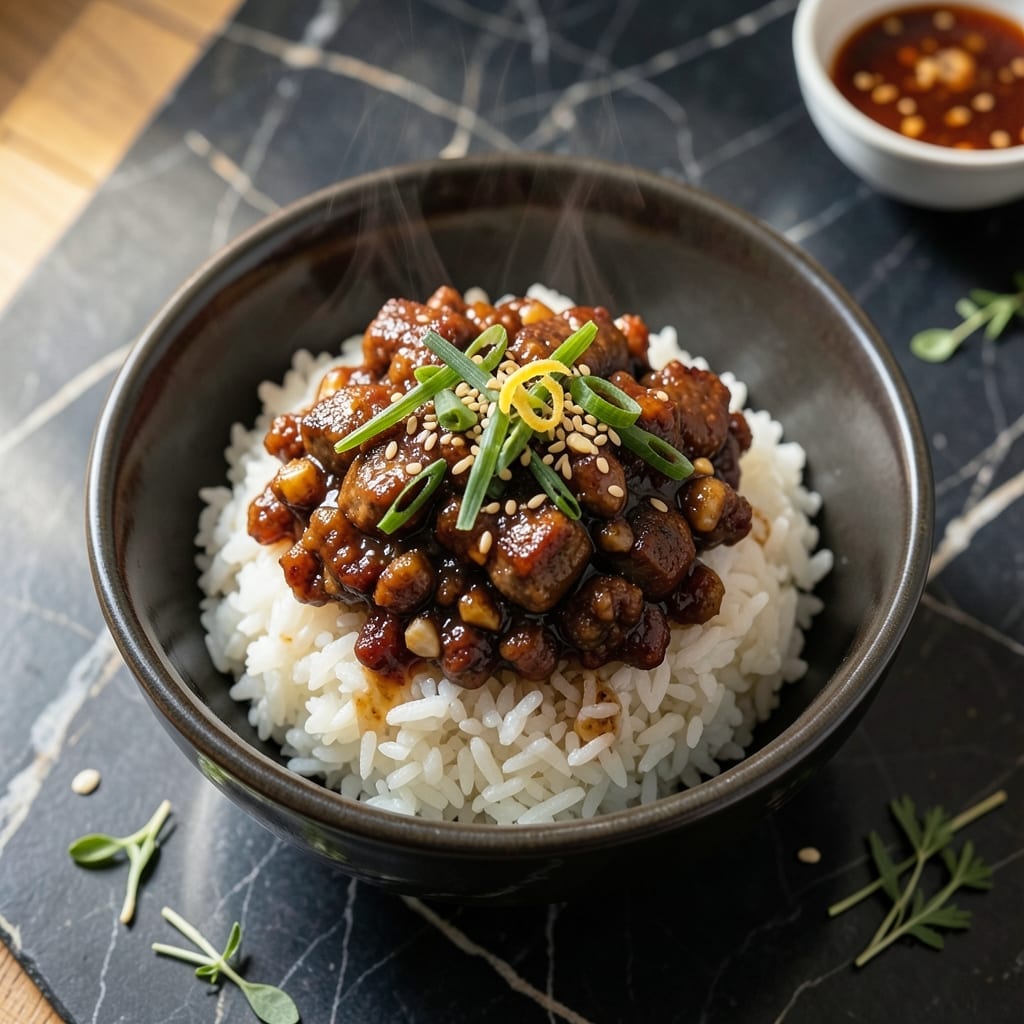
This dish delivers bold Korean flavors with minimal effort. The combination of sweet and savory gochujang creates a sauce that transforms simple ground beef into something extraordinary.
Ready in under 30 minutes, this bowl layers tender rice with caramelized beef for a satisfying meal that’s both quick and deeply flavorful.
Ingredients for Korean Ground Beef and Rice Bowl
Bold Korean flavors start with gochujang and simple pantry staples for this satisfying dish.
| Ingredient | Amount | Notes |
|---|---|---|
| Ground Beef 🥩 | 1 lb | 80/20 lean-to-fat ratio preferred |
| White Rice 🍚 | 2 cups | Uncooked, long-grain preferred |
| Gochujang 🌶️ | ½ cup | Korean red pepper paste |
| Soy Sauce 🫒 | 3 tbsp | Low-sodium if preferred |
| Brown Sugar 🍯 | 2 tbsp | Packed, or substitute honey |
| Garlic Cloves 🧄 | 4 cloves | Minced for maximum flavor |
| Fresh Ginger 🌿 | 1 tbsp | Grated, or 1 tsp ground |
| Sesame Oil 🫒 | 1 tbsp | Toasted for nutty aroma |
| Rice Vinegar 💧 | 1 tbsp | Or substitute apple cider vinegar |
| Green Onions 🧅 | 4 whole | Thinly sliced for garnish |
| Sesame Seeds 🌾 | 1 tsp | Toasted for garnish |
| Vegetable Oil 🫒 | 1 tbsp | For cooking beef |
| Water 💧 | ¼ cup | To thin the sauce |
The ground beef quality matters here—80/20 lean-to-fat ratio delivers the best caramelization and flavor. Costco or Whole Foods have excellent options, but any supermarket ground chuck works. For the gochujang, H-Mart or Korean grocery stores offer the most authentic brands, but Amazon carries reliable options like Sempio or CJ. The rice should be long-grain white for that classic sticky texture.
No gochujang? Sriracha plus 1 tsp miso paste gets you close on flavor, though the depth won’t be identical. Brown sugar can be swapped for honey or maple syrup. For a gluten-free version, use tamari instead of soy sauce. The ginger can be substituted with 1 tsp ground ginger in a pinch, but fresh always tastes brighter. Skip the sesame seeds if needed—they’re mostly for garnish.
Cooked rice holds well in the fridge for 3-4 days—store it separately from the beef to prevent sogginess. The beef mixture reheats beautifully and actually tastes better the next day. Freeze for up to 3 months if making ahead. Toast sesame seeds just before serving for maximum crunch (worth the extra minute).
Why You’ll Love This Recipe
- One Pan Wonder: I brown the beef, stir in the gochujang and soy, and dinner’s ready before the rice timer dings.
- Sweet-Spicy Magic: The brown sugar and gochujang create this sticky, caramelized glaze that coats every bite.
- Meal Prep Hero: I make a double batch—it reheats beautifully for lunches all week.
- Feeds Four for Five: Ground beef and rice stretch a buck further than takeout, and it’s honestly tastier.
Step-by-Step Instructions for Korean Ground Beef and Rice Bowl
Master this technique and the balance of sweet, savory, and spicy flavors will become second nature.
Step 1: Cook the Rice to Perfection
Begin by rinsing the 2 cups white rice under cold water until the water runs clear. This removes excess starch and prevents gummy rice. Use a 1:2 rice-to-water ratio for fluffy results.
Bring the rice and 4 cups water to a boil in a medium saucepan, then reduce heat to low, cover, and simmer for 15-18 minutes. Remove from heat and let it sit covered for 10 minutes to steam. Fluff with a fork before serving.
Step 2: Brown the Ground Beef
Heat the 1 tbsp vegetable oil in a large skillet over medium-high heat. Add the 1 lb ground beef and cook, breaking it into small pieces with a wooden spoon, for 5-7 minutes until deeply browned and cooked through.
Drain excess fat if necessary, but leave about 1 tbsp in the pan for flavor. The beef should be crumbly with no pink remaining—this ensures a rich, meaty base for your sauce.
Step 3: Create the Gochujang Sauce
Reduce heat to medium and add the minced 4 cloves garlic cloves and grated 1 tbsp fresh ginger to the skillet. Stir for 30 seconds until fragrant, being careful not to burn the aromatics.
Add the 0.5 cup gochujang, 3 tbsp soy sauce, 2 tbsp brown sugar, 1 tbsp sesame oil, 1 tbsp rice vinegar, and 0.25 cup water. Stir well and simmer for 3-4 minutes until the sauce thickens slightly and coats the beef evenly.
Step 4: Assemble and Garnish
Divide the cooked white rice among four bowls. Spoon the saucy ground beef over the rice, ensuring each portion gets an equal amount of the rich, glossy sauce.
Garnish with thinly sliced 4 whole green onions and 1 tsp sesame seeds. The green onions add a fresh, crisp contrast, while the sesame seeds provide a nutty crunch. Serve immediately while hot.
Pro Tips For Making Korean Ground Beef And Rice Bowl
- Brown the Beef First: Cook the ground beef in a hot pan until deeply browned before adding sauces—this builds a rich, meaty flavor that gochujang and soy sauce can’t fake. I learned this the hard way after too many pale, bland batches.
- Bloom the Gochujang: Let the gochujang sizzle in the pan for 30 seconds with the beef before adding liquids; it mellows the heat and deepens the flavor. Sounds weird, but it works.
- Skip the Over-Saucing: Start with half the sauce you think you need—you can always add more, but you can’t take it out. After burning three batches to a sticky mess, I finally figured out the rice soaks up more than expected.
- Use Day-Old Rice: Cold, day-old rice holds its shape and soaks up the beef sauce without turning mushy. My grandmother swore by this, and she was right—fresh rice just doesn’t cut it.
Troubleshooting This Dish
Sauce Too Thin
If your sauce isn’t thickening, simmer uncovered for an additional 2-3 minutes. The water needs time to evaporate, so resist adding cornstarch. I find medium heat works best for reducing without burning the gochujang. 🌡️
Sauce Too Thick
Add 1-2 tbsp water and stir well. The sauce will loosen as it heats. If it’s still too thick, add another tbsp—but do this gradually to avoid making it watery.
Beef Not Browning
Your pan may not be hot enough. Increase to medium-high heat and let the skillet preheat for 1-2 minutes before adding the beef. Don’t overcrowd the pan—work in batches if needed.
Rice Too Sticky
Rinse your rice more thoroughly next time. Use cold water until it runs completely clear, usually 3-4 rinses. Also, let it rest covered for the full 10 minutes after cooking.
Flavors Too Mild
Bloom your aromatics longer. Cook the garlic and ginger for the full 30-60 seconds until fragrant. For extra depth, add ½ tsp toasted sesame oil at the end. 💡
Burnt Garlic
Lower your heat immediately and scrape the pan. Next time, reduce to medium-low when adding garlic and ginger. Stir constantly—they burn quickly, especially in a hot pan.
Nutrition Facts
Frequently Asked Questions
Can I use ground turkey instead of beef?
Yes! Ground turkey works well as a leaner alternative. Adjust the cooking time to 6-8 minutes since turkey can dry out faster than beef.
How spicy is this dish?
Mild to moderate—gochujang has heat but is balanced by brown sugar and soy. Reduce to ¼ cup for milder flavor or add 1 tsp sriracha for extra kick.
Can I make this ahead of time?
The beef mixture keeps in the fridge for 3-4 days and freezes for up to 3 months. Reheat gently to preserve the sauce’s texture.
What type of rice works best?
Long-grain white rice yields the classic sticky texture. For variety, try jasmine or short-grain, but adjust water ratios as needed.

- Mujadara Rice and Lentils Recipe: Earthy Spiced Lentils With Caramelized Onions - November 1, 2026
- Naija Fried Rice Recipe: Street-Style Spice With Veggie Crunch - November 1, 2026
- Mushy Rice Recipe: Fluffy Grains Transformed in Minutes - November 1, 2026