
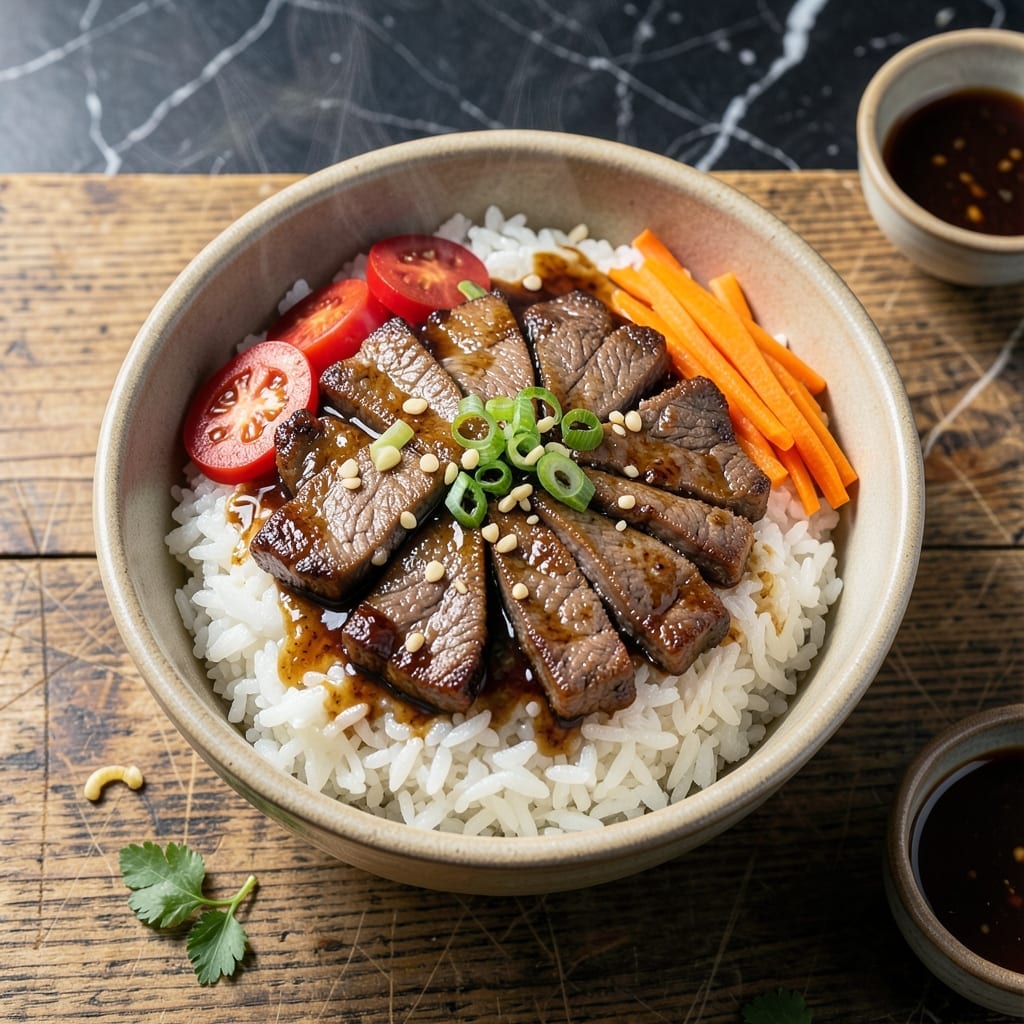
This Korean-inspired rice bowl brings bold, authentic flavors to your home kitchen with minimal effort. The gochujang marinade transforms simple beef into tender, caramelized bites packed with spicy, sweet depth.
Steamed rice serves as the perfect canvas for the richly marinated beef, creating a balanced meal that’s both satisfying and deeply flavorful. The dish comes together in 30 minutes, making it ideal for weeknight dinners.
What makes this recipe special is its ability to deliver restaurant-quality results with everyday ingredients. The gochujang provides complexity, while garlic and soy sauce add savory layers.
Serve with quick-pickled vegetables or a fried egg for extra authenticity. Here’s how to make it.
Ingredients for Korean Rice Bowl
Everyday ingredients transform into a restaurant-worthy Korean-inspired meal with bold, authentic flavors.
| Ingredient | Amount | Notes |
|---|---|---|
| White Rice 🍚 | 2 cups | Short-grain or jasmine preferred |
| Beef Sirloin 🥩 | 1 ½ lb | Thinly sliced against grain |
| Gochujang 🌶️ | ¼ cup | Korean red pepper paste |
| Soy Sauce 🫒 | ¼ cup | Low-sodium recommended |
| Brown Sugar 🍚 | 2 tbsp | Light or dark variety |
| Garlic Cloves 🧄 | 4 cloves | Minced finely |
| Fresh Ginger 🌿 | 1 tbsp | Grated or minced |
| Sesame Oil 🫒 | 1 tbsp | Toasted variety preferred |
| Rice Vinegar 💧 | 1 tbsp | Unseasoned variety |
| Green Onions 🧅 | 4 pieces | Thinly sliced for garnish |
| Sesame Seeds 🌾 | 1 tbsp | Toasted for garnish |
| Vegetable Oil 🫒 | 1 tbsp | For cooking beef |
| Large Eggs 🥚 | 4 whole | Optional for topping |
| Kosher Salt 🧂 | ½ tsp | Adjust to taste |
| Black Pepper 🌶️ | ¼ tsp | Freshly ground preferred |
The beef is key here. Sirloin offers the right balance of tenderness and flavor without breaking the bank. Whole Foods or Korean markets often carry pre-sliced beef for bulgogi, which saves prep time. For the gochujang, look for Sempio or Koon brands—widely available at H Mart or Amazon. The rice should be short-grain for that sticky texture authentic to Korean cuisine.
No gochujang? Sriracha mixed with miso paste (2:1 ratio) gets you close, though the depth won’t be identical. Short on time? Pre-minced garlic and ginger from a jar works fine (just use half the amount). For a gluten-free version, swap soy sauce for tamari. The brown sugar can be replaced with honey or maple syrup if needed.
The marinated beef keeps well—store in an airtight container for up to 3 days in the fridge. Cooked rice holds for 5 days but is best fresh. The gochujang itself has a long shelf life (1 year unopened, 6 months once opened) if kept refrigerated.
Why You’ll Love This Recipe
- One Pan Wonder: I just brown the beef, mix the gochujang and soy sauce right in the same pan, and serve over rice—no extra dishes.
- Sticky Sweet Heat: That gochujang and brown sugar combo gives the beef this glossy, spicy-sweet glaze that I could eat by the spoonful.
- Lunchbox Hero: I make a big batch on Sunday and it reheats beautifully for my work lunches all week.
- Feeds Four Cheap: A pound of sirloin and pantry staples stretches to four generous bowls without breaking the bank.
Step-by-Step Instructions for Gochujang-Marinated Beef Rice Bowl
Follow this precise method to achieve perfectly caramelized beef and fluffy rice with balanced Korean flavors.
Step 1: Cook the White Rice to Perfection
Rinse the 2 cups White Rice under cold water until the water runs clear to remove excess starch. This prevents the grains from becoming gummy during cooking. Use a fine-mesh strainer for best results.
Combine the rinsed rice with 2¼ cups water in a rice cooker or heavy pot. Cook according to manufacturer instructions or bring to a boil, then reduce to a simmer, cover, and cook for 15 minutes. Remove from heat and let it steam, covered, for an additional 10 minutes until the grains are tender and the water is fully absorbed.
Step 2: Prepare the Gochujang Beef Marinade
In a large bowl, whisk together the 0.25 cup Gochujang, 0.25 cup Soy Sauce, 2 tbsp Brown Sugar, 1 tbsp Rice Vinegar, 1 tbsp Sesame Oil, minced 4 cloves Garlic Cloves, and grated 1 tbsp Fresh Ginger until smooth. The marinade should be thick but pourable.
Add the 1.5 lb Beef Sirloin slices to the marinade, ensuring each piece is fully coated. Let it marinate at room temperature for 15-20 minutes, or up to 2 hours in the refrigerator for deeper flavor penetration. The acid in the marinade will begin to tenderize the beef.
Step 3: Cook the Marinated Beef
Heat the 1 tbsp Vegetable Oil in a large skillet or wok over medium-high heat until shimmering. Working in batches to avoid overcrowding, add the marinated beef in a single layer. Cook for 3-4 minutes per side until the edges are caramelized and the beef reaches your desired doneness.
The beef is ready when it develops a glossy, dark red glaze from the gochujang and the thickest pieces are just cooked through. Avoid stirring too frequently—let the beef sear undisturbed to develop that signature char.
Step 4: Assemble the Rice Bowls
Divide the cooked White Rice evenly among four bowls. Top each portion with the cooked beef, arranging it in an appealing layer. Spoon any remaining marinade from the skillet over the beef to maximize flavor.
For the optional topping, heat a nonstick skillet over medium heat and fry the 4 whole Large Eggs sunny-side up or to your preference. Place one egg on top of each bowl. The runny yolk will enrich the dish when broken into the rice and beef.
Step 5: Garnish and Serve Immediately
Sprinkle each bowl with the thinly sliced 4 pieces Green Onions and toasted 1 tbsp Sesame Seeds. Finish with a light drizzle of Sesame Oil and a pinch of 0.5 tsp Kosher Salt and 0.25 tsp Black Pepper if desired.
Serve immediately while the beef is hot and the egg yolk is still runny. The contrast of warm, spicy-sweet beef with fluffy rice and creamy egg creates the perfect balance of textures and flavors in every bite.
Pro Tips For Making Korean Rice Bowl
- Marinate the Beef: Let the sirloin sit in the gochujang, soy sauce, and brown sugar mix for at least 30 minutes—I learned this the hard way after my first batch came out bland.
- Use Day-Old Rice: Fresh rice turns mushy; cold, leftover rice holds its shape and soaks up the sauce better.
- Don’t Overcrowd the Pan: Cook the beef in batches so it sears properly instead of steaming in its own juices.
- Balance the Gochujang: Taste as you go—if the sauce is too spicy, a teaspoon of brown sugar or a splash of soy sauce smooths it out.
Wine and Beer Pairings for This Recipe
Korean Beer Pairings
I love pairing this dish with Hite or OB—light Korean lagers that cut through the richness of the gochujang-marinated beef. Their crisp, clean finish refreshes the palate between bites. Serve ice-cold for the best experience.
Craft Beer Options
For craft beer lovers, a Belgian witbier with citrus notes complements the spicy-sweet profile beautifully. Try Hoegaarden or Blue Moon for a Western twist. The effervescence helps balance the bold flavors.
White Wine Choices
An off-dry Riesling from Germany or Washington state offers a delightful contrast. The residual sugar tames the heat while the acidity cleanses your palate. Dr. Loosen Blue Slate is a personal favorite. 🍷
Red Wine Alternatives
If you prefer reds, opt for a lightly chilled Pinot Noir. Its bright acidity and red fruit notes won’t overpower the dish. Meiomi or La Crema are widely available options.
Non-Alcoholic Pairings
For a non-alcoholic option, Korean barley tea (boricha) provides a nutty, toasted flavor that pairs wonderfully. Serve it cold for a refreshing contrast to the warm, spicy beef. 💡
Sake Recommendation
A chilled Nigori sake like Tyku Junmai Nigori offers a creamy, slightly sweet profile that enhances the dish’s depth. The cloudy texture mirrors the richness of the beef.
Nutrition Facts
Frequently Asked Questions
Can I use chicken instead of beef?
Use 1.5 lb boneless chicken thighs sliced thinly. Marinate for 30 minutes and cook for 5-6 minutes per side over medium-high heat. Chicken stays juicy with this marinade.
What if I don’t have gochujang?
Mix 2 tbsp sriracha with 1 tbsp miso paste for a similar spicy-sweet depth. The flavor won’t be identical, but it’ll still be delicious.
How do I make this gluten-free?
Swap the soy sauce for tamari (ensure it’s labeled gluten-free). All other ingredients are naturally gluten-free. Always check labels for hidden wheat.
Can I meal prep this ahead?
Cook the beef and rice separately, then store in airtight containers for up to 3 days. Reheat gently and assemble fresh for best texture.

- Mujadara Rice and Lentils Recipe: Earthy Spiced Lentils With Caramelized Onions - November 1, 2026
- Naija Fried Rice Recipe: Street-Style Spice With Veggie Crunch - November 1, 2026
- Mushy Rice Recipe: Fluffy Grains Transformed in Minutes - November 1, 2026