
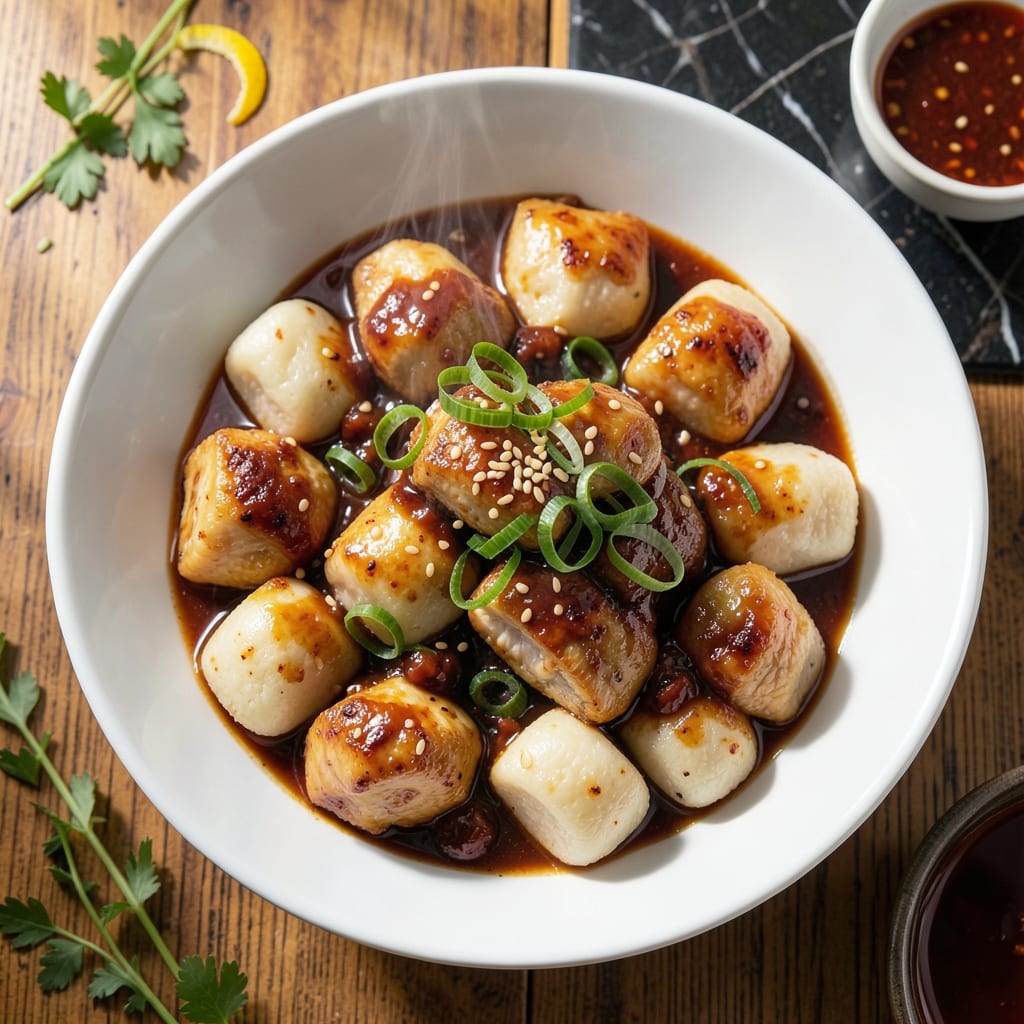
This dish brings Korean street food flavors to your home kitchen with its signature chewy rice cakes and tender chicken. The combination of sweet, spicy, and savory creates an addictive balance that’s hard to resist.
I’ve refined this recipe over years of testing, ensuring the rice cakes maintain their signature chew while the chicken stays juicy. The sauce, rich with gochujang and a touch of sweetness, coats every bite perfectly.
What sets this version apart is the attention to texture—soft rice cakes, crisp-tender chicken, and a glossy, clingy sauce. It’s a dish that delivers restaurant-quality results with straightforward techniques.
Serve it hot, garnished with sesame seeds and green onions, for a meal that’s as satisfying as it is flavorful.
Ingredients for Korean Rice Cake Chicken
Chewy rice cakes and tender chicken meet sweet-spicy sauce. Nothing too exotic, just bold flavor.
| Ingredient | Amount | Notes |
|---|---|---|
| Chicken Thighs 🍗 | 1 ½ lb | Boneless, skinless, cut into bite-sized pieces |
| Korean Rice Cakes 🍚 | 1 lb | Cylindrical rice cakes for stir-fry |
| Gochujang 🌶️ | ¼ cup | Korean red chili paste |
| Soy Sauce 🫒 | 3 tbsp | Low-sodium preferred |
| Brown Sugar 🍚 | 2 tbsp | Light or dark works |
| Garlic Cloves 🧄 | 4 cloves | Minced finely |
| Fresh Ginger 🌿 | 1 tbsp | Grated or minced |
| Sesame Oil 🫒 | 1 tbsp | Toasted for best flavor |
| Green Onions 🧅 | 4 whole | Thinly sliced for garnish |
| Sesame Seeds 🌰 | 1 tbsp | Toasted for garnish |
| Vegetable Oil 🫒 | 2 tbsp | For stir-frying |
| Red Pepper Flakes 🌶️ | 1 tsp | Korean gochugaru preferred |
| Rice Vinegar 🧂 | 1 tbsp | Balances sweetness |
| Cornstarch 🌾 | 1 tbsp | For thickening sauce |
The rice cakes are everything here. Look for cylindrical Korean rice cakes (tteok) in the refrigerated section at H Mart or Korean markets—they’re chewier than the frozen kind. Chicken thighs stay juicier than breasts during stir-frying, but breasts work if that’s what you’ve got. Just don’t overcook them. For gochujang, Sempio or Chung Jung One are reliable brands at most Asian grocers.
No gochujang? Sriracha plus a little miso paste gets you close but won’t be the same. Substitute regular sugar or honey for the brown sugar in a pinch. Fresh ginger is ideal, but ground ginger at half the amount works. For extra veggies, toss in bell peppers or carrots. If you’re gluten-free, tamari instead of soy sauce does the trick.
Leftover sauce clings even better the next day. Stores 3-4 days in the fridge—reheat gently so rice cakes don’t turn mushy. Freezing isn’t ideal (texture suffers), but if you must, 2 months max in a single layer first.
Why You’ll Love This Recipe
- One Pan Wonder: I toss everything in one skillet—the chicken, rice cakes, and that sticky gochujang sauce—and it’s ready before the rice finishes cooking.
- Sweet & Spicy Fix: The gochujang and brown sugar caramelize into this glossy, finger-licking glaze that clings to every bite of chicken and chewy rice cake.
- Weeknight Rescue: Between us, this is my Tuesday night MVP—filling enough for the family, fancy enough for company, and no one complains.
- Budget Stretch: Chicken thighs and rice cakes feed four for the cost of two takeout meals. Honestly, I pocket the savings for more gochujang.
Step-by-Step Instructions for Korean Rice Cake Chicken
Here’s the method that delivers that perfect balance of chewy, spicy, and savory every time.
Step 1: Prep the Chicken and Soak the Rice Cakes
Cut the 1.5 lb Chicken Thighs into bite-sized pieces and pat them dry with paper towels. This ensures they sear rather than steam in the pan. Toss the chicken with the 1 tbsp Cornstarch—this creates a light coating that helps thicken the sauce later.
Soak the 1 lb Korean Rice Cakes in warm water for 10 minutes to soften. If they’re not pre-soaked, they’ll stay hard in the center. Drain them well before cooking to prevent a watery stir-fry.
Step 2: Build the Spicy-Sweet Sauce
In a bowl, whisk together the 0.25 cup Gochujang, 3 tbsp Soy Sauce, 2 tbsp Brown Sugar, 1 tbsp Rice Vinegar, and 1 tsp Red Pepper Flakes. The vinegar balances the sweetness, so don’t skip it. Taste the sauce—it should be bold and slightly tangy.
Mince the 4 cloves Garlic Cloves and grate the 1 tbsp Fresh Ginger. Stir them into the sauce along with the 1 tbsp Sesame Oil. This layer of aromatics deepens the flavor and ties everything together.
Step 3: Stir-Fry the Chicken and Rice Cakes
Heat the 2 tbsp Vegetable Oil in a large skillet or wok over medium-high heat until it shimmers. Add the chicken in a single layer and cook undisturbed for 3-4 minutes, until the edges turn golden brown. Flip and cook another 2 minutes until no longer pink inside.
Add the drained rice cakes and the sauce mixture. Stir-fry for 5-6 minutes until the rice cakes are tender and the sauce clings to everything. The sauce will thicken as it coats the chicken and rice cakes—keep stirring to prevent sticking.
Step 4: Garnish and Serve Immediately
Remove from heat and stir in half the 4 whole Green Onions (thinly sliced). Transfer to a serving dish and top with the remaining green onions and the 1 tbsp Sesame Seeds. The sesame seeds add a nutty crunch, so don’t skip this finishing touch.
Serve right away while hot—the rice cakes are best when fresh from the pan, chewy and coated in that glossy, spicy-sweet sauce. If it sits too long, the rice cakes will absorb all the sauce, so dig in fast!
Pro Tips For Making Korean Rice Cake Chicken
- Soak the Rice Cakes: I learned this the hard way—if using dried rice cakes, soak them in warm water for 10-15 minutes until soft, or they’ll stay rock-hard even after cooking.
- Brown the Chicken First: Sear the chicken thighs in batches over medium-high heat until golden (about 4-5 minutes per side) to lock in juices and add depth to the sauce.
- Skip the Overcrowding: Resist the urge to dump everything in the pan at once—cook the chicken and rice cakes in a single layer to prevent steaming instead of browning.
- Balance the Sauce: Taste as you go and adjust with a splash of water if the gochujang-soy-brown sugar mix gets too thick or overly sweet—this sauce should cling, not suffocate.
Essential Equipment for korean rice cake chicken
Wok or Skillet
A large, heavy-bottomed wok is my top choice for even heat distribution, but a 12-inch cast iron skillet works beautifully too. I’ve used my vintage Lodge skillet for years—it retains heat like a dream. Avoid nonstick for this dish, as you need high heat to get that perfect sear on the chicken. 🔥
Wooden Spoons
Wooden spoons won’t scratch your cookware and are perfect for stirring the rice cakes without breaking them. I keep a bamboo stir-fry spatula handy—it’s heat-resistant and reaches into the wok’s curves. Plastic can melt at high temps, so steer clear.
Mixing Bowls
Prep all your ingredients in wide, shallow bowls so you can grab and toss quickly. I use stainless steel mixing bowls from my collection—they’re durable and nest neatly. Having everything prepped before cooking (mise en place) keeps the stir-fry moving fast.
Knives and Cutting Board
A sharp chef’s knife makes quick work of the chicken and aromatics. I swear by my 8-inch Wüsthof—it’s been my go-to for over a decade. Use a large cutting board with a groove to catch juices. Dull knives slip and make uneven cuts, which affects cooking times.
Measuring Tools
Accurate measurements matter for the sauce balance. I use stainless steel measuring spoons and cups for precision. For the gochujang, a silicone spatula helps scrape every last bit from the jar. Don’t eyeball the brown sugar—too much can make the sauce cloying.
Garnish Station
Set up a small bowl for sesame seeds and another for sliced green onions. This keeps your garnishes organized and ready to go. I toast my sesame seeds in a dry pan for 1-2 minutes until fragrant—it’s worth the extra step for that nutty flavor. 💫
Nutrition Facts
Frequently Asked Questions
Can I use chicken breast instead of thighs?
Yes, but thighs stay juicier. If using breasts, cut into small pieces and cook for 2-3 minutes max to prevent dryness.
Why soak the rice cakes first?
Soaking for 10 minutes softens their center. Skip this and they’ll stay hard inside while the outside burns. Always drain well before cooking.
How do I make it less spicy?
Reduce gochujang to 2 tbsp and omit red pepper flakes. Add 1 tsp honey to balance flavors. Taste as you go!
Can I add vegetables to this dish?
Bell peppers, carrots, or zucchini work well. Stir-fry veggies first for 2-3 minutes before adding chicken.

- Jollof Rice Sauce Recipe: West African Tomato and Spice Infusion - September 25, 2026
- Japanese Rice Soup Recipe: Umami-Rich Comfort in a Bowl - September 25, 2026
- Homemade Cream Of Rice Recipe: Silk-Smooth Breakfast in Minutes - September 25, 2026