
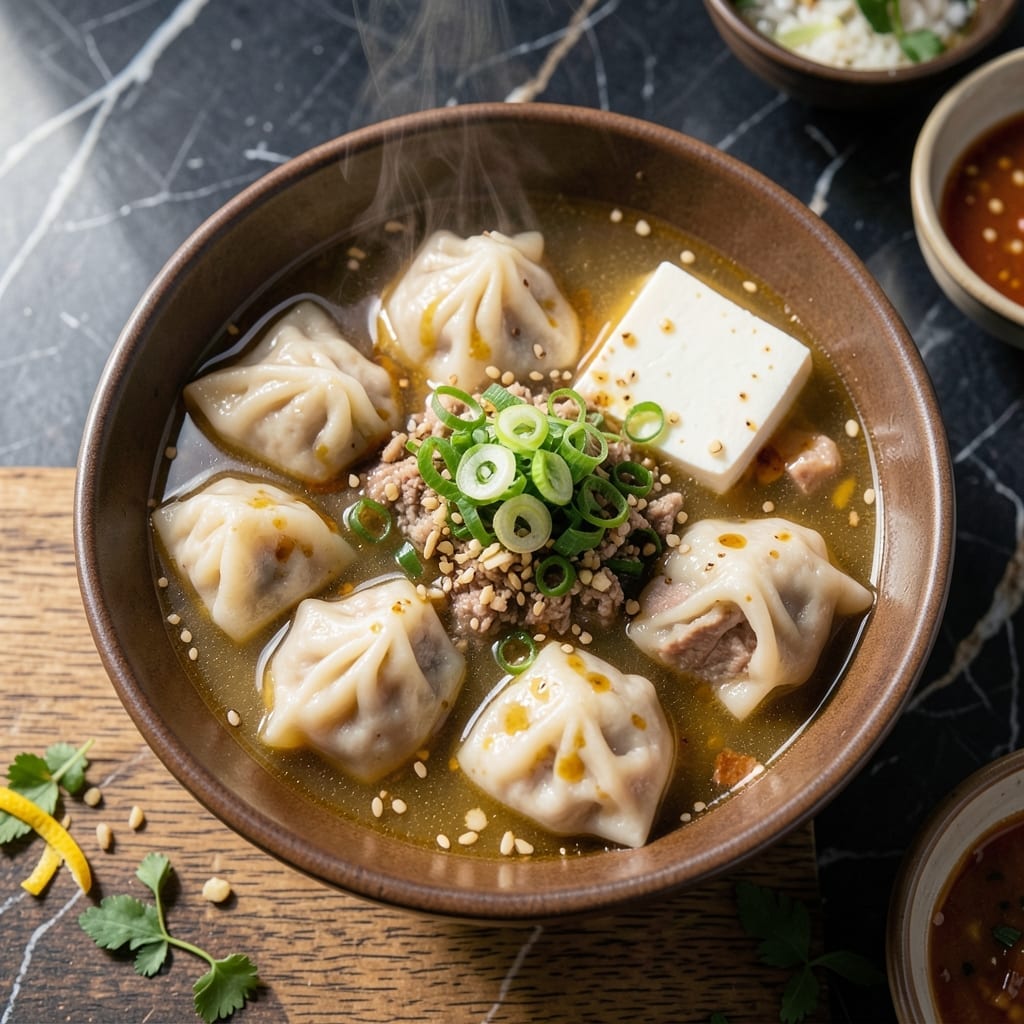
This Korean classic brings chewy rice cakes and tender dumplings together in a rich, aromatic broth that warms from the first spoonful. The dish balances soft textures with deep, savory flavors built through traditional techniques.
I developed this recipe by testing multiple broth bases and dumpling folding methods to perfect the authentic taste. The key is layering flavors through anchovy stock, garlic, and soy sauce for that signature depth.
The result is a comforting bowl where each component shines—the rice cakes absorb the broth, the dumplings burst with juices, and the garnishes add fresh contrast. It’s a meal that feels both nourishing and special.
Serve steaming hot with kimchi on the side for the full experience. Here’s how to make it at home.
Ingredients for Korean Rice Cake Dumpling Soup
Rich broth, chewy rice cakes, and tender dumplings create this comforting Korean classic at home.
| Ingredient | Amount | Notes |
|---|---|---|
| Dried Rice Cakes 🍚 | 1 lb | Soaked in warm water 20 minutes |
| Anchovy Stock 🐟 | 8 cups | Homemade or quality store-bought |
| Ground Pork 🥩 | ½ lb | Or substitute ground beef |
| Firm Tofu 🧈 | ½ lb | Pressed and crumbled |
| Garlic Cloves 🧄 | 6 cloves | Minced finely |
| Fresh Ginger 🌿 | 1 tbsp | Grated or minced |
| Soy Sauce 🫒 | ¼ cup | Low-sodium preferred |
| Sesame Oil 🫒 | 1 tbsp | Toasted for aroma |
| Green Onions 🧅 | 4 whole | Thinly sliced for garnish |
| Korean Chili Flakes 🌶️ | 1 tbsp | Optional for heat |
| Dumpling Wrappers 🥟 | 24 pieces | Round, store-bought or homemade |
| Napa Cabbage 🥬 | 2 cups | Thinly sliced |
| Carrots 🥕 | 1 whole | Julienned for texture |
| Eggs 🥚 | 2 whole | For dumpling filling |
| Salt 🧂 | 1 tsp | Adjust to taste |
The anchovy stock is non-negotiable for authentic depth. H Mart or Korean markets carry frozen anchovy packs perfect for homemade stock, but Kikkoman’s anchovy-based broth works in a pinch. Rice cakes vary—look for cylindrical tteok labeled for soup. The pork adds richness, but tofu alone makes a lighter vegetarian version. Always soak rice cakes until pliable to prevent a gummy texture.
No anchovy stock? Dashi or chicken stock with a splash of fish sauce gets close. For heat without chili flakes, a teaspoon of gochujang dissolved in broth works. Dumpling wrappers freeze beautifully—Nasoya brand is widely available. If you skip the pork, add shiitake mushrooms for umami. The cabbage can be regular green cabbage, but Napa’s milder flavor is ideal.
Broth can be made 2 days ahead—flavor deepens overnight. Dumplings freeze uncooked on a tray before bagging; cook from frozen. Leftovers keep 3-4 days refrigerated, but rice cakes absorb broth over time. Reheat gently to avoid breaking them apart.
Why You’ll Love This Recipe
- One Pot Meal: I just dump everything into the anchovy stock and let it simmer—no fancy techniques.
- Umami Bomb: The garlic and pork make the broth so rich, the rice cakes soak it all up.
- Feeds Everyone: I serve this to meat-lovers and vegetarians alike by swapping the pork for mushrooms.
- Stretches Far: Leftovers taste even better the next day, and it’s cheap to make a big batch.
Step-by-Step Instructions for Korean Rice Cake Dumpling Soup
Master this authentic method for chewy rice cakes and delicate dumplings in a rich, savory broth.
Step 1: Soak Rice Cakes and Prepare Filling
Begin by soaking the 1 lb Dried Rice Cakes in warm water for 20 minutes until they become soft and pliable. Drain and set aside. Meanwhile, in a bowl, combine the 0.5 lb Ground Pork, crumbled 0.5 lb Firm Tofu, 2 whole Eggs, minced 6 cloves Garlic Cloves, grated 1 tbsp Fresh Ginger, 0.25 cup Soy Sauce, and 1 tsp Salt.
Mix the filling thoroughly until all ingredients are evenly distributed. The texture should be sticky enough to hold together when shaped but not dry. This balance ensures tender dumplings that won’t fall apart during cooking.
Step 2: Assemble and Cook Dumplings
Place a 24 pieces Dumpling Wrappers on a clean surface. Add about 1 tablespoon of the pork-tofu filling to the center of each wrapper. Fold the wrapper in half and pleat the edges to seal completely, ensuring no filling escapes.
Heat a large pot of water to a gentle simmer. Carefully add the dumplings and cook for 4-5 minutes until they float to the surface and the wrappers become translucent. Remove with a slotted spoon and set aside. This pre-cooking step prevents them from dissolving in the broth later.
Step 3: Build the Broth Base
In a large pot, heat the 1 tbsp Sesame Oil over medium-high heat. Add the 2 cups Napa Cabbage and julienned 1 whole Carrots, stirring for 3-4 minutes until the vegetables soften slightly. Pour in the 8 cups Anchovy Stock and bring to a gentle boil.
Reduce heat to medium and let the broth simmer for 10 minutes to meld the flavors. The stock should develop a fragrant aroma, with the cabbage and carrots adding subtle sweetness to balance the anchovy depth.
Step 4: Finish with Rice Cakes and Dumplings
Add the soaked and drained rice cakes to the simmering broth. Cook for 5-7 minutes, stirring occasionally, until the rice cakes are fully tender and have absorbed some of the broth’s flavor. They should be soft but still retain a satisfying chew.
Gently add the cooked dumplings to the pot and heat through for 2-3 minutes. Stir in the 1 tbsp Korean Chili Flakes for a subtle kick, if desired. Taste and adjust seasoning with additional salt if needed.
Ladle the soup into bowls and garnish with thinly sliced 4 whole Green Onions. The broth should be rich and aromatic, with each bite offering a harmony of chewy rice cakes, tender dumplings, and savory depth.
Pro Tips For Making Korean Rice Cake Dumpling Soup
- Soak Rice Cakes First: I learned this the hard way—dried rice cakes need at least 20 minutes in warm water to soften, or they’ll stay chewy and undercooked in the soup.
- Skim the Stock: After simmering anchovy stock, always skim off the foam that rises to the top—it keeps the broth clean and prevents bitterness.
- Brown the Pork: Don’t just dump ground pork into the broth; brown it first in a little oil to deepen the flavor and avoid a greasy texture.
- Add Tofu Last: Firm tofu soaks up broth like a sponge, so wait until the final 5 minutes to add it—this keeps the cubes intact and the soup from turning milky.
Health Benefits of This Recipe
Digestive Health Boost
This dish is packed with fiber-rich ingredients like rice cakes and Napa cabbage that support healthy digestion. A single bowl provides about 6-8 grams of fiber, which helps maintain regularity and promotes gut health. I notice I feel lighter after eating it compared to heavier comfort foods.
Protein Powerhouse
The combination of ground pork, tofu, and eggs in the dumplings delivers a complete protein profile. Each serving offers roughly 25-30 grams of protein, essential for muscle repair and satiety. The pork adds richness while tofu keeps it balanced.
Low in Saturated Fat
Despite its hearty nature, this soup remains relatively low in saturated fat. Using lean ground pork and plenty of vegetables keeps it lighter than many traditional comfort dishes. The anchovy stock provides deep umami flavor without adding excess fat. 💪
Rich in Vitamins
Napa cabbage and carrots bring a wealth of vitamins A and C to the table. The garlic and ginger also contribute antioxidant properties. Together, these ingredients support immune function and overall wellness, making this soup as nourishing as it is delicious.
Hydration Support
The 8 cups of broth in each batch helps with daily hydration needs, especially comforting during colder months. I love how the warm liquid feels soothing while also contributing to my fluid intake. It’s a delicious way to stay hydrated.
Energy-Sustaining Carbs
Rice cakes provide complex carbohydrates that release energy slowly, keeping you full for hours. Unlike simple carbs, they help maintain steady blood sugar levels. This makes the soup a great option for sustained energy throughout the day. ✨
Nutrition Facts
Frequently Asked Questions
Can I make this soup vegetarian?
Skip the pork and use mushrooms or extra tofu for the dumpling filling. Replace anchovy stock with vegetable or mushroom broth for depth. The rice cakes and dumplings will still soak up the savory flavors beautifully.
Why do my rice cakes become mushy?
Over-soaking or boiling too vigorously can break them down. Soak for exactly 20 minutes in warm water, then add to gently simmering broth. Stir occasionally but avoid aggressive boiling to maintain their chewy texture.
Can I freeze leftover soup?
Yes, but freeze broth and dumplings separately from rice cakes. Reheat broth and dumplings, then add fresh or thawed rice cakes to cook for 5 minutes. This prevents them from turning to mush when reheated.
What if I can’t find anchovy stock?
Use dashi or chicken stock with a splash of fish sauce for similar umami depth. For a fully plant-based option, try kelp or shiitake mushroom stock instead. The flavor won’t be identical but still delicious.

- Five Spice Rice Recipe: Aromatic Grains With Warm Spice Balance - October 10, 2026
- Flavoured Basmati Rice Recipe: Aromatic Grains with Spiced Depth - October 10, 2026
- Fish Porridge Rice Cooker Recipe: Hands-Free Congee With Silky Depth - October 10, 2026