
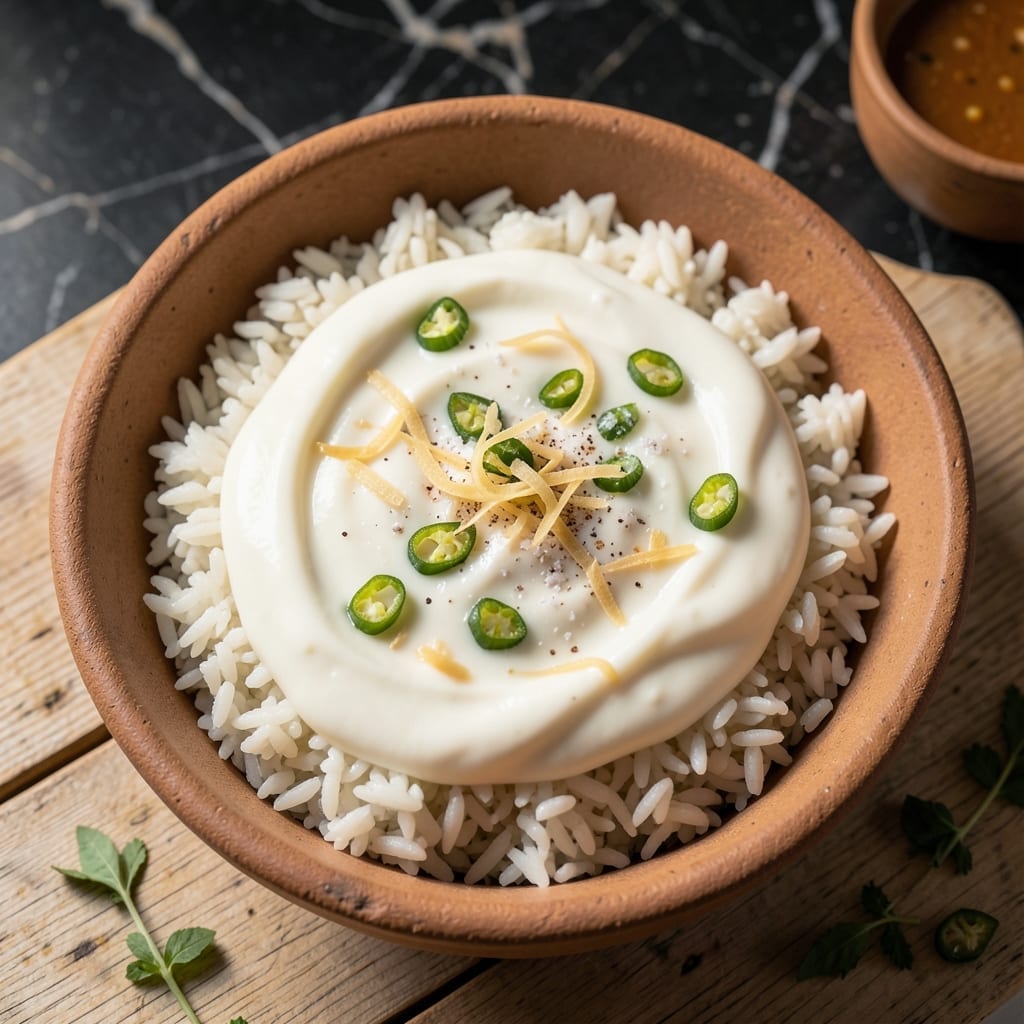
This South Indian comfort dish transforms simple ingredients through natural fermentation into a cooling, tangy meal. I developed this recipe after tasting an authentic version during a visit to Chennai, recreating those complex flavors at home.
The process begins with cooking rice and allowing it to cool before mixing with yogurt. The mixture ferments for several hours, developing that signature tangy flavor that makes this dish so distinctive and refreshing.
What emerges is a dish that’s both soothing and complex – the rice becomes soft yet retains texture, while the yogurt develops a pleasant sourness. It’s traditionally served chilled, often with pickles or papadum on the side.
Perfect for hot days or when you need a light yet satisfying meal. Here’s how to make this traditional favorite.
Ingredients for Fermented Curd Rice
Simple ingredients transform into something magical. Cool, tangy, and utterly satisfying.
| Ingredient | Amount | Notes |
|---|---|---|
| White Rice 🍚 | 2 cups | Short-grain preferred for texture |
| Plain Yogurt 🥛 | 2 cups | Full-fat for best results |
| Water 💧 | 4 cups | For cooking rice |
| Salt 🧂 | 1 tsp | Adjust to taste |
| Green Chilies 🌶️ | 2 whole | Finely chopped for heat |
| Fresh Ginger 🌿 | 1 tbsp | Grated for freshness |
| Curry Leaves 🍃 | 10 pieces | Fresh or dried |
| Mustard Seeds 🌱 | 1 tsp | For tempering |
| Cumin Seeds 🌿 | ½ tsp | Lightly crushed |
| Urad Dal 🌾 | 1 tsp | Split black gram, optional |
| Asafoetida 🌶️ | ¼ tsp | Hing, a pinch |
| Fresh Cilantro 🌿 | ¼ cup | Chopped for garnish |
| Lemon Juice 🍋 | 1 tbsp | Freshly squeezed |
| Vegetable Oil 🫒 | 1 tbsp | For tempering spices |
The yogurt is non-negotiable here—full-fat Indian-style curd (like Amul or Nestlé) gives the right texture and tang. Short-grain rice works best (think sona masoori or any sticky variety), but basmati in a pinch if you rinse it well. Find curry leaves and asafoetida at Indian grocery stores—they’re worth the trip. Skip the urad dal if you can’t find it, but don’t skip the tempering step.
No green chilies? Serrano peppers work just as well. Fresh ginger is ideal, but ground ginger at half the amount in a pinch. Mustard and cumin seeds are the base of the tempering—if you’re missing one, double the other. The cilantro can be swapped with fresh mint for a different twist. And if your yogurt isn’t tangy enough, let it sit out for an hour before mixing.
This tastes even better the next day once the flavors meld. Store in the fridge for up to 3 days—the rice will soak up more yogurt, so add a splash of water or milk when reheating. Always serve chilled for that authentic experience.
Why You’ll Love This Recipe
- 5-Minute Assembly: I just stir cooked rice, yogurt, salt, and a dash of water—no chopping, no fuss. Honestly, the green chilies are optional if I’m in a rush.
- Cooling Summer Bite: That tangy yogurt with the rice hits different on a hot day. The slight kick from the chilies makes it ridiculously good.
- Lunchbox MVP: I pack this for work and it stays fresh all day. My kids even take it to school—no reheating needed.
- Pennywise Comfort: A cup of rice and a tub of yogurt stretch into meals for days. Between us, it’s my go-to when the grocery budget’s tight.
Step-by-Step Instructions for Fermented Curd Rice
This method guarantees the perfect balance of tangy and creamy with minimal effort.
Step 1: Cook and Cool the Rice
Rinse the 2 cups White Rice thoroughly under cold water until the water runs clear. This removes excess starch and prevents the grains from sticking together. Drain well in a fine-mesh strainer.
In a pot, combine the drained rice with the 4 cups Water and bring to a boil over high heat. Once boiling, reduce to low heat, cover, and simmer for 15-18 minutes until the water is absorbed and the rice is tender. Spread the cooked rice on a large plate and let it cool completely to room temperature—this prevents the yogurt from curdling when mixed in.
Step 2: Temper the Yogurt Mixture
In a large bowl, whisk the 2 cups Plain Yogurt until smooth and creamy. Add the 1 tsp Salt and mix well. I always use full-fat yogurt here for the richest texture.
Gradually add the cooled rice to the yogurt, a handful at a time, mixing gently to coat every grain evenly. The mixture should look thick and slightly glossy. If it seems too dry, you can add a splash of water, but the yogurt should fully coat the rice without making it soggy.
Step 3: Prepare the Tempering
Heat the 1 tbsp Vegetable Oil in a small pan over medium heat. Add the 1 tsp Mustard Seeds and let them sizzle until they pop (about 30 seconds). This is when you’ll start to smell their nutty aroma.
Immediately add the 1 tsp Urad Dal, 0.5 tsp Cumin Seeds, and 0.25 tsp Asafoetida. Stir for 10-15 seconds until the dal turns light golden. Then, add the 2 whole Green Chilies (finely chopped), 1 tbsp Fresh Ginger (grated), and 10 pieces Curry Leaves. Sauté for another 30 seconds until the curry leaves become crisp and the ginger turns fragrant.
Step 4: Combine and Ferment
Pour the hot tempering mixture over the rice and yogurt. Using a spatula, fold everything together gently to distribute the spices and oil evenly. The heat from the tempering will slightly warm the rice, enhancing the flavors.
Cover the bowl with a clean kitchen towel or lid and let it sit at room temperature for at least 2 hours (I prefer 4 hours for deeper fermentation). This step develops the signature tangy taste and allows the flavors to meld beautifully.
Step 5: Garnish and Serve
Just before serving, stir in the 1 tbsp Lemon Juice for a bright, citrusy kick. Taste and adjust the salt if needed—the flavors should be bold and well-balanced.
Garnish with the 0.25 cup Fresh Cilantro (chopped) and serve at room temperature or slightly chilled. The rice should be soft yet distinct, with a creamy texture and a tangy, slightly spicy finish that’s pure comfort in every bite.
Pro Tips For Making Fermented Curd Rice
- Cool the Rice: Always use rice that’s completely cooled to room temperature before mixing with yogurt—I learned this the hard way after a few warm batches turned my curd rice sour too fast.
- Use Thick Yogurt: Skip the runny stuff; thick, full-fat plain yogurt gives the creamy texture this dish needs, and it holds up better to the rice without turning watery.
- Avoid Metal Bowls: Mix and store your fermented curd rice in glass or ceramic bowls—metal can react with the yogurt and give it a weird, bitter taste over time.
- Add Salt Last: Stir in the salt just before serving, not earlier; it can slow down fermentation and make the yogurt stiffen up too quickly, especially in warm kitchens.
Troubleshooting fermented curd rice
Over-Fermentation Fix
If your rice turns too sour, stir in ½ cup cold milk or ¼ cup plain yogurt to balance the acidity. I learned this trick after leaving a batch for 6 hours instead of 4—the milk mellowed the tang beautifully without diluting flavor. 💡
Watery Texture Solution
When the mixture seems runny, add ¼ cup cooked and cooled rice to thicken it. Press the rice gently with your hand to remove excess moisture first. This works better than cornstarch, which can alter the authentic texture.
Preventing Curdling
Always ensure rice is completely cool before mixing with yogurt. If you see separation, whisk in 1 tsp cold water to restore creaminess. I test this by pressing rice to my wrist—it should feel room temperature, not warm.
Tempering Troubles
If mustard seeds won’t pop, your oil isn’t hot enough. Heat the 1 tbsp Vegetable Oil until shimmering before adding spices. If they burn, start over—burnt seeds add bitterness that ruins the dish. 🔥
Mild Flavor Boost
For insufficient tang, add 1 extra tbsp lemon juice or let the mixture sit for another 30-60 minutes. Stir well after adding acid to distribute evenly. This saved my first attempt that tasted too bland.
Storage Separation
After refrigeration, if liquid separates, simply stir vigorously before serving. Add 1-2 tbsp cold water if needed to restore creaminess. The flavors actually deepen overnight in my experience.
Nutrition Facts
Frequently Asked Questions
What rice works best for this dish?
Short-grain varieties like sona masoori are ideal. They absorb yogurt well and maintain a soft, sticky texture. Basmati can work if rinsed thoroughly to remove excess starch.
Why does the rice need to cool completely?
Hot rice will curdle the yogurt, ruining the texture. Cooling prevents separation and ensures a creamy finish. Press rice to your wrist—it should feel room temperature.
Can I use Greek yogurt instead?
Yes, but thin it with 2-3 tbsp water first. Greek yogurt is thicker and can make the dish too dense. Regular full-fat yogurt is preferred for authenticity.
How do I fix a too-sour batch?
Stir in ½ cup cold milk or ¼ cup plain yogurt to balance acidity. This mellows the tang without diluting flavor.

- Five Spice Rice Recipe: Aromatic Grains With Warm Spice Balance - October 10, 2026
- Flavoured Basmati Rice Recipe: Aromatic Grains with Spiced Depth - October 10, 2026
- Fish Porridge Rice Cooker Recipe: Hands-Free Congee With Silky Depth - October 10, 2026