
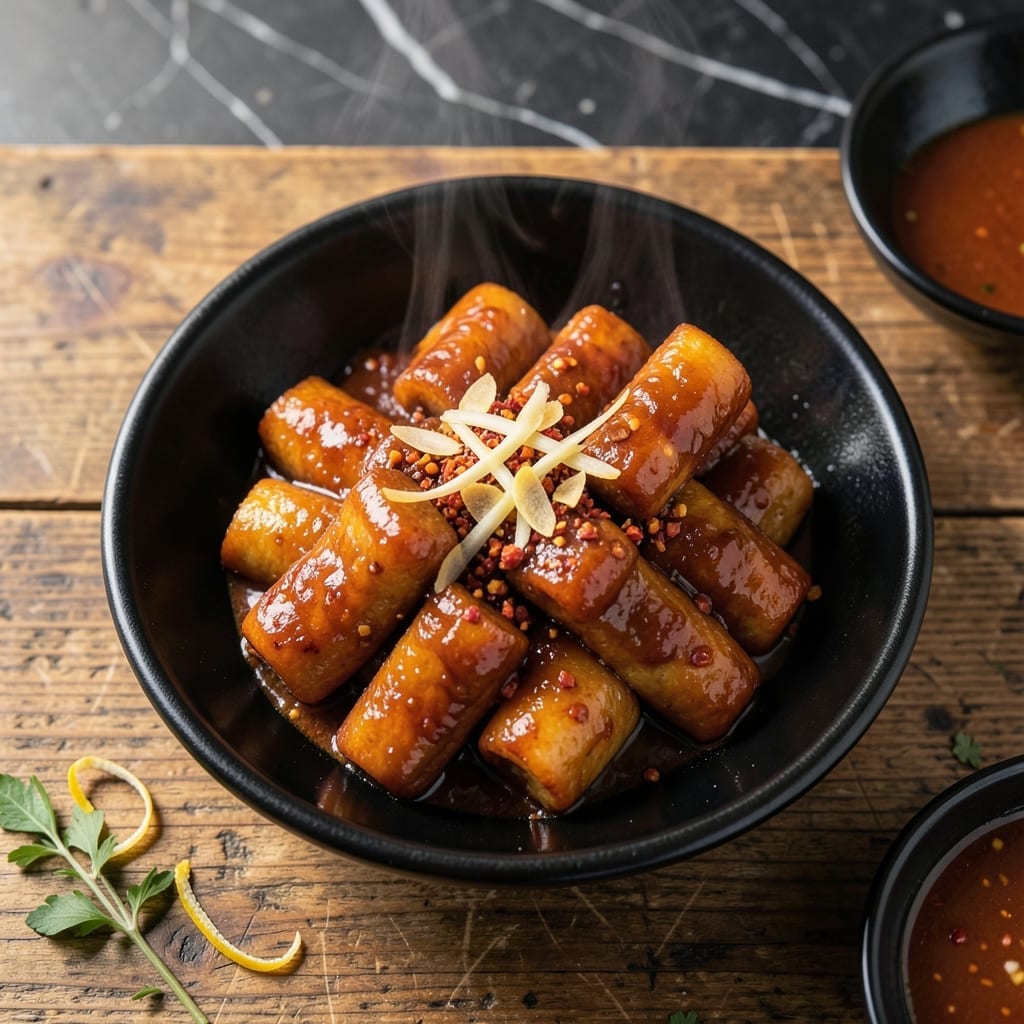
This Korean rice cake stir fry delivers chewy pillows of tteok in a perfectly balanced spicy-sweet glaze. The dish transforms simple ingredients into a restaurant-quality experience with minimal effort.
The secret lies in pre-soaking the rice cakes to achieve the ideal texture before stir-frying. A homemade sauce combines gochujang, sugar, and soy for that signature bold flavor profile.
In 20 minutes, you’ll have a dish that’s both comforting and exciting, with soft rice cakes that absorb the glossy, umami-rich sauce. The aroma alone will have everyone gathering at the table.
Serve as a main course or alongside your favorite proteins. This method guarantees authentic taste every time.
Ingredients for Korean Rice Cake Stir Fry
Simple ingredients transform into chewy, saucy perfection in minutes flat.
| Ingredient | Amount | Notes |
|---|---|---|
| Korean Rice Cakes 🍚 | 1 lb | Pre-soaked for chewy texture |
| Gochujang 🌶️ | 3 tbsp | Korean red pepper paste |
| Soy Sauce 🫒 | 2 tbsp | Low-sodium preferred |
| Brown Sugar 🍯 | 2 tbsp | For sweet balance in sauce |
| Garlic Cloves 🧄 | 4 cloves | Minced for sauce |
| Fresh Ginger 🌿 | 1 tbsp | Grated or minced |
| Sesame Oil 🫒 | 1 tbsp | Toasted for best flavor |
| Vegetable Oil 🫒 | 2 tbsp | For stir-frying |
| Green Onions 🧅 | 4 whole | Thinly sliced for garnish |
| Carrots 🥕 | 1 whole | Julienned or thinly sliced |
| Bell Peppers 🌶️ | 2 whole | Any color, sliced thin |
| Sesame Seeds 🌾 | 1 tbsp | Toasted for garnish |
| Red Pepper Flakes 🔥 | ½ tsp | Adjust for heat preference |
The rice cakes are everything here. Look for cylinder-shaped tteok in the refrigerated section of an Asian market—H Mart or 99 Ranch if you’ve got one nearby. Soak them in warm water for 15-20 minutes (don’t skip this part) to achieve that signature chew. Gochujang is non-negotiable—Sempio or CJ brand are the easiest to find and most reliable. Vegetable oil can be swapped for canola or peanut oil if that’s what you’ve got.
No gochujang? Sriracha plus a pinch of miso paste gets you in the ballpark (not perfect, but workable). Fresh ginger can be replaced with one-third the amount of ground ginger, though fresh is always better. For extra umami, add a splash of vegetable broth. The veggies are flexible—mushrooms, zucchini, or spinach would all work beautifully. Just keep everything cut thin so it cooks fast.
This keeps 3-4 days in the fridge, though it’s best fresh. Leftovers reheat well with a splash of water to loosen the sauce. Freeze without the veggies for up to 3 months—add fresh ones when you reheat.
Why You’ll Love This Recipe
- One Pan Wonder: I just toss the rice cakes with the sauce and let the pan do the work—minimal cleanup, maximum flavor.
- Sweet & Spicy Fix: The gochujang and brown sugar create this ridiculous balance of heat and caramelized goodness that I can’t get enough of.
- Meal Prep Hero: I make a big batch on Sunday and it reheats beautifully for lunches all week. (Yes, even on a Tuesday night)
- Budget Stretcher: A pound of rice cakes costs pennies and feeds my whole family with plenty left over for seconds.
Step-by-Step Instructions for Korean Rice Cake Stir Fry
Here is the method for achieving perfect texture and flavor every time.
Step 1: Soak and Prep the Korean Rice Cakes
Begin by soaking the 1 lb Korean Rice Cakes in warm water for 15-20 minutes. This softens them to achieve that signature chewy texture. Drain well and pat dry with a clean towel—excess water will make the stir fry soggy.
While they soak, thinly slice the 1 whole Carrots and 2 whole Bell Peppers into uniform strips. This ensures even cooking. I like to cut them on a slight bias for better presentation and texture.
Step 2: Make the Spicy-Sweet Sauce
In a bowl, whisk together the 3 tbsp Gochujang, 2 tbsp Soy Sauce, 2 tbsp Brown Sugar, minced 4 cloves Garlic Cloves, and 1 tbsp Fresh Ginger until smooth. The sugar should fully dissolve into the paste—this creates a glossy, clingy sauce.
Add the 1 tbsp Sesame Oil and 0.5 tsp Red Pepper Flakes, then stir to combine. Taste and adjust the heat level now if needed, but remember the flavor will mellow slightly during cooking. Set this aside while you prep the remaining ingredients.
Step 3: Stir-Fry the Vegetables
Heat the 2 tbsp Vegetable Oil in a large skillet or wok over medium-high heat until shimmering. Add the sliced carrots and bell peppers, then stir-fry for 4-5 minutes until they begin to soften but still retain a slight crunch.
Push the vegetables to one side of the pan, then add the drained Korean Rice Cakes. Cook for 2-3 minutes, stirring occasionally, until they start to develop a light golden crust on some edges. This contrast in texture is what makes this dish special.
Step 4: Combine and Finish the Stir Fry
Pour the prepared sauce over the rice cakes and vegetables. Stir everything together gently but thoroughly to coat every piece. Cook for another 3-4 minutes until the sauce thickens slightly and clings to the rice cakes.
The rice cakes should be tender but still chewy, and the vegetables should be crisp-tender. If the sauce reduces too much, add a splash of water to reach your desired consistency.
Step 5: Garnish and Serve Immediately
Remove from heat and stir in half of the thinly sliced 4 whole Green Onions. Transfer to a serving platter and top with the remaining green onions and 1 tbsp Sesame Seeds for crunch and visual appeal.
Serve immediately while hot—the sauce will continue to thicken as it cools. The ideal serving temperature is straight from the pan, with the rice cakes at their peak chewiness and the sauce at its glossiest.
Pro Tips For Making Korean Rice Cake Stir Fry
- Soak the Rice Cakes: I learned this the hard way—dry rice cakes stay rock-hard. Cover them in warm water for 15-20 minutes before cooking, or they’ll never absorb the sauce properly.
- Bloom the Gochujang: Cook the gochujang with the minced garlic in a little oil for 1-2 minutes before adding liquids. This deepens the flavor and removes the raw paste taste.
- Skip the Overcrowding: Stir-fry the rice cakes in batches if needed—dumping them all in at once steams them instead of giving those delicious slightly crispy edges.
- Balance the Sweetness: Taste before adding all the brown sugar. Some gochujang brands are sweeter than others, and you can always adjust but can’t take it out.
Essential Equipment for Perfect Results
Must-Have Pan
A large, heavy wok or stainless steel skillet is essential for even heat distribution. I use my 14-inch carbon steel wok for this—it handles the high heat needed for stir-frying without hot spots. Avoid nonstick for this dish as the sauce needs to reduce properly. 🔥
Wooden Utensils
Use a wooden spatula or tongues to gently toss the rice cakes without crushing them. The rice cakes are delicate when hot, so avoid metal utensils that can tear them. A bamboo stir-fry paddle works beautifully for this.
Prep Tools
A sharp chef’s knife makes quick work of the veggies. I recommend 8-inch Wüsthof for precision cuts. A mandoline can help with consistent julienned carrots, but isn’t required. Always keep your knives sharp for safety.
Mixing Bowls
Have 2-3 mixing bowls ready for prepping ingredients. I use stainless steel because they’re lightweight and easy to clean. One bowl for the sauce, one for soaking rice cakes, and another for prepped veggies keeps your workflow efficient.
Measuring Essentials
Accurate measurements matter for the sauce balance. I keep my set of measuring spoons and glass measuring cups within reach. The sauce comes together quickly, so having everything pre-measured saves time during cooking.
Serving Dish
Use a wide, shallow platter for serving to showcase the glossy sauce. I love my stoneware serving bowl from a local Korean market—it retains heat beautifully. The wide surface allows the sauce to pool attractively around the rice cakes. ✨
Nutrition Facts
Frequently Asked Questions
Can I use frozen rice cakes instead of fresh?
Yes, but thaw them completely in warm water for 20-25 minutes first. Frozen rice cakes need extra soaking to achieve the right chewy texture. Avoid microwaving, as it can make them mushy.
How do I adjust the spice level?
Reduce or omit the red pepper flakes and use less gochujang. For milder heat, substitute some gochujang with 1 tbsp tomato paste plus 1 tsp sugar. Taste as you go.
What if my sauce is too thick?
Stir in 1-2 tbsp water or vegetable broth to thin it out. Cook for another 1-2 minutes to let the flavors meld. The sauce should coat the rice cakes lightly but not be watery.
Can I add protein to this dish?
Add cooked shrimp, chicken, or tofu during the final 2-3 minutes of cooking. Fish cakes or thinly sliced beef also pair well. Just ensure proteins are pre-cooked before adding.

- Jollof Rice Sauce Recipe: West African Tomato and Spice Infusion - September 25, 2026
- Japanese Rice Soup Recipe: Umami-Rich Comfort in a Bowl - September 25, 2026
- Homemade Cream Of Rice Recipe: Silk-Smooth Breakfast in Minutes - September 25, 2026