
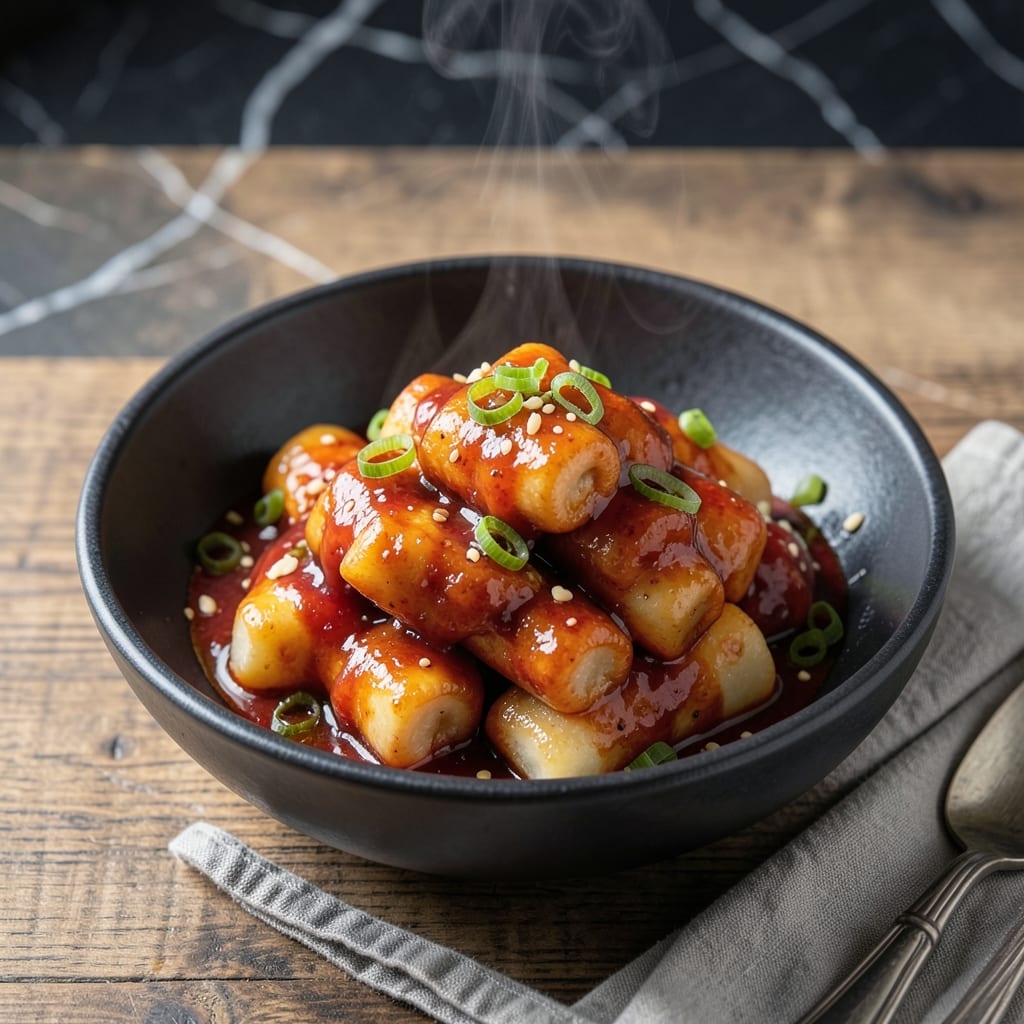
There’s a reason tteokbokki is Korea’s ultimate street food—each bite delivers chewy rice cakes swimming in a spicy-sweet sauce that’s both bold and balanced. I perfected this version after testing multiple gochujang brands to find the ideal heat level.
The sauce comes together in minutes with pantry staples, while the rice cakes soak up every bit of flavor as they soften. A touch of sugar tempers the heat, creating that signature addictive taste.
You’ll end up with glossy, tender rice cakes coated in a rich, vibrant sauce that clings perfectly. Add boiled eggs or fish cakes for texture, or keep it simple for a classic approach.
This dish comes together in under 20 minutes, making it a quick yet impressive meal. The flavors deepen as it sits, so leftovers taste even better the next day.
Ingredients for Korean Spicy Rice Cake Tteokbokki
Chewy rice cakes and pantry staples deliver bold Korean street food flavors in minutes.
| Ingredient | Amount | Notes |
|---|---|---|
| Korean Rice Cakes 🍙 | 1 lb | Cylindrical tteok, fresh or frozen |
| Gochujang 🌶️ | ½ cup | Korean red pepper paste, adjust for heat |
| Granulated Sugar 🍚 | 3 tbsp | Balances the spicy heat |
| Soy Sauce 🫕 | 2 tbsp | Low-sodium preferred for control |
| Garlic Cloves 🧄 | 4 cloves | Minced for depth of flavor |
| Sesame Oil 🫒 | 1 tbsp | Toasted for nutty aroma |
| Green Onions 🧅 | 4 whole | Thinly sliced for garnish |
| Dried Red Pepper Flakes 🌶️ | 1 tsp | Optional for extra heat |
| Sesame Seeds 🌰 | 1 tsp | Toasted for garnish |
| Vegetable Stock 🥕 | 1 cup | Low-sodium to control saltiness |
| Hard-Boiled Eggs 🥚 | 2 whole | Optional for texture |
| Korean Fish Cakes 🐟 | 4 pieces | Optional protein addition |
The rice cakes are everything—fresh cylindrical tteok from an Asian market (look in the refrigerated section) gives you that perfect chew. If frozen, thaw them first. H Mart or Korean grocery stores carry the best gochujang brands like Sempio or Chung Jung One. I always grab an extra tube since it keeps forever in the fridge. The quality difference between fresh and old rice cakes is night and day.
No gochujang? Miso paste plus sriracha at a 2:1 ratio gets you close but won’t be authentic. For extra heat, add gochugaru (Korean chili flakes). The soy sauce can be tamari for gluten-free. If using fish cakes, check for vegetarian versions at Asian markets. Sugar can be swapped with honey (but skip for vegan) or corn syrup in a pinch.
Leftover tteokbokki keeps 3-4 days in the fridge and actually tastes better as flavors meld. Freeze the sauce separately for up to 3 months—just reheat with fresh rice cakes (they don’t freeze well). Store gochujang in the fridge after opening for 1 year.
Why You’ll Love This Recipe
- One Pot Wonder: I love that this comes together in a single pan—just the rice cakes, gochujang, and a few other staples simmering away.
- Sweet Heat Balance: The sugar cuts through the gochujang’s spice in the most addictive way, while the garlic adds depth.
- Weeknight Lifesaver: Honestly, it’s my go-to when I need something fast but still crave bold Korean flavors.
- Budget Friendly: A bag of rice cakes and a jar of gochujang stretch across multiple meals without breaking the bank.
Step-by-Step Instructions for Korean Spicy Rice Cakes
This method delivers perfectly chewy rice cakes in a rich, balanced spicy-sweet sauce every time.
Step 1: Prepare the Rice Cakes and Aromatics
If using frozen 1 lb Korean Rice Cakes, soak them in warm water for 15-20 minutes until soft but still firm to the touch. Drain thoroughly—excess water will dilute your sauce. Meanwhile, mince the 4 cloves Garlic Cloves finely and thinly slice the 4 whole Green Onions, separating whites and greens.
This soaking step is crucial for frozen rice cakes; fresh ones can go straight into the sauce. The rice cakes should plump up slightly but retain their cylindrical shape. Pat them dry with a clean towel to ensure the sauce clings properly rather than pooling at the bottom of the pan.
Step 2: Build the Spicy-Sweet Sauce Foundation
In a large, deep skillet or wok, heat the 1 tbsp Sesame Oil over medium heat until shimmering. Add the minced garlic and the white parts of the green onions, sautéing for 30-45 seconds until fragrant but not browned. You want to bloom the aromatics without burning them.
Stir in the 0.5 cup Gochujang, 3 tbsp Granulated Sugar, and 2 tbsp Soy Sauce. Cook for 1-2 minutes, stirring constantly, until the paste darkens slightly and the sugar begins to melt. This creates a rich, glossy base that will coat every rice cake evenly.
Step 3: Simmer the Rice Cakes in Sauce
Pour in the 1 cup Vegetable Stock and stir to combine, then add the drained 1 lb Korean Rice Cakes. If including protein, add the 4 pieces Korean Fish Cakes now. Bring to a gentle simmer over medium-high heat, then reduce to medium-low.
Cook for 8-10 minutes, stirring occasionally, until the rice cakes are tender and the sauce thickens to a glossy consistency that clings to the back of a spoon. The sauce should reduce by about a third, becoming rich and slightly sticky. If it thickens too quickly, add a splash of water.
Step 4: Finish with Garnishes and Serve
Once the rice cakes are perfectly chewy and the sauce has reached your desired consistency, stir in the 1 tsp Dried Red Pepper Flakes for an extra kick if desired. Taste and adjust seasoning—you might want a touch more sugar if it’s too spicy, or a splash of stock if it’s too thick.
Transfer to serving bowls and garnish with the sliced green onion greens, 1 tsp Sesame Seeds, and halved 2 whole Hard-Boiled Eggs if using. Serve immediately while hot—the rice cakes absorb the sauce as they cool, so timing matters. Each bite should deliver a perfect balance of chewy texture and spicy-sweet heat.
Pro Tips For Making Korean Spicy Rice Cake Tteokbokki
- Soak the Rice Cakes: I learned this the hard way—if using frozen or dried rice cakes, soak them in warm water for 10-15 minutes first. Otherwise, they’ll stay rock-hard no matter how long you cook them.
- Bloom the Gochujang: Cook the gochujang, sugar, and garlic in the oil for 1-2 minutes before adding liquid. It deepens the flavor and removes that raw paste taste.
- Skip the Boiling: Resist the urge to dump all the water in at once. Start with just enough to coat the rice cakes, then add more as it thickens—this keeps the sauce clingy, not soupy.
- Finish with Soy: Stir in the soy sauce at the very end, not the beginning. It brightens the flavor without making the sauce taste flat or overly salty early on.
Regional Styles of korean spicy rice cake tteokbokki
Seoul Street Style
This is the classic you’ll find at every food stall in Myeongdong. Vendors use fresh cylindrical rice cakes and a generous hand with gochujang for that signature bright red sauce. The addition of fish cakes and boiled eggs makes it a complete meal. 🗺️
Royal Court Tteokbokki
In the palace, they created a milder version called ganjeol tteokbokki using soy sauce instead of gochujang. The sauce is lighter in color but rich with beef broth and mushrooms. It was served to royalty who preferred less heat.
Busan Seafood Twist
Coastal regions add fresh seafood to their tteokbokki. Try including shrimp or squid along with the rice cakes. The seafood absorbs the spicy sauce beautifully, creating a unique fusion of land and sea flavors.
Jeonju Vegetarian
This temple-style version omits all animal products. Use mushroom stock instead of vegetable, and add tofu or shitake mushrooms for protein. The gochujang provides plenty of flavor without meat.
Modern Fusion
Korean restaurants in LA often add cheese to their tteokbokki, creating a stretchy, gooey topping. The sweetness of the sauce pairs surprisingly well with mozzarella. I was skeptical at first but now make it this way at home. 💛
Spicy Army Stew
Called budae jjigae, this variation includes ramen noodles, Spam, and hot dogs alongside the rice cakes. It originated post-Korean War using military ration ingredients. The extra textures make it heartier.
Nutrition Facts
Frequently Asked Questions
What can I use if I don’t have gochujang?
Mix 2 tbsp miso paste with 1 tbsp sriracha for a similar depth. It won’t be identical but works in a pinch. For authenticity, order gochujang online or check specialty stores.
How do I prevent the rice cakes from sticking?
Use a non-stick pan and stir frequently while cooking. Soak frozen rice cakes in warm water for 15-20 minutes first to soften them. A splash of oil in the sauce also helps.
Can I make this dish less spicy?
Reduce gochujang to 3 tbsp and add 1 extra tbsp sugar for balance. For mild heat, use 1 tbsp gochugaru (chili flakes) instead. Taste as you go.
How long does it keep in the fridge?
Store in an airtight container for 3-4 days. The flavors deepen over time. Reheat with a splash of water to loosen the sauce.

- Rice Pudding Recipe With Eggs and Milk: Old-Fashioned Custard-Style Comfort - September 30, 2026
- Rice Noodle Sauce Recipe: Bold Umami Depth for Authentic Stir-Fry - September 30, 2026
- Rice Pilaf Recipe: Fragrant Basmati With Toasted Vermicelli - September 30, 2026