
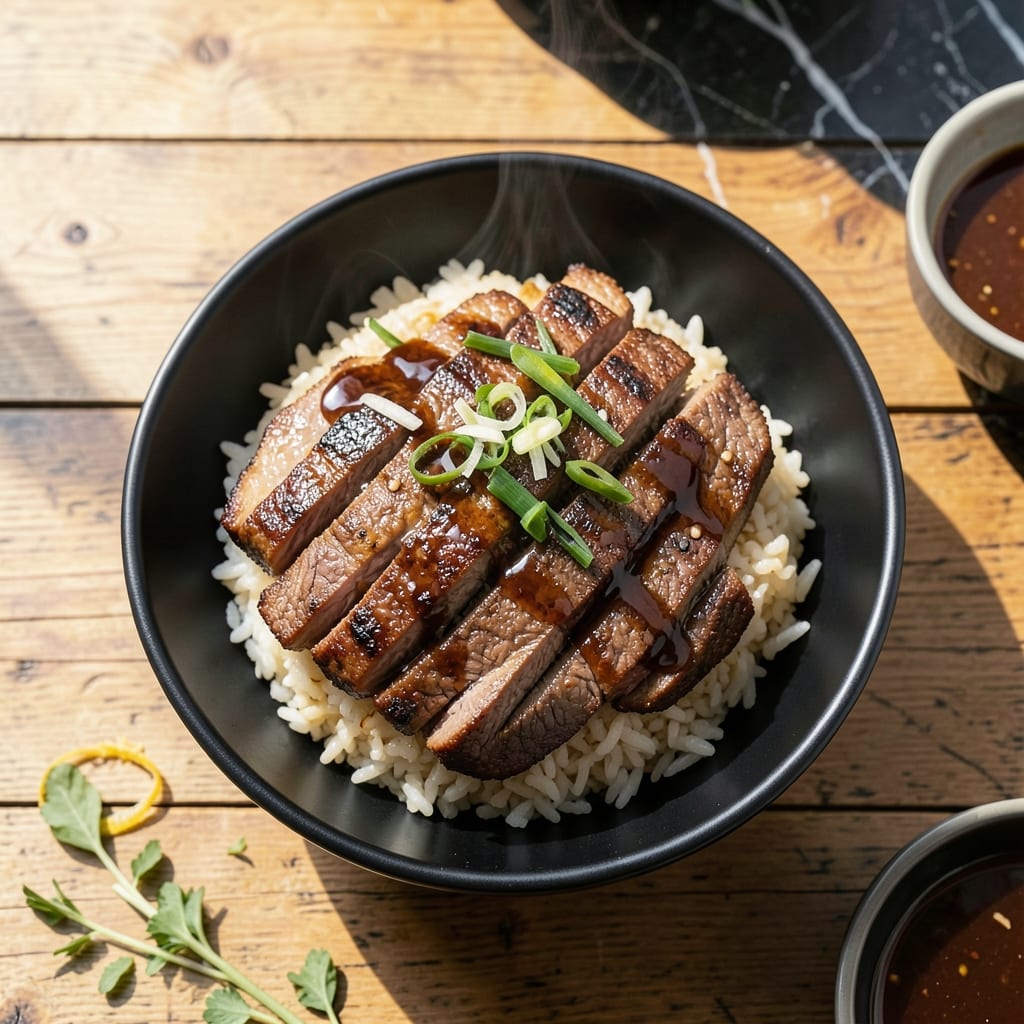
This dish brings bold Korean flavors to your dinner table with tender marinated beef served over fluffy rice.
I developed this recipe to capture the essence of Korean bulgogi in a simple, home-cooked format. The beef marinates in a savory-sweet blend of soy sauce, brown sugar, and garlic, creating layers of depth in every bite.
The steak cooks quickly at high heat, developing a caramelized crust while staying juicy inside. When served over steamed rice, the flavors meld together perfectly, with the rice soaking up the rich sauce.
This creates a balanced meal that’s satisfying yet approachable for weeknight cooking.
Ingredients for Korean Steak Rice Bowl
Thinly sliced ribeye, a sweet-savory marinade, and fluffy jasmine rice make this dish sing.
| Ingredient | Amount | Notes |
|---|---|---|
| Ribeye Steak 🥩 | 1 ½ lb | Thinly sliced against the grain |
| Soy Sauce 🫒 | ½ cup | Low-sodium preferred for balance |
| Brown Sugar 🍚 | ¼ cup | Packed for sweetness depth |
| Garlic Cloves 🧄 | 6 cloves | Minced for marinade infusion |
| Fresh Ginger 🌿 | 1 tbsp | Grated for aromatic kick |
| Sesame Oil 🫒 | 2 tbsp | Toasted for nutty flavor |
| Rice Vinegar 🍶 | 2 tbsp | Balances sweet and savory |
| Asian Pear 🍐 | ½ whole | Grated for natural tenderizer |
| Green Onions 🧅 | 4 whole | Thinly sliced for garnish |
| Jasmine Rice 🍚 | 2 cups | Uncooked, rinsed before cooking |
| Sesame Seeds 🌰 | 2 tbsp | Toasted for garnish |
| Vegetable Oil 🫒 | 2 tbsp | High smoke point for searing |
| Black Pepper 🌶️ | 1 tsp | Freshly ground for best flavor |
| Red Pepper Flakes 🌶️ | ½ tsp | Optional for heat |
The beef is everything here. Ribeye gives you that buttery richness—flank or sirloin work too but need extra marinating time. Most Asian markets will slice it thin for you if you ask (or freeze it 30 minutes first, then slice at home). Look for good marbling, which means more flavor. The Asian pear is the secret tenderizer—don’t skip it (Bosc pear works in a pinch).
No Asian pear? Kiwi or pineapple does the same meat-tenderizing trick. Out of rice vinegar? Apple cider vinegar at the same amount works. If you’re avoiding sugar, swap the brown sugar for coconut sugar or maple syrup. The soy sauce can be tamari for gluten-free. Fresh ginger is best, but ground ginger at one-third the amount gets you close.
Marinated beef keeps 3-4 days in the fridge—actually gets better overnight. Cooked bowls store 4 days (reheat gently to keep the rice fluffy). Freeze the raw marinated beef for up to 3 months (thaw in fridge before cooking).
Why You’ll Love This Recipe
- One Pan Meal: I toss the ribeye in the soy-ginger-garlic mix and let the oven do the rest—minimal cleanup, maximum flavor.
- Sweet-Savory Bomb: The brown sugar caramelizes with the soy sauce, creating this sticky, umami-packed glaze that clings to every bite of steak.
- Meal Prep Hero: I make a big batch on Sunday and it reheats beautifully for lunches—still tender, still delicious.
- Budget-Friendly Luxe: Ribeye feels fancy, but stretched over rice with those bold flavors, it feeds my family without breaking the bank.
Step-by-Step Instructions for Korean Steak Rice Bowl
Here’s my tested method for achieving restaurant-quality results with minimal effort.
Step 1: Thinly Slice and Marinate the Ribeye
Begin by slicing the 1.5 lb ribeye steak thinly against the grain. This shortens the muscle fibers, ensuring each bite is melt-in-your-mouth tender. Place the slices in a large bowl and set aside.
In a separate bowl, whisk together the 0.5 cup soy sauce, 0.25 cup brown sugar, 6 cloves minced garlic, 1 tbsp fresh ginger, 2 tbsp sesame oil, 2 tbsp rice vinegar, and 0.5 grated Asian pear. The pear contains enzymes that naturally tenderize the beef while adding subtle sweetness.
Pour the marinade over the sliced ribeye, making sure each piece is well coated. Cover and refrigerate for at least 2 hours, or overnight for maximum flavor penetration. Stir the mixture once or twice during marinating to ensure even coverage.
Step 2: Cook the Jasmine Rice to Perfection
Rinse the 2 cups jasmine rice under cold water until the water runs clear. This removes excess starch and prevents gummy texture. Use a 1:1.25 rice-to-water ratio (so 2.5 cups water for the rice) in a pot with a tight-fitting lid.
Bring to a boil, then immediately reduce heat to low, cover, and simmer for 15 minutes. After 15 minutes, turn off the heat and let it steam, covered, for another 10 minutes. Fluff with a fork just before serving—the grains should be separate, fragrant, and slightly sticky.
This method guarantees fluffy, restaurant-style rice that soaks up the beef’s flavorful juices.
Step 3: Sear the Marinated Beef
Heat 2 tbsp vegetable oil in a large skillet or wok over medium-high heat. When the oil shimmers, add the marinated beef in a single layer, working in batches if necessary to avoid overcrowding. Overcrowding steams the beef instead of searing it.
Cook undisturbed for 2-3 minutes until the edges turn deep brown and caramelized. Flip and cook for another 1-2 minutes until fully cooked but still juicy. The sugar in the marinade will create a beautiful glaze on the beef.
Sprinkle with 1 tsp black pepper and 0.5 tsp red pepper flakes (if using) during the last minute of cooking for a subtle kick.
Step 4: Assemble and Garnish the Rice Bowls
Divide the cooked jasmine rice among four bowls. Top each with a generous portion of the seared beef, arranging it attractively. Drizzle any remaining marinade from the pan over the beef for extra flavor.
Garnish with thinly sliced green onions and 2 tbsp toasted sesame seeds. The sesame seeds add a nutty crunch that contrasts beautifully with the tender beef. Serve immediately while the beef is hot and the rice is steaming.
Each bowl should have a balance of rice, beef, and garnishes, with the sesame seeds and green onions adding color and texture to every bite.
Pro Tips For Making Korean Steak Rice Bowl
- Slice Against the Grain: Cut the ribeye into thin strips against the grain after cooking—this shortens the muscle fibers and makes every bite tender, not chewy.
- Bloom the Aromatics: Cook the minced garlic and ginger in a little oil for 30 seconds before adding the soy sauce and brown sugar. I learned this the hard way—raw garlic in the marinade can taste harsh.
- Don’t Overcrowd the Pan: Sear the steak in batches if needed. Steer clear of cramming it all in at once, or you’ll end up steaming it instead of getting that caramelized crust.
- Rest Before Slicing: Let the steak rest for 5-10 minutes under foil after cooking. Sounds weird, but it keeps all the juices in the meat where they belong, not on your cutting board.
Flavor Customization for korean steak rice bowl
Spice Level Adjustments
For mild heat, add only ¼ tsp red pepper flakes to the marinade. I often do this when cooking for kids or sensitive palates. The dish still gets a subtle warmth without overwhelming the other flavors.
Extra Garlicky Version
Double the garlic to 12 cloves for a more pungent, aromatic experience. I love this when I’m craving bold flavors. The garlic mellows during marinating and cooking, so it won’t be harsh.
Sweet & Spicy Twist
Add 1 tbsp gochujang (Korean chili paste) to the marinade for depth. This creates a beautiful balance of sweet, spicy, and umami. I mix it with the soy sauce before adding to the beef. 🌶️
Citrus Brightness
Incorporate zest of 1 orange and 2 tbsp orange juice to the marinade. This adds a fresh, bright contrast to the rich beef. I find it pairs especially well with the sesame garnish.
Umami Boost
Stir in 1 tbsp fish sauce and 1 tsp soy sauce to the marinade. This amplifies the savory depth without making it fishy. I discovered this trick at a Korean BBQ restaurant in LA.
Herb Infusion
Mix in 2 tbsp chopped cilantro and 1 tbsp mint to the marinade. The herbs add a fresh, aromatic layer that brightens the dish. I like to add extra fresh herbs as garnish too.
Nutrition Facts
Frequently Asked Questions
Can I use a different cut of beef?
Yes! While ribeye is ideal, flank or sirloin work well too. Just slice thinly against the grain and marinate for 4-6 hours to ensure tenderness.
How do I prevent the rice from getting mushy?
Rinse the jasmine rice thoroughly before cooking and use a 1:1.25 rice-to-water ratio. Let it steam, covered, for 10 minutes after cooking.
Can I make this dish ahead of time?
Marinate the beef for up to 24 hours in the fridge. Cook the rice and beef just before serving for the best texture.
What can I substitute for Asian pear?
Kiwi or pineapple work as natural tenderizers. Use 2 tbsp grated kiwi or ¼ cup crushed pineapple per pound of beef.

- Mujadara Rice and Lentils Recipe: Earthy Spiced Lentils With Caramelized Onions - November 1, 2026
- Naija Fried Rice Recipe: Street-Style Spice With Veggie Crunch - November 1, 2026
- Mushy Rice Recipe: Fluffy Grains Transformed in Minutes - November 1, 2026