
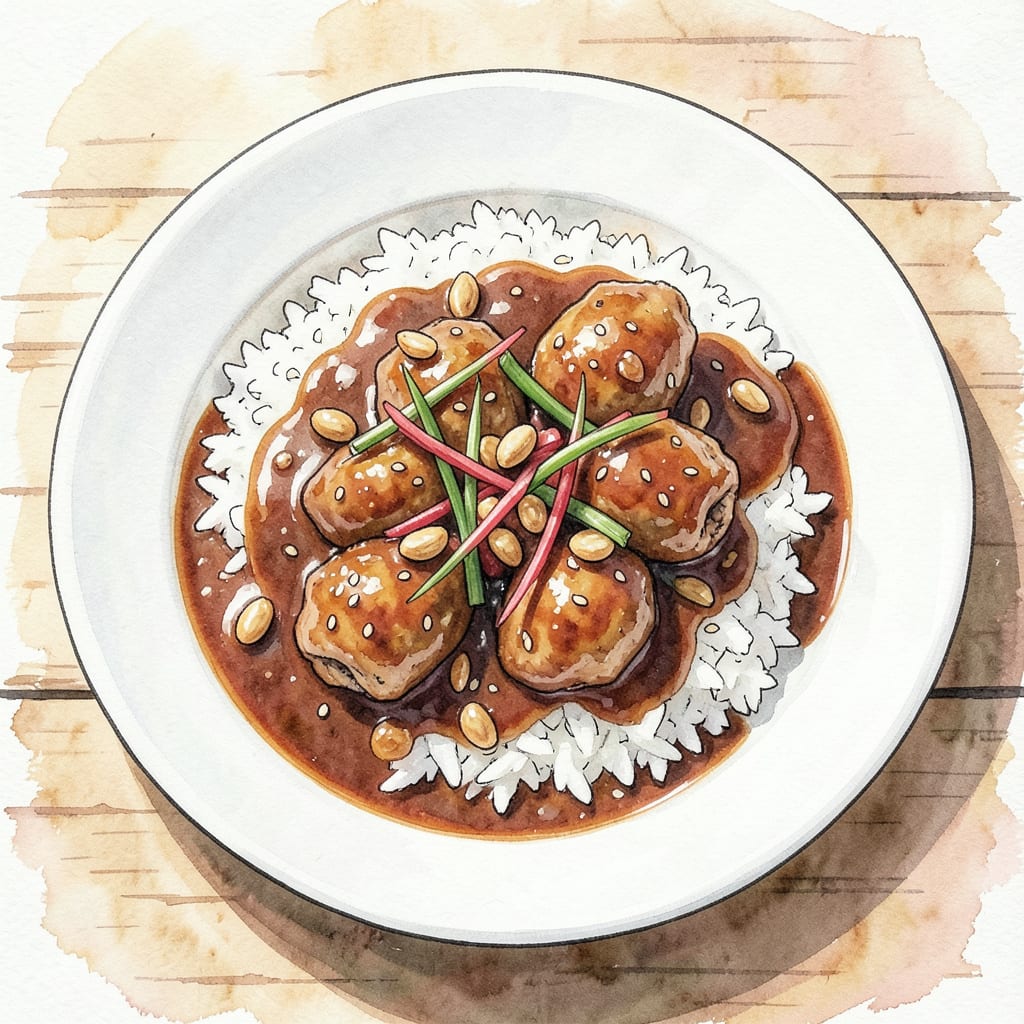
I’ve perfected my Kung Pao chicken sauce recipe to capture the authentic flavors of Sichuan cuisine. This savory and spicy condiment is a game-changer for elevating your stir-fries and noodle dishes with its rich, complex flavor profile.
With just a few ingredients and simple instructions, you’ll be able to create a perfect Kung Pao sauce that’s sure to become a staple in your kitchen, adding depth and excitement to your favorite Chinese-inspired recipes.
Ingredients for Kung Pao Chicken Sauce
These essential ingredients create a rich, complex Kung Pao sauce that’s truly authentic.
| Ingredient | Amount | Notes |
|---|---|---|
| Soy Sauce 💧 | ½ cup | Use low-sodium variety for best flavor |
| Shaoxing Wine 🍺 | ¼ cup | Or dry sherry as substitute |
| Rice Vinegar 🍋 | 2 tbsp | Unseasoned rice vinegar preferred |
| Cornstarch 🌾 | 2 tbsp | For thickening the sauce |
| Sesame Oil 🫒 | 1 tbsp | Toasted sesame oil for nuttiness |
| Sichuan Peppercorns 🌿 | 1 tsp | Toasted and ground for best flavor |
| Red Pepper Flakes 🔥 | ½ tsp | Adjust for desired heat level |
| Garlic Cloves 🧄 | 3 cloves | Minced for maximum flavor |
| Ginger 🌿 | 1 tbsp | Freshly grated for best results |
Sichuan peppercorns are non-negotiable here—their unique numbing flavor is what makes Kung Pao ‘Kung Pao’. Toast whole peppercorns in a dry pan until fragrant, then grind in a spice grinder. For the chili heat, use Szechuan hot chili oil if you have it, or regular red pepper flakes as a fallback. The Shaoxing wine adds depth—dry sherry works too if you don’t have the real deal.
No Shaoxing wine? Dry sherry or Japanese mirin can substitute, though the flavor will be slightly different. For a gluten-free version, tamari or coconut aminos replace soy sauce nicely. If you like a thicker sauce, add a bit more cornstarch (start with an extra teaspoon). The garlic and ginger should be minced/pureed to release their oils and flavor fully.
This sauce keeps for 2 weeks in the fridge, though it rarely lasts that long. Store in an airtight container—the sesame oil on top helps prevent oxidation. If it thickens too much in the fridge, whisk in a tablespoon of water to loosen it back up. Freezes well too—portion into ice cube trays for single servings.
Step-by-Step Instructions for Kung Pao Chicken Sauce
Creating this savory and spicy condiment is straightforward with these detailed steps.
Step 1: Toast and Grind Sichuan Peppercorns
Start by toasting the 1 tsp Sichuan Peppercorns in a small dry pan over medium heat for 2-3 minutes, stirring frequently, until fragrant. Watch for the peppercorns to start smoking slightly—that’s when you know they’re ready.
Let the peppercorns cool completely, then grind them in a spice grinder or mortar and pestle until you achieve a fine powder. This step is crucial for releasing the peppercorns’ unique flavor and aroma. Set the ground Sichuan peppercorns aside for later use.
Step 2: Prepare the Sauce Base
In a medium bowl, whisk together the 0.5 cup Soy Sauce, 0.25 cup Shaoxing Wine, and 2 tbsp Rice Vinegar until well combined. The mixture should be smooth and free of any lumps.
Add the 2 tbsp Cornstarch to the bowl and whisk until the cornstarch is fully dissolved. This step is important for achieving the right consistency in the final sauce. Make sure there are no lumps remaining.
Step 3: Cook the Aromatics
Heat the 1 tbsp Sesame Oil in a small saucepan over medium heat. Once the oil is hot and shimmering, add the 3 cloves Garlic Cloves and 1 tbsp Ginger. Cook for 1-2 minutes, stirring constantly, until the aromatics are fragrant and slightly softened. Be careful not to let them burn.
You’ll know they’re ready when you can smell the garlic and ginger aroma filling your kitchen. This step lays the foundation for the sauce’s depth of flavor.
Step 4: Combine and Thicken the Sauce
Pour the prepared sauce base into the saucepan with the aromatics. Add the ground Sichuan peppercorns and 0.5 tsp Red Pepper Flakes. Whisk constantly over medium heat until the sauce comes to a boil.
Continue cooking for another 2-3 minutes, or until the sauce has thickened to your desired consistency. You’ll know it’s ready when it coats the back of a spoon. Remove from heat immediately to prevent over-thickening.
Step 5: Finish and Store the Sauce
Strain the sauce through a fine-mesh sieve into a clean glass jar to remove the solids. This step ensures a smooth sauce. Let it cool to room temperature before sealing the jar.
The Kung Pao chicken sauce is now ready to use. Store any leftovers in the refrigerator for up to 2 weeks. Reheat gently before using to maintain the sauce’s texture and flavor.
Regional Styles of This Dish
Sichuan Province Origins
The classic Kung Pao sauce originates from Sichuan Province, known for its bold flavors and spicy dishes. This region’s cuisine is characterized by the use of Sichuan peppercorns and chili peppers, which create a unique numbing and spicy sensation. The sauce is named after Ding Baozhen, a late Qing Dynasty governor known for his love of spicy food.
Regional Variations
While traditional Sichuan Kung Pao sauce is known for its intense heat, modern adaptations have toned down the spiciness for Western palates. Some versions use milder chili flakes or reduce the amount of red pepper flakes. Regional variations might also incorporate local ingredients like different types of vinegar or soy sauce.
Global Adaptations
As Kung Pao chicken gained popularity worldwide, the sauce recipe adapted to local tastes. For example, American versions often use hoisin sauce to add sweetness, while Thai adaptations might include fish sauce for umami flavor. These variations demonstrate the sauce’s versatility in different culinary contexts.
Authentic Sichuan Characteristics
Traditional Sichuan Kung Pao sauce is distinguished by its use of Sichuan peppercorns, which provide a unique numbing flavor. The sauce also typically includes chili peppers or chili bean paste for intense heat. To achieve authentic flavor, it’s essential to toast and grind the Sichuan peppercorns fresh.
Modern Twists
Contemporary recipes often modify the classic Kung Pao sauce by adjusting the level of spiciness or adding new ingredients. Some variations might include honey for sweetness or rice vinegar for acidity. These modern twists allow cooks to personalize the sauce to their taste preferences while maintaining its core characteristics. 🔥
Nutrition Facts
Frequently Asked Questions
How long does homemade Kung Pao sauce last?
Homemade Kung Pao sauce typically lasts for up to 2 weeks when stored properly in an airtight container in the refrigerator. The sesame oil on top helps preserve the sauce. If it thickens too much, whisk in a tablespoon of water to loosen it.
Can I make Kung Pao sauce without Sichuan peppercorns?
While you can make the sauce without Sichuan peppercorns, they provide a unique numbing flavor that’s characteristic of authentic Kung Pao sauce. If you can’t find them, you can omit or substitute with a combination of black peppercorns and lemon zest, though the flavor will be different.
How can I adjust the spiciness of the sauce?
To adjust the spiciness, modify the amount of red pepper flakes or omit them entirely for a milder sauce. For extra heat, add more red pepper flakes or incorporate diced fresh chilies into the sauce while it cooks.
Can I freeze Kung Pao sauce?
Yes, you can freeze Kung Pao sauce for longer storage. Portion it into ice cube trays, then transfer the frozen cubes to a freezer-safe bag. Frozen sauce keeps for up to 3 months. Thaw in the refrigerator or reheat gently before using.

- Jollof Rice Sauce Recipe: West African Tomato and Spice Infusion - September 25, 2026
- Japanese Rice Soup Recipe: Umami-Rich Comfort in a Bowl - September 25, 2026
- Homemade Cream Of Rice Recipe: Silk-Smooth Breakfast in Minutes - September 25, 2026