
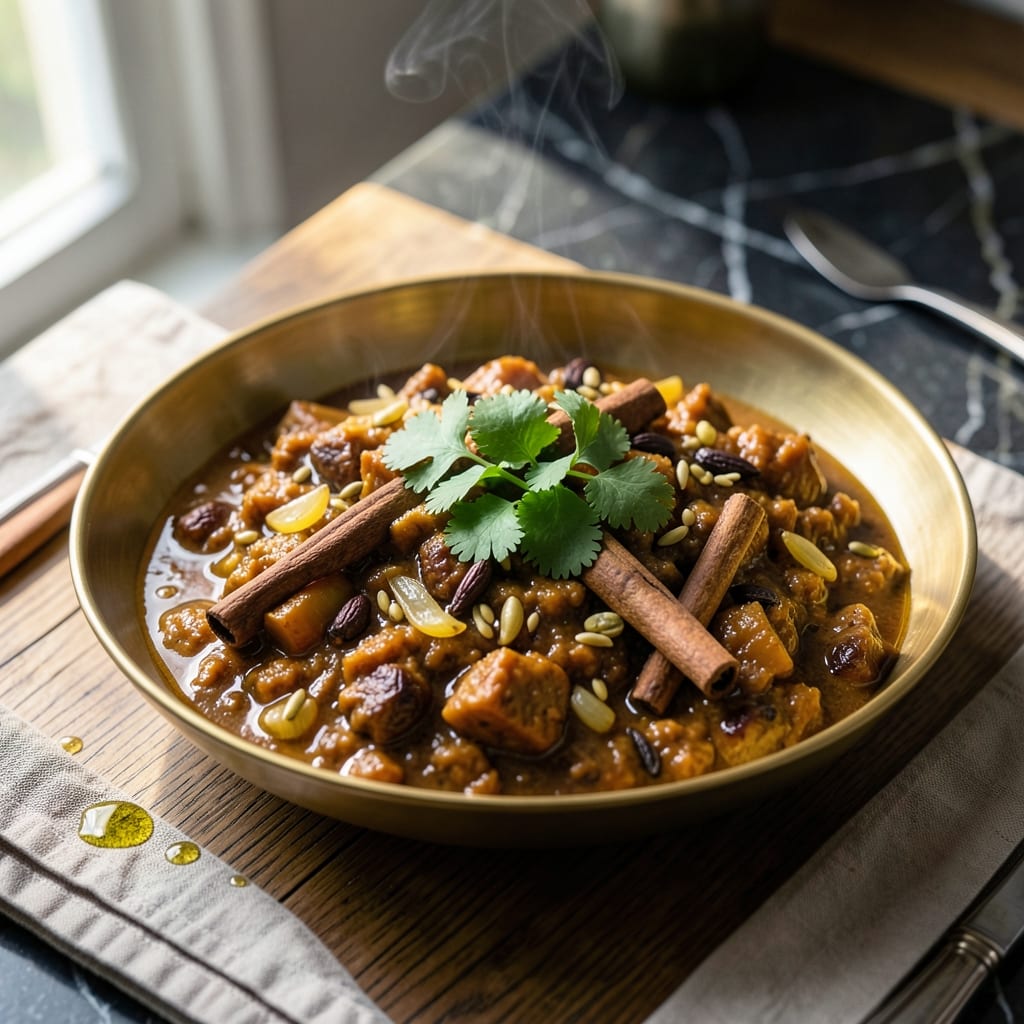
This fragrant kurma delivers a perfect balance of warm spices and creamy texture, designed specifically to complement steamed rice. I developed this version after years of testing different spice blends to achieve authentic depth without overwhelming heat.
The secret lies in blooming whole spices in hot oil before building the sauce. This traditional technique releases essential oils that infuse the gravy with complex aromas. Coconut milk creates a velvety finish that coats every grain of rice beautifully.
You’ll achieve a rich, golden curry with tender vegetable pieces suspended in a thick, aromatic sauce. The flavors develop slowly as it simmers, creating layers of taste that improve with time.
Ideal for special occasions or everyday meals, this kurma transforms simple rice into a complete, satisfying dish. The recipe scales easily for gatherings.
Ingredients for Kurma for Rice
A harmonious blend of whole spices, fresh aromatics, and creamy coconut milk builds this rich gravy.
| Ingredient | Amount | Notes |
|---|---|---|
| Vegetable Oil 🫒 | 3 tbsp | For blooming whole spices |
| Cinnamon Stick 🌿 | 1 whole | Lightly toasted for aroma |
| Green Cardamom Pods 🌿 | 4 pieces | Lightly crushed to release seeds |
| Cloves 🌰 | 4 pieces | Whole, for depth of flavor |
| Fennel Seeds 🌿 | 1 tsp | Lightly crushed |
| Yellow Onion 🧅 | 1 whole | Finely chopped for base flavor |
| Garlic Cloves 🧄 | 4 cloves | Minced for aromatic base |
| Fresh Ginger 🌿 | 1 tbsp | Grated for brightness |
| Potatoes 🥔 | 2 whole | Peeled and cubed |
| Carrots 🥕 | 2 whole | Peeled and sliced |
| Green Beans 🌱 | 1 cup | Trimmed and cut into pieces |
| Coconut Milk 🥥 | 1 can | Full-fat for creaminess |
| Tomato Puree 🍅 | ½ cup | Smooth for sauce base |
| Garam Masala 🌶️ | 1 tsp | Freshly ground preferred |
| Turmeric Powder 🌿 | ½ tsp | For golden color |
| Salt 🧂 | 1 tsp | Adjust to taste |
The whole spices are non-negotiable for authentic flavor. Indian grocery stores offer the freshest stock—look for vibrant color and strong aroma in cardamom, cloves, and cinnamon. Avoid pre-ground spices as they lose potency quickly. For coconut milk, Thai Kitchen or Native Forest brands deliver consistent creaminess. The vegetable base should be firm and fresh—wilted or soft produce won’t hold up during simmering.
No green cardamom? Black cardamom at half the quantity works in a pinch but has a smokier profile. Missing fennel seeds? Anise seeds at equal measure provide similar sweetness. For a quicker version, pre-crushed spice mixes can substitute, though whole spices bloomed in oil yield superior depth. The tomato puree can be replaced with blended fresh tomatoes if you prefer a brighter acidity.
This kurma improves overnight as the flavors meld. Store in an airtight container in the fridge for up to 5 days or freeze for 3 months. Reheat gently to preserve the velvety texture—microwaving can cause separation. Always bring to a simmer before serving to restore the aromatic balance.
Why You’ll Love This Recipe
- One Pot Wonder: I love that I can bloom cinnamon, cardamom, cloves, and fennel seeds in oil—then just add everything else. No fancy techniques.
- Warm Spice Heaven: Honestly, the aroma of those whole spices toasting in oil is intoxicating. Every bite tastes rich and layered.
- Weeknight Savior: Between us, this kurma pairs with rice, roti, or even bread. It’s my go-to when I need a filling meal fast.
- Budget Friendly: A handful of spices and pantry staples stretch into a hearty dish. Leftovers? Even better the next day.
Step-by-Step Instructions for Kurma for Rice
Master the technique for building layers of flavor in this aromatic gravy.
Step 1: Bloom Whole Spices in Hot Oil
Heat the 3 tbsp vegetable oil in a heavy-bottomed pot over medium heat. Add the 1 whole cinnamon stick, 4 pieces green cardamom pods, 4 pieces cloves, and 1 tsp fennel seeds. Lightly crush the cardamom and fennel with your fingers as you add them to release their essential oils.
Stir constantly for 45-60 seconds until the spices become fragrant and the fennel seeds start to sizzle. Be careful not to burn them—the moment they turn a shade darker and the aroma fills your kitchen, they’re ready. This blooming process awakens the spices’ flavors and infuses the oil.
Step 2: Build the Aromatic Base
Add the finely chopped yellow onion to the spiced oil. Cook for 6-8 minutes, stirring frequently, until the onions turn golden brown and begin to caramelize at the edges. The natural sugars will deepen the flavor foundation.
Stir in the 4 cloves minced garlic cloves and 1 tbsp grated fresh ginger. Cook for 1-2 minutes until the raw aroma of ginger disappears. This trio—onion, garlic, ginger—creates the essential base for the kurma’s complex flavor profile.
Step 3: Add Vegetables and Dry Spices
Incorporate the 2 peeled and cubed potatoes, 2 peeled and sliced carrots, and 1 cup trimmed green beans. Stir to coat the vegetables in the spiced onion mixture. Cook for 3-4 minutes to allow the vegetables to absorb the flavors.
Sprinkle in the 1 tsp garam masala, 0.5 tsp turmeric powder, and 1 tsp salt. The turmeric will immediately lend its vibrant golden hue to the mixture. Stir thoroughly to ensure even distribution of the spices across all the vegetables.
Step 4: Simmer with Liquids Until Tender
Pour in the 0.5 cup tomato puree and cook for 2-3 minutes, stirring constantly to prevent sticking. The puree will darken slightly and thicken as it cooks down. This step develops the rich, tangy base for your kurma.
Add the 1 can coconut milk and 1 cup water. Stir well to combine all ingredients. Bring the mixture to a gentle boil, then reduce heat to low. Cover and simmer for 20-25 minutes until the vegetables are fork-tender and the gravy has thickened slightly.
Step 5: Adjust Consistency and Finish
After simmering, check the consistency. The kurma should coat the back of a spoon but still be pourable. If it’s too thick, add ¼-½ cup warm water to reach your desired consistency. If it’s too thin, simmer uncovered for an additional 5-7 minutes.
Taste and adjust the salt if needed, though remember the flavors will concentrate slightly as it rests. Remove the cinnamon stick before serving. The kurma is ready when the vegetables are perfectly tender and the gravy has developed a rich, cohesive flavor that complements rice beautifully.
Pro Tips For Making Kurma For Rice
- Toast Whole Spices: Heat the cinnamon, cardamom, cloves, and fennel in oil for 30-45 seconds until fragrant—I learned this the hard way after adding them too early and ending up with bitter, burnt flavors.
- Crush Cardamom Lightly: Gently crush the green cardamom pods with the flat of your knife before adding them. My grandmother swore by this, and it releases just enough aroma without overpowering the dish.
- Skip High Heat: Keep the flame at medium-low when tempering the spices in oil. After burning a batch or two, I finally figured out that high heat turns the spices bitter before they can infuse properly.
- Use Fresh Fennel: Sounds weird, but it works: rub the fennel seeds between your palms before adding them to wake up their oils. I was skeptical until I tried it—now my kurma has that extra depth of flavor every time.
Pro Cooking Tips for This Dish
Spice Blooming Mastery
Heat your 3 tbsp vegetable oil in a heavy pot over medium heat—I use my Le Creuset Dutch oven for even heat distribution. The moment the oil shimmers, add your whole spices. 45-60 seconds of constant stirring is all it takes to release their essential oils. 🌡️
Layering Flavors Properly
After blooming spices, add your yellow onion and cook until golden brown. This caramelization step takes about 6-8 minutes and builds the flavor foundation. Don’t rush this process—the deeper the color, the richer your kurma will taste.
Vegetable Cooking Order
Add your potatoes and carrots first as they take longer to cook. After 3-4 minutes, add the green beans. This staggered approach ensures all vegetables finish cooking simultaneously without turning mushy.
simmering techniques
Once you add the liquids, maintain a gentle simmer—not a rolling boil. Cover the pot and cook for 20-25 minutes. I check at the 20-minute mark and adjust the heat if needed to prevent sticking.
Consistency Control
The perfect kurma should coat the back of a spoon. If it’s too thick, add ¼ cup warm water at a time. Too thin? Simmer uncovered for 5-7 minutes. Remember, the gravy will thicken slightly as it cools. 💡
Resting Time
Let your kurma rest for 10-15 minutes off the heat before serving. This allows the flavors to meld together. I often make this in advance—the flavors improve overnight and reheat beautifully.
Nutrition Facts
Frequently Asked Questions
Can I use a different protein instead of vegetables?
Try chicken thighs or lamb cubes for a meatier version. Cook proteins for 25-30 minutes until fully tender. For seafood, add shrimp in the last 8-10 minutes to prevent overcooking.
What if my kurma turns out too spicy?
Balance the heat by stirring in 1-2 tbsp plain yogurt or a splash of coconut milk. The dairy will mellow the spices without diluting the flavor. Taste and adjust gradually.
How do I store leftovers properly?
Cool completely, then transfer to an airtight container. Refrigerate for up to 5 days or freeze for 3 months. Reheat gently on the stove with a splash of water to restore consistency.
Can I make this in a slow cooker?
Yes! Sauté spices and onions first, then transfer everything to the cooker. Set on low for 6-7 hours or high for 3-4 hours. Add coconut milk in the last hour.

- Rice Pudding Recipe With Eggs and Milk: Old-Fashioned Custard-Style Comfort - September 30, 2026
- Rice Noodle Sauce Recipe: Bold Umami Depth for Authentic Stir-Fry - September 30, 2026
- Rice Pilaf Recipe: Fragrant Basmati With Toasted Vermicelli - September 30, 2026